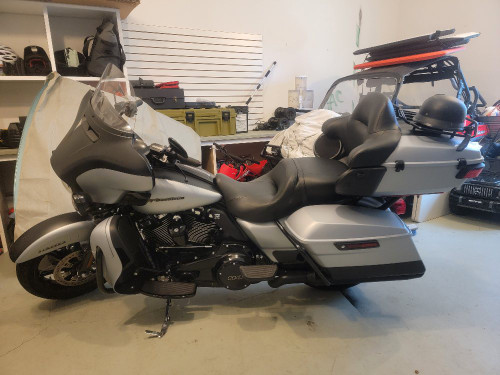
Description
1989 Harley Davidson FLH Electra Glide - Cycle Concept Custom Lots of Performance, Chrome and Polishing
Specs and Dims
Description Continued...
The 1989 Harley-Davidson FLH Electra Glide: What Buyers Need to Know
TL;DR: The 1989 Harley-Davidson FLH Electra Glide is a classic touring motorcycle powered by the Evolution V-twin engine (80ci/1340cc). It offers reliable performance, iconic styling, and a strong parts market — but age-related issues like dry-rotted rubber, electrical gremlins, and neglected primary chains can turn a good-looking bike into an expensive project. Know what to inspect before you buy.
The 1989 Harley-Davidson FLH Electra Glide is not a beginner's gamble. It's a proven touring platform with over three decades of road history behind it — and a parts and community ecosystem that still supports it well. But "classic" and "reliable" are not synonyms. A 35-year-old motorcycle requires specific knowledge to evaluate correctly. Buying blind is how you pay restoration prices for a rider.
This guide covers what the '89 FLH is, what makes it worth owning, and exactly what to check before you hand over money.
What Is the 1989 Harley-Davidson FLH Electra Glide?
The FLH designation stands for Full-dress, Low-compression, Heavy. It's Harley's flagship touring model — built for distance, not drag strips.
By 1989, the Electra Glide had been running the Evolution (Evo) engine for five years. That matters. The Evo replaced the troublesome Shovelhead in 1984 and transformed Harley's reputation for reliability. The 1989 model benefits from five years of Evo refinement — early teething issues were resolved, and the engine had proven itself in the field.
Core specs for the '89 FLH:
- Engine: Evolution V-twin, 80ci (1340cc), air-cooled
- Transmission: 5-speed, chain primary drive
- Frame: Steel, rubber-mounted powertrain
- Fuel system: Carburetor (Keihin CV, 40mm)
- Dry weight: Approximately 760 lbs
- Fairing: Full dresser — windshield, hard saddlebags, Tour-Pak optional
The rubber-mounted engine, introduced in 1980, reduces vibration at the handlebar and footpegs. Over long miles, that matters.
Why the 1989 FLH Electra Glide Still Holds Value
Three things keep the '89 FLH relevant in the used market: engine longevity, parts availability, and cultural staying power.
The Evo engine is nearly bulletproof when maintained. A well-kept Evo with regular oil changes can exceed 100,000 miles without a rebuild. That's not marketing language — it's what decades of real-world use have confirmed. Unlike its predecessor, the Evo doesn't leak from every gasket by design. It holds oil. It starts reliably. It responds well to basic maintenance.
Parts are everywhere. The Evo ran from 1984 to 1999. That's 15 years of production, millions of bikes, and an aftermarket that grew around them. Replacement carburetors, gaskets, ignition modules, and chrome dress-up parts are all accessible. You won't be hunting down NOS inventory for routine repairs.
The community supports it. Forums, local clubs, and independent mechanics who know the Evo inside-out are easy to find. This cuts your cost of ownership over time compared to more obscure vintage platforms.
What to Inspect on a 1989 FLH Before Buying
Age is the primary risk factor here, not mileage. A 1989 bike with 20,000 miles has still sat through 35 winters. Rubber degrades. Fuel systems gum up. Electrical connectors corrode.
Work through this list before you negotiate a price.
1. Check the Primary Chain and Tensioner
The chain primary drive on pre-1990 FLH models is a common maintenance point. A worn primary chain slaps loudly at idle. A failed tensioner damages the inner primary cover. Start the engine cold and listen. Any rhythmic clunking from the left side is a negotiating point — or a reason to walk.
2. Inspect All Rubber Components
Tires, fork seals, fuel lines, and carb diaphragm — all degrade with age regardless of miles. Cracked fork seals leak oil onto the front wheel. A split fuel line is a fire risk. A torn carb diaphragm causes erratic fuel delivery. Budget $300–$600 to replace these proactively on any '89 FLH you buy.
3. Test the Charging System
The Evo-era charging system is adequate but not robust. The voltage regulator and stator are known weak points, especially on bikes that sat infrequently. Test battery voltage at idle (should read 13.5–14.5V). If it reads below 13V with lights on, the charging system needs attention. A stator replacement runs $150–$300 in parts.
4. Evaluate the Carburetor Condition
Sitting destroys carburetors. Varnish from old fuel clogs jets and passages. If the bike idles rough, hesitates off the throttle, or floods easily, the Keihin CV carb needs a rebuild. A carb kit costs under $50. The labor to do it right — about 2 hours — is what you're really paying for.
5. Check Frame and Engine Mount Condition
The rubber engine mounts absorb vibration across the life of the bike. Cracked or collapsed mounts transmit harshness directly to the frame and worsen handling. Inspect them visually where the engine cradles into the frame. Replacements are inexpensive; missing them means a rough ride you'll eventually have to fix anyway.
6. Review the Service History
A complete service history — oil change records, inspection receipts, any rebuild documentation — is worth a price premium. A bike with no paperwork is not automatically a bad buy, but it demands more thorough mechanical inspection before purchase. A 2000-mile bike with zero records tells you less than a 40,000-mile bike with a binder.
What to Expect to Pay for a 1989 FLH Electra Glide
Prices vary by condition, mileage, and regional market. As of recent sales data, expect:
- Project or parts bike: $2,000–$4,000
- Running, cosmetically rough: $4,500–$6,500
- Clean original, well-maintained: $7,000–$10,000
- Restored or show-quality: $10,000–$15,000+
Overpaying is easy when you buy on appearance. A clean paint job and chrome covers hide nothing about the condition of the primary chain, the stator, or the carb. Price the bike on what you can verify, not what it looks like on a sunny day.
Is the 1989 FLH Electra Glide the Right Touring Bike for You?
The '89 FLH is the right choice if you want a touring platform you can maintain yourself, parts you can find locally, and a bike that rewards mechanical engagement. It's a wrong fit if you want modern fuel injection, ABS, or ride-by-wire electronics. This is an analog machine from a pre-CAN-bus era. That's its appeal — and its limitation.
If you're moving from a newer bike to a classic, plan for a learning curve. The Evo rewards consistent maintenance. Neglect it and it will tell you.
The Bottom Line on the 1989 Harley-Davidson FLH Electra Glide
The 1989 FLH Electra Glide is a strong platform when you buy correctly. The Evo engine is durable, the parts supply is solid, and the community knowledge base is extensive. But age-related deterioration is real. Inspect the primary drive, rubber components, charging system, and carburetor before any money changes hands. A thorough pre-purchase inspection saves you $1,000–$3,000 in immediate repairs on a bike that looked fine at a glance.
Know what you're buying. Then buy it.
Frequently Asked Questions About the 1989 Harley-Davidson FLH Electra Glide
Is the 1989 Harley-Davidson FLH Electra Glide reliable for long-distance touring?
Yes, when properly maintained. The Evolution V-twin (80ci/1340cc) is a proven long-distance engine. Riders regularly exceed 100,000 miles on well-kept Evo motors. The key variable is maintenance history, not mileage alone.
What is the difference between the 1989 FLH and FLHX Electra Glide models?
The FLH is the standard Electra Glide with full touring equipment. The FLHX (Street Glide) did not exist in 1989 — that nameplate came later. In 1989, the key variants were the FLHX (Classic) and the standard FLH, differentiated mainly by trim level and included accessories.
How much does it cost to maintain a 1989 Harley-Davidson Electra Glide annually?
Budget $400–$800 per year for routine maintenance on a well-sorted example — oil changes, filters, brake fluid, and minor adjustments. Add $300–$600 upfront on any new purchase for proactive rubber and seal replacement, regardless of apparent condition.
What are the most common problems with the 1989 FLH Electra Glide?
Primary chain wear, stator failure, carburetor varnishing from sitting, and deteriorated rubber components (fork seals, fuel lines, carb diaphragm). None are catastrophic. All are diagnosable before purchase with a proper inspection.
Is the 1989 Electra Glide a good first Harley-Davidson?
It can be — but it requires mechanical confidence or a budget for a trusted independent mechanic. The Evo is forgiving and well-documented, but a 35-year-old bike needs active management. If you've never maintained a vintage motorcycle, budget for professional setup before your first long ride.