
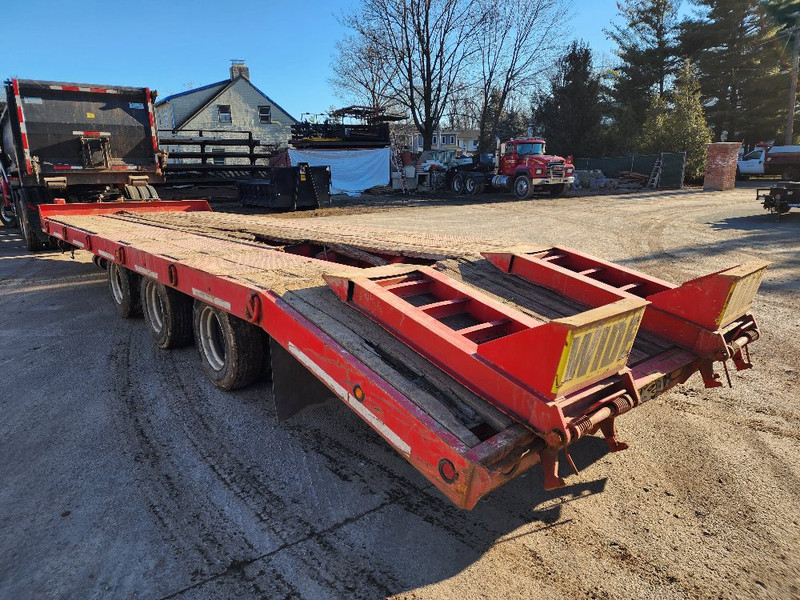
Return on investment looks different when you buy a 25-ton tag-along trailer. You’re not just purchasing a hauling tool—you’re securing faster mobilization, lower transport costs, and the ability to keep high-value paving machines working on schedule.
IronmartOnline works with contractors who rely on heavy equipment transport every day. That’s why ROI matters: a properly spec’d 25-ton tag trailer cuts downtime, reduces outsourced hauling, and supports safer moves for pavers, rollers, and skid steers.
In this article, you’ll see how a 25-ton tag trailer generates real value, which specs influence ROI most, and what to evaluate before buying used or adding another hauler to your fleet. The goal is clarity—so you can spend confidently and keep your projects moving.
25-ton Tag-Along Trailer Overview
A 25-ton tag-along trailer gives you sturdy hauling for paving machines, skid steers, and medium-duty pavers. It balances load capacity, deck length, and towing ease so you can move equipment between jobs fast and with low fuss.
What Is a Tag-Along Trailer?
A tag-along trailer (also called a tag trailer) ties to your truck with a bumper or pintle hitch and rides behind. It usually has a straight flat deck, ramps or dovetail, and axles under the deck for a lower load height without a gooseneck.
A 25-ton tag-along trailer is rated to carry about 50,000 pounds gross vehicle weight (GVW), depending on axle setup.
Typical features include a heavy-duty steel frame, a 102-inch width for equipment like pavers, and hydraulic or spring-assisted ramps for safe loading. You should check suspension type, brake system, and tare weight to match your tow vehicle and permits.
Primary Uses for Heavy Equipment Hauling
You will use a 25-ton heavy equipment trailer mostly for paving machines, compactors, small asphalt pavers, skid steers, and mini excavators. Contractors in driveway, parking lot, and roadwork sectors rely on these trailers to move 10–12 high-value paving machines between sites.
The trailer suits short- to medium-distance hauls and local contract work where quick loading and unloading save time. It also works well for rental fleets and resellers who need flexible transport without the larger permits and costs of semi-trailers.
How Payload Ratings Affect Cost Efficiency
Payload ratings directly influence the number of trips required to move paving equipment. The Federal Highway Administration notes that correct weight distribution and compliant loading reduce operational costs and improve long-term fleet efficiency.
Matching trailer capacity to your heaviest machine helps avoid fines, unplanned repairs, and premature component wear. A 25-ton rating supports multi-machine workflows, allowing contractors to transport rollers, skid steers, or attachments in a single run when legal.
This improves job-site turnaround and reduces fuel and labor costs. Understanding these cost benefits helps you see ROI not just as a purchase expense but as daily operational savings across the season.
Differences Between Tag Trailers and Lowboy Trailers
Tag trailers keep the axles under the deck and usually have a higher deck than a lowboy. That makes tag trailers simpler to tow with pickups and easier to hook up, but they carry lower overall height clearance for very tall machines.
Lowboy trailers use a drop-deck design with a gooseneck and much lower deck height. Lowboys handle taller and heavier machines that exceed tag trailer limits, like full-size pavers or large milling machines, but they require a heavier tractor, special permits, and more complex loading.
Choose a tag-along trailer if you want easier towing and good capacity for paving and light-to-medium construction gear; choose a lowboy for very heavy or oversized units.
Key Features of 25-ton Tag-Along Trailers
A 25-ton tag-along trailer focuses on strong decks, reliable axles, easy loading, and secure tie-downs. You want a trailer that matches your machines, lowers deck height for load stability, and gives simple storage for tools and chains.
Deck Designs: Flat Decks, Tilt Decks, and Dovetail
Flat decks give you the most usable space for pavers, skid steers, and rollers. You can load wide equipment and position it to balance tongue weight. Look for heavy-duty steel or high-tensile plate with a tread plate wheel cover in high-wear zones.
Tilt decks reduce the need for long ramps and cut loading time. They work well for compact paving machines and small loaders. Check the pivot strength and hydraulic or mechanical tilt mechanism for smooth, safe operation.
Dovetail (dove tail) decks lower the loaded deck height near the rear. That makes driving equipment on and off easier and reduces ramp angle. A 6 ft dovetail is common on tag trailers and helps when you move paving machines that sit low.
Axle Configurations and Suspension Options
A 25-ton trailer often uses tandem or tri-axle setups to spread the load and meet road limits. Tandem axles are common for 20–25-ton ratings; tri-axles give extra stability for heavier or uneven loads. Confirm the GVWR and axle spacing for legal compliance.
Suspension choice matters for your cargo. Air ride suspension smooths the transport of delicate paving electronics and reduces shock to machine components. Spring suspension or HD spring suspension is more rugged and lower-cost, good for heavier, brute-force hauling across rough sites.
Match brakes and axles to your hauling route. Electric or air brakes sized to the load keep stopping distances short, especially when you haul loaded pavers or rollers.
Loading Equipment: Beavertail and Ramps
Beavertail (beavertail) decks slope down with built-in ramps for short approach distances. They help when you run compactors, mini-pavers, or loaders that can’t handle steep ramps. Check the beavertail length and angle to ensure your machine’s ground clearance clears the deck.
Detachable or fold-up steel ramps give flexibility for different machine widths. Spring ramps make deploying and storing ramps faster and safer on job sites. Verify ramp rating—ramps should match or exceed the machine weight, often rated per axle or per ramp pair.
Look at ramp storage and tie points. Ramps that lock under the dovetail or on the deck keep them secure during transit and prevent shifting that could damage equipment.
Load Security and Tool Storage
Tie-downs and D-rings must be rated and placed for common machine lashing points. You want plenty of D-rings along the deck centerline and outer rails to control pitch and yaw for paving machines or skid steers. Verify rated working load limits stamped on anchors.
A built-in toolbox or cross-box near the tongue keeps straps, chains, winches, and binders organized and ready. Look for lockable boxes and weatherproof seals to protect gear. Tread plate covers and skid plates near wheel openings help prevent wear from chains and edges.
Check landing gear and loaded deck height. Good landing gear supports quick hookup and prevents sag when unhitched. A lower-loaded deck height reduces the center of gravity and makes securing tall paving machines easier.
Specifications That Matter Most
These specs tell you what the trailer can haul, how it stops and rolls, and how the deck will hold up under heavy paving gear. Focus on capacity, wheel and brake choices, and floor materials to match your paving machines and jobsite needs.
Weight Capacity and Deck Dimensions
A true 25-ton tag trailer should list a 50,000 lb GVWR (gross vehicle weight rating) or equivalent axle ratings that add up to the 25-ton payload you need. Confirm the trailer’s tare (empty) weight so you know the net payload available for rollers, pavers, or skidsteers.
Look for a flat deck length around 24 ft with a 6 ft dovetail; that layout fits most tandem-axle paving machines and makes winching and ramping easier.
Deck width commonly runs 96 inches (8 ft). Check the rated ramp capacity if you load by drive-on. Also, verify VIN, suspension type (air ride vs. spring), and whether the trailer uses a drop tag axle. Those details affect how the trailer rides and how the weight distributes during hauling.
Wheel, Tire, and Brake Options
Choose 17.5-inch tires when you need higher load capacity at highway speeds and easier tire replacement. Steel disc wheels are rugged and common on heavy trailers; confirm bolt pattern and hub size for spares.
Oil-bathed bearings extend service intervals and stand up to heavy stop-and-go use on paving jobs. Air brakes give stronger, more consistent stopping power for loaded runs and are preferred for frequent highway hauling.
If the trailer has electric brakes, match controller capacity to the trailer’s axle weight. Inspect brake chambers, lines, and adjusters; replace worn parts to keep the stopping distance predictable with heavy paving machines aboard.
Material Choices for Floors and Covers
Wood floors remain popular because they absorb shock, are easy to repair, and cost less to replace section-by-section. Choose pressure-treated oak or hardwood boards rated for heavy equipment foot loads if you carry pavers and rollers often.
Inspect board thickness and fastening method—lag-screwed boards wear better than nailed boards. Steel plate or chequer plate decks offer greater long-term durability and resist gouging from tracks, but they add weight and can transfer more vibration to equipment.
Consider a hybrid: steel at high-wear zones (dovetail and ramps) and wood elsewhere. If you need weather protection, ask about bolt-on covers or skid plates that shield wood floors without welding.
Popular Makes, Models, and Custom Options
These trailers suit heavy paving and roadwork fleets. Buyers focus on load capacity, deck length, suspension type, and ease of loading for paving machines and asphalt equipment.
Top Brands: Load King, Brandt, and Eager Beaver
Load King, Brandt, and Eager Beaver rank high for tag-along trailers used in paving and roadwork. Load King is known for heavy-duty steel frames, long-lasting axles, and options geared to highway hauling.
Eager Beaver makes rugged tag trailers often marketed as “paver special” setups with wide decks and low profiles for easy loader and paver placement. Brandt focuses on fit-for-purpose designs with options for air-ride suspension and strengthened dovetail sections.
When you buy, check corrosion protection, weld quality, and serviceable parts like brakes and hubs. Those items affect resale and downtime when you move high-value paving machines.
Highlight: Load King LK-25TT and LK20T
Load King models like the LK-25TT and LK20T target contractors hauling heavy pavers and rollers. The LK-25TT typically offers a 25-ton rating, reinforced crossmembers, and optional air-ride or spring suspension to protect sensitive paving equipment.
The LK20T is a lighter 20-ton platform that still supports skidsteers and medium pavers while saving fuel and haul costs.
Look for features that matter on the job: slip-resistant decking, easy-connect safety chains, and factory-rated ramp capacity. If you haul high-value paving machines, prioritize trailers with documented load ratings and a history of shop maintenance.
Notable Models: UBT2524 and More
Models such as the UBT2524 provide a compact 24–25 ft flat deck with a dovetail and ramp combination built for paving attachments and compactors. UBT-style trailers often include wider 102" decks and heavy axles to match paving machines’ footprint.
Other notable options mirror this layout but vary by suspension—air ride reduces shock to machinery, while spring setups cost less to maintain.
Before buying, match deck width and ramp angle to the specific machines you plan to load. Verify rated tongue weight and axle spacing to avoid axle overload when carrying heavy pavers.
Personalizing Your Tag-Along Trailer
You can tailor a tag-along trailer to your fleet's needs. Common upgrades include air-ride suspension, 6' dovetails, 6' ramps, reinforced decking, and remote brake controls for safer hauling. Electrical and lighting packages help meet state DOT rules for night moves.
For contractors moving 10–12 high-value paving machines, label tie-down points, add removable rub rails, and choose corrosion-resistant coatings. These tweaks reduce loading time, protect equipment, and keep resale value high.
You can list custom specs clearly to reach buyers who need paving and asphalt gear.
Purchasing Your 25-ton Tag-Along Trailer
You’ll need to pick a trusted seller, confirm payment and financing, and arrange delivery that fits your job sites. Focus on dealer reputation, clear financing terms like 0 down options, and affordable nationwide delivery that handles heavy equipment.
Finding a Reliable Dealer
Look for dealers who list trailer condition, axle rating, and deck dimensions clearly. Ask for maintenance records, brake and tire history, and any frame repairs. Verify the dealer qualifies buyers and secures payment before transfer.
That reduces the risk of fraud and ensures a smooth title transfer. Check references from other paving or asphalt contractors who bought tag trailers. Ask about how the dealer handled transport, paperwork, and any post-sale issues
Prefer dealers who offer appraisals and staging for photos. Those services help you compare value across similar 25-ton tag trailers.
Financing Options and 0 Down Financing
Ask lenders for term length, interest rate, and total cost over the loan. Compare offers from equipment finance companies and dealer-backed programs. Zero down financing can help preserve working capital, but confirm fees, higher monthly payments, and any required insurance.
Get pre-approval so you know your buying power before negotiating. Read the fine print on penalties for early payoff and what happens if the trailer is used for heavy commercial work like paving.
If you plan to buy multiple high-value paving machines later, ask about fleet financing or repeat-buyer programs that can lower rates.
Affordable Nationwide Delivery Services
Choose carriers specializing in heavy equipment and tag trailers. They know load securement, overweight permits, and state-by-state rules. Ask for door-to-door quotes and get itemized costs for permits, escorts, and fuel surcharges.
Compare at least three carriers and check past delivery times for similar loads. Look for carriers offering consolidated routes to cut costs when hauling within a region.
Confirm insurance limits and damage claims process before pickup. Require signed delivery condition reports and photos at both pickup and drop-off.
Understanding ROI Before You Invest
A 25-ton tag-along trailer delivers ROI through uptime, hauling flexibility, and predictable operating costs. When you match load capacity, deck style, and suspension to your equipment fleet, you improve job mobility and reduce dependence on outside haulers.
IronmartOnline emphasizes practical evaluation and clear documentation so contractors can buy with confidence. With the right trailer, your fleet becomes more efficient, your jobs run smoother, and your equipment investment works harder for you.
If you’re evaluating trailer options now, outline your heaviest machines, confirm hauling requirements, and compare real operating costs. Make the decision that strengthens your fleet and supports long-term profitability. Get started today.
Frequently Asked Questions
This section answers practical buyer questions about 25-ton tag-along trailers, including condition checks, where to find listings, differences versus 20-ton models, hitch choices, maintenance cost drivers, and must-have heavy equipment trailer features.
What should I consider when buying a used 25-ton tag trailer?
Check the frame and deck for cracks, rust, or replaced boards. Inspect axles, suspension, and tires for even wear. Verify brakes, lights, and VIN. Ask for maintenance records and recent haul history. Confirm payload, deck length, dovetail, ramp capacity, and tie-down points.
Where can I find a 25-ton tag trailer for sale on Craigslist?
Search “25-ton tag trailer” and “tag-along trailer” in your local Craigslist region. Filter by metro area and set alerts for new listings. Look for clear photos, VIN, dimensions, and contact info. Request measurements, condition notes, and a phone number if details are missing.
Are there any significant differences between a 20-ton and a 25-ton tag trailer?
A 25-ton trailer has stronger axles, a heavier frame, and a higher GVWR. Deck and ramp capacity are increased for larger equipment. Tire size and brakes may differ. Added strength can raise curb weight and slightly reduce payload compared to a 20-ton trailer.
What are the benefits of choosing a pintle hitch trailer over other hitch types?
Pintle hitches offer more articulation for uneven ground and heavy loads. They handle high tongue loads and rugged towing better than most ball couplers. Common in construction fleets, pintles match heavy-duty tow vehicles. They are simpler and often cheaper to maintain than some electronic hitch systems.
How do maintenance costs compare for 20, 25, and 30-ton tag trailers?
Higher-capacity trailers cost more to maintain due to larger, pricier parts. 30-ton models use bigger axles, brakes, and tires. Labor rises with complexity—air-ride and dual axles need more service. Routine items like brakes, bearings, tires, and deck boards are the main cost drivers.
What are the key features to look for in a heavy equipment trailer?
Rated GVWR and payload capacity that match your heaviest machine. Solid frame, reinforced deck, and correct ramp/dovetail strength for pavers and paving machines. Tie-down points, D-rings, and tie rails are placed for your equipment layout.
Good brakes, serviceable suspension (air ride or dependable springs), and clear VIN/registration documents.