
Table of Contents
- Why Use an Ironmartonline Equipment Broker?
- Tip 1: Price It Right with 2026 Market Data
- Tip 2: Preparing Heavy Equipment for Sale Checklist
- Tip 3: Build a Listing That Sells: Photos and Specs
- Tip 4: How to Sell Used Excavators Online Fast
- Tip 5: Protect Your Sale: Payment and Paperwork
- Platform Comparison: Broker vs. Auction vs. Marketplace
- Common Mistakes to Avoid When Selling Machinery
- Final Checklist for a 2026 Equipment Sale
- Frequently Asked Questions
Last Updated: September 8, 2026
The global heavy equipment market is projected to reach $242 billion by the end of 2026, expanding at an 8.7% compound annual growth rate (CSG Talent heavy equipment industry trends 2026(https://www.csgtalent.com/insights/blog/heavy-equipment-industry-trends-2026/)). That growth is pulling thousands of new sellers into the online space, each competing for the same buyer attention. Selling heavy equipment online in 2026 isn't about posting a photo and hoping for the best; it's about pricing with current data, preparing the machine properly, and choosing a sales channel that actually puts your listing in front of serious buyers.
This guide from Ironmartonline breaks down the five tactics that separate equipment that sells in weeks from listings that sit for months. But first, here's the question every seller should ask before investing time in photos, cleaning, and listings: why use an Ironmartonline equipment broker instead of going it alone? The answer comes down to reach, preparation, and the fact that most individual sellers only have one machine to move while brokers maintain active buyer networks across multiple platforms daily.
Quick Picks:
- Best Overall: Ironmartonline, nine integrated platforms, no contracts, no hidden fees
- Best for Fast Liquidation: Ritchie Bros. Auctioneers, guaranteed sale date
- Best for Local Sales: Craigslist, free but limited reach
Why Use an Ironmartonline Equipment Broker?
Most guides treat selling heavy equipment as a solo project. That advice ignores a simple reality: buyers in 2026 are actively seeking used machinery to avoid long delivery lead times and regulatory price increases tied to new emission standards (Makana analysis of selling heavy machinery in 2026(https://www.makana.com/en/news/sell-heavy-machinery-2026)). When demand is this strong, the bottleneck isn't finding a buyer; it's getting your machine seen by enough of them.
A broker solves that visibility problem. Ironmartonline distributes listings across nine specialized web-based selling platforms simultaneously, pushing your excavator or dozer in front of millions of potential buyers without you managing multiple accounts. There are no contracts locking you in and no hidden fees eating your margin. For a small owner-operator moving two trucks or a fleet manager liquidating end-of-lease machinery, that hands-off approach means you spend your time running your business rather than chasing leads.
Tip 1: Price It Right with 2026 Market Data
Pricing is where most equipment sales go wrong. Set the price too high and the listing goes stale; too low and you leave thousands on the table. The 2026 market favors sellers, but only those who price against current data rather than what they paid for the machine five years ago.
Start with an equipment appraisal that accounts for depreciation, operating hours, and component wear. Check comparable listings on multiple platforms, not just one. Pay attention to what similar models with similar hours actually sold for, not what sellers are asking. Dealers are currently facing significant challenges related to high pricing and inflation (EquipmentWatch dealer survey on pricing and inflation(https://www.equipmentworld.com/market-pulse/article/15828769/equipmentwatch-survey-dealers-face-high-pricing-inflation-in-2026)), which means buyers are comparison shopping harder than ever.
A common mistake is anchoring to the original purchase price. Depreciation on heavy equipment doesn't follow a straight line; it accelerates with hours and market shifts. If you're uncertain, a Heavy Equipment Broker can provide market context from its active buyer network, helping you set a price that moves the machine without leaving money behind.
Tip 2: Preparing Heavy Equipment for Sale Checklist
Presentation directly impacts resale value. A clean, well-maintained machine photographs better, attracts more serious inquiries, and justifies a higher asking price. This preparing heavy equipment for sale checklist covers the essentials before any photos are taken.
- Deep clean the exterior and cab: Remove grease, mud, and debris. Pressure wash the undercarriage and engine compartment.
- Fix minor cosmetic issues: Touch up paint, replace worn decals, and repair broken lights or mirrors.
- Document maintenance: Gather service records, repair invoices, and the owner's manual. Complete records signal a well-maintained machine.
- Conduct a mechanical inspection: Check the hydraulic system, engine, and transmission. Address leaks or unusual noises.
- Verify serial numbers: Ensure the VIN and component serial numbers match your title and registration documents.
- Test all functions: Operate the machine fully. buyers want to see that everything works.
Tip 3: Build a Listing That Sells: Photos and Specs
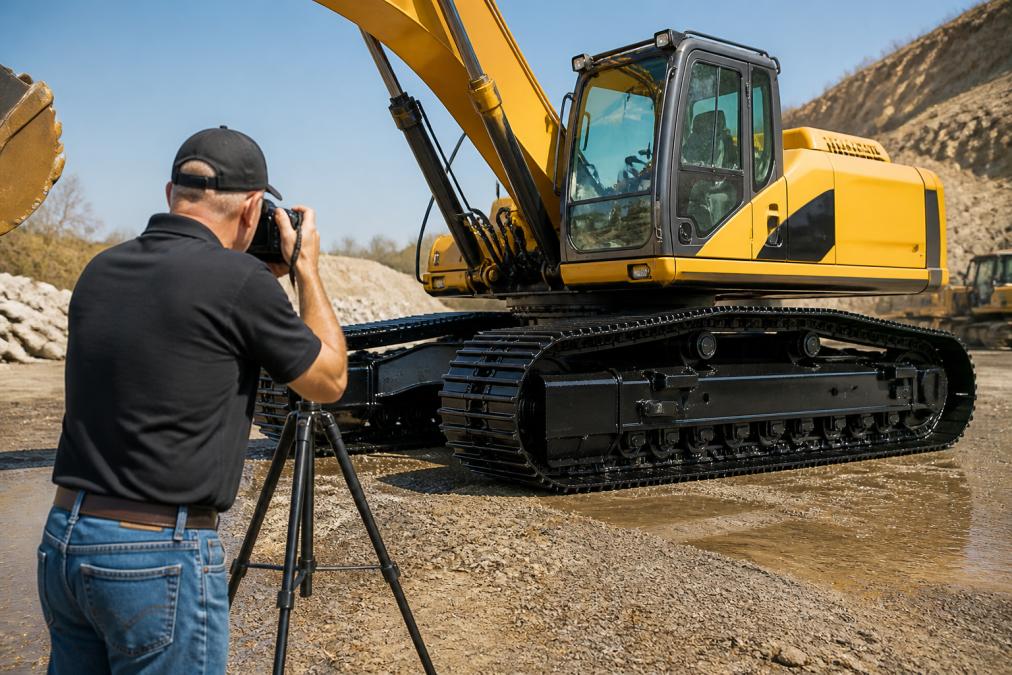
Your listing is your sales pitch, and it lives or dies on two things: imagery and specification accuracy. Low-quality photos or vague descriptions signal that the seller has something to hide. Detailed, honest listings attract serious buyers and command better prices.
For photos, follow the Ritchie Bros. guidance: capture the undercarriage and engine compartment in high resolution, not just the exterior glamour shots. Include photos of the control panel, hour meter, tires or tracks, and any wear points. A buyer should be able to assess the machine's condition without visiting in person.
The spec sheet must be precise. List the make, model, year, serial number, and operating hours exactly as they appear on the title. Include attachment details, maintenance history, and any known issues. Full transparency builds trust, and trust is what converts a listing into a sale.
Tip 4: How to Sell Used Excavators Online Fast
Selling used excavators online fast requires understanding what makes this specific machine category move. Excavators are high-demand assets in construction and demolition, but buyers are cautious about hydraulic system health and structural integrity. If you want to sell used excavators online quickly, prioritize the components that matter most to buyers.
Start by addressing the hydraulic system check. Leaks, slow cycles, or unusual noises are deal-breakers. Have a mechanic verify the system is sound and include that documentation in your listing. Next, confirm the operating hours are accurate and consistent with the machine's condition. An excavator with 3,000 hours that looks like it has 8,000 hours of wear raises immediate red flags.
Timing also matters. Market analysis suggests 2026 is a peak year for selling used machinery because buyers are actively seeking alternatives to new equipment (Makana market analysis(https://www.makana.com/en/news/sell-heavy-machinery-2026)). List during peak buying seasons, typically spring through early fall, and respond to inquiries within hours. Fast responses signal a motivated, legitimate seller.
Tip 5: Protect Your Sale: Payment and Paperwork
The sale isn't complete when the buyer says "I'll take it." The transaction is where deals fall apart, and it's where fraudsters operate. In 2026, the FBI's Internet Crime Complaint Center continues to warn about Business Email Compromise (BEC) schemes targeting high-value equipment transactions. Protecting your payment and completing proper paperwork are non-negotiable steps in selling heavy equipment online.
The Wire Fraud Threat Model
Wire transfer remains the standard for high-value equipment sales, but it's also the primary vector for fraud. A common pattern: a "buyer" requests your bank details, then sends a forged payment confirmation or a link to a fake banking portal. Alternatively, a bad actor intercepts your legitimate invoice email and alters the routing number.
Before you share any banking information, verify the buyer's identity independently. Do not rely on the phone number or email address in their signature. Look up the company's main line, call them back, and confirm the person you're dealing with is authorized to make the purchase. If the buyer proposes an alternative payment method, especially an overpayment or a third-party escrow service you didn't initiate, treat it as a red flag. integrating new tools.
A Secure Payment Checklist for Sellers
Use this checklist to protect yourself from wire fraud and counterfeit payments:
- Verify the buyer's business entity: Confirm the company exists, has a physical address, and has been operating for more than a few months. A new LLC with no web presence is a warning sign.
- Never accept overpayment: A buyer who "accidentally" sends too much and asks for a refund is running a classic scam. The original payment will bounce or be reversed, and you'll be out the refunded amount.
- Use a dedicated bank account: If possible, have the wire go to an account with limited funds, so a compromised transaction doesn't drain your operating capital.
- Confirm the wire in writing: After the buyer claims to have sent the funds, call your bank to confirm receipt before releasing the machine or signing the title. Do not rely on a PDF receipt the buyer sends you.
- Be wary of escrow services: Only use established, licensed escrow companies with a verifiable track record. If the buyer insists on an escrow service you've never heard of, research it thoroughly, many fraudulent escrow sites are designed to look legitimate.
Heavy Equipment Bill of Sale Template Essentials
A heavy equipment bill of sale template protects both parties by documenting the transaction. At minimum, it must include:
- Buyer and seller legal names and addresses
- Equipment description: make, model, year, serial number, and VIN
- Sale price and payment method
- "As-is, where-is" condition statement
- Date of sale and signatures from both parties
- Odometer or hour meter disclosure if applicable
- A statement that the seller holds clear title and has the right to sell
- A clause specifying that risk of loss transfers to the buyer upon pickup or delivery
Consult your state's department of motor vehicles for any additional title transfer or registration requirements specific to your jurisdiction. Some states require a notarized bill of sale or a separate title application form. Failing to complete these steps can leave you liable for the machine's future use or fines.
By treating every transaction as potentially fraudulent until proven otherwise, you protect your proceeds and your reputation. A secure sale is a successful sale.
Platform Comparison: Broker vs. Auction vs. Marketplace
| Platform Type | Best For | Pros | Cons |
|---|---|---|---|
| Broker (Ironmartonline) | Hands-off sellers wanting maximum reach | Multi-platform distribution, no contracts, no hidden fees | Commission-based fee structure |
| Auction (Ritchie Bros.) | Fast liquidation of large fleets | Guaranteed sale date, global buyer reach | Less control over final price |
| Marketplace (eBay Motors) | Broad audience reach | High traffic, flexible formats | Fees add up, high competition |
| Local (Craigslist) | Quick local sales, no shipping | Free, direct contact | High scam risk, limited reach |
The platform you choose determines your timeline, your net proceeds, and your workload. A broker handles the heavy lifting of listing, inquiries, and negotiation. An auction guarantees a sale date but may leave money on the table. Marketplaces give you control but require active management and carry fraud risk.
Common Mistakes to Avoid When Selling Machinery
Several recurring mistakes cost sellers time and money. Avoiding them is often the difference between a smooth sale and a months-long headache. Beyond the obvious errors, skipping market research, poor photography, hiding known issues, the most expensive mistakes in 2026 happen after the price is agreed upon.
Mistake 1: Ignoring the Logistics Question Until After the Sale
A sale isn't final until the machine is loaded and on its way to the buyer. Sellers who wait until the last minute to figure out freight lose deals or eat unexpected costs. Before you list, decide who pays for shipping and how the machine will move.
Who pays for shipping? In most B2B equipment transactions, the buyer arranges and pays for transport. However, some buyers, especially those buying from individual sellers, will ask for a delivered price. If you agree to deliver, you need a firm quote from a heavy haul carrier before you set your final price. A typical lowboy move for a mid-size excavator can vary significantly in cost depending on distance and machine specifications. Get quotes from heavy haul carriers and build the transport cost into your price if you agree to deliver.
How do you coordinate the pickup? The buyer's carrier will need:
- Accurate machine dimensions (length, width, height, weight)
- A clear loading location with enough room for a lowboy to maneuver
- Confirmation that the machine can be loaded under its own power or that you have the equipment to load it
- A completed bill of lading that documents the machine's condition at pickup
If the machine is not running, disclose that upfront. A non-running machine requires a winch truck or a crane for loading, which adds significant cost and complexity to the carrier's job. Most carriers will refuse the load if they arrive and find the machine inoperable without prior notice.
Mistake 2: Failing to Secure the Machine for Transport
A machine that isn't properly secured is a liability. The Federal Motor Carrier Safety Administration (FMCSA) requires that cargo be properly tied down. For heavy equipment, that means using the correct number of chains and binders rated for the machine's weight. A mid-size excavator typically requires four chains, each rated for at least the machine's gross weight, attached to the frame or designated tie-down points, not the bucket or the cab.
If you're loading the machine yourself, inspect the trailer's deck and ramps for damage. Ensure the parking brake is engaged and the bucket or blade is lowered to the deck. If the buyer's carrier is doing the loading, you are still responsible for pointing out any known mechanical issues that could affect safe loading.
Mistake 3: Overlooking Insurance and Liability at Pickup
Who is responsible if the machine is damaged during loading? Who pays if the carrier's truck is damaged by a failing hydraulic line on your machine? These questions should be answered before the carrier arrives. Typically, the buyer's insurance covers the machine once it's loaded on the truck. But if the machine is damaged during the loading process, for example, a track falls off while being driven up the ramps, the responsibility can fall on the seller.
A simple way to protect yourself: take dated, time-stamped photos of the machine from all angles immediately before loading. Have the carrier's driver sign a copy of the bill of lading that notes the machine's condition. If the driver refuses to sign, note that on the document and take a photo of the machine next to the truck.
Mistake 4: Not Preparing for the Buyer's Inspection
Serious buyers in 2026 will request a third-party inspection or a live video walkaround. Sellers who refuse or delay these requests lose credibility. Prepare for the inspection by having the machine clean, serviced, and ready to run. Have the service records and hour meter readings available. If the inspector finds an issue you didn't disclose, the deal will likely fall through, or the buyer will demand a significant price reduction.
By addressing logistics and liability before you list, you avoid the two most common reasons deals collapse after the handshake. A smooth transaction from listing to delivery is what separates professional sellers from amateurs.
Final Checklist for a 2026 Equipment Sale
Before your listing goes live, run through this final checklist to confirm you have covered every step.
- Machine is deep cleaned and photographed, including undercarriage and engine
- Maintenance records and service history are compiled and ready to share
- Mechanical inspection completed and known issues documented
- Serial numbers verified against title and registration
- Pricing set using 2026 market data and comparable sales
- Listing platform selected based on timeline and reach needs
- Payment method verified and bill of sale template prepared
- Logistics and shipping coordination arranged or discussed with buyer
Selling heavy equipment online in 2026 is a seller's market, but only for those who prepare properly. The demand for used machinery is strong, driven by buyers avoiding new equipment lead times and regulatory costs. The sellers who succeed are the ones who price with data, present their machines professionally, and protect themselves through secure payment and proper documentation.
Frequently Asked Questions
What is the best way to sell used heavy equipment?
The best way combines accurate valuation, professional preparation, and multi-platform exposure. For most sellers, using a specialized heavy equipment broker like Ironmartonline delivers the widest reach without the hassle of managing listings. Brokers distribute your machine across nine platforms, handle buyer qualification, and manage the transaction. This approach typically yields higher net returns than a private sale because it attracts serious, pre-vetted buyers, including international ones, rather than limiting you to local lowball offers.
How does the 2026 market impact heavy equipment resale values?
The global heavy equipment market is projected to reach $242 billion by the end of 2026, growing at an 8.7% CAGR. This growth favors sellers. Buyers are actively seeking used machinery to avoid long delivery lead times and regulatory price increases tied to new emission standards. This means demand for well-maintained used equipment is strong, and prices are holding firm. Sellers who provide detailed documentation and service history can command premium prices in this market.
What documentation is required to sell heavy equipment?
At minimum, you need a signed heavy equipment bill of sale template, the title or certificate of ownership, and a serial number verification. For selling heavy equipment online, you should also prepare maintenance records, service history, and any relevant inspection reports. Buyers in 2026 are more cautious, so complete documentation builds trust and speeds up the transaction. Using a broker simplifies this process because they handle the paperwork and ensure all legal requirements are met for both domestic and international sales.
Is it better to use a broker or sell heavy equipment privately?
It depends on your time, expertise, and network. Private sales can save on commission but limit your reach to local buyers, who often focus on purchasing at lower price points. A professional heavy equipment broker exposes your machine to millions of potential buyers through multiple platforms, handles negotiations, and manages secure payment logistics. For most sellers, the higher sale price and faster transaction time from broker representation outweigh the commission cost. Brokers also reduce fraud risk through buyer vetting.
The challenge of selling heavy equipment online is managing every variable: pricing, preparation, listing quality, and transaction security. Ironmartonline simplifies that process by distributing your listing across nine web-based platforms to reach millions of buyers, with no contracts and no hidden fees. Get started with Ironmartonline and turn your surplus equipment into working capital.