
Table of Contents
- Why Autocar Trucks for Sale Are Worth Your Attention in 2026
- Autocar Truck Models: Vocational and Severe-Duty Options
- Autocar Trucks for Sale: Pricing, Inventory, and Market Trends
- Heavy-Duty Truck Inspection Checklist for Used Autocar Models
- Benefits of Using an Equipment Broker to Buy or Sell Autocar Trucks
- First-Time Buyer Guide: What to Know Before You Purchase
- Maintenance and Lifecycle Costs for Autocar Vocational Trucks
- Regulatory Compliance and Emissions Standards for Vocational Trucks
- Frequently Asked Questions
Last Updated: September 16, 2026
Why Autocar Trucks for Sale Are Worth Your Attention in 2026
Inventory for Autocar trucks for sale sits between $1,000 and $449,500 across 392 active listings, with 182 of those being pre-owned units (TruckPaper commercial truck listings). That spread tells you something important: this is a market where specification, not brand prestige alone, sets the price. At Ironmartonline, we broker used heavy equipment every day, and vocational trucks behave differently from consumer pickups. Buyers here care about axle ratings, chassis specs, and how the truck was worked.
So why use Ironmartonline as your equipment broker? Because the alternative is guessing. Vocational truck pricing is opaque, condition varies wildly, and a bad purchase can cost a fleet six figures in downtime. A broker who reaches millions of buyers across nine specialized platforms removes that guesswork on both sides of the deal.
The broader market adds pressure. U.S. auto sales fell 6.6% in August 2026 (MarkLines monthly U.S. auto sales data), and inventory levels for heavy-duty trucks keep climbing while demand softens. Translation: sellers need reach, and buyers need discipline.
Below, we break down Autocar models, pricing trends, inspection standards, and lifecycle costs so you can move on a truck with confidence.
Autocar Truck Models: Vocational and Severe-Duty Options
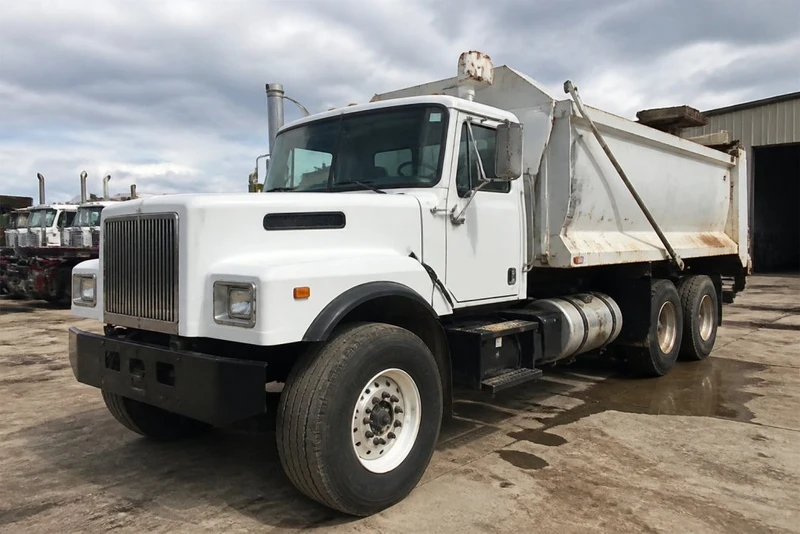
Autocar builds two core platforms for vocational work: the ACX for severe-duty applications and the ACMD for medium-duty duty cycles. Both are purpose-built for refuse, construction, and specialized industrial work rather than highway freight.
The ACX handles the brutal end of the spectrum. Tandem dump truck configurations, heavy axle ratings, and high-horsepower engine options make it a fixture in construction and waste hauling. The ACMD sits lower on the weight scale, better suited to municipal fleets and lighter vocational bodies.
What separates these trucks from commodity haulers is the custom build philosophy. As Craig Antonucci, Chief Experience Officer at Autocar Trucks, put it:
"We focus on our company's approach to customer experience and how we are custom building tools to your specifications." -- Craig Antonucci, Chief Experience Officer at Autocar Trucks (YouTube, 2026)
That matters when you're buying used. A truck spec'd for one application may not suit yours.
ACX and ACMD: What Each Model Delivers
| Model | Class | Typical Application | Key Spec Focus |
|---|---|---|---|
| ACX | Class 8 severe-duty | Refuse, construction, heavy vocational | High axle rating, severe-duty chassis |
| ACMD | Class 7 medium-duty | Municipal, delivery, light vocational | Payload capacity, maneuverability |
Autocar Trucks for Sale: Pricing, Inventory, and Market Trends
Pricing for used Autocar trucks ranges from project-grade units near $1,000 to late-model severe-duty builds approaching $449,500 (Commercial Truck Trader used inventory). The gap is not arbitrary. Model year, transmission configuration, engine hours, and maintenance history drive nearly all of it.
Two trends shape 2026 buying. First, inventory is rising while demand cools, which gives buyers more use than they had two years ago. Second, manufacturers increasingly push custom-built vocational specs over off-the-shelf units (Autocar Truck official model lineup), so used buyers should expect more specialized configurations on the market.
Some analysts argue the truck market is heading toward a price correction, citing record-high prices and rising inventory that may not hold. That view is worth weighing if you're buying for resale rather than deployment.
Heavy-Duty Truck Inspection Checklist for Used Autocar Models
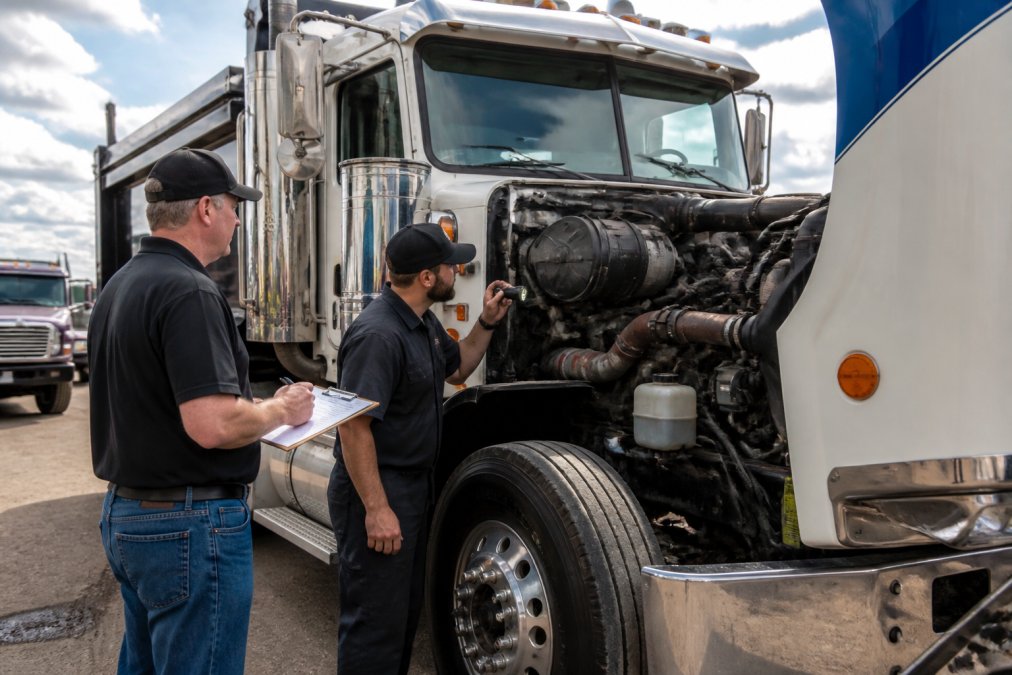
A heavy-duty truck inspection checklist for used Autocar models should go beyond a generic walkaround. Autocar vocational trucks, especially the ACX, are engineered for severe duty, and their common failure points differ from those of highway tractors. Use this sequence to separate a well-maintained workhorse from a money pit.
Start with the chassis and frame. Autocar ACX frames are built for high axle ratings, but they still crack under extreme loads. Inspect the frame rails around the suspension hangers, crossmembers, and fifth-wheel mounting areas. Look for rust scale, flaking paint, and any signs of welding or reinforcement plates, these often indicate prior damage or a hard life. Pay close attention to the rear frame behind the cab, where refuse and dump bodies transfer stress.
Next, examine the drivetrain. Autocar trucks often run high-horsepower engines paired with heavy-duty automatic or manual transmissions. Check for transmission fluid condition and smell, burnt fluid suggests overheating. On automated manual transmissions, verify clutch wear and shift quality during a test drive. Engine hours matter more than mileage on vocational trucks; compare the hour meter to the odometer to spot tampering. A truck that idled for long periods may have low miles but high hours, meaning more wear on the engine and aftertreatment system.
Axle ratings and suspension are critical. Verify that the axle rating plates match the spec sheet for the application you intend. A truck spec'd for refuse may have a different rear axle and suspension setup than one built for construction. Check for leaking seals, worn bushings, and cracked leaf springs. Air suspension components, bags, height valves, and shocks, should be inspected for leaks and proper operation.
Hydraulics and PTO systems are often overlooked. If the truck has a dump body, refuse packer, or other hydraulic equipment, test every function under load. Look for weeping cylinders, damaged hoses, and contaminated hydraulic fluid. A PTO that engages roughly or makes noise can signal a costly repair.
Finally, documentation and emissions. Ask for maintenance records, prior fleet assignment, and any warranty history. A municipal truck with scheduled service is generally a safer bet than a construction unit with gaps in its records. Confirm that the emissions aftertreatment system, DPF, DEF, and SCR, is intact and functioning. Deleted or modified systems create legal and resale problems. Use the EPA heavy-duty emissions standards to verify compliance for the model year.
Maintaining these rigorous standards requires a clear understanding of available heavy duty repair options to ensure that every component remains within factory specifications throughout the vehicle's extended service life.
Benefits of Using an Equipment Broker to Buy or Sell Autocar Trucks
An equipment broker connects buyers and sellers of vocational trucks without the friction of a direct private sale. The benefit is reach and speed, not just convenience.
Ironmartonline runs nine specialized web-based selling platforms, which puts your listing in front of millions of potential buyers across global and local markets. There are no contracts and no hidden fees, so sellers keep more of the sale price. For buyers, that same network surfaces inventory that never appears in a single regional listing.
The broker model also solves a specific problem: vocational trucks are hard to price. A broker who sees transaction data across platforms can tell you what a spec'd ACX actually sells for, not what a seller hopes to get.
First-Time Buyer Guide: What to Know Before You Purchase
First-time vocational truck buyers should define the application before they look at a single listing. The truck follows the job, not the other way around.
Start with payload capacity and duty cycle. A medium-duty ACMD handles municipal routes and light delivery; a severe-duty ACX is built for constant heavy loads. Match the chassis to the work, then match the engine and transmission to the chassis.
Research on fleet acquisition decisions shows that procurement for heavy-duty trucks involves far more variables than conventional vehicle purchases (ScienceDirect fleet acquisition research). Buyers weigh total cost of ownership, resale value, and serviceability, not just sticker price.
Maintenance and Lifecycle Costs for Autocar Vocational Trucks
Lifecycle cost, not purchase price, determines whether a vocational truck was a good deal. Severe-duty trucks run harder and cost more to keep on the road. Most competitors stop at listing cost categories; here we break down the actual intervals and trade-offs that fleet managers face.
Start with the aftertreatment system. Modern Autocar trucks equipped with diesel particulate filters (DPF) and selective catalytic reduction (SCR) require regular DEF fluid and periodic filter cleaning or replacement. DPF cleaning is typically needed every 150,000 to 200,000 miles, depending on duty cycle. A replacement DPF can cost several thousand dollars, and a clogged system can derate the engine, leaving you stranded. For vocational trucks that idle frequently, regeneration cycles may be incomplete, leading to premature filter loading.
Transmission and drivetrain rebuild intervals vary widely. An Allison automatic in a refuse truck might need a rebuild around 250,000 miles, while a manual transmission in a construction truck could last longer if driven properly. Clutch replacement on a manual can run $2,000 to $4,000, while an automatic rebuild can exceed $8,000. The key is to match the transmission to the duty cycle, stop-and-go refuse work punishes automatics, while highway hauling favors manuals.
Brakes and suspension wear faster under constant load. Tandem dump truck configurations may need brake relining every 50,000 to 80,000 miles. Air suspension bags and shocks often fail between 100,000 and 150,000 miles. Tires on vocational trucks can wear out in as little as 40,000 miles in severe service, compared to 80,000 miles for highway tractors. Budget for these consumables based on your annual mileage.
A documented maintenance history almost always costs less over five years than a cheaper unit with gaps in its records. That is the trade most first-time buyers miss. A truck with a rebuilt transmission and documented service records can command 30-40% more than an identical model year with unknown history. When evaluating a used Autocar, ask for the prior fleet assignment. A municipal unit that ran fixed routes with scheduled service is a safer bet than a construction truck that sat idle for months between jobs.
Regulatory Compliance and Emissions Standards for Vocational Trucks
Emissions compliance is a hard gate on vocational truck ownership, and it trips up more buyers than any mechanical issue. Federal standards for heavy-duty engines set the aftertreatment requirements that govern what you can legally operate and where.
Before purchase, confirm the truck's emissions configuration matches the model year and that aftertreatment components are intact. A truck with a deleted or modified emissions system creates compliance and resale problems that follow it for life. Check the current requirements through the EPA heavy-duty emissions standards before you finalize any deal.
For fleet managers, compliance records should travel with the truck. Missing documentation turns a straightforward purchase into a regulatory headache.
Frequently Asked Questions
Are Autocar trucks still in business?
Yes. Autocar Company remains active and is headquartered in Birmingham, Alabama. The manufacturer specializes in severe-duty, Class 7, and Class 8 vocational trucks, including the Autocar ACX and ACMD models. Their current focus includes custom-built tools and specifications for severe-duty applications, as noted by Craig Antonucci, Chief Experience Officer, who said, 'We focus on our company's approach to customer experience and how we are custom building tools to your specifications.' Autocar trucks for sale remain available through dealer networks and used equipment listings.
What should you inspect when buying used vocational trucks?
Start with a heavy-duty truck inspection checklist that covers engine performance, transmission, axle rating, chassis specifications, and cab configuration. Check for maintenance history records and vehicle condition reports. Verify the model year and trucking history. Inspect the truck body for wear, and confirm the drivetrain and payload capacity match your industrial application. For Autocar trucks for sale, pay close attention to severe-duty components since these trucks often operate in demanding environments. A pre-purchase inspection by a qualified mechanic is recommended.
How does a heavy equipment broker assist in purchasing used trucks?
An equipment broker connects buyers and sellers through specialized platforms, often providing access to a wider inventory than a single dealer. Ironmartonline uses nine web-based selling platforms to reach millions of potential buyers globally and locally. Brokers can help with vehicle listings, price range guidance, and logistics. The benefits of using an equipment broker include access to pre-owned inventory, reduced time searching, and support with paperwork. For Autocar trucks for sale, a broker can help you find specific configurations like tandem dump truck setups or custom builds.
What are the most popular Autocar truck models for sale?
The Autocar ACX is the severe-duty model, built for heavy vocational work like construction and waste management. The ACMD is the medium-duty option, suited for lighter industrial applications. Both models appear in used truck inventory listings. As of 2026, TruckPaper reported 392 active listings for Autocar trucks, with prices ranging from $1,000 to $449,500. Commercial Truck Trader showed 182 active listings for used Autocar trucks. These models are known for custom build options and work-ready configurations.
The vocational truck market rewards buyers who do the homework and sellers who reach the right audience. Whether you are moving a single owner-operator rig or liquidating a fleet of tandem dump trucks, Ironmartonline connects you to millions of buyers across nine specialized platforms with no contracts and no hidden fees. Join our email list to get new inventory alerts and market pricing updates before the next deal closes.