
Table of Contents
- Why Lemon Laws Don't Protect Heavy Equipment Buyers
- The Heavy Equipment Pre-Purchase Inspection Checklist
- Why Used Heavy Equipment Maintenance Records Matter
- Field-Testing Protocols Before You Commit
- What Happens If You Buy Stolen Heavy Equipment
- Your Legal Rights as a Commercial Buyer
- How a Brokerage Reduces the Risk of a Lemon
- Conclusion: Build a Defense Against Defective Equipment
- Frequently Asked Questions
Last Updated: September 7, 2026
Why Lemon Laws Don't Protect Heavy Equipment Buyers
A common misconception in the used machinery market is that state lemon laws will bail you out if you purchase a defective excavator or dozer, but those protections rarely apply to lemon heavy equipment. Lemon laws are consumer protection statutes designed for passenger vehicles, pickup trucks, and specific consumer goods, not for commercial heavy equipment. When a $200,000 excavator fails within weeks of purchase, many buyers discover too late that the legal framework they assumed would protect them simply does not apply.
Construction and farm equipment generally fall outside the scope of traditional automotive lemon laws, according to TractorByNet and JustAnswer analysis of equipment law. Buyers must instead rely on broader warranty terms, the Uniform Commercial Code, and contract law to pursue remedies. This distinction matters because the legal process for commercial equipment disputes looks nothing like filing a lemon law claim with your state's DMV.
So why use Ironmartonline equipment broker instead of rolling the dice on a private sale? Because a professional brokerage screens listings, verifies machine histories, and connects you with vetted sellers before you commit capital. The Ironmartonline team has watched this market long enough to know that preventing a bad purchase beats litigating one.
The Heavy Equipment Pre-Purchase Inspection Checklist
A thorough pre-purchase inspection is your first and most effective defense against defective equipment. Unlike a new car purchase where manufacturer warranties provide a safety net, used heavy equipment is often sold as-is, meaning the burden of identifying problems falls entirely on you. Consumer Reports guidance on used equipment purchases emphasizes that legal recourse for used equipment is significantly more limited than for new passenger vehicles, making inspection non-negotiable.
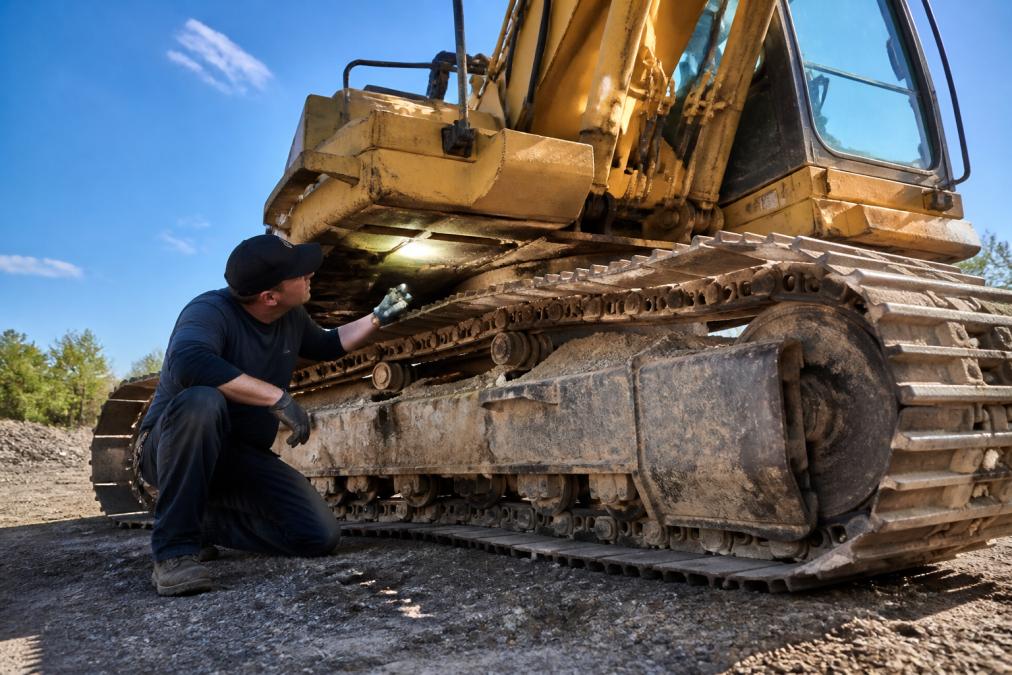
The heavy equipment pre-purchase inspection checklist below covers the critical systems that determine whether a machine will perform or become a liability. Work through each category systematically and document everything you find with photos and notes. Do not rely on a single walk-around; a proper inspection takes 2-4 hours for a full-sized excavator or dozer.
Engine and Hydraulic Systems
Engine diagnostics should begin with a cold start observation. Listen for unusual knocking, excessive smoke, or hard starting, all of which signal internal wear. Check the oil dipstick for milky discoloration indicating coolant contamination, and inspect the air filter housing for signs of poor maintenance.
Hydraulic systems deserve equal scrutiny because repairs here are among the most expensive on any machine. Look for fluid leaks around cylinders, hoses, and fittings. Wet spots on the ground beneath the machine or caked dirt mixed with hydraulic fluid are red flags that should not be ignored. Test every hydraulic function: boom raise and lower, bucket curl, and track drive. A machine that hesitates, groans, or drops loads under pressure has hydraulic problems that will only worsen.
Undercarriage and Structural Integrity
The undercarriage on track-type equipment represents a significant portion of the machine's total value, often 20 to 30 percent. Inspect track bushings for ovaling, check sprocket teeth for hooking or wear patterns, and measure track tension. Excessive wear here means thousands of dollars in replacement costs shortly after purchase.
Structural integrity issues can render a machine unsafe and worthless. Examine the boom, arm, and frame for cracks, especially near weld joints and pin connections. Look for evidence of previous repairs that might indicate prior structural failure. Check the wiring harness for melted insulation, exposed wires, or amateur splicing, which Consumer Reports identifies as a key physical red flag alongside fluid leaks.
The 15-Point Field Checklist Competitors Skip
Most generic advice stops at 'look for leaks.' A professional inspection goes deeper. Here is the specific checklist a seasoned equipment appraiser follows, which you should replicate:
- Turbocharger play: Remove the intake hose and check the turbo shaft for radial and axial play. More than 1/16 inch of play means the turbo is near failure.
- Coolant analysis: Dip a test strip into the radiator. Look for pH imbalance or silicate drop-out, which indicates the cooling system was not serviced with the correct fluid.
- Hydraulic cylinder drift: With the machine at operating temperature, raise the boom to full height, hold it for 5 minutes, and measure the drop. More than 2 inches per minute indicates internal cylinder seal bypass.
- Track sag measurement: On an excavator, the track should sag between 1-2 inches when lifted off the ground. Too tight or too loose both cause premature wear.
- Swing bearing backlash: With the machine level, rock the upper structure back and forth. A clunking sound or visible movement between the upper and lower frames indicates a worn swing bearing, a $15,000-$25,000 repair.
- Final drive oil check: Remove the plug and check for metal shavings on the magnetic drain plug. Shiny particles indicate gear or bearing wear.
- Bucket linkage wear: Check the pin and bushing clearances at the bucket. Excessive slop (over 1/4 inch) means the linkage needs rebuilding.
- Radiator and oil cooler fins: Check for bent fins, debris blockage, or corrosion. Overheating from a clogged cooler destroys engines and hydraulics.
- Electrical connectors: Look for green corrosion on harness connectors, especially near the battery box and under the cab. Corrosion indicates water intrusion and future electrical gremlins.
- Cab interior wear: Excessive wear on the joystick grips, seat, and floor mat can indicate high actual hours even if the meter reads low. Compare the meter reading against the physical wear.
- Fuel system: Check the primary and secondary fuel filters for water separator contents. Water in the fuel system indicates poor storage practices.
- Exhaust manifold: Look for soot trails around the manifold gaskets, which indicate exhaust leaks that affect engine performance.
- Track adjuster grease: Check the grease fitting on the track adjuster. A missing or damaged fitting means the adjuster has been neglected.
- Undercarriage wear measurements: Use a caliper to measure the track bushing outer diameter. Compare it against the manufacturer's wear limit specification.
- Operational test on a slope: Operate the machine on a 10-degree incline. The engine should not lose oil pressure, and the hydraulic system should hold the implements without drifting.
Documenting What You Find
Every finding, no matter how minor, should be photographed and logged with a timestamp. This documentation serves two purposes: it gives you negotiating leverage on price, and it creates a record that protects you if the seller misrepresented the machine's condition. Use your phone to record video of the cold start, the hydraulic cycle test, and any unusual noises. These recordings are admissible evidence in a dispute and are far more persuasive than written notes alone.
Why Used Heavy Equipment Maintenance Records Matter
Service records tell you more about a machine than any single inspection. A complete maintenance history demonstrates that the previous owner invested in regular oil changes, filter replacements, and scheduled service intervals. Missing records should raise immediate questions about how the machine was treated between service intervals.
Operating hours provide context for evaluating wear. A machine with 5,000 hours and complete dealer service records may be a better purchase than one with 3,000 hours and no documentation. The maintenance history also reveals how the machine was used: consistent service at recommended intervals suggests a fleet operator who followed manufacturer guidelines, while gaps in documentation often indicate neglect.
Request the serial number and verify it against manufacturer records. A serial number check can reveal whether the machine has a clean title, outstanding liens, or a history of major repairs. This verification step protects you from purchasing equipment with hidden problems or legal complications.
Field-Testing Protocols Before You Commit
Paper inspection only tells you so much. A field test under real operating conditions reveals performance issues that static checks miss. Arrange to operate the machine yourself or hire an independent operator to run it through a comprehensive work cycle.
Test the machine under load, not just at idle. Move dirt, lift heavy materials, and operate all attachments through their full range of motion. Pay attention to how the machine responds: smooth, predictable operation indicates healthy systems, while jerky movements, unusual vibrations, or strange noises point to developing problems. securing construction equipment.
Performance testing should also include checking the machine's ability to hold position on an incline, verifying that tracks or wheels engage properly, and confirming that all safety systems function correctly. Auto Remarketing analysis of OEM defect trends notes that proactive identification of defects at the first sign of trouble is the most effective way to avoid disputes, a principle that applies equally to your pre-purchase evaluation.
What Happens If You Buy Stolen Heavy Equipment
Purchasing stolen heavy equipment carries consequences far beyond financial loss. If law enforcement identifies your newly purchased machine as stolen, it will be seized and returned to the rightful owner. You lose both the equipment and your investment, with little legal recourse against the seller who has likely disappeared.
Title verification is your primary defense. Obtain the certificate of title or proof of ownership and verify it through the appropriate state agency. Cross-reference the serial number against national stolen equipment databases. Be wary of sellers who cannot produce clear documentation or who pressure you to complete the transaction quickly.
Dealer disclosure requirements vary by state, but reputable sellers voluntarily provide complete documentation. If a deal feels rushed or the paperwork has irregularities, walk away. The risk of purchasing stolen equipment is simply not worth any discount.
Your Legal Rights as a Commercial Buyer
Commercial equipment buyers operate under different legal protections than consumers purchasing vehicles. The Uniform Commercial Code governs commercial transactions and provides remedies for breach of warranty and breach of contract, but these protections differ significantly from lemon law coverage.
Original Equipment Manufacturers are involved in the majority of lemon law cases, according to Alex Cha Law analysis of 2026 claim trends, which suggests that proactive customer service at the first sign of a defect is the most effective way to avoid litigation. For commercial buyers, this means documenting every issue and communicating with the seller or manufacturer in writing from the first problem.
An as-is purchase significantly limits your legal options. When a machine is sold as-is, the seller disclaims implied warranties, leaving you responsible for defects discovered after purchase. Understanding the difference between consumer and commercial warranties helps you negotiate better terms or adjust your inspection strategy accordingly.
The UCC vs. Lemon Law Distinction That Most Articles Miss
Most online advice conflates automotive lemon laws with heavy equipment. The legal reality is that lemon laws, which exist in all 50 states, apply almost exclusively to consumer passenger vehicles, not to commercial machinery. If you buy a defective excavator, you cannot file a lemon law claim with your state's DMV or attorney general. Your recourse comes from the Uniform Commercial Code (UCC), which has been adopted in some form by every state except Louisiana.
Under the UCC, two provisions matter most for equipment buyers:
- Implied Warranty of Merchantability (UCC § 2-314): Unless explicitly disclaimed, the seller promises that the goods are fit for their ordinary purpose. An excavator that cannot dig without overheating fails this standard.
- Implied Warranty of Fitness for a Particular Purpose (UCC § 2-315): If you tell the seller you need a machine for a specific job (e.g., demolition in tight urban spaces) and the seller recommends a machine that cannot perform that job, this warranty may apply.
However, sellers routinely disclaim both warranties with a single sentence in the sales contract: 'Sold as-is, without any warranties, express or implied.' Once you sign that, your UCC protections evaporate. This is why the inspection and field-testing sections of this article are non-negotiable.
Warranty Transferability: The Critical Check Most Buyers Skip
If you are buying a machine that is still within the manufacturer's original warranty period, you must verify whether that warranty transfers to a second owner. Manufacturer policies vary dramatically:
- Caterpillar typically allows warranty transfer to a new owner, but requires the transfer to be registered with the dealer within a specific timeframe.
- Komatsu generally honors the remaining warranty for a second owner, but may require a paid inspection by an authorized dealer to validate the transfer.
- Deere often requires the buyer to pay a transfer fee and complete a multi-point inspection before the warranty is reissued.
A machine advertised as 'still under warranty' may have a warranty that is void the moment you take ownership. Before you commit, obtain the original warranty certificate, call the manufacturer's regional office with the serial number, and ask three questions:
- Is the warranty transferable to a second owner?
- What is the process and fee for transferring it?
- What inspection or documentation does the manufacturer require?
Get the answers in writing. A verbal assurance from the seller is worthless if the manufacturer later denies your claim.
Revocation of Acceptance: Your Strongest Remedy
If you discover a defect after purchase and the seller refuses to fix it, your strongest UCC remedy is revocation of acceptance under UCC § 2-608. This allows you to return the machine and recover the purchase price if:
- The defect substantially impairs the machine's value to you, and
- You accepted the machine without knowledge of the defect, or the seller assured you the defect was fixed.
Revocation must occur within a reasonable time after you discover the defect. Courts typically interpret 'reasonable' as weeks, not months. If you continue using the machine after discovering a serious defect, you may waive your right to revoke.
Practical Steps to Protect Your Legal Position
- Negotiate warranty language before signing: If the machine is sold as-is, ask the seller to include a limited warranty for 30 or 90 days covering major systems (engine, transmission, hydraulics). Many sellers will agree to this to close a deal.
- Put every representation in writing: If the seller tells you the machine has a new transmission or the hydraulics were recently rebuilt, get it in the sales contract. Verbal representations are difficult to enforce.
- Act quickly on defects: Do not wait weeks to report a problem. Document the issue, notify the seller in writing, and give them a reasonable opportunity to cure the defect before you pursue legal remedies.
- Consider a UCC Article 2 lawyer: For machines valued above $50,000, a consultation with a commercial transactions attorney before you sign is a worthwhile investment. They can review the contract for warranty disclaimers, limitation of liability clauses, and other traps that are standard in equipment sales agreements.
How a Brokerage Reduces the Risk of a Lemon
A professional heavy equipment brokerage serves as a filter between you and the risks of the used machinery market. Ironmartonline connects buyers with vetted sellers through nine specialized web-based selling platforms, giving you access to millions of potential machines while providing the infrastructure to verify listings and sellers.
The brokerage model shifts the burden of due diligence. Rather than navigating private sales where sellers control all the information, you work with a team that understands the market, knows what questions to ask, and can identify warning signs before you commit. This is particularly valuable for buyers who lack deep mechanical expertise or experience with commercial equipment transactions.
Ironmartonline operates without contracts or hidden fees, making the process straightforward for buyers and sellers alike. Whether you are acquiring a single excavator or managing a fleet, the brokerage's global and local reach ensures you see machines from a broader market while maintaining the support of professionals who handle equipment transactions daily.
Conclusion: Build a Defense Against Defective Equipment
Avoiding a lemon heavy equipment purchase requires a layered defense: understand the legal landscape, inspect thoroughly, verify documentation, field test under load, and work with professionals who know the market. No single step guarantees protection, but together they dramatically reduce your risk of acquiring a machine that becomes a financial liability.
The legal reality is clear: lemon laws will not save you, and commercial transactions demand a higher level of due diligence. A professional brokerage like Ironmartonline provides the screening, verification, and market expertise that individual buyers often lack. With nine specialized platforms, no contracts, and no hidden fees, Ironmartonline makes the process of acquiring used heavy equipment safer and more transparent.
Join our email list to stay informed about equipment buying strategies and market trends. Get started with Ironmartonline and protect your next equipment investment with a partner who understands the risks of buying used machinery.
Frequently Asked Questions
Is there a lemon law for tractors or construction equipment?
Generally, no. Lemon laws in most states apply to consumer passenger vehicles, not commercial heavy equipment like tractors, excavators, or dozers. For used machinery, your legal protection comes from the sales contract, the Uniform Commercial Code, and any written warranty. An "as-is" sale removes most seller obligations, which is why pre-purchase inspection and documentation are critical before you commit.
What are the most common signs of a lemon in used heavy machinery?
Look for fresh paint hiding rust or cracks, wet spots under the machine indicating fluid leaks, melted or chafed wiring, and excessive wear on the undercarriage or bucket teeth. Mismatched serial numbers on major components are a serious red flag. A machine with low operating hours but a worn seat or pedals suggests the hour meter may have been tampered with.
How can I verify the maintenance history of used heavy equipment?
Request the complete service records from the seller, including scheduled maintenance logs, oil analysis reports, and repair invoices. Cross-reference the serial number with the manufacturer or a service like the National Equipment Register to check its history. Gaps in the maintenance records are a warning sign, especially for high-wear items like hydraulic systems and final drives.
What happens if you buy stolen heavy equipment?
If you buy stolen heavy equipment, law enforcement can seize the machine from you, and you will likely lose both the equipment and your money. The original owner retains title, and your only recourse is against the seller, who often disappears. Always verify the serial number against national databases and request title documentation before completing any purchase to avoid this costly scenario.