
Table of Contents
- Why Use an Equipment Broker to Avoid Lowball Offers
- Understanding the Market Value of Your Heavy Equipment
- How to Price Used Construction Equipment for Maximum Returns
- Identifying Serious Heavy Equipment Buyers vs. Lowballers
- Setting Automated Price Parameters and Bid Thresholds
- Negotiation Scripts for Heavy Equipment Sellers
- Red Flags in Buyer Communication and Fraudulent Listings
- The Time-to-Sell vs. Price Trade-Off Strategy
- Common Mistakes When Selling Heavy Equipment
- Conclusion
Last Updated: August 17, 2026
Why Use an Equipment Broker to Avoid Lowball Offers
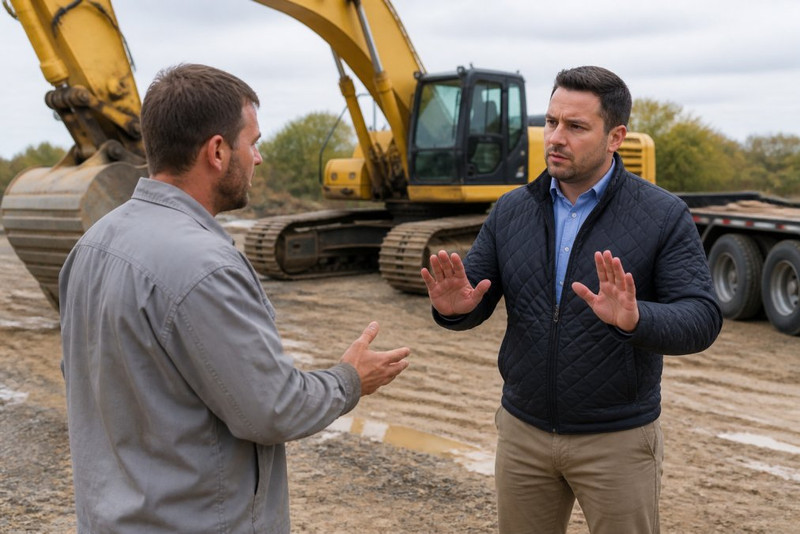
When you list heavy equipment for sale, you're stepping into a marketplace where buyers range from serious operators to opportunistic lowballers who'll test your resolve with offers 30-40% below market value. The question that separates sellers who walk away frustrated from those who close deals at fair prices is simple: why use a Heavy Equipment Broker to avoid lowball offers in the first place?
The answer lies in how the market actually works. Selling machinery privately means fielding inquiries from tire-kickers, managing communications across fragmented platforms, and spending weeks sorting qualified buyers from those making unrealistic bids. A heavy equipment broker fundamentally changes this equation. By using multiple web-based selling platforms simultaneously, a broker connects your equipment to millions of potential buyers, not just the handful who stumble onto a single listing. More visibility means more serious inquiries. More serious inquiries mean less time wasted on lowball offers and more leverage in negotiations.
Here's what makes the difference: professional brokers have seen thousands of equipment transactions. They understand pricing psychology, buyer behavior patterns, and the red flags that separate genuine offers from waste-of-time communications. They've built frameworks for identifying serious buyers before you spend an hour on the phone with someone who has no intention of paying fair market value. That expertise, knowing which offers to pursue and which to dismiss, is worth far more than the difference between selling alone and selling with professional support.
The machinery sales cycle is brutal if you approach it wrong. Equipment sits unsold, holding costs accumulate, and desperation creeps in. By the time you're three months into an unsold listing, you're vulnerable to exactly the lowball offers you were trying to avoid. A broker's job is to prevent that scenario entirely, by reaching the right buyers quickly, establishing clear pricing parameters from the start, and handling the negotiation process with the confidence that comes from professional experience.
Understanding the Market Value of Your Heavy Equipment
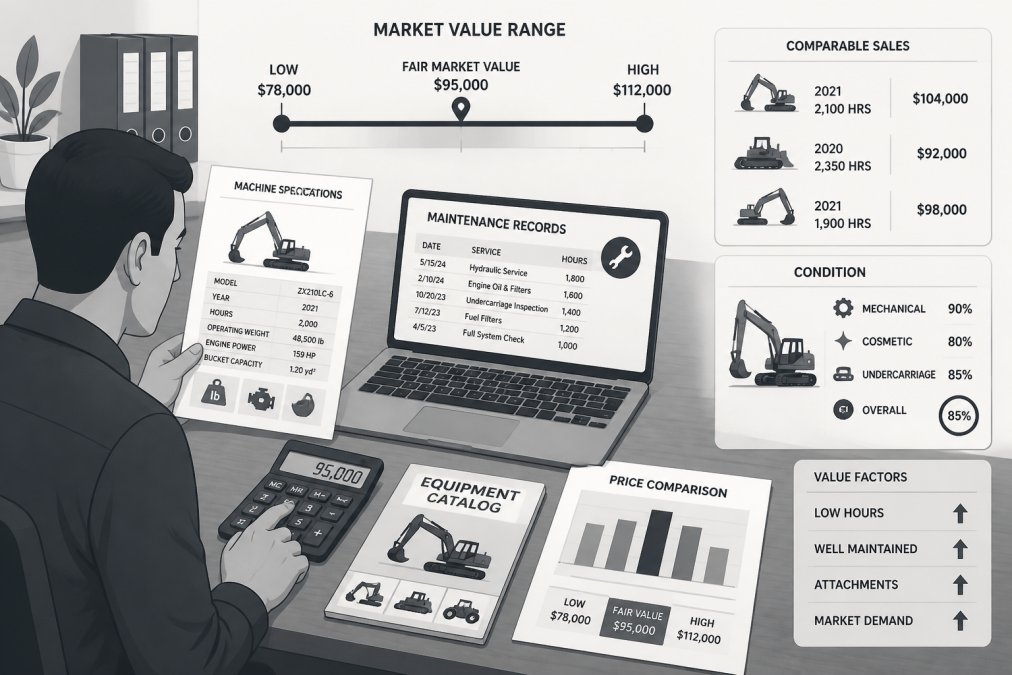
Pricing used construction equipment requires more than checking what similar machines sold for last year. Market value shifts based on equipment condition, hours of operation, maintenance history, current demand in your region, and broader economic factors affecting capital equipment purchases. A skid steer that sold for $28,000 twelve months ago might command $32,000 today if demand is strong, or drop to $24,000 if rental houses are liquidating fleet inventory.
The first step is honest assessment. Document the actual condition of your equipment, not what you hope it's worth, but what a buyer will see when they inspect it. Hours of operation matter enormously. A 2,500-hour excavator is fundamentally different from a 6,000-hour machine, even if both are the same year and model. Maintenance records are your strongest argument for pricing above market. Equipment with documented regular service, new hydraulics, or recently replaced wear items commands premiums that vague claims about "excellent condition" cannot justify.
Research comparable sales, but understand the context behind them. A piece of equipment sold at auction under time pressure tells you something different than a private sale where the seller waited for the right buyer. Auction prices tend to run 10-15% below fair market value because buyers know they're bidding against a deadline. Private sales between informed parties typically reflect true market conditions more accurately.
Consider total cost of ownership when positioning your asking price. Buyers are calculating not just the purchase price but fuel consumption, maintenance costs, resale value, and downtime risk. A newer machine with lower hours might justify a higher price because the buyer's total cost of ownership over five years is actually lower than a cheaper, older alternative. This is where understanding your buyer's perspective becomes critical.
How to Price Used Construction Equipment for Maximum Returns
Setting your initial asking price is a negotiation strategy, not a statement of what you'll actually accept. Most experienced equipment sellers price 5-10% above their genuine bottom line, knowing that serious buyers will negotiate and that lowballers will anchor their offers to whatever number they see first.
Start with market comparables, then adjust for condition and hours. If three similar machines sold recently for $35,000-$38,000, and yours has lower hours and better maintenance records, $40,000 is a reasonable asking price. If your equipment has higher hours or visible wear, $33,000 might be more appropriate. The goal is to land in a range where serious buyers see value and lowballers can't use an inflated asking price as an excuse to submit insulting offers.
Document everything that supports your price. Maintenance records, service invoices, photos of key components, and any recent repairs or upgrades all strengthen your position. When a buyer sees evidence that you've maintained the equipment properly, they're more likely to accept your pricing and less likely to submit lowball offers based on assumptions about hidden problems.
Timing matters. Equipment prices fluctuate with seasons and economic conditions. Tractors sell better in spring when farmers are preparing for planting. Excavators and dozers move faster when construction activity is strong. Selling during peak demand for your equipment type can justify higher pricing and means less time on the market.
Identifying Serious Heavy Equipment Buyers vs. Lowballers
The first filter is communication style. Serious buyers ask specific questions about equipment condition, maintenance history, and availability. They want to know exact hours of operation, whether the machine has been in accidents, what repairs have been done recently, and when they can inspect it. Lowballers typically open with vague inquiries ("What's your lowest price?" or "Will you take X amount?") without demonstrating any real interest in the equipment itself.
Response speed tells you something too. A buyer who calls back within 24 hours and schedules an inspection is showing genuine interest. Someone who goes silent for a week, then suddenly reappears with a lowball offer, was probably shopping around and only came back because they couldn't find better options elsewhere.
Qualified buyers ask about financing, transportation, and next steps. They're thinking about logistics and timeline. Lowballers focus entirely on price and often seem shocked that you won't accept offers significantly below market value. When someone leads with "I know you're asking $40,000, but I can only pay $28,000," they're not negotiating, they're testing whether you're desperate enough to accept a bad deal.

Check whether the buyer has the financial capacity to close. Ask for proof of funds or pre-approval from a lender. This filters out tire-kickers immediately. A buyer who can't show you they have access to capital is wasting your time, no matter how interested they seem.
Geographic location matters. Local buyers can inspect equipment quickly and close deals fast. Out-of-state or international buyers add complexity around transportation and logistics. That's not necessarily a red flag, legitimate buyers from outside your region will have legitimate questions about shipping and inspection. The red flag is when someone won't commit to a timeline, keeps asking for price reductions to cover "transportation costs," or seems unwilling to arrange a professional inspection.
Setting Automated Price Parameters and Bid Thresholds
If you're selling through multiple platforms simultaneously, as you would with a heavy equipment broker's network, setting clear price parameters prevents you from wasting time on offers you'll never accept. Define your absolute minimum price, your target price, and your maximum acceptable price before fielding offers.
Your absolute minimum is the lowest price you'll accept. Below this number, you're better off holding the equipment, using it longer, or scrapping it for parts. This number should account for holding costs, the value of your time in managing the sale, and your actual financial needs. If you set this too low out of desperation, you've already lost the negotiation.
Your target price is what you genuinely expect to receive based on market research and equipment condition. This is the number you use as your asking price. Your maximum acceptable price is what you hope to receive if the market is strong and multiple buyers are competing for your equipment.
Automated bid thresholds work when you're managing listings across multiple platforms. Set minimum bids that trigger notifications. Offers below your threshold get a standard response: "Thank you for your interest. This equipment is priced at [target price] based on current market conditions and comparable sales. Please contact me if you'd like to discuss."
This approach accomplishes two things. First, it prevents you from engaging emotionally with lowball offers, you have a system for handling them. Second, it signals to lowballers that you're serious and won't be negotiated down significantly. Buyers who see that you respond professionally but firmly to below-market offers will either increase their bids or move on to other equipment.
Negotiation Scripts for Heavy Equipment Sellers
When a serious buyer makes an offer below your asking price but within a reasonable range, you have room to negotiate. Here's a framework that works:
Opening Response to a Below-Market Offer: "I appreciate the offer. Based on recent comparable sales and this equipment's condition and maintenance history, I'm confident in the $[asking price] pricing. What specific concerns do you have about the equipment that led to your offer of $[their number]?"
This accomplishes three things. It affirms your price without being defensive. It asks the buyer to justify their number, which often reveals whether they have legitimate concerns or are just testing you. It opens dialogue instead of shutting it down.
If the Buyer Cites Equipment Condition: "I understand. Here's what I've documented about maintenance and repairs [reference specific records]. These investments protect your total cost of ownership. Would you like to schedule an inspection so you can evaluate the equipment directly?"
This shifts focus from price to value. You're demonstrating that you've maintained the equipment and inviting the buyer to verify your claims. A buyer confident in their inspection skills will often increase their offer once they see the equipment is in better condition than they assumed.
If the Buyer Cites Market Conditions: "I've tracked recent sales of comparable equipment, and the market has been strong for [equipment type]. However, I'm open to discussion. What price range would make sense for you, and what timeline are you working with?"
This acknowledges their concern without accepting their premise. You're asking them to reveal their actual budget and urgency, which gives you negotiating leverage. If they have a tight timeline, they're more likely to move toward your price.
If the Buyer Won't Move Off a Lowball Number: "I appreciate your interest, but there's too much distance between our numbers to bridge right now. If your situation changes or your budget adjusts, please reach out. I'll keep your contact information."
This politely ends the negotiation without burning the bridge. Sometimes buyers circle back after they've looked at other options and realized your equipment is actually fairly priced. Leaving the door open costs you nothing.
Red Flags in Buyer Communication and Fraudulent Listings
Lowballers often use psychological pressure tactics. Watch for buyers who create artificial urgency ("I have another option I'm looking at, can you come down on price today?") or who claim they're doing you a favor by making an offer at all. These are negotiation games, not genuine reasons to accept below-market pricing.
Fraudulent listings and scams work in reverse, sellers posting equipment that doesn't exist or misrepresenting condition severely. If you're the buyer in these scenarios, the red flags are obvious: refusal to allow inspection, pressure to send payment before seeing the equipment, or prices significantly below market for no clear reason. As a seller, you're protected by being honest about condition and allowing inspections. As a buyer working with a broker, the broker's reputation depends on vetting sellers and equipment thoroughly.
Communication red flags include buyers who avoid phone calls and only text, who ask strange questions about your personal situation ("Are you desperate to sell?"), or who request payment methods that can't be reversed. Legitimate buyers communicate professionally and want to establish a relationship, even if brief, before transferring large sums of money.
If a buyer asks you to ship equipment before payment clears, or to accept payment through unusual channels, stop. These are classic fraud patterns. Professional equipment transactions involve clear payment terms, often with escrow or verified funds before equipment leaves your location.
The Time-to-Sell vs. Price Trade-Off Strategy
Every equipment seller faces this tension: hold out for maximum price and risk months of carrying costs, or accept a lower offer and move the equipment quickly. There's no universally correct answer, it depends on your financial situation, the equipment's holding costs, and market conditions.
Calculate your actual holding costs. If you're paying $500 monthly in storage, insurance, and maintenance on unsold equipment, every month you wait costs you $500 in real money. If you could sell at $2,000 below your asking price and move the equipment in two weeks instead of three months, you've actually come out ahead financially. The math sometimes favors a faster sale at lower price.
However, if your holding costs are minimal and market conditions are strong, waiting for the right buyer at full price makes sense. Equipment in high demand during peak season might sell in weeks at your asking price. The same equipment in off-season might sit for months. Timing your sale to coincide with peak demand for your equipment type is a form of price optimization that doesn't require accepting lowball offers.
Be realistic about market conditions. If you're selling during a period when similar equipment is abundant and buyers are scarce, accept that you'll need to price more aggressively or wait longer. Refusing to adjust to market reality just means your equipment sits unsold, accumulating holding costs while you wait for a buyer who will never come at your original price.
A professional heavy equipment broker helps you navigate this trade-off by providing real market data. They can tell you how long similar equipment typically takes to sell, what price range is realistic given current demand, and whether waiting longer or pricing lower makes financial sense for your situation.
Common Mistakes When Selling Heavy Equipment
The biggest mistake is pricing based on what you paid for the equipment or what you think it's worth, rather than what the market will actually pay. Equipment depreciates. A $50,000 excavator purchased five years ago might be worth $28,000 today. Pricing it at $40,000 because that's what you have invested in it doesn't change market reality, it just means your equipment sits unsold.
Listing on a single platform is another critical error. You're limiting your reach to whatever traffic that platform generates. Professional brokers list across multiple channels simultaneously, exponentially increasing the number of potential buyers who see your equipment. More visibility means faster sales and better pricing.
Poor documentation is costly. Equipment without maintenance records, service history, or clear photos of condition attracts lowball offers because buyers assume hidden problems. Spending a few hours documenting everything strengthens your negotiating position and justifies higher pricing.
Engaging emotionally with lowball offers wastes time and energy. Every lowballer you argue with is time not spent on serious buyers. Having a system for handling below-market offers, a polite but firm response that redirects to your actual asking price, keeps you focused on qualified prospects.
Failing to understand your buyer's perspective costs you money. Buyers are calculating total cost of ownership, not just purchase price. A machine with lower hours and documented maintenance might be worth $3,000 more than a cheaper alternative because it will cost less to operate and maintain. If you can articulate this value clearly, you justify higher pricing.
Not vetting buyers before investing time is inefficient. Asking qualifying questions early, proof of funds, timeline, intended use, filters out tire-kickers and focuses your energy on people who can actually close deals.
Selling heavy equipment at fair market value requires strategy, documentation, and the ability to distinguish serious buyers from lowballers testing your resolve. The market is efficient when information flows freely and both parties understand what they're negotiating. Working with a heavy equipment broker means tapping into specialized selling platforms that reach millions of potential buyers, eliminating the guesswork about whether your equipment is getting in front of the right people. You get professional pricing guidance, buyer vetting, and negotiation support, the exact tools that separate sellers who close strong deals from those who accept lowball offers out of frustration. The difference between selling alone and selling with professional support often exceeds the cost of the broker's service many times over.
Frequently Asked Questions
Do lowball offers ever work in heavy equipment sales?
Lowball offers occasionally succeed when sellers are desperate or uninformed about market value. However, most experienced sellers reject offers 20-40% below asking price. The key is understanding your equipment's true market value through comparable sales data, equipment appraisal reports, and current inventory turnover rates. Serious buyers make offers within 5-15% of asking price, while lowballers typically open 30-50% below. Knowing this difference protects your profit margins and helps you identify which inquiries deserve negotiation versus dismissal.
How do I know if a buyer is serious versus just testing my price?
Serious buyers ask specific questions about maintenance history, operational hours, recent repairs, and equipment condition. They request inspection appointments, provide proof of funds, and discuss logistics without hesitation. Lowballers send vague inquiries, avoid direct communication, make extreme offers without seeing the equipment, and disappear when asked for documentation. Watch for qualified buyers who mention specific use cases, ask technical questions about your skid steers or excavators, and respond promptly to your counter-offers. These signals separate genuine interest from time-wasting inquiries.
What's the best way to respond to a lowball offer?
Counter with data, not emotion. Send a brief response that includes comparable sales prices, your equipment's condition documentation, and your actual asking price. Example: 'I appreciate your interest. Recent comparable sales for this model in similar condition have sold for $X. My listing reflects current market value. I'm open to discussion if you'd like to discuss terms.' This approach maintains professionalism, educates the buyer, and filters out those unwilling to negotiate seriously. Ignore offers that don't warrant a response, your time has value too.
How does using an equipment broker help me avoid lowball offers?
A professional broker like Ironmartonline provides market expertise, vetting systems, and multi-platform exposure that deters lowballers. Brokers handle buyer qualification, verify funds, and manage the negotiation process. They understand asset depreciation, total cost of ownership calculations, and current market volatility. By listing through multiple specialized platforms simultaneously, your equipment reaches millions of qualified buyers, increasing competition and driving prices toward fair market value. This eliminates the isolation that makes sellers vulnerable to lowball tactics.
This article was written using GrandRanker