
Table of Contents
- Why Use Ironmartonline Equipment Broker for Heavy Machinery Liquidation
- How to Sell Heavy Equipment: The Liquidation Process From Start to Finish
- Used Heavy Equipment Valuation: How to Determine What Your Machine Is Worth
- The Equipment Sale Checklist: What to Gather Before You List
- Heavy Equipment Liquidation Auction vs. Brokerage: Choosing the Right Channel
- Common Mistakes That Cut Your Net Return
- How Long Heavy Machinery Liquidation Takes and What Speeds It Up
- Conclusion: Build the Process Before You List
- Frequently Asked Questions
Last Updated: October 12, 2026
Why Use Ironmartonline Equipment Broker for Heavy Machinery Liquidation
The used-equipment auction market is projected to grow from $13.74 billion in 2025 to $32.14 billion by 2030, an 18.5% annual growth rate, according to Mideast Equipment's guide to commercial auction firms. That growth means more machines competing for the same buyers. Best practices for heavy machinery liquidation start with one question: who gets your excavator in front of the right people?
That is where Ironmartonline comes in. We are a heavy equipment brokerage built to connect sellers with buyers across nine web-based selling platforms, with no contracts and no hidden fees.
So why use Ironmartonline equipment broker instead of listing it yourself? Because reach decides your final number. A single listing on one site reaches one audience. Nine platforms reach millions of buyers at once, local and global.
Below, we break down the full liquidation process, from the sell-or-trade decision to the final wire transfer.
How to Sell Heavy Equipment: The Liquidation Process From Start to Finish
Learning how to sell heavy equipment starts with a simple sequence: decide, prepare, then price and negotiate. Skip a step and you leave money on the table.
Phase 1: Decide Whether to Sell, Trade, or Liquidate
Sell if the machine still holds retail value and you have time. Trade if a dealer will credit it against new iron. Liquidate if you need cash and the unit is sitting idle.
A study in ScienceDirect on operational efficiency and sustainable asset management proposes weighing equipment performance, age, work location, and business clustering before you decide. That framework keeps emotion out of it.
Phase 2: Prepare the Machine and the Paperwork
Clean the machine, fix small faults, and pull your records. Documented service logs and other preparation steps can increase final bids by 15-20%, according to PESCO's guide to liquidating industrial equipment at auction.
Phase 3: Price, List, and Negotiate
Set a realistic number, then distribute the listing widely. Auction bidding rewards discipline, not hope. Guidance from FieldFix's heavy equipment auction buying guide recommends comparing your target against average dealer retail for similar machines.
Used Heavy Equipment Valuation: How to Determine What Your Machine Is Worth
Used heavy equipment valuation comes down to four inputs: make, model year, hours, and condition. A forum thread on Heavy Equipment Forums pricing discussion flags exactly those details as the ones buyers ask about first.
Typical recovery runs about 28-35% of original net book cost, per Industrial Recovery Organization on maximizing ROI when selling industrial assets. That is a starting range, not a promise.
| Valuation Input | What to Check | Why It Moves the Price |
|---|---|---|
| Make and model | Plate and serial number | Sets the buyer pool |
| Model year | Title and registration | Drives financing options |
| Hours | Hour meter and logs | Signals remaining life |
| Condition | Undercarriage, hydraulics, tires | Decides repair costs |
| Service records | Dealer and in-house logs | Builds buyer trust |
The Equipment Sale Checklist: What to Gather Before You List
An equipment sale checklist keeps you from answering the same buyer questions twenty times. Gather everything before the first photo.
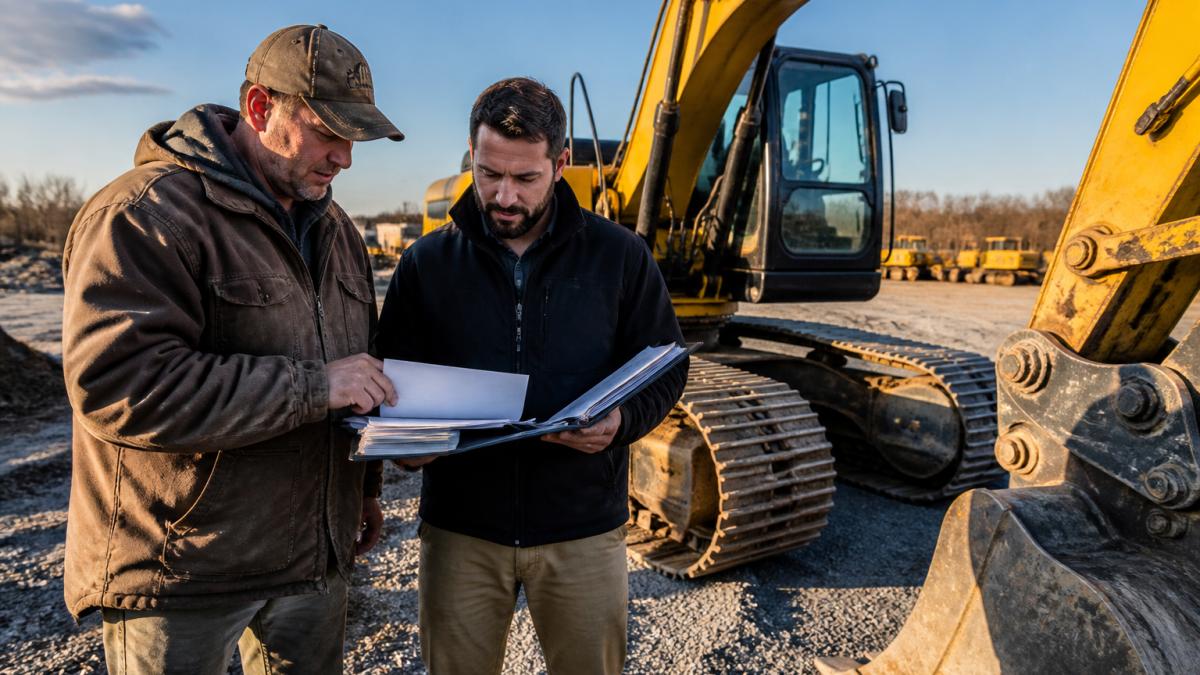
Comprehensive maintenance logs also provide an opportunity to verify the integrity of your heavy duty recovery equipment, ensuring that every asset remains fully operational and ready for inspection by prospective buyers.
- Title, lien release, and proof of ownership
- Serial number and hour meter photo
- Full service and repair history
- Undercarriage and tire measurements
- Recent inspection or repair invoices
- Clear photos from all four sides
- Cold-start video and walkaround clip
Heavy Equipment Liquidation Auction vs. Brokerage: Choosing the Right Channel
A heavy equipment liquidation auction sells fast and sets the price by competition. A brokerage markets your machine to a targeted buyer pool and lets you hold a floor.
Auctions suit sellers who need speed and accept market risk. Brokerage suits sellers who want control over timing and price. Most owner-operators with one or two machines do better with brokerage.
Common Mistakes That Cut Your Net Return
The biggest mistake is skipping preparation. Dirty machines, missing logs, and vague listings all read as risk to a buyer, and risk gets priced in.
Second: pricing from memory instead of comparable sales. Third: ignoring fees until the settlement sheet arrives. Ask about every fee before you sign anything.
How Long Heavy Machinery Liquidation Takes and What Speeds It Up
Most machines sell within weeks when the listing is complete and priced near market. Slow sales usually trace back to thin documentation or an unrealistic ask.
What speeds it up: full records, sharp photos, wide distribution, and a broker who answers buyer questions same-day. Ironmartonline puts your machine on nine platforms, which shortens the time it takes to find the right buyer.
Conclusion: Build the Process Before You List
The hard part of liquidation is not the listing. It is the preparation, the pricing, and the reach behind it.
Ironmartonline handles the reach with nine web-based selling platforms, no contracts, and no hidden fees. We connect your machine to millions of buyers, local and global, and manage the process end to end.
Join our email list to get new listings and selling guidance, and let Ironmartonline move your surplus iron.
Frequently Asked Questions
How do you liquidate heavy machinery?
You have three main routes: a direct private sale, a brokerage, or a liquidation auction. Start by cleaning and photographing the machine, gathering service logs and the title, and establishing a realistic value. Documented service logs and other preparation steps may increase final bids. Then choose the channel that matches your timeline. A brokerage markets the machine across multiple platforms, while an auction sells it on a set date. Whichever you pick, set a firm minimum price before you list.
How do you determine the value of used heavy equipment?
Used heavy equipment valuation rests on four inputs: make, model year, hours on the meter, and condition. Pull comparable sale prices from more than one source rather than trusting a single listing, and review past auction results for the same model. FieldFix's 2026 auction guide suggests buyers target 20-35% below average dealer retail, which gives you a rough floor for what the market will pay. A written appraisal helps when the machine is unusual or high-value. Expect recovery of roughly 28-35% of original net book cost on liquidation, per Industrial Recovery Organization's 2026 article.
Should I sell heavy equipment through a broker or an auction?
It depends on your timeline and how much control you want. A heavy equipment liquidation auction produces a sale on a fixed date, which suits fleet-wide disposals and end-of-lease machinery. A broker works on your schedule, markets the machine to a broader pool of buyers, and can negotiate above the opening bid. Auctions often move faster; brokerage often nets more on clean, well-documented machines. Many sellers use brokerage for individual units and auctions for bulk liquidation, and some run both at once.
How long does it take to liquidate heavy machinery?
Timelines vary by channel and machine type. An auction sale is date-driven, so the machine moves on the scheduled day. A brokered sale depends on demand for that model, condition, and price, and can close in weeks or run longer for niche equipment. Preparation is the variable you control: clean machines with complete service records and clear titles attract serious buyers faster. If you need cash quickly, tell your broker upfront so they prioritize the listing and set a realistic asking price from day one.