
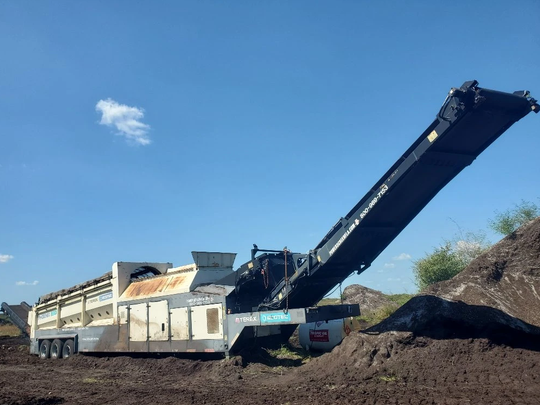
What's the Biggest Mobile Screener Made? The Terex Ecotec Phoenix 3300
Quick answer: The Terex Ecotec Phoenix 3300 is the largest mobile trommel screener Terex Ecotec builds, designed for high-volume operations processing compost, topsoil, mulch, and construction and demolition (C&D) debris. It's built for contractors and recycling operations that need maximum throughput without sacrificing portability between sites.
If you're shopping for a mobile screener and keep hitting a size ceiling on every model you look at, you're probably not shopping the right line. Most mobile trommel screeners are built for mid-volume jobs — landscaping yards, small recycling operations, municipal composting sites. They top out fast. The Terex Ecotec Phoenix 3300 doesn't.
This machine sits at the top end of the Phoenix series, and it's built specifically for operations that have outgrown smaller units. If your current screener can't keep pace with material coming off your crusher, your grinder, or your incoming load trucks, that's the bottleneck the Phoenix 3300 is designed to remove.
See 2021 TEREX ECHOTEC PHOENIX 3300 Trommel Screener.
Why does screener size matter for high-volume operations?
Undersized screening equipment creates a backlog everywhere else on site. Material piles up faster than it can be processed, crews wait on equipment instead of running it, and your cost per ton climbs even though your production numbers look fine on paper.
Buyers chasing a smaller, cheaper screener often end up paying for that decision later — in lost hours, in double-handling material, and in machines that can't scale with a growing contract. Match your screener capacity to your actual material volume before you buy. Don't buy for today's job if next year's contract will be bigger.
What is the Terex Ecotec Phoenix 3300 built to do?
The Phoenix 3300 is a heavy-duty tracked trommel screener engineered for operations moving large volumes of organic and construction material. It's positioned at the top of the Ecotec Phoenix range, meaning it's built with a larger drum and hopper configuration than the smaller Phoenix models in the same family.
Trommel screeners like the Phoenix 3300 work by feeding material into a rotating cylindrical drum fitted with mesh or perforated screening panels. As the drum rotates, material tumbles and separates by size — undersized fines fall through the screen openings while oversized material travels to the end of the drum for separate discharge. This design handles wet, sticky, and high-volume material loads better than flat deck screeners, which makes it a common choice for compost facilities, topsoil producers, and C&D recycling yards.
Because it's track-mounted, the Phoenix 3300 can relocate across a site or between job sites without needing a separate loader or crane to reposition it — a meaningful advantage for contractors running multiple active screening locations.
What applications is the Phoenix 3300 best suited for?
Choose the Phoenix 3300 if your operation fits one or more of these profiles:
- Compost and organics processing — High-volume municipal or commercial composting operations that need to separate finished compost from oversized woody material and contaminants.
- Topsoil production — Operations screening large volumes of raw soil into saleable grades.
- C&D recycling — Facilities processing construction and demolition debris that need to separate fines from aggregate and recoverable material.
- Biomass and mulch processing — Operations grading processed wood material by size for fuel or landscaping sale.
If your volume doesn't justify a machine at this scale, a smaller Phoenix model or a different screener class will likely be more cost-effective to buy, run, and maintain. Size your equipment to your tonnage, not your ambitions.
How does the Phoenix 3300 compare to smaller Ecotec screeners?
Terex Ecotec builds the Phoenix line in multiple sizes to match different volume needs. The decision point between the Phoenix 3300 and a smaller model in the same family comes down to three questions:
- What's your daily throughput target? Higher-volume operations justify the larger drum and hopper capacity of the 3300.
- How often does your material include oversized or high-moisture content? Larger trommel screeners generally handle variable material conditions with less downtime than smaller units pushed past their design limits.
- What's your site layout? Larger tracked machines need more room to maneuver and transport. Confirm site access and transport logistics before committing to the largest unit in the lineup.
If your operation runs below full capacity most days, a mid-size Phoenix model may deliver a better return. If you're regularly maxing out a smaller screener's throughput, the 3300 is the upgrade that removes the bottleneck.
What should you check before buying a used Phoenix 3300?
Buying used heavy screening equipment carries the same risks as buying any used heavy machine — and the mistakes are just as costly. Before you commit:
- Verify hours and maintenance history. A unit with moderate hours and a documented service record tells a better story than a low-hour machine with no paperwork.
- Inspect the drum and screen media. Screening surfaces wear fastest. Confirm remaining life on screens and replacement cost before negotiating price.
- Check the undercarriage. Track wear is one of the most expensive repairs on a tracked screener. Get an independent inspection if you can't verify it yourself.
- Confirm engine and hydraulic system condition. Request service records and, where possible, run the machine under load before purchase.
- Ask for the original spec sheet. Configurations and screen media can vary by unit. Confirm you're getting the exact capacity and setup you're paying for.
A seller who won't let you verify condition in person or run the machine before you buy is telling you something. Walk away from deals you can't inspect.
Match your screener to your volume, not your budget alone
The Terex Ecotec Phoenix 3300 earns its place at the top of the Phoenix lineup by solving a specific problem: high-volume operations outgrowing smaller screening equipment. If that's your situation, it's worth evaluating seriously. If it's not, a smaller, less expensive unit in the same family may serve you better.
Before you buy — new or used — define your tonnage requirements, confirm your site logistics, and verify every spec and maintenance record a seller gives you. That's how you turn a high-stakes equipment purchase into a calculated decision instead of a gamble.
Frequently asked questions
Is the Terex Ecotec Phoenix 3300 the largest screener on the market overall?
It's the largest mobile trommel screener in the Terex Ecotec Phoenix lineup. Other manufacturers build screeners of comparable or larger scale, so "biggest" depends on the brand and screener type you're comparing.
What materials can the Phoenix 3300 process?
It's built primarily for compost, topsoil, mulch, biomass, and construction and demolition debris — any application that benefits from high-volume trommel separation.
Is the Phoenix 3300 portable between job sites?
Yes. It's track-mounted, which allows it to relocate on site or between sites without a separate loader, though larger tracked units require more transport planning than compact screeners.
Who should avoid buying the Phoenix 3300?
Operations with lower daily material volumes will likely get better value from a smaller Phoenix model. Buying more capacity than you need raises your upfront cost without a matching return.
What should I check before buying a used unit?
Verify hours, maintenance records, screen media condition, and undercarriage wear, and inspect or test the machine in person before finalizing a purchase.