
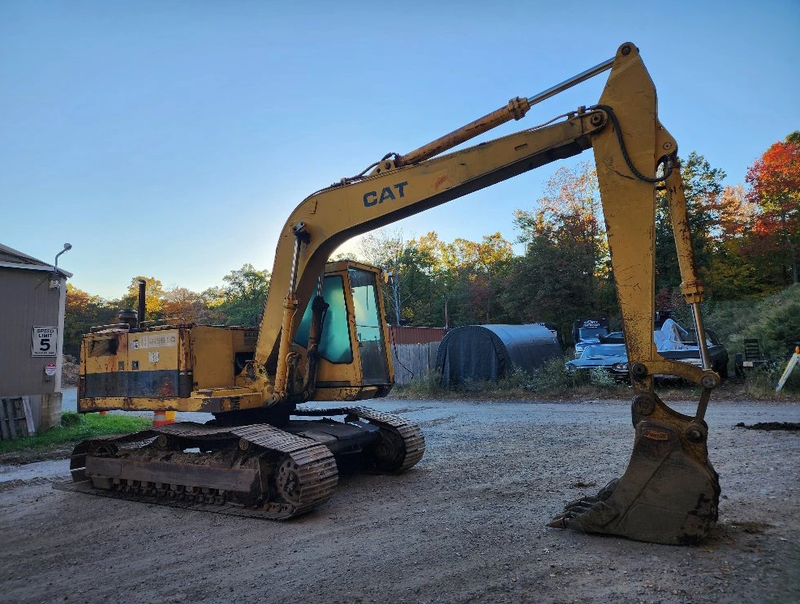
1984 Caterpillar 215B LC Excavator: What Buyers Need to Know Before You Buy
TL;DR: The 1984 Caterpillar 215B LC is a mechanically-controlled, long-carriage hydraulic excavator built around Caterpillar's 3306 diesel engine, delivering roughly 49,000 lbs of operating weight and 145-150 horsepower. At 40+ years old, buyers should prioritize undercarriage condition, hydraulic pump performance, and engine hours over cosmetic condition. Verify maintenance records before negotiating price.
Buying a 40-year-old excavator isn't like buying a used truck. The Caterpillar 215B LC left the factory in 1984, which means every unit on the market today has already outlived its original design life several times over. That doesn't make it a bad purchase — it makes it a purchase that demands due diligence most buyers skip.
This guide breaks down what the 215B LC actually is, what separates a sound unit from a money pit, and the exact checks you need to run before you sign anything.
See 1984 CATERPILLAR 215B LC Excavator.
What Is the Caterpillar 215B LC Excavator?
The Caterpillar 215B LC is a mid-size, long-carriage (LC) hydraulic excavator produced in the 1980s as part of Caterpillar's second-generation hydraulic excavator lineup. The "LC" designation refers to the long undercarriage configuration, which adds stability and reduces ground pressure compared to standard-carriage models — a real advantage on soft or uneven ground.
Caterpillar powered the 215B with its own 3306 diesel engine, a naturally aspirated or turbocharged inline-six depending on configuration, producing approximately 145-150 horsepower. Operating weight sits around 49,000 lbs, placing it in the mid-size excavator class — large enough for serious excavation, trenching, and demolition work, but still mobile enough for most job sites.
Control systems on the 215B are mechanical, not electronic. That's a defining characteristic buyers need to understand: there's no onboard diagnostic computer to flag a failing component. Every evaluation on this machine is physical, not digital.
Is a 1984 Caterpillar 215B LC Still Worth Buying?
Choose a 1984 215B LC if you need a heavy-duty, mechanically simple excavator for straightforward excavation work and have access to a mechanic who understands pre-electronic hydraulic systems. Skip it if you need modern safety features, fuel efficiency, or if downtime costs more than the machine's purchase price.
The case for buying one comes down to simplicity and repairability. Mechanical systems don't fail the way electronic ones do — there's no control module to replace, no sensor network to diagnose. What breaks on a 215B LC is usually visible, understandable, and fixable by a competent diesel mechanic. Parts availability also remains reasonable for a machine this old, since Caterpillar's 3306 engine was used across dozens of models for decades.
The case against buying one is equally direct. A machine built in 1984 has had 40+ years for previous owners to defer maintenance, skip rebuilds, or run it into the ground before reselling. Fuel efficiency lags far behind modern Tier 4 equipment. And because these units predate telematics entirely, you have zero ability to verify usage history beyond whatever paperwork the seller hands you — if any.
What Should You Inspect Before Buying a 215B LC?
The fastest way to overpay on a 40-year-old excavator is trusting the seller's word on condition. Verify everything yourself, in person, before negotiating price.
Run through these checks in order:
- Undercarriage wear. Measure track pad thickness and check for excessive play in the rollers and idlers. Undercarriage replacement on a machine this size runs into five figures, so this single inspection can make or break the deal.
- Hydraulic pump and cylinder condition. Start the machine cold and watch for slow or jerky cylinder movement, which signals internal pump wear or seal failure. Check every cylinder rod for pitting or scoring.
- Engine hours vs. maintenance paperwork. A 215B LC with 8,000 hours and a documented rebuild history tells a far better story than one with 5,000 hours and no records at all. Ask for service receipts, not just a verbal history.
- 3306 engine compression and oil condition. Pull a dipstick and check for milky oil (a sign of coolant intrusion) or metal shavings (a sign of internal wear). Low compression on one or more cylinders means an overhaul is coming.
- Boom and stick pin and bushing wear. Grab the bucket and check for excessive play at each pin joint. Loose pins mean expensive machining work down the line.
- Cab and control linkage function. Since this is a mechanically controlled machine, test every lever through its full range. Stiff or sloppy linkage often points to worn cables or linkages that are cheap to fix now and expensive to ignore.
Skip any of these steps and you're gambling on a machine that has no digital record to fall back on.
How Much Should You Expect to Pay for a 1984 Caterpillar 215B LC?
Pricing on a machine this old varies enormously based on hour count, undercarriage condition, and whether a major rebuild has already been performed. A unit with fresh undercarriage and documented engine work commands a real premium over one sold "as-is" with unknown history. Treat any price quote as a starting point for negotiation, not a fixed number — and use your inspection findings as leverage.
A seller asking top dollar for a 215B LC with worn tracks and no maintenance records is asking you to pay full price for unknown risk. Walk that math backward: estimate the cost of undercarriage replacement or engine overhaul, then subtract it from the asking price before you make an offer.
Choosing Between a 215B LC and a Newer Mid-Size Excavator
Choose the 1984 215B LC if upfront cost matters more than fuel efficiency and you have in-house mechanical expertise. Choose a newer Tier 3 or Tier 4 excavator if you need lower operating costs, emissions compliance for regulated job sites, or warranty-backed reliability.
The tradeoff is straightforward: a well-maintained 215B LC costs a fraction of a comparable newer machine upfront but carries higher fuel costs and zero manufacturer support. A newer unit costs more to acquire but reduces the unknowns that come with four decades of undocumented use.
Buy With Verification, Not Assumptions
A 1984 Caterpillar 215B LC can still deliver solid, dependable excavation work decades after it left the factory — but only if you verify its condition instead of taking a seller's description at face value. Inspect the undercarriage, test the hydraulics cold, pull the maintenance records, and price the machine based on what you find, not what you're told.
Have a specific unit in mind? Run the full inspection checklist above before you make an offer.
Frequently Asked Questions
How much horsepower does a Caterpillar 215B LC have?
The 215B LC is powered by Caterpillar's 3306 diesel engine, producing approximately 145-150 horsepower depending on configuration.
What does "LC" mean on a Caterpillar excavator?
LC stands for "long carriage," referring to an extended undercarriage that improves stability and lowers ground pressure compared to standard-carriage models.
Is parts availability a problem for a 1984 Caterpillar 215B LC?
Parts availability is generally reasonable because the 3306 engine was used across many Caterpillar models for years, keeping replacement components in circulation. Undercarriage and hydraulic components can be harder to source and may require aftermarket suppliers.
What's the biggest risk when buying a 215B LC this old?
Undocumented maintenance history is the biggest risk. Without service records or telematics data, buyers must rely entirely on physical inspection to assess true condition.
Should I hire an independent inspector before buying?
If you lack hands-on diesel mechanic experience, hiring an independent inspector is worth the cost relative to the risk of an undisclosed hydraulic or engine problem on a machine this age.