
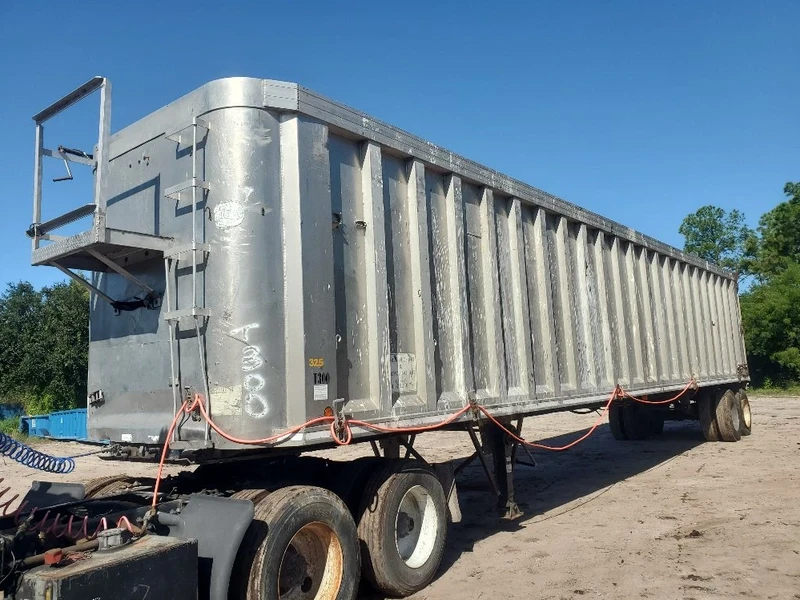
What to Know Before Buying a 2001 Summit 100 Yard Walking Floor Trailer
Quick answer: A 2001 Summit 100-yard walking floor trailer is a live-floor unit built for hauling bulk, loose materials like woodchips, compost, or demolition debris. Buyers evaluating one should check hydraulic floor cycle time, slat condition, drive chain wear, and floor motor hours before negotiating price — age alone doesn't tell you the real condition of the unit.
A walking floor trailer isn't a flatbed with a gimmick bolted on. It's a self-unloading system built around a hydraulic drive that moves aluminum or steel slats in a sequence, pushing cargo out the back without a tipper or a crew with shovels. For haulers moving loose, bulky material — mulch, scrap, municipal waste, recycled aggregate — that self-unloading function is the entire reason to own one.
A 2001 model is now a 20-plus-year-old trailer. That doesn't automatically mean it's worn out, but it does mean you're buying a machine with a long maintenance history, and that history matters more than the model year printed on the title. Two trailers from the same production run can be in wildly different shape depending on how hard they were run, how often the floor system was serviced, and whether the previous owner kept up with slat and chain replacement.
See 2001 SUMMIT 100 Yard Walking Floor Trailer
What does "100 yard" actually mean on a walking floor trailer?
The "100 yard" designation refers to cubic yard capacity — roughly how much loose material the trailer can carry by volume, not weight. This matters because walking floor trailers are typically volume-limited before they're weight-limited. A 100-yard unit is built for lightweight, bulky loads: woodchips, compost, shredded material, baled recyclables. Haulers moving dense material like gravel or sand will hit legal weight limits long before they fill 100 cubic yards of space.
Choose a 100-yard trailer if your loads are bulky and light. Choose a smaller-capacity unit if your material is dense — you'll pay for floor length and height you can't legally use.
How does the hydraulic walking floor system actually work?
The walking floor system uses a hydraulic drive unit — typically mounted at the front of the trailer — that moves floor slats in three phases: all slats move together to push material rearward, then alternating slats retract in sequence so the load doesn't travel backward during the reset stroke. Repeat that cycle and the entire load walks out the back of the trailer without tipping or manual unloading.
That hydraulic drive is the single most expensive component to replace on the trailer. Before buying any walking floor unit, 2001 Summit or otherwise, run the floor system under load if at all possible. A slow cycle time, uneven slat movement, or hydraulic noise under strain signals pump or motor wear that can cost thousands of dollars to correct.
What should you inspect on a 20-plus-year-old walking floor trailer?
Age isn't the risk — deferred maintenance is. Here's where to look before you make an offer:
- Floor slats: Check for cracking, warping, or excessive wear on the leading edge of each slat. Aluminum slats resist corrosion better than steel but dent more easily under heavy debris loads.
- Drive chains and sprockets: These wear from constant cycling. Stretched chains cause uneven slat movement and accelerate wear on everything downstream.
- Hydraulic hoses and fittings: Look for cracking, leaks, or replacement patches. Hoses degrade with age regardless of how many hours the trailer has run.
- Floor motor and pump: Ask for maintenance records specific to the floor system, not just the axles and brakes. A trailer with documented floor system service tells a far better story than one with no paperwork at all.
- Frame and crossmembers: Rust and stress cracks at crossmember welds are common on older live-floor trailers that have hauled corrosive or wet material for years.
- Axles, brakes, and tires: Standard trailer wear items, but don't let a clean floor system distract you from neglected running gear.
Walk through this list in person. Don't rely on photos or a seller's description of "good condition" — ask for the floor system's service history and verify the cycle action yourself.
What's a fair price range for a 2001 Summit 100-yard walking floor trailer?
Pricing on a trailer this age depends heavily on floor system condition, not just cosmetic appearance. A unit with a recently rebuilt hydraulic drive and documented slat replacement commands a meaningfully higher price than one with original components and no service records — even if both trailers look similar from the outside. Request maintenance logs before negotiating. A seller who can't produce them is asking you to buy blind on the most expensive part of the trailer.
Choose the higher-priced, documented unit if you're running daily routes and can't absorb downtime. Choose the lower-priced, undocumented unit only if you have the budget and shop access to rebuild the floor system yourself.
Why does maintenance history matter more than model year?
Two 2001 Summit trailers can have identical specs on paper and completely different real-world value. One may have had its floor motor rebuilt three years ago and its slats replaced on schedule. The other may be running on the original 2001 hydraulic components with no service records at all. The second trailer isn't necessarily a bad buy — but it's a different buy, and it should be priced accordingly.
Treat the absence of maintenance records as a negotiating point, not a dealbreaker. Factor the cost of a potential floor system rebuild into your offer, and don't pay a premium price for an unverified maintenance history.
Making the decision
A 2001 Summit 100-yard walking floor trailer can still be a sound investment for hauling bulk, lightweight material — if the hydraulic floor system has been maintained and the frame has no structural damage. Run the floor under load, inspect the slats and chains firsthand, and request service records before you negotiate. If the numbers and the paperwork line up, you're buying capability, not just age.
FAQ
How much does it cost to rebuild a walking floor hydraulic drive?
Costs vary by trailer make and drive type, but a full hydraulic drive rebuild on a walking floor trailer typically represents one of the largest single repair expenses on the unit. Get a quote from a walking floor specialist before finalizing any purchase price.
Is a 100-yard walking floor trailer legal to run fully loaded on the highway?
Legal weight limits depend on your state's axle and gross weight regulations, not the trailer's volume rating. A 100-yard trailer filled with dense material can exceed legal weight limits well before it's visually full.
What's the difference between aluminum and steel floor slats?
Aluminum slats resist corrosion better and reduce overall trailer weight, which helps payload capacity. Steel slats are generally more resistant to denting and puncture damage from sharp debris, but add weight and are more prone to rust over time.
How long do walking floor trailers typically last with proper maintenance?
With regular slat, chain, and hydraulic component replacement, walking floor trailers can remain in service for decades. The limiting factor is usually frame and hydraulic system condition rather than a fixed service life.
Should I buy a walking floor trailer without seeing the floor system run?
No. Always verify the floor cycle in person or request video of the system running under load before purchase. This is the single most important inspection step for any walking floor trailer, regardless of age.