
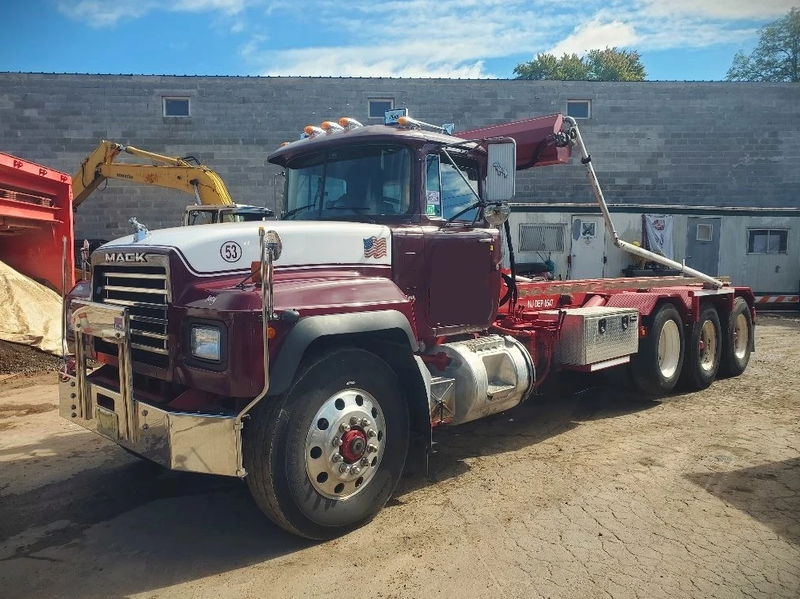
What Should You Know Before Buying a 2002 Mack RD688SX Tri Axle Roll Off?
Quick answer: A 2002 Mack RD688SX tri-axle roll-off is a vocational truck built for waste hauling and container work, typically running a Mack E7 diesel, an Eaton Fuller manual transmission, and a tri-axle configuration rated for heavier GVWR than a tandem. Before buying one, verify engine hours, hoist condition, axle ratings, and maintenance records — age alone tells you nothing about remaining service life.
Buying a roll-off truck isn't like buying a car. The hoist system, the frame rating, and the axle configuration all determine whether the truck can actually do the job you need it for. A 2002 Mack RD688SX tri-axle sits at an interesting point in the used truck market: old enough to be affordable, but built on a platform that's known for running well past 500,000 miles when maintained correctly. The question isn't whether the truck is old. The question is whether it was maintained like it mattered.
This guide breaks down what the RD688SX platform typically offers, what tri-axle configuration means for your payload, and what to check before you sign anything.
See 2002 MACK RD688SX Tri Axle Roll Off.
What Is the Mack RD688SX Platform Built For?
The Mack RD688S and RD688SX series are conventional cab vocational trucks, designed for heavy-duty applications like roll-off hauling, dump work, and construction site logistics. Mack built this platform to take abuse — stop-and-go cycles, uneven terrain, and constant loading and unloading that would wear down a highway tractor fast.
A 2002 model year typically pairs with:
- Mack E7 diesel engine, commonly rated between 350–460 horsepower depending on configuration
- Eaton Fuller manual transmission, often a 9-speed or 10-speed
- Mack or Eaton rear axles, rated for heavy vocational use
- Set-forward or set-back front axle depending on body configuration
None of this guarantees performance in any single unit. Specs tell you what the truck was built to do. Maintenance records tell you what it's actually capable of today.
What Does "Tri Axle" Mean for Your Payload?
A tri-axle configuration adds a third axle to the standard tandem setup, which increases the truck's gross vehicle weight rating (GVWR) and legal payload capacity. For roll-off work, that extra capacity matters — heavier containers, more weight per haul, fewer trips.
Choose tri-axle if you're regularly hauling near-capacity loads or operating in states with strict weight-per-axle limits. Choose tandem if your routes involve lighter containers and you want better maneuverability in tight job sites. The tradeoff is simple: tri-axle buys you payload, tandem buys you agility.
How Do You Verify Condition on a 2002 Model?
A truck built in 2002 is old enough that mileage and hours alone won't tell you the real story. Here's what actually matters:
- Engine hours and mileage together. A high-mileage truck that's spent most of its life on highway runs wears differently than a low-mileage truck that's spent two decades idling and cycling a hoist. Ask for both numbers, not just one.
- Hoist and cable condition. The hoist is the single most expensive component to repair on a roll-off truck. Inspect the cables for fraying, check hydraulic cylinders for leaks, and run a full cycle before you buy.
- Frame and subframe integrity. Tri-axle trucks carry more stress through the frame. Look for cracks, repairs, or reinforcement welds around the axle mounts.
- Service records. A truck with a documented maintenance history — oil changes, transmission service, brake jobs — is worth more than one without paperwork, even if the sale price looks identical. A 2002 unit with a complete service binder tells a far better story than a newer truck with zero documentation.
- DOT inspection status. Confirm the truck is current on inspection, or budget for the cost and downtime if it isn't.
Skipping any one of these steps is how buyers end up with a truck that looks fine on the lot and costs $20,000 in repairs within the first six months.
What's the Real Cost of Buying Older vs. Newer?
A 2002 Mack RD688SX will cost significantly less upfront than a 2015 or newer model — often tens of thousands of dollars less. But that lower price comes with tradeoffs: higher likelihood of needing a transmission rebuild, hoist cylinder replacement, or frame repair in the near term.
Run the numbers before you decide. If the purchase price saves you $40,000 but you're looking at $15,000–$25,000 in deferred maintenance over the next two years, the "deal" isn't as good as it looks on paper. Compare total cost of ownership, not sticker price alone.
Who Should Buy a 2002 Mack RD688SX Tri Axle?
This truck makes sense if you're a small-to-midsize hauling operation that needs reliable tri-axle capacity without the upfront cost of a newer unit, and you have the mechanical capability — in-house or through a trusted shop — to handle maintenance as it comes up. It's a weaker fit if you need a truck that runs with minimal downtime from day one, or if you lack the budget reserve to absorb an unexpected hoist or transmission repair.
Making the Purchase Decision
A 2002 Mack RD688SX tri-axle roll-off can be a smart buy — but only if you verify the specifics before you commit. Confirm engine hours, inspect the hoist system in person, pull the maintenance records, and run the total cost of ownership against newer alternatives. Don't buy on year and model alone.
If you're evaluating a specific unit, request the full service history and a pre-purchase inspection from an independent diesel mechanic. That inspection typically costs a few hundred dollars and can save you from a five-figure mistake.
Frequently Asked Questions
How much does a 2002 Mack RD688SX tri-axle roll-off typically cost?
Pricing varies widely based on hours, condition, and region, but used tri-axle roll-off trucks from this era generally sell well below newer models. Get a current market quote from a dealer or private seller and compare it against total cost of ownership, including likely near-term repairs.
What's the expected remaining lifespan of a 2002 Mack E7 engine?
Mack E7 engines are known for durability and can run well past 500,000–750,000 miles with proper maintenance. Remaining lifespan depends heavily on maintenance history, not just age.
What are the main risks of buying an older roll-off truck?
The biggest risks are hoist and hydraulic system failure, transmission wear, and frame fatigue from tri-axle load stress. Each of these can cost thousands of dollars to repair and should be inspected before purchase.
Is a tri-axle configuration worth the extra cost over tandem?
Choose tri-axle if you regularly haul near-capacity containers or operate under strict axle weight limits. If your loads are lighter and job sites are tight, a tandem configuration may offer better value and maneuverability.