
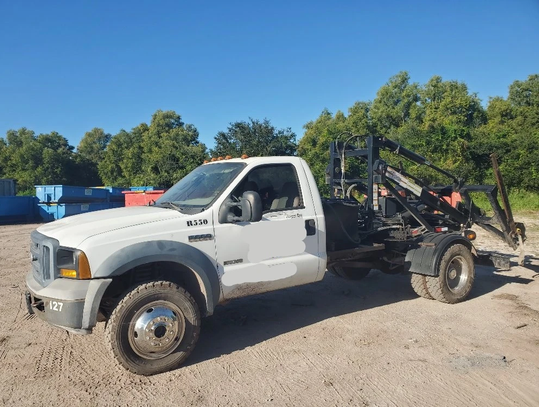
2006 Ford F550XL Container Truck: What Buyers Need to Know
Quick answer: The 2006 Ford F550XL container truck pairs a heavy-duty Super Duty chassis with a small container or dump-style body, making it a common choice for waste haulers, landscapers, and municipal crews. Buyers should verify the engine (6.0L Power Stroke diesel or 6.8L V10 gas), transmission condition, GVWR rating, and container/hoist mechanics before purchasing a used unit. Always inspect maintenance records and run the truck in person.
The used commercial truck market doesn't forgive guesswork. A 2006 Ford F550XL with a small container body looks like a straightforward purchase — until you find out the hoist doesn't cycle, the diesel injectors are shot, or the GVWR doesn't match your hauling needs. Knowing exactly what you're buying before you sign anything separates a smart fleet addition from an expensive mistake.
This guide breaks down what the 2006 Ford F550XL is, what specs and components matter most, and how to evaluate a used unit before you commit.
See 2006 FORD F550XL Small Container Truck
What is a Ford F550XL container truck?
The Ford F550 is a Class 5 Super Duty chassis cab, built for upfitting with specialized bodies — dump beds, flatbeds, and small roll-off or container hauling systems. The XL trim is Ford's base commercial package: durable cloth interior, fewer convenience features, and a focus on function over comfort. In 2006, the F550 was available with two engine options: the 6.0L Power Stroke turbo diesel (producing 325 hp and 570 lb-ft of torque) or the 6.8L Triton V10 gas engine (362 hp, 457 lb-ft of torque).
A "small container truck" configuration typically means the F550 chassis has been fitted with a compact roll-off or hook-lift system designed for containers in the 10 to 20 cubic yard range — smaller than the massive containers hauled by Class 7 and 8 trucks, but still built for commercial waste, debris, or construction material hauling.
What should you check before buying a used 2006 F550XL?
Buying any 19-year-old commercial truck means treating every claim as something to verify, not something to assume. Confirm these items before you negotiate price:
- Engine condition and history — The 6.0L Power Stroke from this era is known for injector and EGR cooler issues if not properly maintained. Ask for service records showing oil changes, injector work, and any EGR cooler replacement.
- Transmission type and condition — Most F550s from 2006 came with a 5-speed automatic (TorqShift) or manual option. Test shifting under load if possible.
- GVWR and payload rating — The F550 chassis typically carries a GVWR between 17,500 and 19,500 lbs depending on configuration. Match this to the weight of your container plus load.
- Hoist or roll-off mechanism — Cycle the lift system multiple times. Hydraulic leaks, slow cycling, or unusual noises signal expensive repairs ahead.
- Container body condition — Check for rust-through, weld failures, and worn hook or cable systems if it's a roll-off design.
- Mileage versus wear — High mileage with full documentation beats low mileage with no paperwork. A truck with 120,000 miles and a complete service binder tells a more reliable story than one with 60,000 miles and zero history.
Choose the diesel engine if your routes involve frequent heavy loads or long hauls — the torque advantage matters more over time. Choose the gas V10 if your use case is lighter-duty, shorter-distance work and you want to avoid diesel emissions system repair costs.
How much should a 2006 Ford F550XL container truck cost?
Pricing on a 19-year-old commercial chassis varies heavily based on mileage, engine type, container condition, and regional demand. Diesel-equipped units with documented maintenance typically command a premium over gas-engine trucks with uncertain service history. Don't anchor your offer to an asking price — anchor it to the cost of comparable units with similar hours, mileage, and documented condition.
Request a pre-purchase inspection from a diesel or commercial truck specialist if you're spending five figures on a unit you haven't personally operated. The inspection fee is small compared to a blown engine or failed hydraulic pump discovered after the sale.
What are common problems with the 6.0L Power Stroke engine?
The 6.0L Power Stroke, used in Ford Super Duty trucks from 2003 to 2007, has a well-documented reputation for specific failure points: EGR cooler cracking, head gasket failure under high boost, and injector fouling from fuel contamination. None of these issues are disqualifying on their own — many 6.0L engines have been upgraded with aftermarket fixes (EGR deletes, ARP head studs, upgraded oil coolers) that resolve the factory weak points permanently.
Ask the seller directly: has the EGR cooler been replaced or deleted? Have head studs been upgraded? A truck with documented fixes is a safer buy than one running factory-original components with high mileage.
Is a small container truck right for your operation?
A small container truck makes sense if you're hauling loads in the 10 to 20 cubic yard range on a regular basis — construction debris, landscaping waste, or light demolition material. If your volume consistently exceeds that range, a larger Class 7 or 8 roll-off truck will save you trips and reduce cost-per-load over time. If your loads are inconsistent or smaller, a dump trailer towed by a lighter truck may cost less to own and operate.
Match the truck to the job before you match the price to your budget. A cheap truck that's the wrong size for your work costs more in inefficiency than a properly sized truck costs in sticker price.
Next steps for buyers
Verify the engine and transmission history, cycle the hoist system in person, and confirm the GVWR matches your hauling needs before you make an offer. Request a pre-purchase inspection on any unit with unclear maintenance records. A 2006 Ford F550XL container truck can be a dependable workhorse for years — if you know exactly what you're buying before the deal closes.
Frequently Asked Questions
How many miles should a used 2006 F550 have?
There's no universal cutoff — a well-maintained truck with 150,000 miles and complete service records is often a better buy than a poorly maintained one with 70,000 miles and no documentation. Focus on maintenance history over mileage alone.
What's the difference between the 6.0L diesel and 6.8L V10 gas engine?
The 6.0L Power Stroke diesel offers more torque (570 lb-ft) and better fuel economy for heavy, frequent hauling, but carries known maintenance risks if not properly serviced. The 6.8L V10 gas engine produces less torque (457 lb-ft) but has fewer emissions-related failure points and lower repair costs.
How long does a Ford F550 chassis typically last?
With regular maintenance, an F550 chassis can run 200,000 to 300,000 miles or more. The container body and hoist mechanism, not the chassis itself, are often the first components to need major repair or replacement.
What financing options exist for used commercial trucks like this?
Commercial equipment lenders and some banks offer financing for used work trucks, often requiring a down payment and proof of business use. Shop multiple lenders, since rates and terms vary significantly for equipment of this age.
What's the biggest risk when buying this truck sight unseen?
Skipping an in-person inspection of the hoist or container mechanism. Hydraulic and lift system failures are among the most expensive repairs on this type of truck, and photos alone won't reveal a slow-cycling or leaking system.