
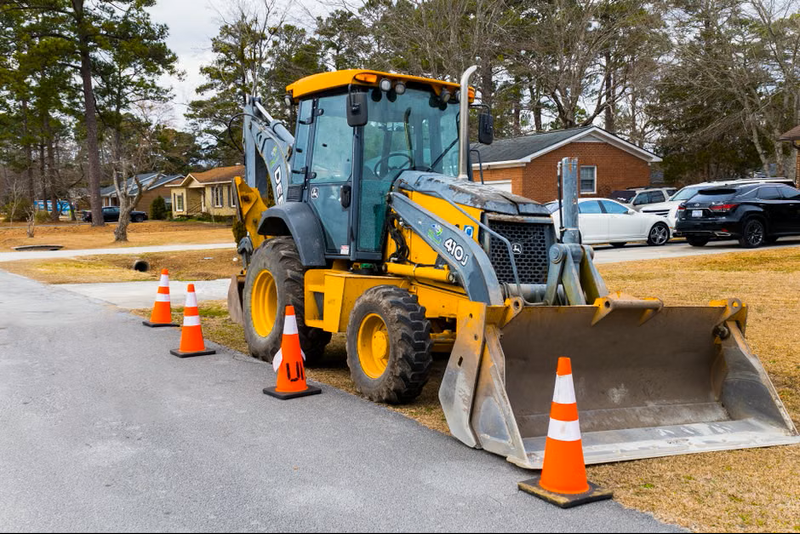
Backhoes Explained: What to Know Before You Buy One
Quick answer: A backhoe is a versatile machine with a digging bucket on an articulated arm at the rear and a loader bucket at the front. Backhoe loaders handle digging, trenching, loading, and light grading on one chassis—making them a cost-effective pick for small-to-medium job sites that can't justify separate excavators and loaders.
Buy the wrong backhoe and you'll pay for capacity you never use—or worse, stall on a job you can't finish. This guide breaks down what a backhoe is, how it works, what to check before you buy, and who actually needs one. Read it before you start browsing listings.
What is a backhoe and what does it do?
A backhoe is a piece of heavy equipment built around two working ends. The rear carries a hoe—a digging bucket on a hinged, articulated arm that pulls material toward the machine. The front carries a loader bucket for scooping, carrying, and dumping.
Most machines people call "backhoes" are actually backhoe loaders. They combine three tools on one chassis: a front loader, a rear digging arm, and a tractor in the middle. One operator, one machine, three functions.
Common jobs include:
- Digging trenches for pipe, cable, or foundations
- Loading dirt, gravel, and debris into trucks
- Backfilling excavated areas
- Light grading and site cleanup
- Demolition of small structures
The versatility is the point. A backhoe loader replaces a small excavator plus a wheel loader on jobs that don't demand full-size equipment.
How does a backhoe work?
A backhoe runs on hydraulics. The engine drives a hydraulic pump, which sends pressurized fluid to cylinders that move the arm, bucket, and stabilizers. Two control levers—or joysticks on newer machines—handle the digging end.
The operator sits in a rotating seat. Face forward to run the loader. Swivel to face the rear to run the hoe. Before digging, the operator drops two stabilizer legs to plant the machine and keep it from tipping under load.
Key components to know:
- Boom: The first arm section, closest to the machine
- Dipper (or stick): The second arm section, holds the bucket
- Bucket: The digging tool, swappable for different widths
- Stabilizers: Outriggers that anchor the machine while digging
- Loader bucket: Front tool for scooping and carrying
What are the main types of backhoes?
Not every backhoe fits every job. Match the type to your work before you look at price.
Backhoe loaders are the standard. Loader front, digging arm rear, wheels for road travel. Best for utility work, landscaping, and general contracting where you move between sites often.
Excavators are sometimes confused with backhoes. An excavator rotates 360 degrees and has no front loader. Choose an excavator over a backhoe loader if you dig deep, dig all day, and don't need road mobility.
Mini backhoes and compact units handle tight residential lots and indoor demolition. Lower dig depth, lower reach, but they fit where full-size machines can't.
Choose a backhoe loader if versatility and road travel matter more than raw dig depth. Choose a dedicated excavator if digging is 80% of your work.
What to check before buying a used backhoe
The fastest way to overpay is to start browsing before you know your specs. Define your dig depth, loader capacity, and required attachments first. Then inspect against that list.
Here's what to verify on any used machine:
- Hours on the meter. Under 5,000 hours is generally low for a backhoe loader. Confirm the meter reads true and hasn't been reset.
- Hydraulic condition. Look for leaks at cylinder seals, hoses, and fittings. Run every function and watch for jerky or slow movement.
- Pin and bushing wear. Play in the boom, dipper, and bucket pins means expensive rebuild work ahead.
- Service records. A 2018 unit with a complete service binder beats a newer unit with zero paperwork.
- Tires or undercarriage. Check tread and sidewalls on wheeled units. Replacements run into thousands.
- Frame and welds. Cracks or amateur weld repairs signal hard use or past damage.
Run the machine yourself before you sign. A five-minute test operation reveals problems no photo will.
How much does a backhoe cost?
Price depends on age, hours, brand, and condition. General ranges for buyers planning a budget:
- New backhoe loader: $75,000–$120,000
- Used, low hours (under 3,000): $45,000–$70,000
- Used, higher hours (5,000+): $20,000–$40,000
Buying used saves upfront but may cost more in repairs. A machine that saves you $40,000 today can eat that gap in hydraulic and pin work within two seasons. Weigh the purchase price against expected repair exposure, not just the sticker.
Factor in delivery, attachments, and financing. A cheap machine with worn tires and no bucket options isn't the deal it looks like.
Who should buy a backhoe?
Buy a backhoe loader if you run varied jobs on small-to-medium sites and move between locations. Utility contractors, landscapers, small excavation outfits, and municipal crews get the most out of one.
Skip the backhoe if you dig deep trenches all day—buy an excavator. Skip it if you only need occasional digging a few times a year—rent instead. Ownership makes sense when the machine works enough hours to beat rental costs.
Making the right backhoe decision
A backhoe loader earns its keep through versatility—three tools on one chassis, one operator, road-legal between sites. That flexibility is exactly why buyers overpay for the wrong specs or overlook worn hydraulics on a used unit.
Know your dig depth and loader needs first. Inspect against that list. Test the machine yourself. Do those three things and a high-stakes purchase becomes a calculated one.
Ready to look? Browse listings now.
Frequently asked questions
What's the difference between a backhoe and an excavator?
A backhoe loader has a front loader bucket and a rear digging arm on a wheeled tractor chassis, and travels on roads between sites. An excavator has no front loader, rotates a full 360 degrees, and typically runs on tracks. Choose the excavator for deep, all-day digging; choose the backhoe loader for mixed work and mobility.
How many hours is too many on a used backhoe?
Under 5,000 hours is generally considered low for a backhoe loader. Machines with 8,000–10,000 hours can still work well if maintained, but expect higher repair exposure. Hours matter less than service history—a well-documented high-hour machine can outlast a neglected low-hour one.
How deep can a backhoe dig?
Most standard backhoe loaders dig 14–17 feet. Extendable dipper arms push that to 18 feet or more. Mini and compact units dig shallower, often under 10 feet. Confirm the exact dig depth spec against your job requirements before buying.
Should I buy or rent a backhoe?
Buy if the machine works enough hours to beat rental rates—generally when you use it several days a month or more. Rent for occasional or one-off jobs where ownership costs, storage, and maintenance don't pay off.
Do you need a license to operate a backhoe?
Requirements vary by region and job site. Operating on public roads may require a driver's license or endorsement. On commercial sites, OSHA or local safety training is often mandatory. Check local regulations before you operate.