
What's the Best Screener for C&D Recycling in 2026?
Quick answer: The Terex Ecotec Phoenix 3300 is the best screener for C&D recycling in 2026. Its tracked trommel design separates mixed construction and demolition debris — concrete fines, wood, metals, and soil — into clean, sellable fractions faster than static or wheeled alternatives, and its mobility lets you reposition on cluttered demolition sites without a second machine.
C&D debris isn't like topsoil or compost. It's a chaotic mix of rebar, drywall, brick, wood, and dirt, and most screeners choke on it. Buy the wrong machine and you'll spend more time clearing blockages than processing material. This guide breaks down what actually matters when screening C&D waste, why trommel screens outperform other designs for this application, and why the Phoenix 3300 has become the benchmark machine for recyclers who need throughput without downtime.
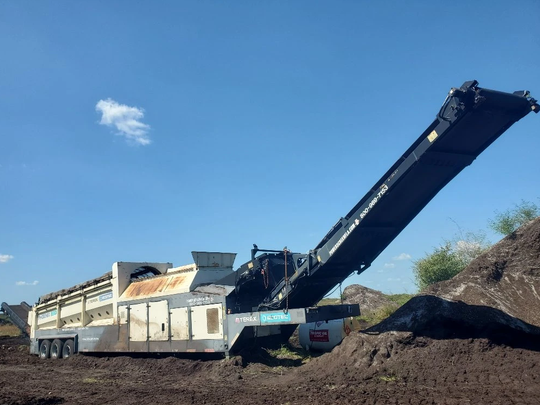
See 2021 TEREX ECHOTEC PHOENIX 3300 Trommel Screener.
Why Standard Screeners Fail on C&D Material
Mixed demolition debris punishes equipment that wasn't built for it. Rebar snags on conveyor belts. Wet concrete fines cake onto screen decks. Oversized chunks of block and brick jam feed hoppers designed for aggregate or topsoil.
The result on an underpowered machine: constant manual clearing, reduced tonnage per hour, and accelerated wear on components never rated for abrasive demolition waste. Operators lose entire shifts to blockages that a correctly specced screener would never develop in the first place.
The fix isn't harder operation. It's matching the screen type to the material before you buy.
What Makes a Trommel Screener the Right Fit for C&D Waste
A trommel screener uses a rotating cylindrical drum with perforated panels, and that rotation is what separates it from flat deck or star screeners when C&D debris is involved.
- Self-cleaning action: The tumbling motion inside the drum breaks apart clumped material and prevents screen panels from blinding over with wet fines — a common failure point for flat decks processing demolition waste.
- Tolerance for contamination: Trommels handle mixed-size debris — from fine soil to broken block — without the frequent panel changes flat screens require when feed material varies load to load.
- Multiple fraction output: A single pass through a trommel drum can separate material into two or three distinct size fractions, cutting the number of passes needed to get a sellable end product.
Choose a trommel screener if your feed material includes wet, clumpy, or inconsistently sized debris. Choose a flat deck screener only if your input is already clean and uniform — a rare condition in true C&D recycling.
Why the Terex Ecotec Phoenix 3300 Leads the C&D Category
The Phoenix 3300 is a tracked trommel screener built specifically for high-volume, high-contamination waste streams, and demolition debris is exactly that.
It's mobile by design. The tracked chassis lets you reposition the machine directly on an active demolition site instead of trucking material to a stationary plant. For contractors processing debris on-site, that mobility alone cuts hauling costs.
It handles the mess other machines can't. The drum design is built to keep processing through wet, sticky, and mixed-density material — the exact profile of torn-out drywall, broken concrete, and wet timber that defines most demolition loads.
It's built for continuous operation. Recyclers running C&D streams need a machine that holds up to abrasive, rebar-laden material shift after shift, not one that needs constant panel swaps or belt repairs.
Choose the Phoenix 3300 if you're processing high volumes of mixed demolition debris and need a single machine that moves with the job. Choose a smaller static trommel only if your operation is a fixed-location facility with lower daily tonnage.
Three Factors to Verify Before You Buy Any C&D Screener
1. Drum perforation size. Match the panel aperture to your target end product — contractors selling screened fines need a tighter aperture than those producing coarse aggregate substitute.
2. Hours and maintenance history. On used units, a machine with documented service records and consistent hours tells a more reliable story than a low-hour unit with no paperwork. Ask for the service binder before you ask about price.
3. Site access and mobility needs. If you're screening in place on active demolition sites, tracked mobility isn't optional. A static or towable unit will cost you time every time the job moves.
Verify these three before signing anything. A screener that's wrong for your material or your site will cost you more in downtime than you saved on the purchase price.
Get the Right Screener Before Your Next Job
C&D recycling punishes the wrong equipment choice fast — clogged decks, snagged belts, and lost tonnage add up within days, not months. A tracked trommel screener built for mixed demolition waste, like the Terex Ecotec Phoenix 3300, solves the problems that stop lesser machines cold: contamination, inconsistent material size, and limited site mobility.
Define your material stream and site conditions first. Then match the machine to the job, not the other way around. Request a spec sheet before you buy.
Frequently Asked Questions
What type of screener works best for C&D recycling?
A tracked trommel screener works best for C&D recycling because its rotating drum self-cleans during operation and tolerates the mixed, wet, and inconsistently sized debris typical of demolition waste.
How much does a C&D screener like the Phoenix 3300 cost?
Pricing varies by configuration, hours, and whether the unit is new or used. Contact a Terex Ecotec dealer directly for current pricing on the Phoenix 3300.
Can I use a flat deck screener for C&D debris instead of a trommel?
You can, but flat deck screens blind more easily when fed wet or clumped demolition material, requiring more frequent panel cleaning and reducing overall throughput compared to a trommel design.
Is a tracked screener necessary, or can I use a stationary unit?
A tracked screener is necessary if you process debris directly on active demolition sites. Stationary units work only if all material is hauled to a fixed processing location.
What are the risks of buying the wrong screener for C&D material?
The main risks are frequent blockages, reduced tonnage per hour, and accelerated wear on components not rated for abrasive demolition debris — all of which increase downtime and operating cost.