
Which Screener Actually Pays You Back? The ROI Math Most Buyers Skip
Quick answer: For contractors processing topsoil, compost, mulch, or C&D debris at mid-to-high volumes, the Terex Ecotec Phoenix 3300 trommel screener delivers the strongest return on investment. Its large-capacity drum, fast screen media changes, and low cost-per-ton throughput let most operators recover the purchase price faster than smaller or less versatile screening equipment.
Buyers ask the wrong question first. They ask "which screener is the best?" instead of "which screener pays for itself the fastest on my job site?" Those are different questions with different answers, and conflating them is how contractors end up with underutilized equipment sitting on a lot.
ROI on a screener isn't about horsepower bragging rights or the longest spec sheet. It's about three numbers: tons processed per hour, cost per hour to operate, and resale value when you're done with it. Get those three right, and the machine pays for itself. Get them wrong, and you're financing a very expensive pile of dirt.
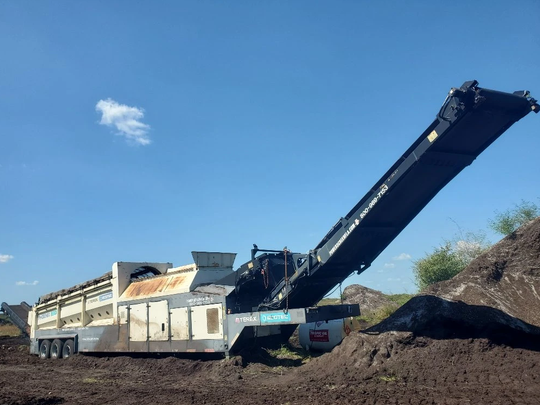
See 2021 TEREX ECHOTEC PHOENIX 3300 Trommel Screener.
What determines a screener's actual return on investment?
A screener's ROI comes down to throughput efficiency relative to purchase price, not purchase price alone. A cheaper machine that processes half the material per hour costs you more over a two-year ownership window than a pricier unit that clears jobs twice as fast. Time on site is money spent — labor, fuel, rental overlap, and missed next jobs all stack up while material sits unscreened.
Three variables drive that math:
- Material versatility. A screener limited to one material type (say, only clean aggregate) sits idle between specialty jobs. A screener that handles topsoil, compost, mulch, sand, and construction debris stays working year-round.
- Screen media changeover time. Crews lose hours — sometimes a full shift — swapping screens on poorly designed units. Faster changeovers mean more billable hours per week.
- Drum capacity and speed control. Larger drums with variable RPM let operators match screening speed to material moisture and density, which directly affects tons-per-hour output.
Buyers who skip this analysis end up comparing sticker prices instead of cost-per-ton, and that's the single most common reason screener purchases underperform expectations.
Why the Terex Ecotec Phoenix 3300 outperforms on cost-per-ton
The Phoenix 3300 is built around a large-capacity trommel drum designed for high-volume operations — topsoil processing, compost facilities, mulch production, and C&D recycling yards. Its oversized screening area means fewer passes per load, which translates directly into lower labor hours per ton processed.
Three features separate it from comparable mid-size trommels:
- Hydraulic tip-up screen box. Operators access and replace drum sections without a crane or extended downtime, cutting changeover time compared to units requiring manual disassembly.
- Variable speed drum control. Operators dial in drum RPM to match material type and moisture content, which improves screening accuracy and reduces reprocessing of oversized material.
- Tracked mobility. The machine repositions on-site without a separate transport vehicle, reducing setup time between stockpiles.
Choose the Phoenix 3300 if your operation processes mixed materials at volume and values uptime over a low entry price. Choose a smaller static or trailer-mounted screener instead if your throughput needs are modest and consistent — under those conditions, the larger machine's capacity goes underused and the ROI case weakens.
How do you calculate the breakeven point on a screener purchase?
Breakeven on a screener comes down to dividing total acquisition cost by net revenue or cost savings generated per ton processed. Here's the four-step version:
- Determine your realistic tons-per-hour output. Don't use manufacturer peak specs — use the output you'll hit under normal operating conditions, including moisture variation and operator experience.
- Calculate your cost per operating hour. Add fuel, maintenance reserve, financing cost, and labor. This is your true hourly overhead, not just the lease payment.
- Multiply tons-per-hour by your revenue or savings per ton. Whether you're billing a client for screened material or saving on landfill tipping fees, this is your hourly return.
- Divide total machine cost by (hourly return minus hourly cost). The result is the number of operating hours until the machine is paid off.
A 2018 unit with heavy use and full maintenance records will often make financial sense over a newer machine with unknown service history — but only if the hours-to-breakeven math still works in your favor. Run the numbers before you run the machine.
When does a screener purchase NOT make financial sense?
A screener purchase doesn't pay off when utilization stays below the threshold needed to offset financing and maintenance costs — typically when a contractor processes material only a few days per month. In that case, renting or subcontracting screening work usually returns more value than ownership. The fastest way to lose money on a screener is buying for capacity you don't regularly need. Match machine size to actual job frequency, not peak-season ambition.
Stop guessing. Run the numbers before you buy.
The screener that delivers the best ROI is the one matched to your actual material mix, job frequency, and crew capacity — not the one with the flashiest spec sheet. For contractors running mixed-material operations at real volume, the Terex Ecotec Phoenix 3300 consistently clears the breakeven bar faster than smaller or single-purpose alternatives because it keeps more material moving per operating hour.
Run your own tons-per-hour and cost-per-hour numbers before you commit. If the math points to high-volume, multi-material screening, put the Phoenix 3300 on your shortlist and verify specs with a dealer walkthrough.
Frequently Asked Questions
How much does the Terex Ecotec Phoenix 3300 cost?
Pricing varies by dealer, configuration, and whether the unit is new or used. Contact an authorized Terex Ecotec dealer for current pricing and financing options specific to your region.
How long does it take to see a return on a screener investment?
Breakeven timing depends on utilization. High-volume operations running the machine daily can recover costs within one to two seasons; low-utilization operations may take significantly longer or never fully offset ownership costs.
What materials can the Phoenix 3300 screen?
The Phoenix 3300 is built for topsoil, compost, mulch, sand, and construction and demolition (C&D) debris, making it suited to operations that handle varied material types rather than a single commodity.
What are the alternatives to buying a Phoenix 3300 outright?
Contractors with infrequent screening needs often rent equipment, subcontract the work, or choose a smaller trailer-mounted screener with lower acquisition cost and lower capacity requirements.
Who should avoid buying this screener?
Operations with low or seasonal screening volume should avoid oversized equipment purchases. If your realistic utilization doesn't support the hourly cost of ownership, a smaller unit or rental arrangement protects your margin better.