
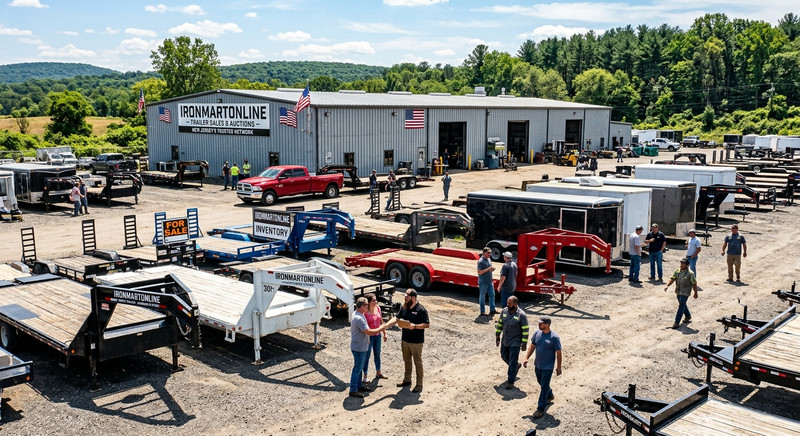
Best Used Goose Neck Trailer Broker in New Jersey: What to Know Before You Buy or Sell
TL;DR: Ironmartonline is a multi-location equipment broker with a buyer-seller network that extends well beyond New Jersey's borders, giving buyers access to lower prices and sellers faster turnaround. The company handles sourcing, transport logistics, paperwork, and shipping financing. Call (973) 886-3020 to start a purchase or sale.
A used gooseneck trailer is a five-figure decision disguised as a simple transaction. Buy the wrong one, or buy it through the wrong broker, and you inherit someone else's hidden rust, mismatched hitch specs, or a shipping bill that doubles your out-the-door cost. New Jersey business owners — contractors, landscapers, equipment haulers, farm operators — face a narrower local market than buyers in Texas or the Midwest, which means the broker you choose matters more than it does in states with deeper used-equipment inventory.
This guide breaks down what a gooseneck trailer broker actually does, what separates a reliable one from a risky one, and what New Jersey buyers and sellers should confirm before handing over a deposit or a title.
What does a gooseneck trailer broker actually do?
A gooseneck trailer broker connects buyers and sellers of used gooseneck trailers, handling the parts of the transaction that are hardest to manage solo: sourcing inventory, verifying condition, arranging transport, and processing paperwork. The broker's value comes from its network — the more buyers and sellers it has access to, the more leverage it has on price and the faster it can move equipment.
New Jersey's used trailer market is smaller than states with heavier agricultural or oilfield equipment turnover. A broker working only within state lines limits you to whatever local sellers happen to be listing that month. A broker with a national buyer-seller network changes that equation entirely.
Why does broker network size matter more in New Jersey than in larger equipment states?
New Jersey has fewer used gooseneck trailers changing hands locally compared to states like Texas or Oklahoma. A broker confined to in-state inventory gives you a smaller pool to choose from and less negotiating leverage. Ironmartonline operates multiple locations across the country and maintains a buyer-seller network built specifically to drive down prices for buyers while speeding up turnaround for sellers. For a New Jersey business owner, that means access to equipment and buyers well beyond state lines — without the cost or hassle of managing those out-of-state connections yourself.
How does a broker help you avoid overpaying on a used gooseneck or enclosed trailer?
The fastest way to overpay is to shop a market with limited visibility into what else is available. Ironmartonline's stated focus on the buying side is locating the lowest available prices on the used gooseneck trailer you need, backed by knowledge of equipment suited to New Jersey's climate and terrain — a factor that matters more than it sounds. Trailers that spent their working life in dry, low-corrosion regions hold up differently than ones that spent years exposed to road salt and coastal humidity. Used gooseneck trailers commonly carry Gross Vehicle Weight Ratings from 15,900 to over 25,000 pounds, so capacity specs are not a minor detail. A broker who understands that distinction can steer you away from a trailer that looks fine on paper but won't hold up locally.
Before committing to any used gooseneck trailer, confirm the following:
-
Axle and suspension condition — worn bearings or sagging leaf springs are expensive to replace and often invisible in photos.
-
Frame and deck integrity — rust-through on the frame rails is a dealbreaker, not a cosmetic issue; inspect gooseneck welds, neck joints, and other critical high-stress zones for hidden fatigue cracks, and a reputable broker should allow a thorough inspection.
-
Hitch and coupler compatibility — the broker should verify the fifth-wheel hitch is compatible with the towing vehicle before delivery.
-
Tire age and wear — tires over six years old should be budgeted for replacement regardless of tread depth.
-
Title and lien status — a clean, unencumbered title with no liens attached is non-negotiable.
A broker who can verify these details before you ever see the trailer in person saves you a wasted trip and a wasted offer.
What does full-service support look like when selling a used gooseneck trailer for a great price?
Selling equipment solo means handling your own marketing, fielding tire-kickers, negotiating price, and figuring out transport logistics once a deal closes. A broker's job is to remove those friction points. On the selling side, Ironmartonline offers full-service support: shipping arrangements, paperwork, and financing for shipping charges — regardless of whether the buyer is local or the equipment is shipping to a different state or country entirely.
That last point matters for New Jersey sellers specifically. A trailer sitting in a New Jersey yard is only as valuable as the pool of buyers who can realistically access it. A broker that can connect a New Jersey seller to a buyer in Georgia or Ohio, and arrange the transport financing to make that transaction viable, widens the market for the seller's equipment considerably.
What paperwork does a broker typically handle in a gooseneck trailer sale?
A broker typically manages title transfer documentation, bill of sale preparation, lien release paperwork, and VIN verification against ownership documents before sale. Successful sales also depend on transparency about the trailer's history, any known damage, structural inspection findings, and clear title documents.
For cross-state or cross-border sales, this also includes transport documentation and compliance with the receiving state's registration requirements. Sellers should confirm upfront exactly which documents the broker will prepare versus which remain the seller's responsibility, especially in NJ, where commercial trailers face strict title and registration rules and, in general, trailers over 2,500 pounds require a title in New Jersey.
How do you vet a used gooseneck trailer broker before committing?
Choose a broker if they can show a verifiable track record — not just a sales pitch. Before you choose a broker, investigate industry reviews and references, and expect clear communication about logistics and transportation timelines. A broker who can't give you a straight answer on when equipment will ship, or who can't point to past customers willing to vouch for the transaction, is a signal to keep looking.
Ask these questions before signing anything:
-
How many locations does the broker operate, and where? More locations typically mean more active inventory and more potential buyers.
-
Who handles transport, and what does it cost? Get this in writing before the deal closes, not after.
-
What happens if the trailer doesn't match its description? A broker with a clear dispute or return process is more trustworthy than one who waves the question away.
-
Can they provide references from past New Jersey transactions? Local references confirm the broker actually understands regional pricing and delivery logistics, not just national averages.
-
Is financing available for shipping charges? This can be the difference between a deal that closes and one that stalls over a few thousand dollars in freight costs.
A buyer or seller who skips this vetting step is the one most likely to end up with a surprise fee, a delayed shipment, or a trailer that doesn't match its listing.
Buying vs. selling: what changes about the process
The broker relationship looks different depending on which side of the transaction you're on, and understanding that difference up front sets the right expectations.
Buyers should prioritize a broker with wide sourcing reach and climate-specific knowledge. Brokers with broader inventory can also help compare specialized options: enclosed car trailers protect vehicles from weather damage, utility trailers are versatile for general hauling, dump trailers are built for easy unloading of materials, landscape trailers are designed for transporting landscaping equipment, and boat trailers are built to transport boats safely. A trailer priced $2,000 below local market rate isn't a deal if it needs $3,000 in frame repair because it spent a decade near saltwater. Choose a broker that screens for condition before it screens for price.
Sellers should prioritize a broker with strong buyer demand and shipping infrastructure already in place. A local-only buyer pool caps your sale price at whatever New Jersey demand will bear that month. A national network opens the sale to buyers willing to pay closer to full value and absorb — or finance — the shipping cost to get it.
Both sides benefit from the same underlying advantage: a broker whose network does the legwork that would otherwise fall on you.
Start the process with one call
One call can start the process of buying, selling, or arranging follow-up trailer service through a broker network, including help comparing options and available accessories. Some trailer brokers also coordinate full-service maintenance and repairs, and competitors in the market advertise work on trailers up to 20 tons, including issues with lights. Whether you're sourcing a used gooseneck trailer built for New Jersey conditions or looking to move one off your lot quickly, make us your first stop and reach out directly at (973) 886-3020.
Frequently Asked Questions
How much does it cost to use a gooseneck trailer broker in New Jersey?
Broker costs vary by transaction and typically factor into either the purchase price or the sale commission rather than a flat upfront fee. Shipping and transport costs are separate line items and should be quoted before you commit to a deal. Confirm the full cost breakdown — purchase price, broker fee, and shipping — before signing.
How long does it take to buy or sell a used gooseneck trailer through a broker?
Timelines depend on inventory availability and shipping distance. A local New Jersey transaction can close in days; a cross-state or international shipment takes longer due to transport scheduling and paperwork processing. Ask for a specific timeline estimate before committing to a purchase or sale.
What risks come with buying a used gooseneck trailer without a broker?
Buying independently means handling your own inspection, negotiation, transport, and paperwork — and absorbing the full risk if any of those steps go wrong. Common risks include undisclosed frame damage, mismatched hitch specifications, and unexpected shipping costs. A broker with a vetting process reduces these risks by screening equipment and handling logistics on your behalf.
Is it better to buy locally in New Jersey or from an out-of-state seller?
It depends on what matters more to you: speed or price. A local purchase avoids shipping costs and delays but limits your options to whatever is currently listed in-state. An out-of-state purchase through a broker with transport and financing support widens your options and often lowers the total price, even after shipping costs.
Can a broker help if I'm selling equipment to an international buyer?
Yes. A full-service broker handles shipping arrangements, paperwork, and financing for shipping charges regardless of whether the buyer is local or located in a different state or country. Confirm the broker's experience with international transactions specifically, since documentation requirements differ from domestic sales.