
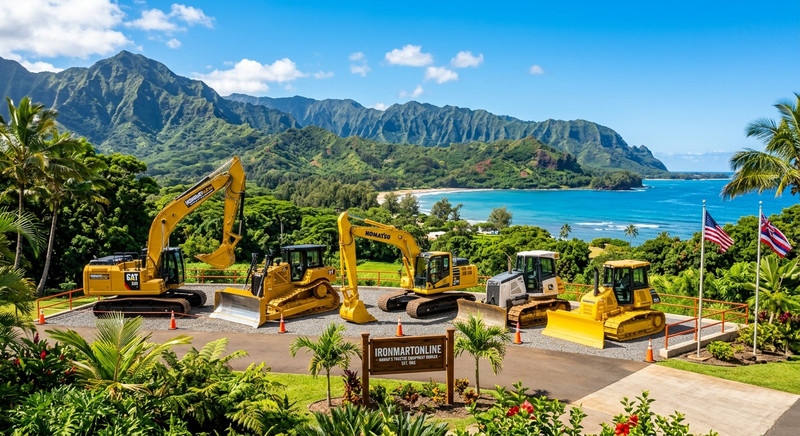
How Do You Find the Best Used Heavy Equipment Broker in Hawaii?
Quick answer: The best used heavy equipment broker in Hawaii is one with an established network of buyers and sellers beyond the islands, transparent pricing, and a track record of fast turnaround on both purchases and sales. Companies like Ironmartonline operate this way, connecting Hawaii buyers to a nationwide inventory instead of the limited local supply most islands face.
Hawaii's used heavy equipment market runs on a different set of rules than the mainland. Shipping costs, limited local inventory, and a small pool of sellers mean buyers often pay a premium just for the convenience of staying local. That premium adds up fast on a $150,000 excavator or a fleet of dump trucks.
A broker changes that math. Instead of sorting through whatever three or four dealers happen to have in stock on Oahu, a broker with mainland connections puts you in front of equipment sitting in Texas, Georgia, or California — machines that can be shipped to Honolulu for less than the markup you'd pay buying local and settling for the wrong spec.
This post breaks down what separates a reliable broker from a middleman who just adds friction, what to check before you commit to a purchase, and how selling through a broker compares to listing equipment yourself.
Why Does Buying Heavy Equipment Locally in Hawaii Cost More?
Hawaii's geography limits supply. Every excavator, loader, or dozer already on the islands got there by barge, and that shipping cost is baked into the asking price before you even start negotiating.
Local sellers also know buyers have fewer alternatives. Fewer competing listings means less downward pressure on price. A buyer shopping only Oahu-based inventory is negotiating from a weaker position than one pulling quotes from a network spanning dozens of states.
A broker with a national network flips that dynamic. You're comparing prices across a much larger pool of sellers, and the broker absorbs the logistics of getting the equipment to Hawaii — often at rates lower than what an individual buyer would pay arranging freight independently.
What Should You Look for in a Used Heavy Equipment Broker?
Not every broker delivers the same value. Before signing anything, confirm the following:
- Network size. A broker working one region can't get you competitive pricing. Look for a broker with buyers and sellers "from coast to coast," not just a handful of regional contacts.
- Turnaround speed. Equipment sitting idle costs money, whether you're buying and waiting on a job site or selling and carrying the asset. A broker should quote a realistic timeline up front, not "we'll see."
- Transparent pricing. Ask for comparable sales data, not just a listing price. A broker who can show you what similar machines sold for recently has done the work; one who can't is guessing.
- Remote service quality. If you're in Hawaii and the broker is based on the mainland, confirm you get the same level of service as a local buyer — document handling, inspection reports, and shipping coordination included.
- Equipment verification. Hour meters, maintenance records, and photos of specific components (undercarriage, hydraulics, engine bay) should be available before you commit. A broker who can't produce them is selling you a guess, not a machine.
Choose a broker with a verifiable national network if minimizing purchase price matters more than buying hyper-locally. Choose a local-only dealer if you need to physically inspect every machine in person before any commitment — but expect to pay the Hawaii supply premium for that convenience.
How Does Selling Used Heavy Equipment Through a Broker Work in Hawaii?
Selling equipment yourself in Hawaii means marketing to a small local buyer pool, which usually means a longer time on market and a lower final price. A broker changes that equation by listing your equipment to buyers well beyond the islands.
Ironmartonline, for example, operates across multiple locations nationwide and maintains a network of buyers and sellers built specifically to move equipment fast. Posting equipment through a broker like this — or letting the broker take it off your hands directly — gets sellers a quicker turnaround than waiting on local-only interest.
Location isn't a barrier either. Whether your equipment sits in Hawaii or anywhere else, a broker with national reach can offer the same services a local seller gets, because the buyer network isn't limited by geography in the first place.
What Are the Biggest Mistakes Hawaii Buyers Make When Shopping for Used Equipment?
The fastest way to overpay is to start browsing before you define what you need. Lock in your specs — lift capacity, attachment compatibility, hour range, engine type — before you look at a single price tag. Buyers who skip this step end up chasing a "good deal" on a machine that's wrong for the job site, then pay again to correct the mistake.
The second mistake: trusting a listing's condition claims without verification. "Great condition" means nothing without a number behind it. A 2018 excavator with 4,000 hours and a complete service record tells a far better story than a 2020 model with half the hours and no paperwork at all. Ask for documentation before you ask for a discount.
The third mistake: ignoring shipping costs until after the deal is signed. Freight to Hawaii isn't a rounding error — it can shift the real cost of a machine by thousands of dollars. Get a shipping quote locked in before you agree to a purchase price, not after.
Make Your Next Move on Hawaii's Used Equipment Market
Hawaii's used heavy equipment market punishes buyers who shop only what's local and rewards those willing to work with a broker who can reach further. The same logic applies on the sell side — a wider buyer network means a faster sale and a better price.
If you're buying, define your specs first, verify condition with real documentation, and get shipping costs locked in before you negotiate price. If you're selling, a broker with multi-state reach will move your equipment faster than a local-only listing ever will.
Ironmartonline works both sides of that equation, with a nationwide network built to get Hawaii buyers and sellers the best deal available — not just the best deal on the island. Call (973) 886-3020 to get started.
Frequently Asked Questions
Does it cost more to buy used heavy equipment in Hawaii than on the mainland?
Yes, typically. Limited local inventory and shipping costs already baked into island pricing mean Hawaii buyers often pay a premium for equipment that would cost less sourced through a mainland network and shipped in.
How long does it take to sell used heavy equipment through a broker?
Turnaround varies by equipment type and demand, but a broker with a national buyer network typically moves equipment faster than a local-only listing because more buyers are seeing it at once.
Is it risky to buy heavy equipment sight-unseen from a mainland broker?
The risk is manageable if the broker provides verifiable documentation — hour meters, maintenance records, and component-specific photos — before the sale. Buyers who skip this step take on more risk than the shipping distance itself creates.
What's the alternative to using a broker in Hawaii?
Buying or selling directly through local dealers and private listings. This works if your top priority is in-person inspection, but it narrows your buyer or seller pool significantly and usually means paying or accepting Hawaii's local pricing premium.
Who benefits most from using a heavy equipment broker in Hawaii?
Buyers who need competitive pricing across a larger inventory and sellers who want a faster sale than the local market can support both benefit most. Buyers who need hands-on inspection of every option before committing may prefer local-only dealers despite the higher cost.