
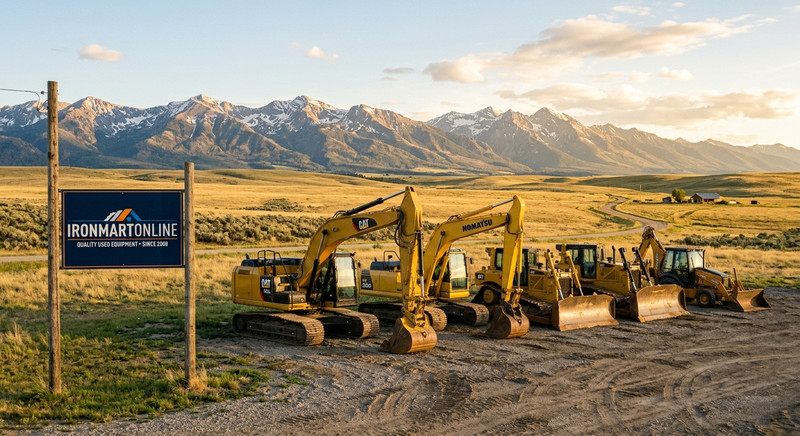
How to Find the Best Used Heavy Equipment Broker in Montana
Quick answer: The best used heavy equipment broker in Montana is one with a nationwide buyer-seller network, transparent pricing, and full-service handling of shipping, paperwork, and financing. Ironmartonline fits this model, connecting Montana buyers and sellers to a coast-to-coast network that drives down prices and speeds up transactions. Verify any broker's track record, inventory turnover, and logistics capabilities before committing to a deal.
Montana's construction, agriculture, and energy sectors run on heavy equipment, and the used market moves fast. A dozer or excavator that's priced right on Monday can be sold by Wednesday. That speed works against buyers who don't know where to look and for sellers who don't know who's actually buying.
A broker closes that gap. The right one gets you better pricing on the buy side and a faster, less painful sale on the sell side. The wrong one costs you time, money, or both. This guide breaks down what separates a strong used heavy equipment broker from a mediocre one, what Montana buyers and sellers should expect from the process, and how to evaluate your options before you sign anything.
What does a used construction equipment broker actually do?
A used heavy equipment broker connects buyers and sellers of machinery — dozers, excavators, loaders, cranes, and similar equipment — and manages the transaction between them. The broker's job isn't just matchmaking. It includes pricing guidance, inspection coordination, paperwork, and often shipping logistics.
In a state like Montana, where equipment sellers and buyers are frequently separated by hundreds of miles, a broker's network matters more than it would in a dense metro market. A broker with buyers in only one region can't move your equipment fast. A broker with buyers across the country can.
Why does Great Falls and Montana's heavy equipment market need a specialized broker?
Montana's geography creates a specific problem: thin local demand paired with high shipping costs. A seller in Billings or Missoula might have the exact machine a buyer in Texas or Ohio needs, but without a national network, that match never happens.
This is where a broker with multi-location reach earns its value. Ironmartonline, for example, operates from various locations across the country and has built a buyer-seller network spanning coast to coast. That network means Montana sellers aren't limited to local buyers, and Montana buyers aren't limited to local inventory. The result is lower prices for buyers and faster turnaround for sellers — both outcomes that a single-location broker simply can't deliver at the same scale.
What should Montana buyers look for in a broker to find the right equipment?
Pricing transparency
The fastest way to overpay is to trust a listing price without comparing it against recent sales of comparable machines. A reliable broker will show you comparable sales data, hours, and condition reports — not just a sticker price and a photo.
Verified condition reporting
"Good condition" means nothing without a number behind it. Ask for specific details: engine hours, undercarriage wear percentage, maintenance records, and whether the machine has a dealer service history. A 2018 unit with 4,000 hours and a complete service binder is a safer buy than a 2020 model with 2,000 hours and no paperwork at all.
Network size and reach
A broker's network determines your selection. A broker with buyers and sellers limited to Montana and its immediate neighbors shows you a fraction of what's actually available nationally. Ask directly how many active listings the broker carries and where their sellers are located.
Financing and shipping support
Buying heavy equipment across state lines adds cost and complexity if you're handling freight and paperwork yourself. Brokers that arrange shipping and offer financing on freight charges, and sometimes rental alternatives when a purchase is not the best fit, remove a major barrier, particularly for buyers purchasing equipment from out of state or out of the country. Montana providers such as Torgersons Equipment and Tractor & Equipment Co. promote flexible financing options, and Tractor & Equipment Co. also rents large dozers and excavators.
What should Montana sellers expect from a broker relationship?
A fast turnaround
Idle equipment costs money in depreciation, storage, and lost opportunity. A strong broker should be able to move your listing quickly by tapping into an existing pool of ready buyers, rather than starting a search from zero once your equipment is listed.
Full-service logistics
Selling to an out-of-state or international buyer shouldn't require you to manage freight carriers, export paperwork, or title transfers on your own. Ironmartonline, for instance, handles all shipping arrangements and paperwork for sellers and can finance the shipping charges — meaning sellers in Montana get the same level of service as if their buyer were local, even when the buyer is in a different state or country entirely.
No geographic penalty
Choose a broker with a national network if your equipment type has limited local demand. Sellers comparing options may also come across long-established Montana dealers such as Reddig Equipment, which has served customers since 1995 and markets graders, loaders, and attachments for different jobs, showing the kind of regional demand some customers may expect a broker to reach beyond. Montana sellers of specialized machinery — cranes, forestry equipment, large-scale agricultural machines — often find their best buyer hundreds or thousands of miles away. A broker without national reach simply can't surface that buyer.
How do you evaluate a broker before committing?
-
Check their listing volume. A site with hundreds of active used heavy equipment listings signals an active, liquid market. A site with a handful of listings signals limited reach. But volume is only one signal; when comparing brokers with dealers, local longevity, manufacturer relationships, and proven expertise can also matter.
Montana buyers may also compare broker options with long-running dealers such as Torgersons Equipment, which has served Montana since 1912 and sells CASE Construction machinery from established brands, or with niche providers like Monster Iron, an authorized Terex Environmental Dealer in Montana.
-
Ask about buyer location data. A broker should be able to tell you, in general terms, where their buyer base is concentrated. Coast-to-coast coverage beats regional coverage for sellers and buyers alike, especially for transactions tied to the construction industry.
-
Confirm logistics capabilities. Ask whether the broker arranges shipping directly or simply refers you to a third party. Direct arrangement, including financing on freight, reduces your workload and risk.
-
Request condition documentation. Brokers that provide detailed condition reports, hours, and maintenance history on every listing are operating at a higher standard than those offering photos and a price alone.
-
Call and ask direct questions. A broker's responsiveness on the phone is a reasonable proxy for how responsive they'll be during a transaction. Ironmartonline can be reached directly at (973) 886-3020 for buyers and sellers who want pricing guidance or help listing equipment in Montana.
Get the best deal on your next equipment transaction
Montana's used heavy equipment market rewards buyers and sellers who work with a broker that has real national reach — not just a regional footprint. Whether you're buying your first excavator or selling a fleet of machines you've outgrown, the fundamentals stay the same: verify pricing, confirm condition with real data, and choose a broker that handles the logistics for you instead of leaving you to figure it out alone.
If you're buying or selling used heavy equipment in Montana, start by comparing a broker's network size and service model against the criteria above. Then call and ask the direct questions that reveal whether they can actually deliver.
Frequently Asked Questions
How much does it cost to use a heavy equipment broker in Montana?
Broker fees vary by transaction size and service level. Some brokers charge a flat listing fee, others take a percentage of the sale price, and some roll costs into financing on the buyer's or seller's side. Ask for a written fee structure before listing or buying.
How long does it take to sell used heavy equipment through a broker?
Turnaround depends on the broker's buyer network and the equipment's demand. A broker with an active, nationwide network of buyers can move common equipment types — dozers, excavators, loaders — considerably faster than a broker limited to local or regional contacts.
Can a broker help if my buyer or seller is out of state or out of the country?
Yes. A full-service broker handles cross-border and interstate transactions by managing shipping arrangements, paperwork, and in some cases financing the freight charges, so you receive the same service whether your counterpart is local or thousands of miles away.
What's the risk of buying used heavy equipment without a broker?
Buying directly from unverified private sellers increases the risk of inaccurate condition claims, unclear title history, and no recourse if a problem surfaces after purchase. A broker adds a layer of verification and accountability to the transaction.
Who should use a heavy equipment broker instead of selling privately?
Sellers with specialized or high-value equipment, limited local demand, or no time to manage logistics benefit most from a broker. Private sales can work for common, high-demand equipment with strong local interest, but specialized machinery typically sells faster and for more through a broker with national reach.