
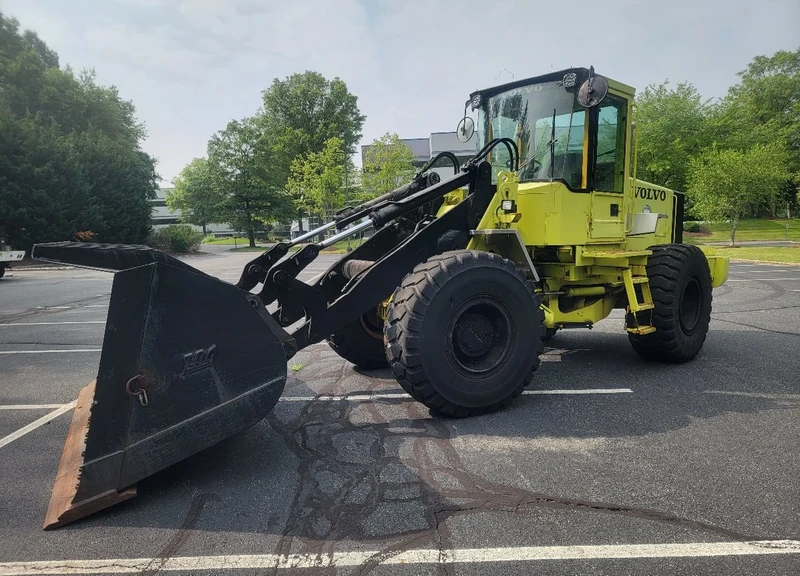
One on Best Wheel Loaders for Snow Removal Michigan L90: Why the L90 Class Leads the Pack
For Michigan snow removal, mid-size wheel loaders in the L90 class — think Volvo L90, Case 621, or Cat 926 — hit the sweet spot between pushing power and maneuverability. They deliver roughly 3-4 cubic yards of bucket capacity, 150-200 horsepower, and operating weights near 30,000-35,000 lbs, enough to clear parking lots and access roads fast without the fuel costs or turning radius of full-size loaders. Buy based on hours, undercarriage condition, and attachment compatibility, not just sticker price.
Michigan winters don't negotiate. Lake-effect snow bands can drop a foot of powder overnight, and by morning, municipalities, contractors, and commercial property managers are all racing the same clock. The machine you choose for that job determines whether you're done by 6 a.m. or still fighting drifts at noon.
Wheel loaders in the L90 size class have become the default choice for serious snow removal operations across the state, and for good reason. They're big enough to move real volume but nimble enough to work tight commercial lots, school entrances, and residential subdivisions without tearing up curbs or wasting fuel on unnecessary bulk.
This guide breaks down what makes the L90 class the right fit for Michigan conditions, how it stacks up against smaller skid steers and larger loaders, and exactly what to check before you buy one.
See MICHIGAN L90B Wheel Loader.
What is an L90-class wheel loader?
The "L90 class" refers to mid-size wheel loaders — a category popularized by the Volvo L90 but matched by comparable models like the Case 621, Cat 926/930, and John Deere 544. These machines typically run:
-
Operating weight: 30,000-35,000 lbs
-
Engine output: 150-200 horsepower
-
Bucket capacity: 3-4 cubic yards
-
Breakout force: Sufficient to handle packed snow, ice buildup, and frozen berms without stalling
That combination makes them heavy enough to punch through compacted snow and ice ridges left by plow trucks, but still small enough to maneuver in parking lots, loading docks, and narrow access lanes without a wide turning radius working against you.
Why does Michigan snow removal favor this size class over skid steers or full-size loaders?
Skid steers are cheaper to buy and easier to transport, but they lose to L90-class loaders on two fronts that matter most in a Michigan winter: bucket capacity and sustained power. A skid steer moving 1-1.5 cubic yards per pass needs three to four times the cycles to clear the same lot an L90-class loader clears in one. That said, compact wheel loaders, compact track loaders, and skid steers are more maneuverable in very tight spaces, so they can make more sense for smaller projects on congested streets.
Full-size wheel loaders (Cat 950, Volvo L120 and up) push more volume per pass, but that advantage disappears fast in tight commercial or residential settings. Wider turning radius, higher fuel burn, and reduced visibility in confined spaces turn an efficiency advantage into a liability. L90-class machines also ride faster on wheels, with travel speeds often topping 25 mph, which helps cut transport time between nearby sites where compact models would otherwise give up too much capacity. You end up paying for capacity you can't use.
Choose an L90-class loader if you're clearing commercial lots, HOA subdivisions, or municipal roads under a few miles. Choose a full-size loader if you're managing airport runways, large industrial yards, or continuous highway shoulders where open space lets you use every ounce of that extra bucket capacity.
What features matter most for snow removal in Michigan winters?
Cold-weather starting reliability
Michigan temperatures regularly drop below zero during peak snow events, so cold-weather starting should be part of broader cold weather work preparation, especially for machines that may sit for extended periods and then need to operate hard before dawn. Look for block heaters, glow plug systems, and verified cold-start history from the previous owner; cold-weather outfitting like cab heaters also helps reduce freezing, and use winter blend fuel plus a winter-blend windshield washer solvent as basic anti-freeze prep. A seller who can show a maintenance log with winter starts documented is worth more than one who just says the machine "runs great in the cold." Before storms, also check grease points to limit salt corrosion, tire pressures for traction, and high-powered LED lights for visibility, while watching for snow build around key areas.
Attachment compatibility
Snow pushers, V-plows, snow buckets designed for large volumes, a blade, and a blower all require the right hydraulic setup, and compact wheel loaders can also run snow-specific attachments like snow blowers for a large parking lot or tight routes on pavement. Confirm the loader's auxiliary hydraulics match your attachment lineup before you buy to determine fit for the machine's width, the snow conditions from light powder to wet snow, and the materials you expect to move; a hydraulic quick coupler speeds swaps from inside the cab, allowing operators to change from pallet forks or a bucket with a sand bit to winter tools, while parallel linkage can help with visibility, and high flow hydraulics plus high-flow auxiliary hydraulics are necessary for high-performance snow equipment because they enhance attachment performance in winter conditions.
Some snow blowers can throw snow up to 150 feet, and snow blades can range from 3 ft to 12 ft wide, so size the attachment to the machine and route.
Tire choice
Standard L-3 rated tires handle most Michigan lots fine, but contractors working ice-heavy routes often upgrade to L-5 rock service tires or add wheel weights and chains for extra traction. Ask what tires are currently mounted and what the previous owner used them for — a loader that spent its life on gravel yards will have different wear patterns than one that ran snow routes exclusively.
Cab visibility and heating
Snow removal happens in the dark, in whiteout conditions, and during long severe-weather shifts, so operators need a comfortable, ergonomic cab design as much as they need the machine itself. A cab with a functioning heater, defrost system, heated mirrors, high-powered LED lights, and great visibility to the bucket edge isn't a comfort feature here — it's an operational requirement. Verify these systems, along with broader cold-weather outfitting like cab heaters and block heaters, before you sign anything, not after the first storm.
How much should you expect to pay for an L90-class wheel loader in 2026?
Pricing varies by hours, age, and attachment package, but here's the general range for the Michigan used market:
-
Under 3,000 hours, recent model year: $95,000-$130,000
-
3,000-6,000 hours, mid-life machine: $65,000-$95,000
-
6,000-10,000 hours, high-hour but serviceable: $40,000-$65,000
Just remember that operating costs can matter as much as purchase price; Volvo wheel loaders won awards for lowest cost of ownership in 2021, and electric wheel loaders are also a quieter option for nighttime snow removal.
A 2018 unit with 4,000 hours and a complete dealer service binder tells a far better story than a 2021 model with 2,500 hours and zero paperwork. Documentation matters more than the model year on the title.
Budget separately for attachments. A quality snow pusher box in the 12-14 foot range typically runs $8,000-$15,000 new, less if you buy it used alongside the loader from the same seller.
What should you inspect before buying a used wheel loader for snow work?
The fastest way to overpay is to trust even reliable listings and detailed equipment specs without verifying them in person before purchase. Walk through these checkpoints before any purchase, especially if the machine will be part of your winter heavy equipment fleet and used for loading snow:
-
Hour meter vs. wear patterns. Confirm the hours on the meter match the wear you see on pins, bushings, and tire tread. A meter that's been swapped or reset is a red flag, not a technicality.
-
Hydraulic cylinder condition. Check the lift and tilt cylinders for scoring, leaks, or excessive drift when holding a raised load. Snow pushing puts repeated stress on hydraulics, and a worn cylinder means an expensive rebuild mid-season.
-
Undercarriage and axle seals. Wheel loaders don't have tracks, but axle seals and final drives take a beating in slush and road salt. Salt exposure accelerates corrosion — ask directly whether the machine worked salted routes, and inspect axle housings for pitting.
-
Engine block and cold-start history. Request service records showing winter operation specifically. A machine with three prior Michigan winters behind it and no cold-start complaints is a proven asset, not a gamble.
-
Attachment coupler wear. Quick-attach plates take constant impact from pusher boxes hitting curbs and frozen berms when stacking into a pile. Loose pins or elongated mounting holes mean added repair costs before the plow attachment even goes on, and a hydraulic quick coupler should lock tightly and cycle correctly during inspection.
Run these checks yourself or bring a mechanic who can. If you need help matching the right machines to the job, a Volvo dealer can point you toward a capable setup, but your own inspection is what confirms the loader’s real ability. A seller confident in the machine's condition will welcome the inspection, not resist it.
Buy prepared, not in a hurry
Michigan's snow removal season doesn't wait for you to finish comparing spec sheets in October. The contractors and municipalities that come out ahead every winter are the ones who lock in their equipment — and their maintenance plans — before the first storm hits.
An L90-class wheel loader gives you the volume, power, and maneuverability to handle everything from HOA subdivisions to municipal routes without overspending on capacity you'll never use. Match the machine to your routes, verify the paperwork, inspect the hydraulics and axle seals yourself, and lock in your attachment compatibility before the snow flies.
Start comparing listings now, get financing pre-approved, and line up your attachment package. The buyers who wait until the first snowfall are the ones paying premium prices for whatever's left on the lot.
Frequently Asked Questions
What size wheel loader do I need for a typical commercial parking lot in Michigan?An L90-class loader with a 3-3.5 cubic yard bucket handles most commercial lots efficiently. Larger retail centers or multi-acre lots may benefit from a slightly bigger loader in the 4-4.5 cubic yard range, but going bigger than that usually sacrifices maneuverability without adding meaningful speed. For context, large wheel loaders used for heavy snow work can approach 300 hp, and John Deere offers models up to 500 hp. Caterpillar also spans a much broader lineup, with 48 wheel loader models across all sizes, while Bobcat builds only two and New Holland tops out around 19,270 lbs.
How many hours can I expect an L90-class wheel loader to last?With regular maintenance, these machines typically run 10,000-12,000 hours before requiring major engine or hydraulic component rebuilds. Snow removal work is less abrasive on undercarriages than earthmoving, which often extends practical service life compared to construction-heavy use.
Is it better to buy new or used for a snow removal fleet?New loaders eliminate unknown maintenance history but cost significantly more upfront and depreciate fastest in year one. A well-documented used machine with under 5,000 hours and full service records typically delivers better value per dollar for seasonal snow work, provided you verify the inspection checklist above.
What financing timelines should I expect for equipment purchases before winter?Equipment financing typically takes 3-10 business days for approval, depending on credit and down payment. Start the application process by early fall to ensure the machine is delivered and attachments are mounted before the first significant snowfall.
Are skid steers a viable alternative to wheel loaders for smaller properties?Yes, for properties under an acre or tight residential routes, skid steers with snow blades or blowers can be more cost-effective and easier to maneuver. In contrast, compact equipment such as compact wheel loaders typically weighs about 9,000-20,000 lbs, well below the L90 class, which makes it useful in tighter spaces for light material handling, dirt work, or landscaping. Brands like Wacker Neuson focus on that smaller category; for more info, compare winter-package options and attachment support before buying. For anything larger, the reduced bucket capacity of a skid steer means significantly more cycles and time to clear the same area.