
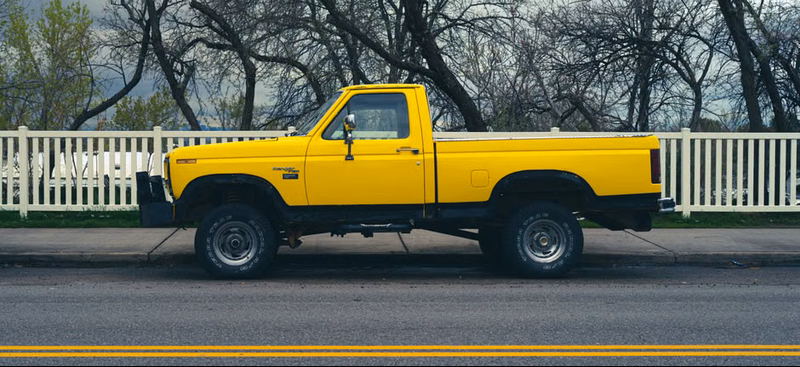
Chevy Trucks
Chevy's truck lineup spans the light-duty Silverado 1500, the heavy-duty Silverado 2500HD/3500HD, and the compact Colorado. Trim level, engine choice, and intended use — towing, hauling, daily driving, or off-roading — determine which truck makes sense. The fastest way to overpay or end up with the wrong truck is skipping those three questions before you shop.
Buying a Chevy truck without a plan is how buyers end up with a $70,000 High Country when a $45,000 Custom Trail Boss would've done the job. Or worse — a gas-powered half-ton pulling a trailer it was never built to tow. This guide breaks down the Chevy truck lineup by model, trim, and engine, and tells you exactly which combination fits which job.
What trucks does Chevy currently make?
Chevrolet sells three truck families: the Colorado (midsize), the Silverado 1500 (light-duty, full-size), and the Silverado 2500HD/3500HD (heavy-duty, full-size). Each serves a different buyer.
-
Colorado: Smaller footprint, easier to park and maneuver, lower price of entry. Built for buyers who want truck utility without full-size bulk.
-
Silverado 1500: The volume seller. Covers daily driving, moderate towing, and family use.
-
Silverado 2500HD/3500HD: Built for buyers who tow heavy trailers, haul heavy equipment, or need maximum payload. Available in dual rear wheel ("dually") configuration on the 3500HD for maximum towing capacity.
Match the family to the job before you look at a single price tag. A buyer hauling a 5,000-lb camper doesn't need a 3500HD. A buyer pulling a 15,000-lb fifth wheel shouldn't settle for a 1500.
What are the Silverado 1500 trim levels, and how do they differ?
Chevy stacks the Silverado 1500 trims from work-truck basic to luxury-level equipped. Each step up adds specific features — not vague upgrades.
-
WT (Work Truck): Vinyl or cloth seating, minimal tech, built for fleet and commercial use. Lowest price point in the lineup.
-
Custom: Adds exterior trim upgrades and more wheel options over WT.
-
Custom Trail Boss: Off-road-focused variant with a two-inch factory lift, Rancho shocks, and an off-road suspension package.
-
LT: Adds more standard tech and comfort features — a step toward retail buyers rather than fleet buyers.
-
RST: Styling-focused trim with a sport-truck appearance package and blacked-out trim.
-
LTZ: Adds leather seating and more standard convenience features.
-
High Country: The top trim. Chrome and premium exterior badging, upgraded interior materials, and the most standard features in the lineup.
-
ZR2: Off-road performance trim with factory-tuned Multimatic DSSV dampers, front and rear locking differentials, and increased ground clearance.
Choose WT or Custom if the truck is a tool, not a statement. Choose LTZ or High Country if daily comfort and interior quality matter as much as capability. Choose Trail Boss or ZR2 if off-road performance is the priority over towing capacity.
What engines are available in the Silverado, and which one should you choose?
Engine choice affects towing capacity, fuel economy, and total cost of ownership more than any other single spec. Chevy offers multiple engine options across the Silverado 1500 lineup, including turbocharged four-cylinder, V8, and diesel options, plus a Duramax turbo-diesel in the heavy-duty trucks.
-
Turbocharged four-cylinder: Lower price of entry, better fuel economy, lower towing capacity than the V8 options. Fits buyers who tow occasionally and prioritize daily fuel costs.
-
V8 engines: Chevy's V8 lineup includes multiple displacement options tuned for a balance of towing capacity and performance. The right choice for buyers who tow regularly but don't need heavy-duty-truck capability.
-
Duramax diesel: Available on Silverado 1500 and standard-availability on the 2500HD/3500HD. Diesel delivers higher torque at lower RPM — the number that actually matters for towing heavy trailers up grades. Diesel engines cost more upfront and cost more to service, but they pay that cost back in towing performance and often in fuel economy on long hauls.
Choose diesel if you tow consistently and put long highway miles on the truck. Choose gas if your towing is occasional and your mileage is mostly local. The break-even point depends on annual towing load and mileage — run your own numbers before assuming diesel is automatically the smarter buy.
How much can a Silverado tow and haul?
Towing and payload capacity change based on cab configuration, bed length, engine, axle ratio, and trim — not just the model name on the tailgate. Silverado HD models can tow up to 36,000 pounds depending on configuration. Two Silverado 1500s with different configurations can have meaningfully different max tow ratings even with the same engine.
Before you assume a truck can handle your trailer, check the specific build's tow rating on the window sticker or the manufacturer's published towing guide for that exact configuration. Chevrolet's maximum towing numbers are strong, but some configurations still trail Ford. Don't rely on the headline "max towing" number from an ad — that number usually reflects the lightest possible configuration, not the one you're buying. For example, the 2020 Chevy Silverado 3500 with the 6.6-liter V8 makes 401 horsepower and 464 lb-ft of torque and has a towing capacity of 14,500 pounds. Safety also depends on active features such as automatic emergency braking when you're towing a heavy load.
If your trailer weight is close to the truck's rated capacity, step up a trim or configuration rather than running at the limit. Modern Chevrolet trucks also offer advanced trailering technology and camera systems that help when towing near capacity. A truck towing near its max rating wears brakes, transmission components, and tires faster than one with margin to spare.
Is a used Chevy truck a better deal than new?
A used Chevy truck can save significant money upfront, but the savings come with added risk that a new truck doesn't carry. A used Chevy truck such as a Silverado or Colorado with 40,000 miles and a complete dealer service record tells a far better story than a 2022 model with unknown maintenance history and 60,000 miles.
Before buying used, verify these specific items. Ask for the CarFax Vehicle History report so you have a clearer picture of the vehicle:
-
Full service history, not a verbal assurance it was "well maintained."
-
Title status — confirm it's clean, not salvage or rebuilt.
-
Diesel-specific checks if applicable: emissions system service history, DPF condition, and injector service records.
-
Frame and undercarriage condition, especially on trucks from regions with heavy road salt use.
-
Tire wear pattern, which can reveal alignment or suspension issues not disclosed by the seller.
A used truck with full documentation and moderate mileage is usually the better buy over a cheaper truck with gaps in its history. Missing records aren't a minor paperwork issue — they're a sign you don't know what you're actually buying. A good support advantage is that Chevrolet's large dealer network can make parts and service easier to access on used trucks.
What's the real cost difference between trim levels?
The sticker price gap between a WT and a High Country on the same cab and engine configuration can run tens of thousands of dollars. That gap is almost entirely features and materials, not mechanical capability. A WT and a High Country with the same engine and drivetrain tow and haul the same weight.
Pay for trim level based on what you'll actually use daily — leather seats, upgraded infotainment, premium audio — not because a higher trim feels like the "complete" version of the truck. If the truck is doing fleet work, job-site duty, or daily hauling where comfort features sit unused, that money is better spent on options that affect capability: a towing package, upgraded axle ratio, or off-road suspension.
Buy with the job in mind, not the badge: why a test drive matters
A Chevy truck is a decade-plus commitment for most buyers, and the trim, engine, and configuration you choose lock in your towing capacity, fuel costs, and resale value for the life of that commitment. Define your towing weight, your daily mileage, and your must-have features before you compare a single price, so you can Search listings and Find the right truck before visiting the dealership. That's the only way to walk into a dealership — or a used listing for vehicles listed for Sale — already knowing which truck is right, instead of letting a salesperson or a shiny trim badge decide for you, with a better buying Experience coming from dealers that Provide clear Information and let you Send questions from Home before you commit to a Purchase.
Frequently Asked Questions
What's the difference between the Silverado 1500 and 2500HD?The Silverado 1500 is Chevy's light-duty, full-size truck, built for daily driving and moderate towing. The 2500HD is heavy-duty, with higher towing and payload capacity, a stronger frame, and available Duramax diesel power — built for buyers who regularly tow heavy trailers or haul heavy loads. The Silverado 3500 can also include features such as an available 4G LTE Wi‑Fi hotspot.
Is the Duramax diesel engine worth the extra cost?Diesel costs more upfront and more to maintain, but delivers more torque for towing and often better fuel economy on long highway hauls. It's worth the cost if you tow consistently and drive high annual mileage. It's usually not worth it for buyers who tow occasionally and drive mostly short, local trips.
What is the Trail Boss package, and who is it for?The Trail Boss is an off-road-focused trim built on the Custom and LT trims, adding a factory two-inch lift, Rancho shocks, and an off-road suspension tune. It's built for buyers who prioritize off-road capability over the heavier towing and payload setups found in work-truck trims.
Does trim level affect towing capacity?Not directly. Towing capacity is determined primarily by engine, cab configuration, bed length, and axle ratio — not trim level. A WT and a High Country with identical mechanical specs tow the same weight; the trim difference is features and materials, not capability.
What should I check before buying a used Chevy truck?Verify full service history, confirm clean title status, inspect the frame and undercarriage for corrosion, check tire wear patterns for alignment issues, and — on diesel models — review emissions and injector service records. Used values vary widely by type and condition, and some specialty trucks have been built or preserved for many years. A 1954 Chevrolet 3100 Restomod is listed at $59,000. A 1988 Chevrolet S10 NASCAR Truck costs $15,500. A 1986 Chevrolet K10 Tribute Show Truck is priced at $47,995. Missing documentation is a red flag, not a minor detail.