
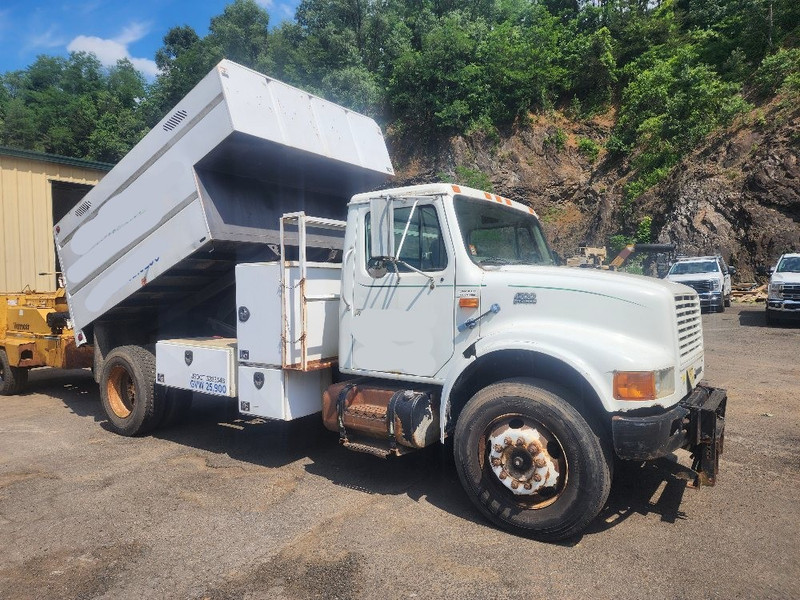
Chip Trucks: Complete Guide to Chipper Trucks, Uses, and Specs
Whether you run a tree care crew, manage a municipal fleet, or are just entering the forestry industry, a chip truck is one of the most important pieces of equipment you will ever invest in. This guide covers everything from design features and chassis options to daily inspections, maintenance, and long-term ROI so you can choose the right chipper truck for your operation and get the most out of it for years to come.
Performing security verification
When you visit a website to browse chip truck inventory, spec sheets, or financing tools, you may briefly see a page performing security verification before the content loads. This is normal and exists to protect both the seller and the buyer.
-
The security service running behind that page uses automated checks to distinguish real human visitors from malicious bots that attempt to scrape pricing data, inventory levels, and quote forms.
-
In most cases, no special action is required beyond waiting a moment. Occasionally, the page may ask you to complete a simple checkbox or image challenge.
-
Your personal data is not exposed during this step. The system essentially verifies that your browser behaves like a legitimate visitor, not a bot. If you ever need to reference the check, a respond ray id is typically displayed at the bottom of the page for troubleshooting.
-
Once verification successful, you can browse chip truck bodies, heavy duty specs, and quote builders with no impact on speed or access. The rest of your session proceeds as normal.
What is a chip truck (or chipper truck)?
A chip truck-also called a chipper truck-is a specialized heavy duty truck equipped with an enclosed dump body designed to receive wood chips directly from a wood chipper chute. It is essentially a mobile collection and transport unit purpose-built for the green industry.
-
On a typical jobsite in 2024–2026, a tow-behind or self-propelled wood chipper sits behind or beside the truck, discharging chips into the rear or side opening of the chip body. The truck's high opening is designed to align with tall chipper chutes so debris lands cleanly inside.
-
Chip trucks often have a closed dump container design to prevent chip and dust loss during transit. Integrated toolboxes, hydraulic or electric hoists, and storage compartments for chainsaws and rigging make the vehicle a complete mobile shop.
-
Common industries include arborists, utility vegetation management crews, municipal public works, line-clearance contractors, and storm response teams.
-
These trucks are usually built on commercial chassis from class 4 through class 7-think Ford F-550, RAM 5500, Freightliner M2, or International MV-with GVWR selected for payload and towing need.
-
It is worth noting that the term "chip truck" carries different meanings depending on context. In some industrial settings, four-caster chip trucks are rolling shop carts with a load capacity of 1,000 to 1,500 pounds, used to carry fasteners and small parts across a factory floor. Four-caster chip trucks typically have higher load capacities because the extra casters distribute weight more evenly. Meanwhile, across Canada and parts of the northern United States, chip trucks evoke a nostalgic cultural identity-these are roadside food trucks that specialize in fried potatoes and comfort foods. Chip trucks typically serve fresh-cut fries, poutine, and burgers, focusing on simple menus with traditional fried foods. Deep fryers are essential equipment in chip trucks of this type. They are staples of local culture and nostalgia in many communities, known for high-volume service at festivals and roadside locations. Speed of service is a defining characteristic, and they often cater to high-traffic areas for convenience. They often operate seasonally, especially in warmer months. This article focuses on the on-road chipper trucks used in tree care and forestry, but acknowledges both alternate types.
Key components and design features of modern chip trucks
The productivity and safety of a chipper truck depend on specific design features, not just raw size or engine power. Here is what separates a well-built chip body from a generic dump truck.
-
The main structural components include a fixed-roof or retractable-roof chip body, a reinforced front bulkhead to absorb impact from material thrown forward during braking, smooth-sided exterior panels for branding and reduced drag, and a high-capacity rear or side door aligned with chipper discharge chutes.
-
Chip trucks feature corrosion-resistant construction for durability. Bodies are typically steel or aluminum, lined with industrial-grade epoxy or coal-tar coatings that protect against wet, acidic wood chips. Sealed seams and galvanneal or e-coat exteriors resist corrosion in four-season climates where road salt is common.
-
For storage and easy access, manufacturers offer vertical and horizontal toolboxes with three-point latching, interior shelving for climbing gear and rigging, and ladder or folding steps to reach the roof. Optional ladder racks hold polesaws and long tools without blocking the roof opening.
-
Tailgate and unloading design matters: 270-degree swing-out gates latch flush against the body for clean dumping, and integrated safety latches keep gates from swinging unexpectedly. Barn-door configurations provide fast debris release during high-volume days.
-
Lighting includes LED work lights above the rear door and along body corners, taillights shielded by polycarbonate covers, conspicuity tape for highway visibility, and backup cameras that are now common on 2025–2026 builds.
-
Heavy duty hoists drive dumping speed and payload handling. Smaller 11–12 ft bodies are often equipped with electric hoists, while 14–16 ft bodies use hydraulic scissor hoists rated anywhere from roughly 11 tons to over 17 tons of lifting force. Some chip trucks can include a self-loading arm for efficiency, further reducing manual handling on the jobsite.
-
Some chip trucks have a load capacity of 1,500 pounds in their integrated toolbox systems alone, giving crews plenty of room for saws, ropes, and safety gear.
Heavy duty chipper truck chassis and size options
The chip body is only half the equation. Matching it to the right chassis and wheelbase is critical for balancing load capacity, maneuverability, and legal compliance on the road.
-
Light-to-medium duty setups pair an 11-foot by 66-inch by 96-inch chip body with a Ford F-550 or RAM 5500 chassis at around 19,500 lb GVWR. Smaller chip trucks are better for urban areas where tight alleys and narrow residential streets are the norm.
-
Mid-size configurations use 14-foot bodies-either 60 or 72 inches tall-on a Chevrolet Silverado 6500 HD or comparable class 6 chassis. A GVWR of 25,999 lbs keeps the vehicle under CDL thresholds, which is popular among crews where not every driver holds a commercial license. This setup provides a strong balance of volume and accessibility.
-
Larger builds step up to 16-foot bodies on a Freightliner M2 or similar class 7 chassis at roughly 31,000 lb GVWR. Larger chip trucks reduce trips to dump locations, saving hours of non-productive drive time on rural jobs or long-haul routes.
-
Chip trucks can tow up to 15,000 lbs in many configurations, which matters when pulling a 6-inch to 18-inch capacity chipper. Always verify that the truck can carry a full chip load and tow the chipper within both GVWR and GCWR limits.
-
Choosing between 4×4 and 4×2 depends on terrain. A 4×4 chip truck with higher ground clearance handles muddy rights-of-way and unplowed streets, but adds cost and slightly reduces payload. For mostly paved, urban work, 4×2 is the more efficient option.
-
Cab-to-axle measurement determines how the body sits on the frame. Matching body length to CA preserves proper weight distribution and turning radius-getting this wrong leads to rear-axle overloading or wasted chassis space.
Applications: who uses chip trucks and for what work?
Chip trucks have become central to a wide variety of green-industry and municipal operations, especially as storm activity and urban tree work have intensified since 2020. Chip trucks are in greater demand than ever in forestry, and tree trimming companies are increasingly purchasing chip trucks to handle growing workloads.
-
Arborist and tree care operations rely on chipper trucks daily for pruning, hazard removals, and crane-assisted takedowns. Chip trucks are essential for tree trimming companies because they allow crews to chip on-site and haul away brush in one pass, eliminating double-handling of materials.
-
Municipal and utility vegetation management crews use chip trucks to maintain clearances around power lines, roadways, parks, and trails. The truck typically follows a bucket truck or aerial lift, collecting chipped debris as the crew moves down the line.
-
Landscaping and land-clearing crews convert brush from lot clearings, invasive-species removal, and trail projects into chips that can be reused as mulch, erosion-control material, or biomass fuel-turning waste into a useful byproduct.
-
Storm and disaster response drives surge demand. Events like the 2021 Texas ice storms and the 2022 hurricane season required fleets of chip trucks capable of running long shifts with minimal trips to dump sites. North America accounts for one-third of global forestry equipment demand, and storm seasons consistently push that figure higher.
-
Construction and right-of-way maintenance crews use chip trucks when clearing corridors for pipelines, highways, and utility runs, where machinery like mechanical harvesters feeds material to chippers that discharge directly into the truck.
Benefits of chip trucks vs. other debris-handling solutions
Buyers often compare chip trucks to open dump trucks, roll-off containers, or manually loaded trailers. A purpose-built chipper truck offers distinct advantages that customers across tree care and municipal work consistently report.
-
Efficiency: branches go directly from the chipper into the enclosed body, which eliminates manual raking, double-loading, and the extra labor of sorting debris at a staging area. This directly boosts productivity at every stop.
-
Capacity: chipping reduces loose brush volume by up to 60–70 percent. A 14-foot chip body can hold what an open trailer would need two or three loads to carry, giving crews plenty of room for a full day of work.
-
Safety: fewer loose branches on the ground means fewer tripping hazards. Enclosed bodies eliminate the need to climb atop piles to tie tarps, and debris stays inside the truck during transport instead of flying off an open trailer.
-
Regulatory and neighborhood compliance: enclosed chip bodies minimize flying chips and dust, meet many municipal rules for transporting yard waste, and present a more professional appearance in residential areas. A clean, graphics-wrapped chip truck can also sell your brand while it works.
-
When you compare chip trucks to roll-off and hook-lift systems, roll-offs offer great volume for large land-clearing projects but are slower to move between jobs. Dedicated chip trucks excel in high-frequency, short urban routes where speed matters.
-
Operating cost savings add up: fewer trips to the dump save fuel and driver hours. Smooth-sided chip bodies double as rolling billboards, which means the truck markets your business while it hauls.
How to choose the right chip truck for your operation
Selecting a chip truck is a long-term investment decision shaped by your job mix, staff experience, and regional conditions. Buying the wrong size wastes money; buying the right one pays dividends for a decade or more. Newcomers in forestry often start with just a chip truck, making this first choice especially important.
-
Assess your typical work: how many removals versus small trims do you handle per week? What is the average drive to your disposal site? If your crew is currently making three dump runs a day, a larger body could easily cut that to one or two.
-
Calculate required volume: estimate daily chip production from your crews and chippers, then match that output to 11, 14, or 16-foot body options. Remember that wet chips weigh more than dry-your truck may hit its weight limit before the body is full.
-
Consider licensing: an under-CDL setup at 25,999 lb GVWR lets any qualified driver operate the vehicle without a commercial license. Stepping up to class 7 makes sense for a larger operation where the owner or dedicated drivers already hold CDLs.
-
Factor in towing: the size and weight of your chipper-whether a compact 6-inch machine or a full-size 18-inch unit-plus any additional trailers must fit within the truck's combined gross weight rating.
-
Consider geographical area when selecting a chip truck size. A 4×4 with higher ground clearance suits rural, snowy, or off-road environments, while a 4×2 offers better payload and lower cost for mostly urban, paved routes.
-
Look beyond the body: upfit details like tool storage layout, access steps, work lighting, and optional roof racks determine whether the chip truck functions as a true mobile shop or just a hauler. A well-equipped truck keeps everything a crew needs in one place, ready to go at every stop.
Safety, security verification, and daily inspections
Chip trucks operate in demanding environments-tight residential streets, muddy access roads, active utility corridors. Performing a thorough security verification of the vehicle before each shift is non-negotiable for every owner and driver.
-
Walk around the truck and check tire condition, lug nuts, and inflation. Inspect hydraulic lines and hoses for leaks or abrasion. Confirm the hoist mechanism is functioning, mounting bolts are tight, and fluid levels are correct.
-
The system verifies that every safety interlock works before the truck rolls: test PTO engagement, hoist switches, and emergency stops to make sure controls are protected from accidental activation.
-
Inspect locking toolboxes and three-point latches. Climbing gear, chainsaws, and rigging must remain secure on bumpy access roads-a latch that fails at speed can turn a chainsaw into a projectile.
-
Watch for chipper-truck-specific hazards: overhead power lines when raising the hoist, pinch points around the tailgate and hinge arms, and the critical step of confirming that the hoist is fully lowered and locked before transport.
-
Seasonal checks matter. After winter, inspect for corrosion from salt exposure. Examine the liner condition after months of hauling wet, acidic chips. Verify that reflective tape and work lights are visible during dark winter shifts.
-
Document everything with checklists or a mobile app so issues are logged and addressed before they become safety incidents. A few minutes of inspection each morning protects your crew, your equipment, and your business from costly surprises.
Maintaining and extending the life of your chip truck
A chip body lives a hard life hauling wet, abrasive materials day after day. Proactive maintenance can easily add several years of service life and protect your resale value when it is time to upgrade.
-
Clean the chip body weekly-or daily during heavy storm seasons. Pressure-wash corners, seams, and weld joints to remove damp chips that promote rust and liner damage. A clean body is a body that lasts.
-
Lubricate hinges, tailgate latches, hoist pivot points, and door hardware on a weekly basis under normal use. During intense storm response work, step that up to every few days.
-
Inspect the industrial epoxy liner or protective coating for chips and cracks. Touch up damaged areas immediately before corrosion spreads underneath. Once rust gets beneath the liner, repair costs escalate quickly.
-
Heavy, frequent loads accelerate wear on brakes, suspension, tires, and axle seals. Stay ahead of manufacturer-recommended service intervals for the engine, transmission, and differential-skipping a service to save a few dollars today can cost thousands tomorrow.
-
For off-season or weekend storage, park on a solid surface like pavement or a gravel pad. Avoid leaving a full chip load sitting for days, because wet chips ferment, acidify, and accelerate interior corrosion.
-
When it comes time to sell or trade in, documented maintenance, a clean interior, and straight body panels with no visible rust significantly increase resale price. The replacement market for chip trucks is also growing, so a well-maintained vehicle holds its value.
Cost, ROI, and planning your next chip truck purchase
A chip truck represents a major capital expense, but it is also a revenue-generating asset whose return on investment can be modeled with realistic numbers. As of 2026, new medium-duty trucks with chip body upfits typically fall in the $70,000 to $160,000-plus range depending on chassis class, body size, hoist type, and accessories.
-
The main cost elements include the chassis, chip body and hoist upfit, optional toolboxes and racks, taxes, delivery, and any lead-time premiums in the current market.
-
Model your ROI by estimating additional billable work per week: fewer dump runs mean more time on the jobsite, faster cleanup, and the ability to run a second crew using the same truck. Even one fewer dump run per day can reclaim hours of productive work each week.
-
Financing terms of five to seven years are common, but a well-maintained heavy duty chip truck can provide 10 to 15 years of service. That leaves several years of payment-free operation during which the truck is generating revenue with minimal overhead.
-
Right-size the vehicle to control operating costs: fuel, insurance, maintenance, and driver training all scale with GVWR and engine spec. An oversized truck wastes fuel and electricity for auxiliary systems; an undersized one wears out faster.
-
Plan for growth. Choose a chassis and body that can support a larger chipper or additional crew members in two to three years, rather than outgrowing the truck too quickly.
Ultimately, maximizing the lifetime value of your chip truck comes down to the principles covered throughout this guide: choose the right size for your work and geography, perform regular safety and security verification checks, maintain the body and chassis proactively, and keep an eye on the variety of ways the truck can serve your growing operation. The right chip truck turns a single crew into a more productive, safer, and more profitable business-and that return compounds every year you own it.