
Crane Truck: Complete Guide to Boom Trucks, Service Cranes, and Rentals
Whether you're placing steel beams on a high-rise or swapping transformers after a storm, a crane truck puts lifting power and transport capability on the same set of wheels. This guide covers everything you need to know about boom trucks, service cranes, electric options, and how to buy, rent, or maintain the right unit for your operation.
Crane Truck Overview and Key Uses
A crane truck combines a truck chassis with a hydraulic crane arm, creating a single vehicle that can travel between job sites on public roads and perform heavy lifts on arrival. Crane trucks can lift loads ranging from small weights to over 100 US tons, depending on configuration. Unlike setups that require a separate flatbed and mobile crane, crane trucks combine transportation and lifting into one vehicle, cutting mobilization time and cost.
You'll hear the terms "crane truck," "boom truck," and "service truck crane" used interchangeably in North American construction and utility sectors. The differences are subtle: boom truck usually implies a larger telescopic crane, while service truck crane refers to a lighter unit mounted on a mechanic body. Crane trucks are used in construction to deliver and place materials, and their core applications include:
-
Construction material handling (steel, precast concrete, rebar bundles)
-
HVAC unit placement on commercial rooftops
-
Utility line work (power poles, transformers)
-
Sign installation along highways
-
Oilfield support and equipment maintenance
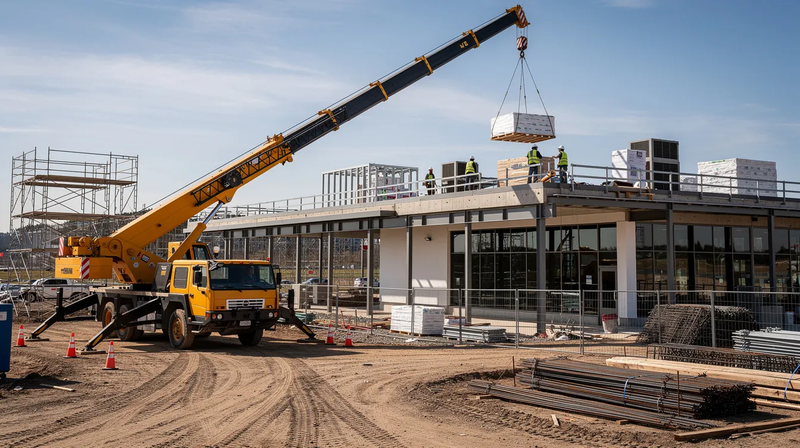
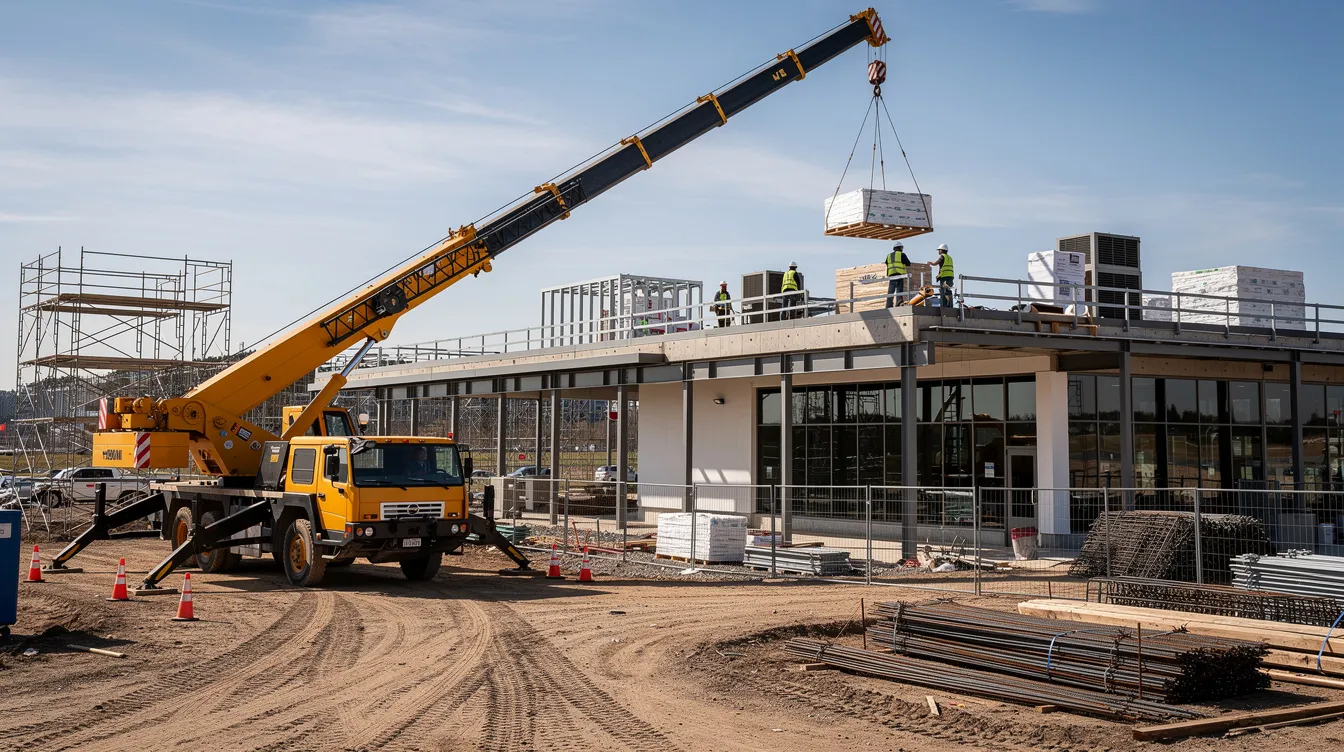
In 2025, a contractor used a 40-ton boom truck with a 142 ft main telescopic boom to set rooftop air handlers on a five-story commercial building. Modern crane trucks match the road speed of highway trucks yet deliver on-site performance comparable to rough-terrain cranes, which are designed for off-road capabilities. Crane trucks operate efficiently on a range of job sites, and choosing the right one directly affects safety, project timelines, and total operating cost.
How Crane Trucks Work: Major Components and Operation
All crane trucks share the same basic architecture: a carrier chassis (truck frame, engine, transmission), the crane structure (boom, slewing mechanism), one or more hydraulic systems, and operator control systems including safety electronics.
The key components include:
-
Truck chassis - dictated by gross vehicle weight rating, axle count, and frame strength; supports the crane, body, and payload.
-
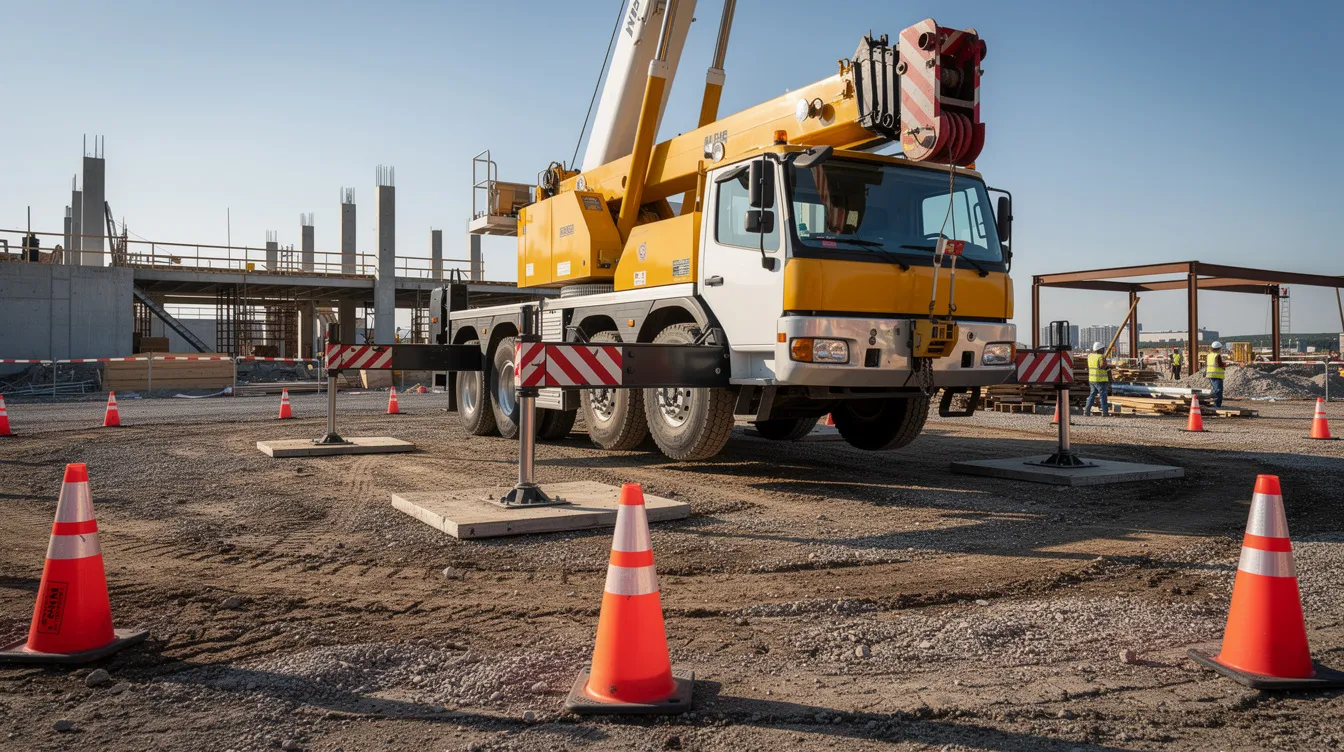
Outriggers - deployed to stabilize the vehicle during lifts. Outriggers improve stability and prevent tipping during lifts. Crane trucks typically include outriggers for stability during lifting, usually in a four-point out-and-down configuration.
-
Boom sections - telescopic booms with multiple extension sections, or articulating knuckle booms. Jib attachments add reach beyond the main boom.
-
Winch and hook block - wire rope drum for hoisting; hook block with safety latch.
-
Load Moment Indicator (LMI) - measures boom position and load weight to prevent overload.
The hydraulic system powers boom elevation, extension, slewing (rotation around the vertical axis), and winch operation through pressurized fluid. Operators don't need to understand fluid dynamics, but they do need to match hydraulic demand to the PTO or power pack capacity.
Operator stations vary from side-mounted open cabs to top-mounted enclosed cabs for full 360° visibility. Many modern units also offer radio remote controls with proportional joysticks, so the operator can stand near the load for better sightlines.
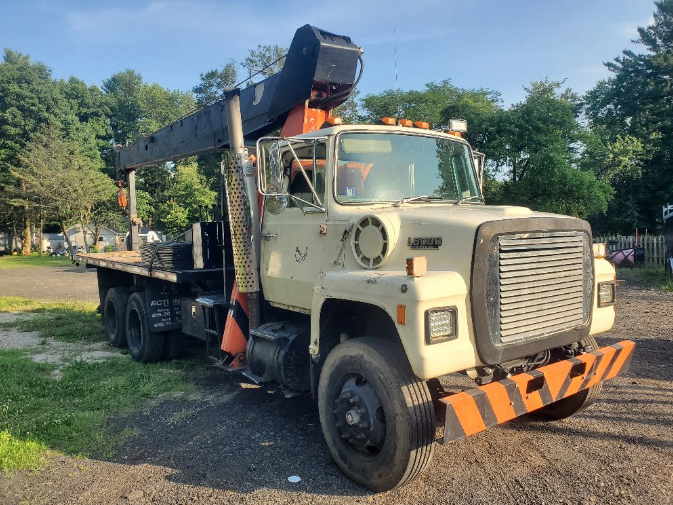
Electronic systems keep operations safe. Load charts are displayed on digital screens in real time, automatic overload protection cuts functions when the LMI detects excess moment, and anti-two-block devices prevent the hook block from contacting the boom tip.
A typical lift sequence runs: truck arrives and parks, outriggers deploy and level, crew completes performing security verification of site conditions including ground bearing and overhead obstructions, the load is rigged, a test lift confirms balance, the main lift executes, and the crane is stowed for travel.
Types of Crane Trucks and Typical Capacities
Crane trucks come in multiple configurations, each engineered to match specific industries and lifting demands. Choosing the wrong type wastes money; choosing the right one multiplies crew productivity.
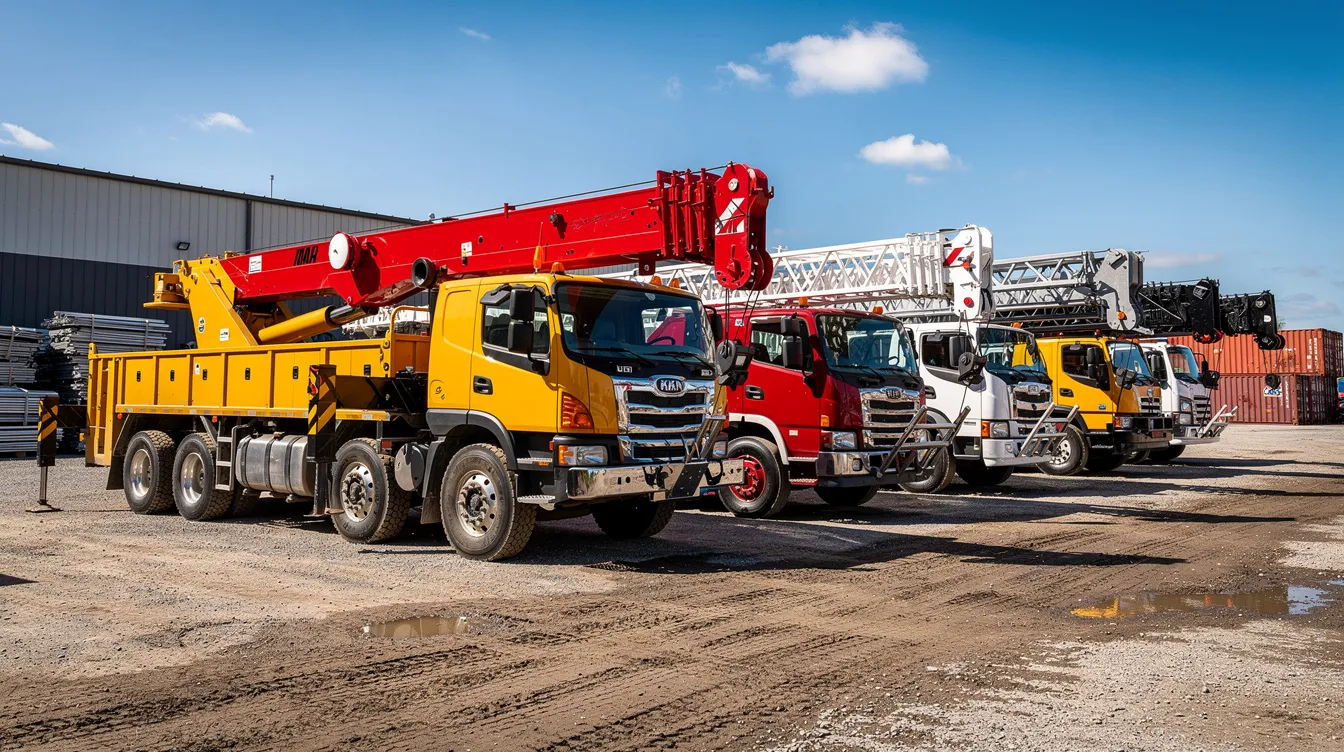
Boom truck cranes sit in the 30–80 ton class with long telescopic booms reaching 100–155 ft horizontally and tip heights exceeding 200 ft with jib extensions. Telescopic boom cranes provide high lifting capacity and vertical reach, making them ideal for construction, infrastructure, and utility projects. Road-building contractors and bridge crews rely on these daily.
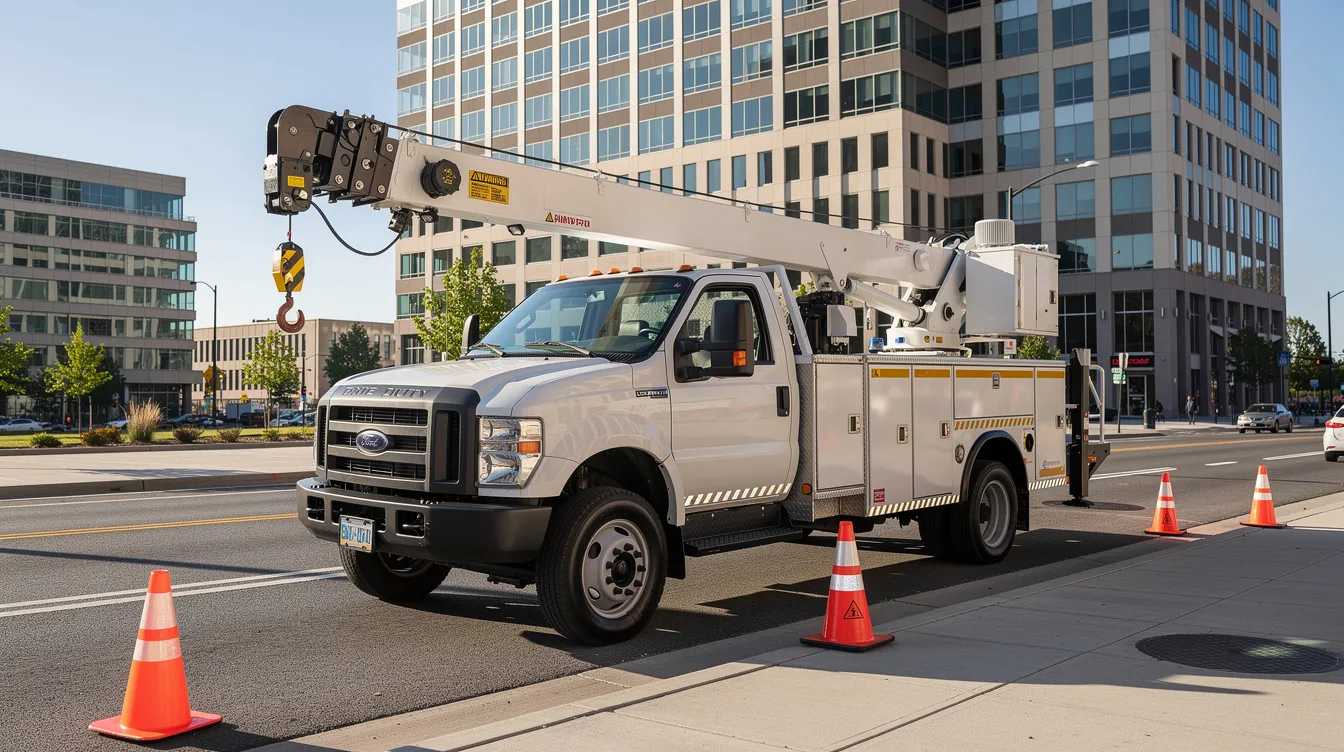
Service truck cranes handle 2,000–14,000 lbs with horizontal reach of 12–25 ft, mounted on Class 4–7 mechanic or service bodies. Auto Crane's service cranes are built for durability and performance, and Auto Crane's truck bodies enhance fleet efficiency and durability across oilfield, mining, and municipal maintenance fleets.
Electric service truck cranes cover the 2,000–6,000 lb range with reach around 12–21 ft. These battery-powered units eliminate idling and are growing in urban utility fleets and indoor maintenance roles.
Articulating (knuckle boom) truck cranes use a compact folding design with articulated arms. Knuckle boom cranes have articulated arms for precise movement, making them well-suited for urban delivery work and tight-access service calls. Horizontal reach typically spans 15–40 ft.
It's worth noting that sidelifter trucks are specialized for handling shipping containers and serve a different niche than general crane trucks. Meanwhile, all-terrain cranes are designed for both highway and off-road use, bridging the gap between boom trucks and dedicated off-road machines.
Load charts vary by model, boom length, and outrigger configuration. Operators must always consult the exact chart for their crane. Terminology and road-weight regulations also differ between North America and Europe, so verify local requirements before spec'ing a unit.
Key Specifications to Consider When Choosing a Crane Truck
Spec selection directly affects what you can lift, what license your driver needs, and whether the truck is legal on local roads.
Maximum lifting capacity is rated in tons or pounds at minimum radius. A 40-ton boom truck may handle 80,000 lbs close to the pivot but far less at 100+ ft of extension. Always check capacity at the radius you'll actually work at, not just the headline number.
Maximum tip height and horizontal reach depend on main boom length, number of sections, and any jib extension. For example, a 142 ft main boom with a jib can push tip height near 207 ft. Longer booms add versatility but also add weight.
Outrigger span options dramatically change what you can safely lift. Full-spread outriggers give maximum chart capacity; short-jacking or mid-span setups reduce it significantly. Always factor in available site footprint.
Chassis GVWR and axle configuration (4x2, 6x4, 8x4) determine legal road weight. In 2024–2026 U.S. regulations, every pound of body, crane, fuel, and tool weight counts toward axle limits. Overweight loads require permits.
Powertrain requirements vary. Boom trucks typically need 300–500+ hp engines; service cranes on medium-duty trucks run 200–350 hp. PTO sizing must match hydraulic demand for outriggers and boom. Automatic transmissions improve driveability and resale.
Control options range from stand-up ground-level controls to enclosed operator cabs and advanced radio remote systems. Modern remotes integrate load indicators and can run through a dedicated app for fleet monitoring.
Part of safe spec selection includes performing security verification of site conditions and ground bearing capacity before every lift. The best practice is to map your 80–90% most common lifts, then choose a crane truck that comfortably covers those tasks with margin for the occasional larger job.
Safety, Compliance, and Security Verification on Crane Truck Jobs
Crane trucks are powerful machines governed by strict standards. In the United States, OSHA 29 CFR 1926 Subpart CC and ASME B30.5 set the baseline for mobile crane safety in construction.
Before any lift, crews must complete a mandatory pre-job process:
-
Verify ground conditions, soil bearing capacity, and underground utilities.
-
Confirm lift plans including load weight, center of gravity, and rigging configuration.
-
Check that outriggers are fully deployed on proper pads and that the truck is level.
-
Identify and clear overhead obstructions such as power lines or piping.
Performing security verification means ensuring only authorized personnel and vehicles are within the lifting zone. Barriers, cones, or barricades must be in place to protect bystanders, and access should be restricted until the lift is complete. Think of this as a security service for the job site - no one enters the zone without clearance.
Daily inspections cover structural members (boom sections, pins, welds), hydraulic cylinders for leaks, wire rope for wear and broken strands, hook safety latches, and functional tests of emergency stop systems. These checks aren't optional; they're regulatory requirements.
Modern crane trucks increasingly use digital access control. Telematics platforms accessible on the www log location, usage, and overload events. Some systems require operator login PINs or card readers that function similarly to how a website might block malicious bots - each session generates a unique respond ray id that the system verifies before enabling crane functions, acting as a built-in bot filter for unauthorized operation. Once the system verifies credentials and confirms that pre-shift checks are complete, crane functions unlock.
Operator qualification under OSHA 29 CFR 1926.1427 requires certification from an accredited organization such as NCCCO, or qualification through an employer-audited program. Certification must match the type and capacity of crane being operated, and annual or more frequent third-party inspections are standard practice.
Crane Truck Applications by Industry
Crane trucks are used wherever heavy or awkward loads need to be lifted and placed quickly without mobilizing a separate mobile crane. They streamline the loading and relocation of heavy equipment across virtually every sector.
Construction and infrastructure: Boom trucks in the 30–80 ton class handle precast panels, structural steel, and concrete beams. Bridge deck work and highway overpass projects regularly call for units with 100–150 ft booms. Crane trucks can drive on public roads to travel between job sites, making them far more responsive than crawler cranes that need lowboy transport.
Utilities and telecom: Setting poles, handling transformers, and positioning cell tower components. A 40-ton boom truck with a 142 ft boom is a common page in the playbook for transmission and substation crews. One regional utility deployed a fleet of 10 service crane trucks to replace 500 transformers over a three-month storm recovery period.
Oil, gas, and mining: Medium hydraulic cranes in the 6,000–12,000 lb class handle pipe, pumps, and wellhead components. Service truck cranes on Class 5–7 bodies are the workhorses here.
Transportation and logistics: Loading and offloading heavy machinery or positioning containers. A single boom truck replaces the need for a separate crane plus flatbed.
Municipal and public works: In 2024, many sign contractors used 18–25 ton boom trucks with 100–125 ft booms for highway signage. Tree removal support and lighting pole installation are also common uses, making these trucks ideal for public agencies managing varied infrastructure.
The right body configuration - flatbed, mechanic body, or custom body - transforms the same crane into application-specific equipment tailored to your industry.
Buying a New or Used Crane Truck
A well-maintained crane truck typically lasts 10–20 years and exceeds 10,000–15,000 operating hours. Total cost of ownership - including maintenance, fuel, insurance, and downtime - matters far more than the sticker price.
Buying new gives you a full warranty, the latest safety electronics (LMIs, anti-two-block, remote controls), and a spec optimized to your work. However, lead times in 2025–2026 for popular 30–60 ton boom trucks and 6,000–10,000 lb service cranes can stretch months due to chassis supply constraints. Dealer support, parts availability, and upfitting quality are critical factors. Don't overlook how the body is mounted - poor manufacturing shortcuts cost you in durability and safety.
Buying used requires a disciplined inspection checklist:
-
Structural welds, boom wear pads, and rotation bearing play
-
Winch condition and wire rope for kinks or broken strands
-
Rust on outriggers, subframe, and chassis
-
Maintenance records, inspection certificates, and hour meter vs. odometer consistency
-
Load charts, manuals, and decals present and legible
As an approximate market reference, used 40-ton boom trucks (2018–2022 models) with 130–150 ft main booms often trade between $375,000 and $650,000 depending on hours, condition, and accessories. Service body cranes on medium-duty trucks may run $80,000–$150,000 new, with used examples scaled downward.
Before closing any deal, performing security verification of serial numbers and ownership documents is essential to ensure the unit is free of liens or theft records. For high-value acquisitions, have a certified crane inspector review structural integrity and compliance before you sign.
Crane Truck Rentals and Short-Term Options
Renting makes sense when lifts are occasional, demand spikes seasonally, or you want to test a configuration before committing to a purchase. It's also ideal when waiting for a new unit to be delivered during extended lead times.
Typical rental models include:
-
Bare rentals - the rental company provides the truck and crane; you supply a qualified operator and insurance. Best for experienced contractors with credentialed operators.
-
Operated rentals - includes the crane, a qualified operator, and often maintenance. Useful if you lack operator credentials or prefer to offload operational risk.
Rental terms generally include daily, weekly, or monthly rates with minimum hour charges, plus mobilization and demobilization fees and travel time. For boom trucks, transport may require oversize permits handled by either party.
Fleet quality matters. Confirm that rental units carry up-to-date inspection stickers, that safety devices are functional with verification successful on all checks, and that operator training documentation is current. A rental crane with outdated safety electronics is a liability, not a bargain.
Communicate detailed lift specifications to your rental provider: load weight, dimensions, center of gravity, radius and height of the lift, site access constraints, and ground conditions. Clear specs allow the company to assign the right crane and ensure safe operations.
Schedule rentals early for peak construction seasons. Spring through fall demand for 30–60 ton boom trucks drives up rates and availability across most U.S. regions.
Electric and Hybrid Crane Truck Solutions
Since 2023, demand has grown steadily for lower-noise, lower-emission crane trucks in urban areas, residential zones, and sites with strict emissions ordinances. If your municipality regulates idle noise or emissions, electric and hybrid solutions deserve serious consideration.
Electric service truck cranes like the Stellar Electric Cranes lift loads from 2,000 to 6,000 lbs. Stellar Electric Cranes have a horizontal reach up to 21 feet and a vertical reach above 22 ft. Electric Crane Trucks lift between 2,000 to 6,000 lbs and have a horizontal reach up to 21 feet. Stellar Electric Cranes operate without fuel, saving costs significantly. Electric cranes operate without fuel, reducing costs across the board, and they can be operated without the engine running - meaning zero idle time. Electric Crane Trucks save on maintenance costs because fewer hydraulic components means fewer failure points.
Hybrid solutions pair a traditional diesel chassis with an electric-hydraulic or plug-in power pack for crane operation. The difference between PTO and ePTO systems matters: an ePTO can power crane functions without engine idle, reducing fuel burn and emissions during lift cycles. Auto Crane's NexStar EHC-6, launched in 2026, offers fleets a choice between traditional hydraulic and electric-hydraulic operation, built in Tulsa to improve parts reliability.
Practical considerations include battery capacity for a full day of intermittent lifting, cold-weather hydraulic fluid viscosity, and charging infrastructure at depots or jobsites. Buyers who add ESG goals and municipal noise ordinances to their security verification process may find electric or hybrid crane trucks especially beneficial for long-term compliance.
 Ownership, Maintenance, and Lifecycle Management
Proactive maintenance keeps crane trucks safe, compliant, and productive. Skipping it doesn't save money - it accelerates failure and invites regulatory trouble.
Routine maintenance tasks include:
-
Daily visual checks of boom sections for cracks, dents, and wear pads
-
Lubrication of pivot points per manufacturer schedule
-
Hydraulic hose and cylinder inspection for leaks
-
Wire rope checks for kinks, broken strands, and corrosion
-
Hook safety latch and emergency stop functional tests
Inspection intervals follow a tiered approach. Operators perform start-of-shift checks daily. Qualified maintenance personnel conduct more detailed structural and hydraulic reviews monthly or as the manufacturer specifies on each page of the maintenance manual. Annual third-party inspections and load tests are standard, with comprehensive structural inspections at 5- and 10-year intervals for heavy-duty-cycle units.
Recordkeeping is non-negotiable. Maintain digital maintenance logs, inspection reports, and repair histories. Telematics systems track utilization, overload or near-overload events, and geographic data for security verification of where the crane operates - useful for audit trails and insurance documentation.
At mid-life, you'll face a refurbishment vs. replacement decision. Components like winches, hoist drums, cylinders, and slewing bearings can be rebuilt. In some cases, re-mounting the crane on a newer chassis extends useful life by another decade when the original truck ages out.
Cranes with full documented history, recent inspections, and clear ownership records command significantly higher resale value and pass external audits or customer qualification requirements - particularly in utility contracting and governmental inc contracts where compliance documentation is mandatory.
Conclusion: Matching the Right Crane Truck to Your Work
A crane truck bridges the gap between transport and lifting, allowing crews to complete complex work with one mobile unit instead of coordinating multiple vehicles and separate cranes.
The key decision factors come down to:
-
Type and capacity - match the crane to your most common lifts, not just your largest possible one.
-
Safety and compliance - performing security verification on every job, maintaining operator certifications, and keeping inspection records current.
-
Buy vs. rent - base the decision on utilization rate, budget, and how quickly your needs may change.
Long-term success depends on combining proper specification, trained operators, rigorous maintenance, and consistent verification of safety checks before every lift. Treat these as non-negotiable, not aspirational.
Looking ahead, electric cranes, smarter control systems, and advanced telematics platforms are reshaping crane truck fleets through 2026 and beyond. The crews and companies that adopt these technologies early will work safer, bid more competitively, and protect their bottom line for years to come.