
Dump Trailers: Payload Capacity, Heavy Duty Options, and FAQs
Whether you're a contractor clearing construction debris, a landscaper moving yards of mulch, or a homeowner tackling a patio tear-out, understanding what a dump trailer can actually handle is the difference between a smooth job and a dangerous one. This guide covers everything from payload capacity and hydraulic systems to real-world load examples and detailed dump trailer faqs so you can buy with confidence.
Quick Overview: What a Dump Trailer Can Carry and How Much Weight It Handles
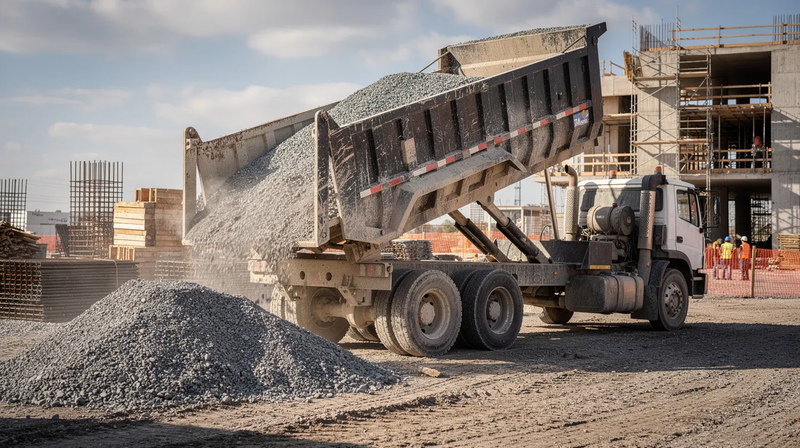
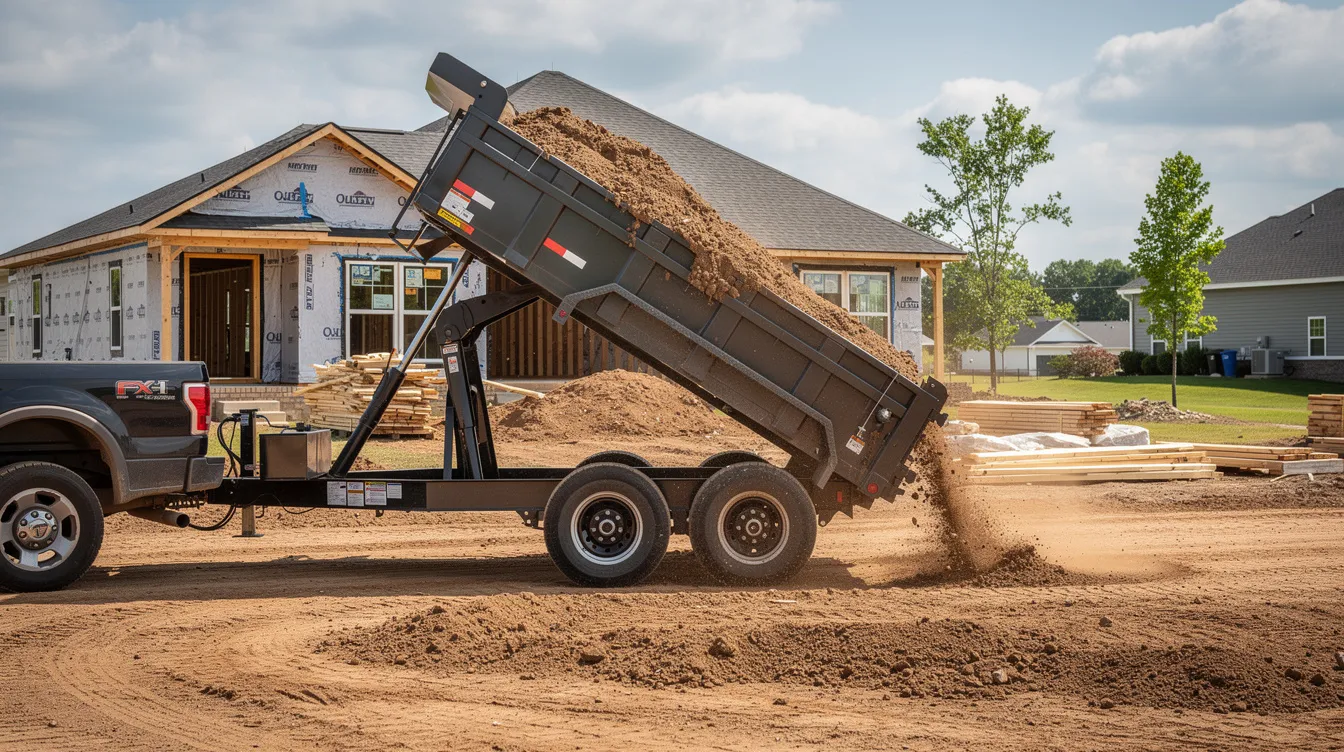
A dump trailer is a towable trailer with a hydraulic lift that raises the bed so loose material slides out, eliminating manual shoveling. Contractors, farmers, landscapers, and homeowners all rely on them because dump trailers allow easy unloading of heavy bulk materials and provide faster unloading compared to manual methods. Dump trailers are commonly used for hauling gravel and debris across residential and commercial sites alike.
So how much weight can a dump trailer carry? It depends on payload capacity, which equals the trailer's GVWR minus its empty weight:
-
A single-axle homeowner model with a 7,000 lb GVWR and ~2,500 lb empty weight delivers roughly 4,500 lbs of payload.
-
A tandem-axle contractor unit at 14,000 lb GVWR with ~4,200 lb empty weight offers about 9,800 lbs.
-
A 7×16 heavy duty model like the Bandit carries a 17,600 lb GVWR and roughly 12,110 lbs of payload.
To put that in perspective, 5 cubic yards of mulch weighs around 2,500–3,500 lbs, while 3 yards of gravel tips the scales near 8,100 lbs. Broken concrete from a 400 sq ft patio runs close to 6,000 lbs. A mid-size tandem-axle dump trailer handles all three scenarios when the tow vehicle and hitch are rated to match.
Safe carrying capacity also hinges on towing capacity, hitch class, and axle ratings-not the trailer alone. The sections below cover construction features, hydraulic systems, configurations, and common trailer faqs in detail.
Understanding Dump Trailer Basics
A dump trailer is a towable unit equipped with a hydraulic system that raises the bed so loose materials-soil, gravel, demolition debris-slide out the rear, cutting labor time dramatically. The main types of dump trailers are end dumps, side dumps, belly dumps, and live bottom trailers. End dump trailers utilize a hydraulic lift to raise the front of the bed for unloading. Belly dump trailers release material through gates at the bottom, which is ideal for spreading material in a windrow. Side dump trailers tilt to one side to dump materials quickly on large sites. Live bottom trailers use a conveyor belt system for unloading without raising the bed at all. Additionally, roll-off dump trailers allow multiple container swaps on job sites, giving crews a bin rotation that keeps work moving.
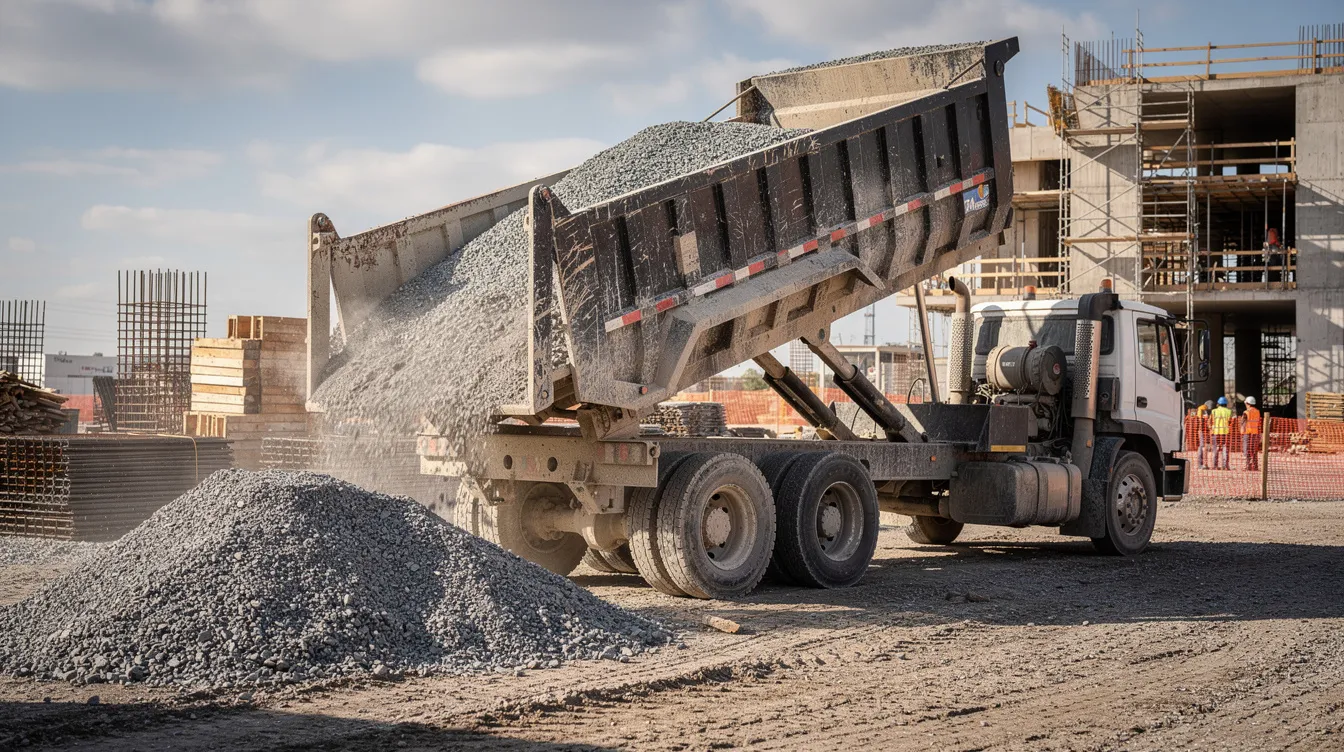
Key components include:
-
Frame and coupler – steel undercarriage with a bumper-pull or gooseneck hitch.
-
Dump bed – the box that holds the load, built from steel or aluminum.
-
Hydraulic hoist, battery, and pump – the power system that lifts the bed.
-
Axles, wheels, brakes, and tires – the rolling support underneath.
-
Ramps and gates – for equipment loading and controlled material discharge.
-
Wiring and lighting – for road-legal towing and visibility.
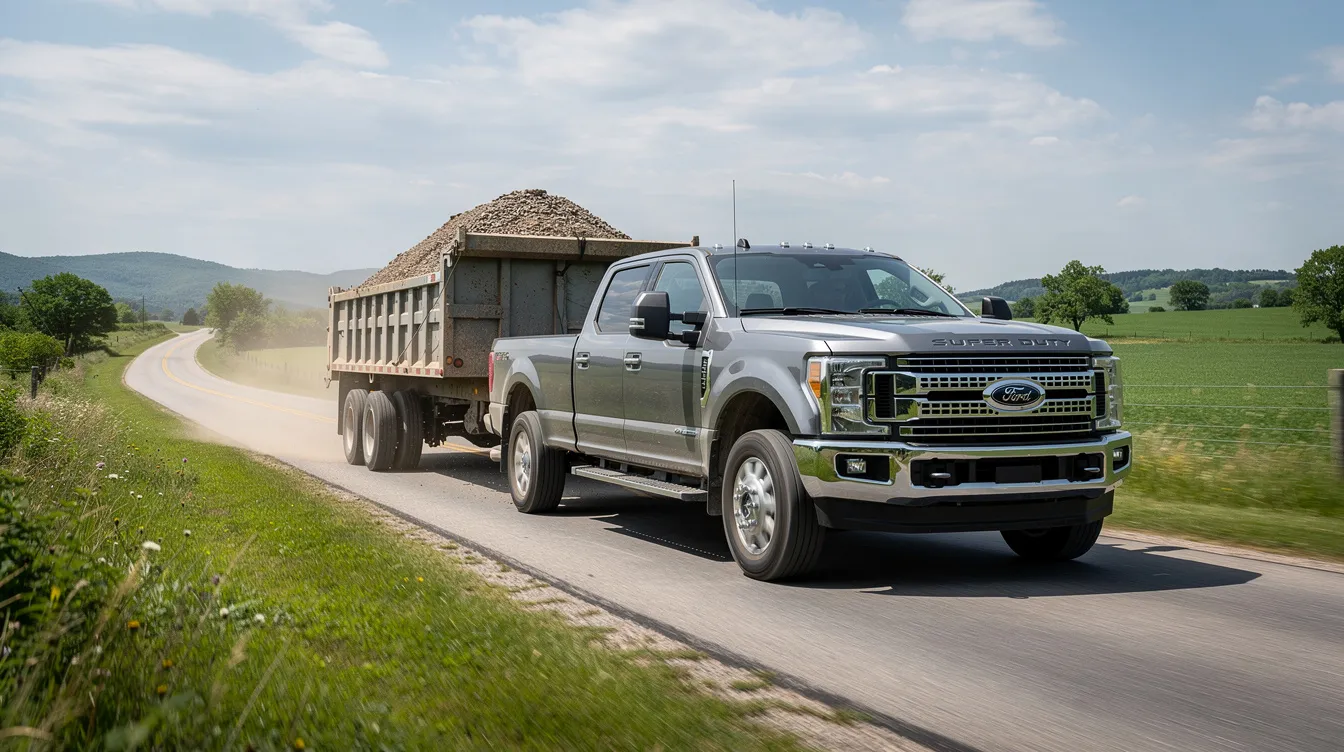
Dump trailers can be towed by trucks or SUVs, and compact dump trailers are ideal for tight spaces and lighter loads. Size examples range broadly: a 10′ × 60″ homeowner unit with ~7,000 lb GVWR, a 14′ × 83″ contractor dump at ~14,000 lb GVWR, and gooseneck dump trailers stretching 16–20 feet with 17,500–21,000+ lb ratings.
Common applications include residential cleanouts, roofing tear-off, dirt and soil removal, small equipment transport via ramps, and farm chores like moving manure or feed. Dump trailers can assist with site preparation by moving soil and bulk materials efficiently. In landscaping, dump trailers are used for delivering bulk materials and removing green waste. They're also commonly used in construction for hauling aggregates and debris removal.
The word "light duty" generally means a single axle, thinner steel, occasional weekend use. "Heavy duty" means beefier frame stock, 7,000+ lb axles, and the reliability needed for daily field work. Commercial-grade dump trailers handle frequent use and heavy loads, while light-commercial dump trailers balance capacity and maneuverability for crews that don't need the biggest setup.
Key Dump Trailer Features That Matter on the Job
Not all dump trailers are built the same. If your application involves daily hauling of gravel, concrete, or roofing debris, the construction details matter more than the sticker price. Here's what to check before you buy.
Structural features:
-
Frame – look for 6″–8″ channel or I-beam main rails. Cross-member spacing of 12″–16″ on center prevents floor sagging under heavy, concentrated loads.
-
Floor gauge – 7-gauge steel floors withstand rocks, concrete, and asphalt. Thinner 10-gauge floors work for mulch and dirt but won't hold up under repeated abuse from dense material.
-
Bed sides – vertical side bracing and reinforced fenders extend service life on rough terrain.
Gates and doors:
Dump trailers feature a two-way barn door for easy loading and full rear access. A spreader gate option lets you control the flow of stone or asphalt for even distribution. Some models offer dual-function gates that combine both styles, giving you versatility whether you're loading equipment or dumping aggregate.
Ramps:
Ramps on dump trailers allow for easy transport of compact equipment like skid steers, compact tractors, and zero-turn mowers. On trailers 7 feet wide or larger, ramps are commonly included and should be rated to match the equipment weight-at least 6,000 lbs for a standard skid steer.
Wiring and lighting:
Sealed wiring harnesses run through conduit or under the bed to protect against damage from debris, mud, and salt spray. Lifetime LED tail lights are standard on all dump trailers, resisting vibration and moisture far better than incandescent alternatives. Flush-mounted lights and protected rear bumpers keep everything intact season after season.
Convenience and safety add-ons:
-
D-rings and stake pockets inside the bed for tie-downs.
-
Tarp brackets to contain loose material during transport.
-
Lockable pump and toolbox compartments to protect the hydraulic components.
-
Onboard battery charger so you start each day ready to go.
-
Grease zerks at hinges and pivot points for long-term keeping of smooth gate and hoist operation.
-
Wireless remote dump controls, standard on many Pro-Series models.
Dump trailers can be equipped with hydraulic systems for unloading that range from basic to fully featured-pick the setup that matches the attention your job demands.
Hydraulic Systems: How Dump Trailers Lift Heavy Loads
The hydraulic system is what separates a dump trailer from a flatbed. Dump trailers use hydraulic systems to lift the bed, and the reliability of that system determines whether your trailer is a daily workhorse or a weekend-only tool. Hydraulic lifts reduce labor time required to unload materials from dump trailers, often turning a 30-minute manual unload into a 60-second operation.
The hydraulic lift mechanism is often powered by a 12-volt battery driving a hydraulic pump that pressurizes fluid through hoses into one or more cylinders. That force raises the loaded bed so material slides out under gravity.
Three primary hoist styles:
-
Single-ram system – one cylinder pushes from beneath the bed center. It's simpler, lighter, and cheaper, making it common on smaller trailers under 10,000 lb GVWR. The tradeoff is less stability under heavy or unevenly distributed loads.
-
Scissor hoist – an X-shaped folding mechanism that distributes force across multiple pivot points. Scissor hoists are standard on trailers over 14,000 lbs because they deliver excellent stability for frequent heavy use. They require more maintenance at pins and joints but are built to withstand punishing daily cycles.
-
Telescopic cylinder – a multi-stage ram, often front-mounted, that extends like a telescope. It provides strong leverage early in the lift and achieves high dump angles, making it effective for sticky or wet material. The industry trend is toward telescopic hoists in heavier models where maximum dump angle matters.
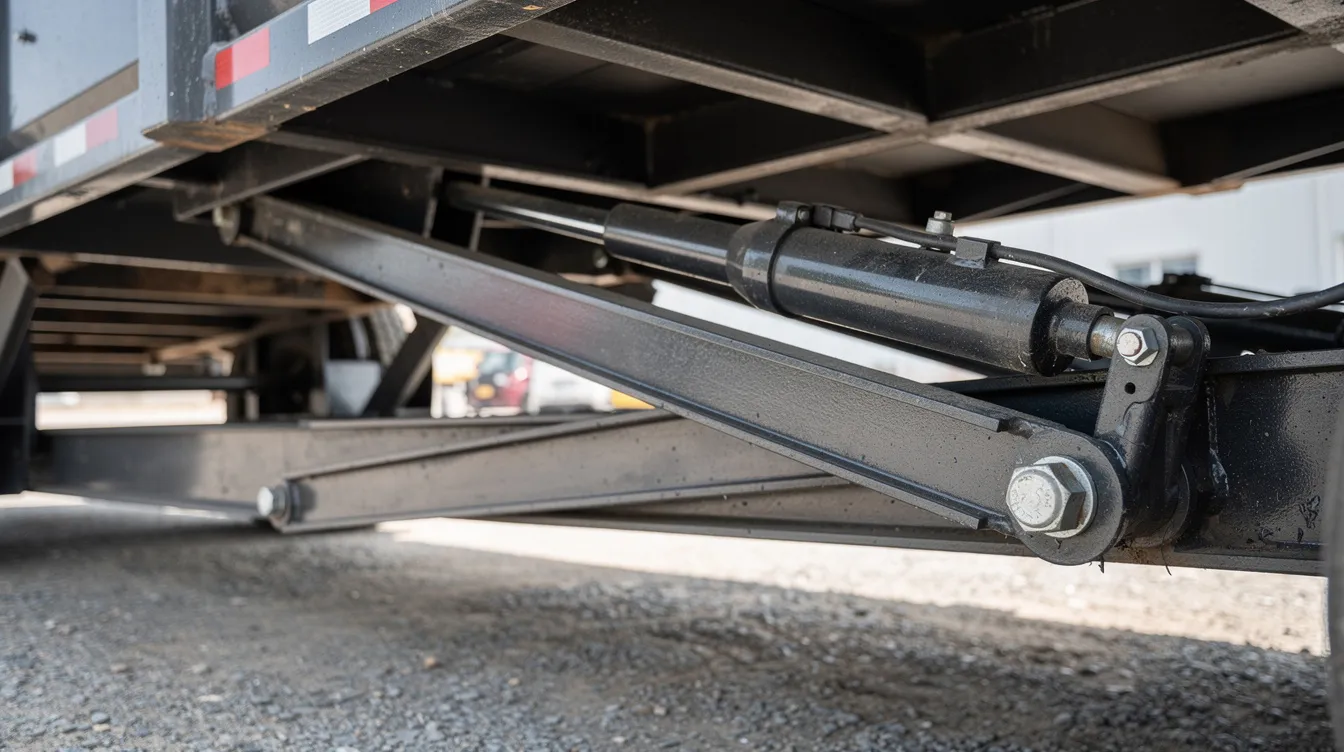
Hydraulic capacity affects how much weight a dump trailer can reliably raise, not just what it can legally carry. Three yards of wet clay, for example, can weigh significantly more than dry mulch of the same volume and may resist sliding, demanding more power from the pump and cylinder.
Maintenance essentials:
-
Check hydraulic fluid level and use the manufacturer-specified fluid.
-
Inspect hoses and fittings for leaks or wear before each use.
-
Charge the deep-cycle battery regularly-a dead battery means a stuck bed.
-
Grease all pivot points, pins, and scissor joints on a scheduled basis.
-
For gravity-down systems, verify hinge and pivot operation to prevent the bed from getting stuck in the raised position.
Dump Trailer Sizes, GVWR, and Payload Capacity
GVWR stands for Gross Vehicle Weight Rating-the maximum combined weight of the trailer plus its cargo. Empty weight (sometimes called curb or tare weight) is the trailer with no load. Payload capacity is simply GVWR minus empty weight. Dump trailers range from 10 to 20 feet long, and the size you choose directly impacts how much material you can move per trip.
Example models and ratings:
-
10′ × 60″ single-axle – ~5,200–7,000 lb GVWR, ~3,500–5,000 lb payload. Good for mulch, light dirt, and small cleanouts.
-
12′ × 77″ tandem-axle – ~9,900–12,000 lb GVWR, ~7,000–9,000 lb payload. Handles most landscaping and moderate construction work.
-
14′ × 83″ tandem-axle heavy duty – ~14,000 lb GVWR, ~9,800–10,500 lb payload. A strong choice for contractors who move gravel, soil, and debris daily.
-
16–20′ gooseneck dump – 17,500–21,000+ lb GVWR for commercial hauling of aggregate, demolition material, and heavy equipment. Heavy-duty dump trailers can have a GVWR of 25,000 lbs and can carry up to 25,000 lbs in the most robust configurations.
Tandem axles on dump trailers provide improved stability and higher capacity compared to single-axle designs, which is why they dominate the contractor and commercial segments.
Material density matters:
-
Gravel / crushed stone: ~2,700–3,000 lbs per cubic yard
-
Topsoil (loose): ~1,800–2,200 lbs/yd³
-
Concrete (broken): ~4,050 lbs/yd³
-
Mulch / wood chips: ~400–600 lbs/yd³
To figure your safe load, find the GVWR on the VIN tag, subtract the empty trailer weight, then calculate the weight of your material by multiplying volume (in cubic yards) by density. Always confirm that axle ratings, tire capacity, hitch class, and tow vehicle ratings support the fully loaded weight. Overloading can lead to brake failure, tire blowouts, and legal penalties.
Low-Profile vs. Deck-Over Dump Trailers
Two main configurations define how a dump trailer's deck sits relative to its wheels: low-profile and deck-over. The choice affects loading ease, stability, and what you can haul.
Low-profile dump trailers position the deck between the wheels, giving a lower center of gravity and reduced deck height (typically 24″–32″). This makes hand-loading and equipment ramp angles easier, and the lower stance improves stability during transport. They're a strong fit for residential work and light commercial tasks.
Deck-over dump trailers ride above the wheel arches, providing full-width bed space-typically 96″ or wider. Deck-over dump trailers provide extra width for bulkier materials like pallets, large equipment, and odd-shaped demolition debris. The higher deck (34″–40″) means steeper ramp angles and a higher center of gravity, so they pair best with heavy duty axles and experienced operators.
Quick comparison:
-
Suburban landscaping contractor moving mulch, mowers, and green waste → low-profile delivers easier loading, better maneuverability in driveways, and enough capacity for 4–6 yard loads.
-
Excavation contractor hauling broken concrete and large rocks → deck-over offers the width and volume to maximize each trip, with GVWR to match.
Both styles deliver strong versatility, so base your decision on the material dimensions and loading method you use most.
Selecting the Right Dump Trailer for Your Work
Start by listing your primary hauling tasks-construction debris, roofing tear-off, landscaping material, farm chores, or mixed use-and how often you'll run the trailer. A once-a-month homeowner and a daily roofing crew have very different needs.
Simple decision framework:
-
Estimate your heaviest typical load. A roofing crew removing 30 squares per day generates roughly 6,000–7,500 lbs of debris. A landscaper moving 4–6 yards of mulch per trip needs capacity for 2,400–3,600 lbs.
-
Check tow vehicle ratings. Confirm tow rating, truck-bed payload, tongue weight limit, and hitch class. Your truck must be able to stop the fully loaded trailer safely.
-
Choose GVWR with a safety margin. If your heaviest load is 9,000 lbs, select at least a 12,000 lb GVWR trailer to leave room for equipment, fuel, and uneven loads.
-
Decide on length and width. Longer beds hold more volume but add weight and reduce maneuverability. Match the bed to your most common material or the equipment you need to transport.
-
Choose bumper pull vs. gooseneck. Gooseneck hitches shift tongue weight forward over the truck's rear axle, improving stability for heavier loads-typically best above 14,000 lb GVWR.
If you transport equipment like a compact tractor, mini excavator, or skid steer, confirm ramp ratings and ensure the bed has D-ring tie-downs to hold machines securely.
Mistakes to avoid:
-
Buying too small and consistently overloading the trailer.
-
Ignoring tongue weight, which can exceed your truck's rear-axle or hitch rating.
-
Forgetting local bridge and axle weight limits that apply on public roads.
A note on researching online: When browsing dealer websites for stock and pricing, you may occasionally find yourself blocked by a security service like Cloudflare that helps protect sites from online attacks. If a certain word or phrase in your search, or submitting malformed data in a form, performed triggered the security solution, you'll see a block page. The cloudflare ray id found at the bottom helps the site owner resolve the issue. You can take several actions: check your ip address, clear your browser, or contact the dealer's team directly to find the page you need. These measures exist to guard against threats like sql command injection, so don't worry-it's not personal. If you're unable to access a website, simply try a different approach or call the dealer.
Heavy Duty Construction Details to Look For
The difference between an occasional-use homeowner trailer and a truly heavy duty, jobsite-ready unit designed for daily punishment comes down to construction detail. A reputation for durability isn't built on marketing-it's built on steel, engineering, and attention to high-stress points.
Steel is more durable than aluminum for heavy-duty dump trailer use, and the best commercial units show it. Here's what to look for:
-
Main frame – 6″–8″ channel or I-beam rails with gussets or double frames at hoist mounts and gate hinges. This is the strength backbone that must withstand years of loading cycles.
-
Floor gauge – 7-gauge steel floors resist denting and puncture from rocks, concrete chunks, and metal debris.
-
Axles – 7,000 lb or 8,000 lb rated axles with properly sized electric or hydraulic brakes on every axle.
-
Suspension – slipper springs or heavy duty leaf springs that hold up under repeated max-weight loads.
-
Tires – radial tires improve fuel economy and ride quality while delivering higher load ratings than bias-ply alternatives.
-
Corrosion protection – powder-coat finish on frame and bed, undercoating on exposed steel, sealed wiring in conduit, and a locking steel toolbox to protect the battery, pump, and hydraulic components.
-
Warranty – most dump trailers feature a three-year frame warranty, a sign the manufacturer stands behind the build quality. Check for warranty terms on components like the hoist, axles, and wiring before you purchase.
These features represent a higher upfront cost but deliver fewer repairs, less downtime, and longer service life. For contractors who run a dump trailer almost every day, that excellence in construction pays for itself in replacement parts you never need to buy.
Dump Trailer FAQs: Common Questions Answered
This section compiles the most frequent dump trailer faqs customers ask before making a purchase. Each answer aims to deliver clear, practical information.
What is a dump trailer and how does it work? A dump trailer is a towable unit with a hydraulic hoist that raises the bed so material slides out under gravity. It can be towed behind a pickup truck or heavy-duty SUV and is used across construction, landscaping, farming, and residential cleanup.
How much weight can a dump trailer carry? It depends on GVWR and empty weight. A 7,000 lb GVWR model typically carries ~4,500 lbs. A 10,000 lb GVWR unit handles around 7,000 lbs. A 14,000 lb GVWR heavy duty trailer offers ~9,800–10,500 lbs of payload, and a 21,000 lb GVWR gooseneck can carry 15,000+ lbs. Some heavy-duty dump trailers can carry up to 25,000 lbs.
Do I need a CDL to pull a dump trailer? Under federal rules, if the combined GCWR of your truck and trailer is 26,001 lbs or more and the trailer's GVWR exceeds 10,000 lbs, you generally require a Class A CDL. Rules vary by state, so check local requirements before you apply for or skip a CDL.
Can a dump trailer haul equipment as well as loose material? Yes, when the trailer has properly rated ramps and D-ring tie-downs. Compact tractors, skid steers, and zero-turn mowers are regularly loaded onto dump trailers. For very large or heavy machines, a dedicated equipment trailer may be a better and safer choice.
What materials can a dump trailer carry? Concrete, asphalt, gravel, sand, topsoil, mulch, roofing debris, manure, brush, and general construction debris. Always calculate the weight of your specific material by volume and density to stay within the trailer's rated capacity.
How do I calculate safe payload capacity? Find the GVWR on the trailer's VIN plate, subtract the empty trailer weight, and you have your maximum payload. Then confirm your tow vehicle's tow rating and hitch capacity can support that loaded weight.
How often should I service brakes, bearings, and hydraulics? For trailers in daily use, inspect brakes and bearings every 12,000 miles or annually, whichever comes first. Check hydraulic fluid, hoses, and battery charge before every shift. Grease pivot points and gate hinges weekly during active use to extend component life.
Operating and Loading Safely
Safe operation protects you, your crew, and the trailer itself. When you're dealing with heavy loads and hydraulics, cutting corners can lead to catastrophic failure.
Loading best practices:
-
Distribute weight evenly over the axles. Keep the heaviest material low and centered in the bed.
-
Never stack material above the side walls-loose debris can shift during transport and create an unstable load.
-
Secure any equipment with chains through D-rings. Ratchet straps alone aren't enough for machines on a dump bed.
Safe dumping procedures:
-
Always park on level, firm ground before raising the bed.
-
Check overhead clearance for power lines, tree branches, and structures.
-
Keep bystanders well clear of the dump zone.
-
Raise the bed slowly-never rush a heavy dump.
-
Never climb under a raised bed without properly installed safety props.
Towing safety:
-
Confirm the correct ball size and full coupler engagement before every trip.
-
Cross safety chains under the tongue so they catch the coupler if it separates.
-
Test the breakaway system and brake function periodically.
Seasonal tips:
-
Rinse road salt from the frame and undercarriage through winter months.
-
Switch to cold-weather hydraulic fluid if you operate in freezing temperatures.
-
Monitor tire pressure during temperature swings-a 10°F change can shift pressure by 1–2 PSI per tire, which matters when you're at max capacity.
Conclusion: Choosing a Dump Trailer That Works as Hard as You Do
Understanding the basics-GVWR, payload capacity, hydraulic hoist types, and construction quality-puts you in a position to choose a dump trailer that genuinely fits your work. Whether you need a compact single-axle unit for weekend cleanups or a heavy duty gooseneck for daily commercial hauling, the right choice always starts with knowing your real loads and matching them to the trailer's rated capabilities.
The key takeaway is straightforward: learn exactly how much weight your dump trailer can carry, understand the configurations available, and pay close attention to the build quality that drives long-term durability and reliability. Chasing the lowest price often leads to higher costs in downtime, repairs, and early replacement.
Before you visit a dealer or make an online purchase, list your top three hauling tasks, estimate your heaviest load in both pounds and cubic yards, and use those numbers to compare options. Ask about frame gauge, hoist type, axle ratings, and warranty terms. A dump trailer that's ready for your hardest day on the job is an investment in productivity, safety, and years of dependable service.