
Forestry Arborist Fella Buncher Guide: Machines, Felling Heads & Used Equipment
Introduction to Forestry Arborist Feller Bunchers
A feller buncher is a heavy-duty mechanized forestry machine designed to cut, hold, and gather two or more trees simultaneously during logging operations. The first prototype bunching machines appeared in Ontario around 1970, and by the late 1970s, mechanized felling had become standard across North American timber harvesting and land clearing operations. A forestry arborist feller buncher replaces large crews of manual loggers with a single operator inside a protective cab, making it one of the most productive pieces of machinery in the woods today. Traditional arborists do not typically use feller bunchers, as they cater to different work environments and tasks; feller bunchers are primarily used for large-scale timber harvesting and land clearing operations.
Feller bunchers cut trees and process timber faster than traditional chainsaw methods. The use of feller bunchers in forestry increases work efficiency by allowing quick and controlled removal of multiple trees. Feller bunchers also offer greater ease of operation than other logging equipment, reducing the skill barrier for new operators starting in mechanized logging.
IronMartOnline specializes in sourcing and selling used feller bunchers and related forestry equipment for contractors, land-clearing companies, and timber operations. This article covers machine types (tracked vs wheeled), felling heads, daily maintenance, risk management, and how to buy or sell a feller buncher through a brokerage.
Core Components of a John Deere Feller Buncher for Arborists
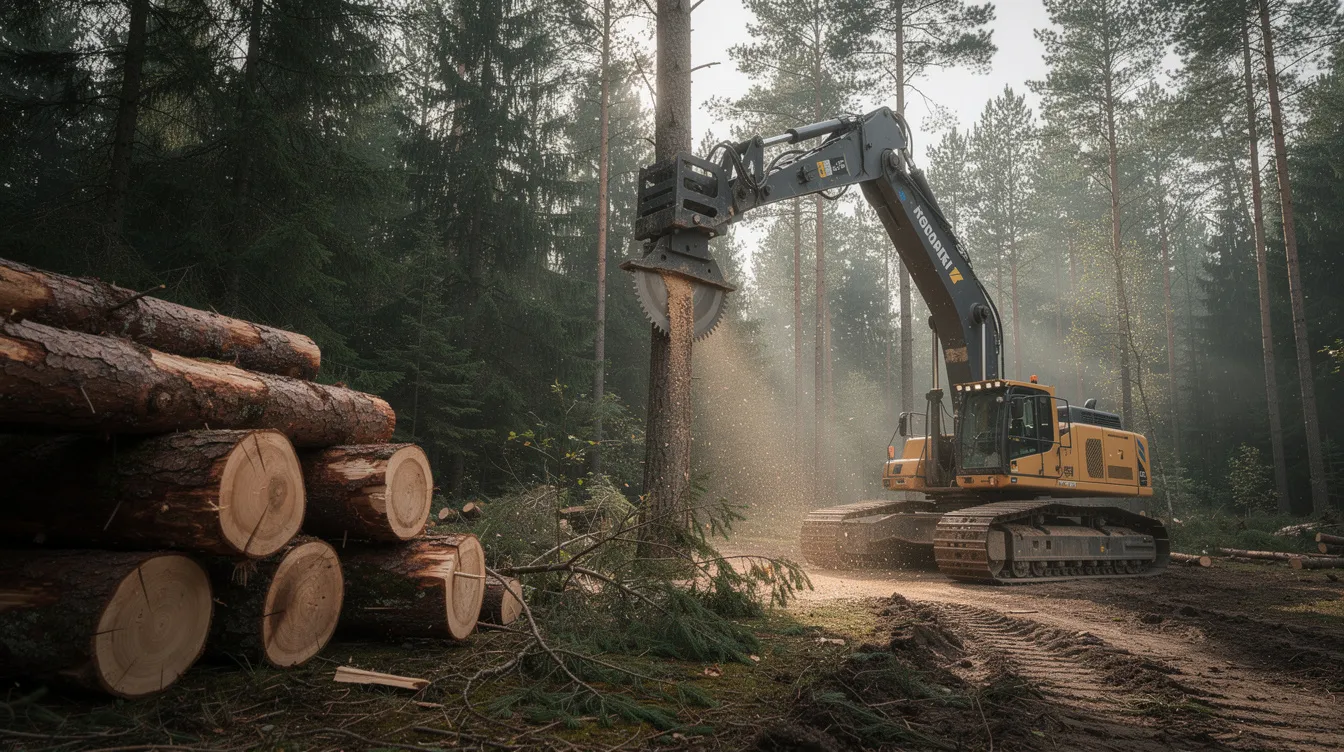
Every feller buncher shares five core components: an undercarriage (tracks or wheels), an upper structure housing the engine and counterweight, an operator cab, an articulated arm with boom assembly, and the felling attachment. Each component affects where and how the machine can operate across different terrain types.
-
Tracked feller bunchers provide high traction and stability on steep slope ground, making them standard in mountainous areas like the Pacific Northwest and Appalachian regions. A mid-to-large tracked machine such as the John Deere 953M weighs roughly 94,000 lb (~42,600 kg). Ground pressure on double-grouser tracks can stay under 10 kPa (1.5 psi), reducing soil disturbance. Standard boom reach on these carriers runs about 27 to 28 feet.
-
Wheeled feller bunchers offer higher travel speed and better fuel efficiency on flat or gently rolling terrain. They are more efficient on flat terrain and popular in Southern U.S. pine plantations. Example models include the Weiler B570 (203 hp, ~39,120 lb) and Weiler B670 (241 hp, ~42,143 lb). Slope capability is limited to roughly 25–30% grade.
-
Self-levelling cabs keep the operator platform near horizontal on slopes, improving visibility and reducing fatigue. Feller bunchers have self-levelling cabins with protective cab features that help keep the machine operator safe, and some systems correct up to 30° of slope. These cabs also allow feller bunchers to operate safely in low light conditions; they can operate safely in the evening, expanding work hours.
-
Felling heads are the working tool of the machine. Arborists and loggers choose different heads based on tree size, stand density, and final product (pulpwood vs sawlogs). Head selection drives both cutting performance and bunching capacity.
Feller bunchers are available in both tracked and wheeled configurations to adapt to different terrains, so carrier choice depends on the job site.
Types of Felling Heads and Their Applications
A felling head is an attachment that grasps a tree at its base, cuts it, and accumulates stems for bunching. It differs from harvesting heads (which also delimb and buck) and simple grapples (which only grip). Feller bunchers can have disc saw, shear blade, or chain saw heads.
-
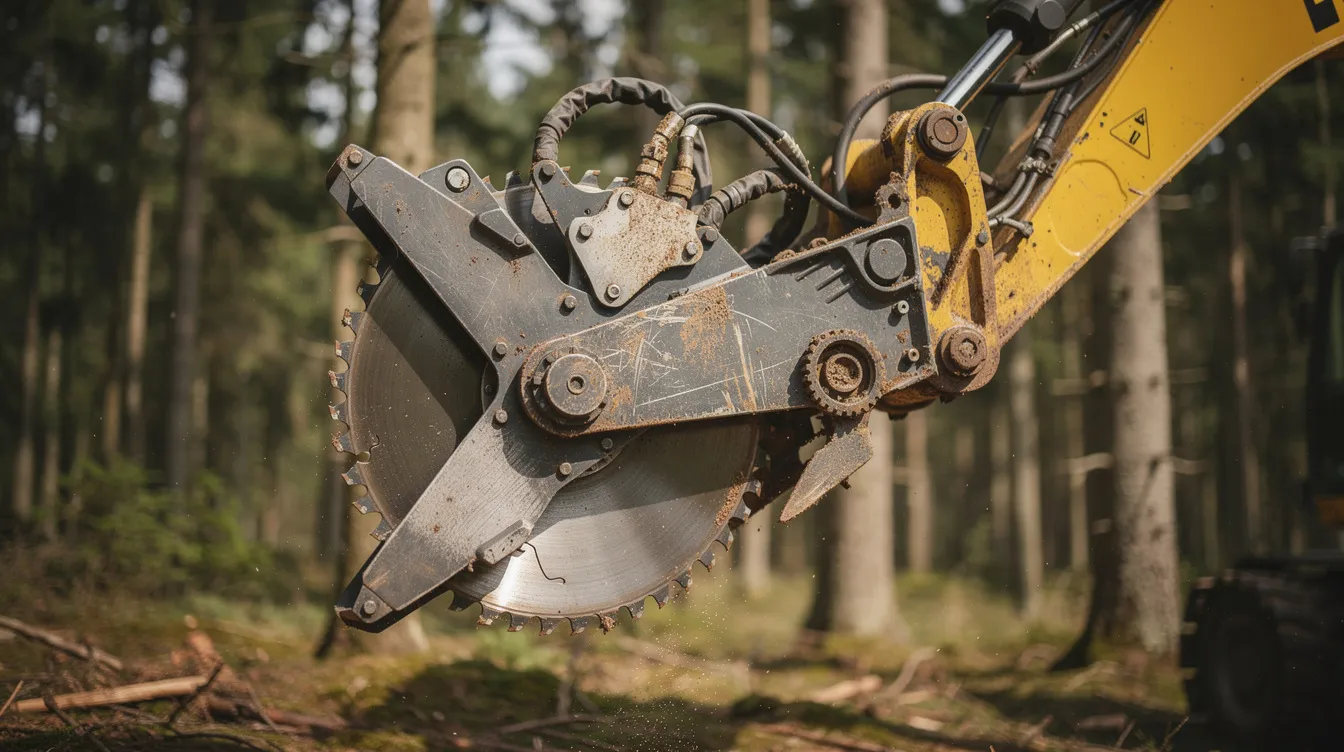
Disc saw felling heads use a hydraulic-powered circular saw disk spinning at roughly 1,150–1,250 RPM with 18–20 teeth. Disc saw heads cut multiple trees quickly and efficiently, with some models handling diameters up to 22–24 inches. They produce clean cuts that lower stump height, preventing up to 30% wood value loss compared to poorly placed manual cuts. John Deere offers heads like the FR22B and FR24B; Tigercat produces the 5702 series for high-production swing-to-tree operations.
-
Shear blade felling heads use a clamp-and-blade action to clip through stems. Shear blade heads hold and cut multiple trees simultaneously with fewer moving parts and lower hydraulic power demand. They are preferred for pulpwood thinning, land clearing, and right-of-way projects, especially on rocky ground. Tigercat's 1800 bunching shear is a lower-cost alternative to disk saw heads in these conditions.
-
Chain saw felling heads integrate a bar and chain into a clamping head. They produce narrow-kerf, precise cuts with less wood waste but cycle slower than disc or shear types, making them better suited to smaller-scale operation or areas where disk parts are expensive.
Cost and maintenance complexity vary: disk saw heads carry the highest purchase price and require periodic tooth replacement and blade balancing; shear blades need sharpening and cylinder seal checks; chain heads demand frequent chain and bar service. OEMs like John Deere and Tigercat design proprietary heads optimized for hydraulic flow on their own carriers, so matching the head to the machine matters for long performance.
Daily Maintenance & Service Intervals for Feller Bunchers
Feller bunchers require daily maintenance before operation. On a machine with a purchase cost of around $180,000 USD and an hourly operational cost of about $99.5, skipping a single day of checks can lead to failures that cost thousands in downtime and parts.
-
Every 8 hours: grease all felling head pivot points, boom pins, slew bearings, saw head clamps, wrist attachments, and driveshaft bearings. Lubrication is needed for every joint daily.
-
Lubricant standard: use extreme-pressure grease containing approximately 3% molybdenum disulphide (MoS₂) to reduce metal-to-metal wear in high-load joints on the boom assembly and clamp arms.
-
Fuel quality: feller bunchers use diesel fuel with a cetane number greater than 50. Ultra-low sulfur diesel (ULSD) is required for Tier 3, Tier 4, and Stage V engines from brands such as John Deere and Caterpillar. Check water separators and fuel filters daily.
-
Coolant system: use low-silicate ethylene glycol-based coolant mixed 50:50 with distilled water. Coolant should protect against temperatures as low as -37 °C. Check the level before startup and inspect radiator hoses for leaks or debris.
-
Hydraulic system: inspect all hose fittings and cylinder rods for leaks; check hose guards; monitor hydraulic fluid temperature and cleanliness.
-
Cab access hazard: slippery cab access steps covered in mud or snow can make each step unsafe during entry or exit.
-
Access safety: Key safety practices: use three points of contact when entering or exiting the cab; keep steps and handrails clear and dry; otherwise, falls can happen during routine access or servicing.
Buyers of used machines from marketplaces like IronMartOnline should review maintenance logs, verify engine hour meters are working, and request fluid analysis reports as part of due diligence before placing any offer.
Safety & Risk Management in Mechanized Forestry Operations
Mechanized harvesting using feller bunchers has reduced logging injuries over the last three decades. Feller bunchers reduce "struck by" injuries by 8.2%. Using feller bunchers can decrease total injury claims by 14.2%. In Washington State, fully mechanized crews logged about 3.0 compensable claims per 100 full-time workers annually; manual crews averaged roughly 28 per 100 over a comparable period.
Common hazards during operation and maintenance include:
-
Hot exhaust components that can burn service personnel
-
High-pressure hydraulic lines that can rupture and spray oil
-
Moving saw disks or blades that can fracture or kick back
-
Slippery cab access steps covered in mud or snow
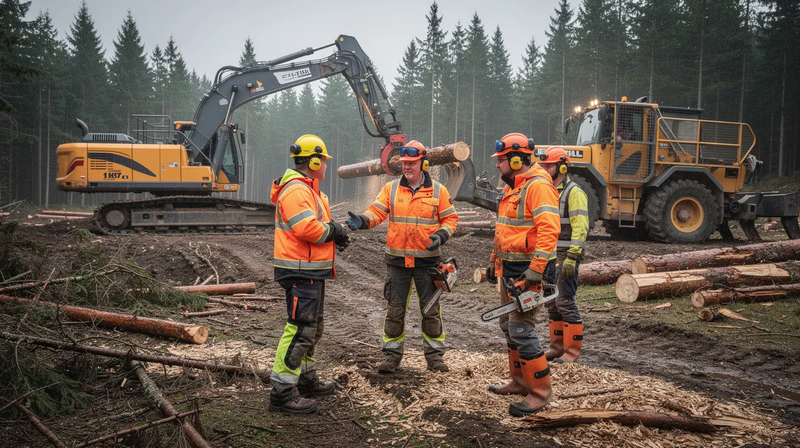
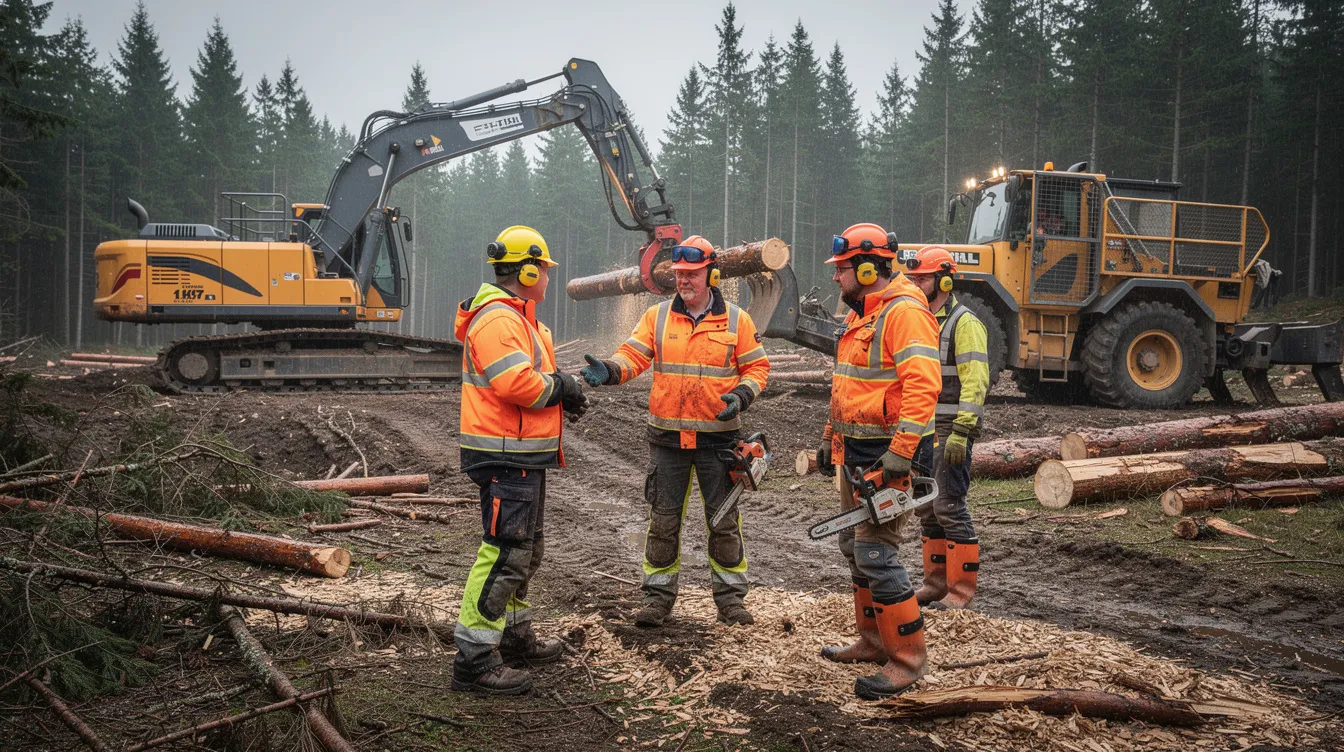
Key safety practices: use three points of contact when entering or exiting the cab; keep steps and handrails clear and dry; never service the felling head with the engine running or hydraulic pressure still in the lines. Ground personnel must wear hard hats, high-visibility clothing, and cut-resistant boots even when the operator is inside a protective cab. Clear communication signals between the operator and ground crew keep everyone in a safe place.
Feller bunchers also reduce fire risk by thinning trees and removing dead trees, reducing fire hazards in managed natural resources areas. They help create firebreaks to reduce fire risk, and those firebreaks slow down fire spread across the landing and surrounding woods. Feller bunchers disturb soil minimally, preventing soil erosion, and help keep trees away from water streams during streamside harvest operations.
Terrain limitations remain: very steep, rocky, or swampy ground raises risk even for tracked machines and may call for alternative equipment or specialized track setups. Despite the cost of purchase and operation, feller bunchers generally deliver the lowest unit production cost and the best safety rate when sufficient tree volumes are available.
Buying & Selling Used Feller Bunchers and Other Logging Equipment with IronMartOnline
New tracked feller bunchers with large disc saw heads often list between $700,000 and $1,000,000. Used models with 5,000–10,000 hours can offer 30–50% savings while still delivering years of service life. Median used listing prices in the Southeastern U.S. run about $217,250 for tracked units and $87,714 for wheeled units. Feller bunchers can also organize felled trees into neat, uniform piles so a skidder can haul them before collection at the landing, which helps produce efficient downstream logistics.
What buyers should check:
-
Carrier type: tracked vs wheeled; inspect track shoes, rollers, idlers, or tire tread and sidewall condition
-
Felling head type and size: disk, shear, or chain; check for cracked blades, worn teeth, or loose chain bars
-
Engine hours: verify the hour meter works; request maintenance logs for major service events
-
Boom and attachment: look for weld cracks, bending, hydraulic cylinder leaks
-
Past application: machines used for plantation thinning typically show less wear than those used for rough land clearing
IronMartOnline's brokerage model handles the hard parts. Sellers get detailed listings with photos, specs, and history, marketed globally to reach buyers across the logging industry. Inspections, logistics coordination, and paperwork are managed so equipment owners save time. The "Sell Your Machine" service is designed for contractors and fleet managers who want a hands-off, professional sales experience. IronMartOnline can also help compare multiple used feller bunchers alongside other logging equipment like harvesters, trailers, and a skidder to assemble a ready working fleet.
Contact IronMartOnline to browse current feller buncher inventory, get a valuation on your existing machine, or learn how to source a specific model for your next operation.