
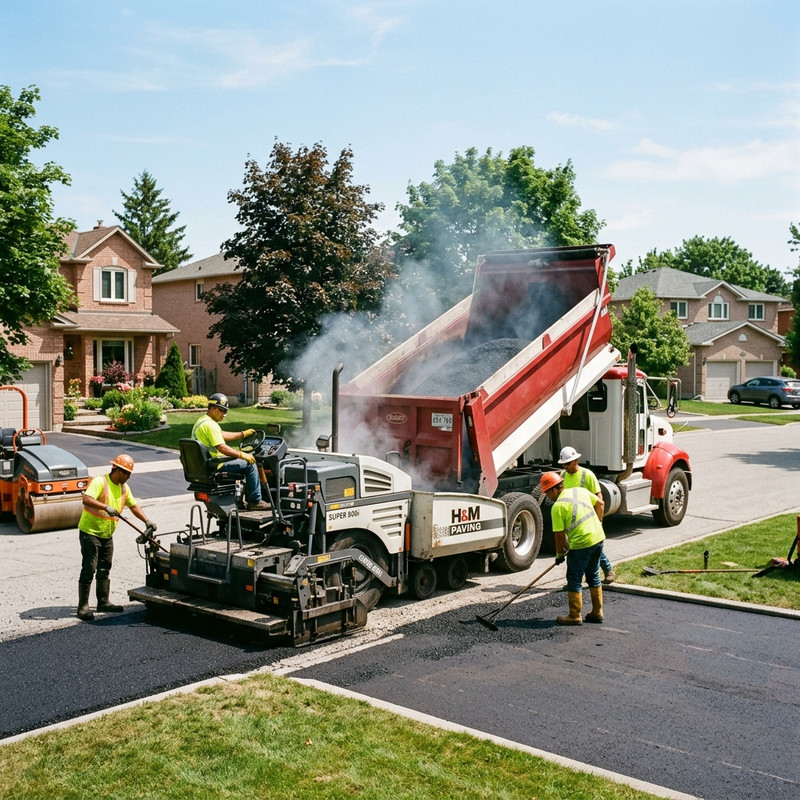
Choosing the wrong asphalt paver is an expensive mistake. The right machine depends on screed width, daily production targets, job site conditions, and total ownership cost — not just the sticker price. This guide answers the most critical questions buyers ask before committing to a paver purchase, whether new, used, or rented.
What Size Asphalt Paver Do I Need for Residential Driveways?
For residential driveways, a compact or mini paver with a 3–8 ft screed width handles most jobs. But screed width is only one variable — match the machine to your daily production target, not just the width of the driveway.
Key specs to verify before buying or renting for residential work:
-
Screed width: 3–8 ft covers the majority of residential applications
-
Hopper capacity: 2–4 tons suits smaller, single-truck loads
-
Lift thickness: 2.5–4 inches meets most residential structural requirements
-
Maneuverability: Confirm the machine can handle tight site access
-
Transport: Verify it loads and hauls on a standard trailer without additional permits
Undersizing a paver slows production and creates more joints. Oversizing creates access and transport problems that eat into your margins on smaller jobs.
What Is the Difference Between Tracked and Wheeled Asphalt Pavers?
Tracked pavers deliver better flotation on soft or uneven ground. Wheeled pavers prioritize on-road mobility and quick repositioning between job sites.
The tradeoff is straightforward:
-
Tracked pavers: More traction on loose or unstable base; slower and more costly to transport between sites
-
Wheeled (rubber tire) pavers: Faster site-to-site travel; lower transport costs; better suited to urban or driveway work where ground conditions are stable
Caterpillar manufactures both rubber tire and steel track pavers to address these different site conditions. If your work spans multiple job types — road base and urban driveways — evaluate both configurations against your typical mix, not your occasional outlier job.
The buying mistake to avoid: Defaulting to tracked because it sounds more capable. If 80% of your work is urban driveways, a wheeled unit keeps your transport costs and mobilization time lower across the year.
How Much Horsepower Does an Asphalt Paver Need?
Match horsepower to your screed width and typical material volume — not the maximum job you might someday take.
-
Driveway and small parking-lot pavers: 80–160 hp
-
Road and commercial pavers: 150–300+ hp
Higher horsepower keeps conveyor and auger systems fed at speed without bogging under load on larger paving runs, making bigger machines more powerful and efficient on longer jobs. As a reference point, Caterpillar asphalt paving equipment includes a broad range of options for different paving applications, from the AP555 for smaller-volume work to the AP1055 for higher-output road jobs. Caterpillar asphalt pavers are recognized for reliable performance and lower operating costs per hour on longer production runs, along with improved operator comfort on extended shifts.
Overpowered machines cost more to buy, more to fuel, and more to maintain — without delivering additional output on jobs that don't need the capacity.
What Should I Check When Buying a Used Asphalt Paver?
A machine with full service documentation is worth more than an undocumented unit with fewer hours on the clock. Start with condition evidence, not the asking price.
Inspect in this order:
-
Undercarriage: Track pads, sprockets, and rollers on tracked units; tires, axles, and drive systems on wheeled units
-
Screed plates: Wear affects mat quality and surface finish
-
Conveyor chain: Check wear indicators and tension
-
Hydraulic system: Look for leaks, test pressure, verify responsiveness
-
Engine hours and service records: Consistent oil changes and documented part replacements reduce downtime risk
-
All controls: Test every function — conveyor speed, screed extensions, auger height — for full responsiveness
-
Automated systems: Newer equipment includes grade and slope automation; verify these features operate correctly before closing the deal
A 2018 unit with documented 4,000-hour service history tells a better story than a 2021 model with 2,000 hours and no paperwork. Verify condition on-site before any purchase commitment.
How Does Hopper Capacity Affect Paving Production?
Hopper capacity directly controls how often you stop — and every stop creates a joint and slows production.
Here is how the flow works: dump trucks unload hot asphalt into the hopper; conveyor belts move material to the rear of the paver; rotating augers spread it evenly across the full paving width. A smaller hopper interrupts that flow more often.
-
Small jobs, single truck: 2–4 ton hopper capacity is adequate
-
Road and commercial jobs: 10+ ton hoppers, or a continuous truck shuttle rotation, maintain production rates without forced stoppages
A steady material flow from the hopper gives the screed more time to react, reducing segregation and producing a smoother finished mat. Size your hopper to your expected truck delivery rate and average job length — not to the largest job you anticipate bidding.
The production math is simple: more stops equal more joints. More joints equal more callbacks and repair risk.
What Is the Total Cost of Owning an Asphalt Paver?
Purchase price is one line item. Total cost of ownership is the number that matters.
Calculate all of the following before making any decision:
-
Purchase price or rental rate
-
Hauling and transport per mobilization
-
Pre-use inspection and repair costs
-
Fuel and oil consumption at expected annual hours
-
Filters, screed plates, and conveyor chain replacement cycles, since planned service helps reduce downtime over the life of the machine
-
Operator labor costs
-
Projected resale value at planned disposal
A small driveway paver operating 300 hours per year carries significantly lower annual ownership costs than a highway-class machine running 2,000 hours. If full ownership costs exceed your budget, rentals are available on daily, weekly, and monthly terms, and those terms can fit your budget and workload when full ownership does not.
The fastest way to overpay: calculate only the purchase price. Run the full annual cost model before finalizing any equipment decision.
Where Can I Buy a Used Asphalt Paver With Verified Condition Information and Versatile and Reliable Solutions?
IronmartOnline and related sources offer used pavers with verified condition information, including compact, midsize, and road-class models with detailed inspection data and model guidance. Buyers can find inventory by screed width, engine output, and hopper capacity, so you filter by your job requirements, not by whatever happens to be available.
For buyers needing higher-output options, Warren CAT's rental fleet is an additional source. Caterpillar pavers are widely used on streets, highways, parking lots, and bridges, and Caterpillar and its dealers provide complete support through a local dealer when comparing models or arranging service.
Financing is available with zero down and a fast application process.
Browse current listings at ironmartonline.com or call (973) 886-3020.
Frequently Asked Questions
Q: Should I buy or rent an asphalt paver for a short-term project?
Rent if the job runs fewer than 300 hours or if your annual workload does not justify full ownership costs. Rental terms — daily, weekly, or monthly — let you access the right machine for the job without absorbing depreciation, storage, or off-season maintenance on a machine sitting idle.
Q: What paving speed should I expect from a commercial asphalt paver?
Commercial road pavers operating in the 150–300+ hp range maintain higher paving speeds without sacrificing mat quality, provided material supply from the hopper stays uninterrupted. Smaller driveway-class machines run at lower speeds suited to their hopper and screed capacity. Paving speed is only meaningful when matched to truck delivery rate — a fast paver fed by slow trucks still stops and waits.
Q: How do I evaluate whether a used paver's automated systems are still functional?
Test every automated function during the pre-purchase inspection: grade control, slope sensors, screed extension automation, and material flow management. Automated systems that fail mid-job are not just inconvenient — they slow production and compromise mat quality. Repair costs on control systems can be substantial, so verify operation before purchase, not after.
Browse used asphalt pavers at ironmartonline.com or call (973) 886-3020.