
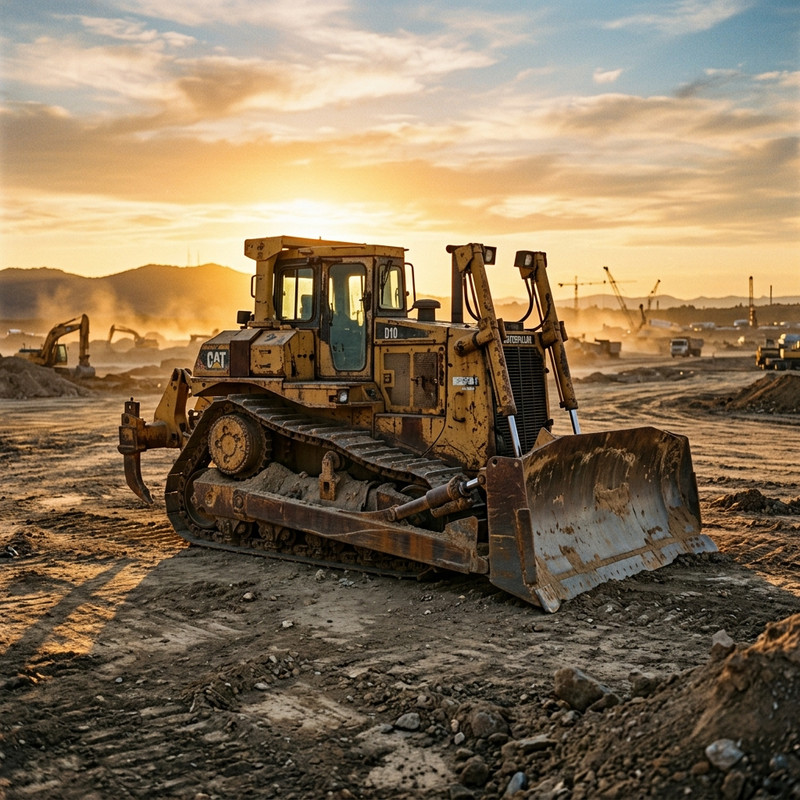
Used Heavy Equipment Longetivity: How Long Does It Really Last?
Quick answer: Most used heavy equipment lasts 10,000–20,000 hours before major component failure, though this range shifts based on maintenance history, operating environment, application intensity, component wear, and machine type. A well-maintained excavator or dozer can run 15,000+ hours on its original engine, while poorly maintained equipment can fail well before 8,000 hours. Hour meter readings alone don't tell the full story — service records, undercarriage wear, and fluid analysis matter more.
For equipment owners, fleet managers, contractors, dealers, and construction or agriculture companies buying or selling used machines, longevity is really a question of remaining service life and condition. Get that call right, and you can save tens of thousands of dollars over a new purchase. Get it wrong, and you inherit someone else's deferred maintenance — along with the repair bill.
The hour meter is the number every buyer checks first. It's also the number that tells you the least. Two machines with identical hours can have completely different remaining lifespans depending on how those hours were accumulated, what maintenance was performed, and what environment the machine worked in. This guide breaks down what actually determines how long used heavy equipment lasts, how to evaluate machine condition, and how to make a smarter buying decision before you sign.
What Determines the Average Lifespan of a Piece of Heavy Equipment?
The most important factors affecting used heavy equipment longevity are maintenance history, operating environment, application intensity, and component-specific wear. Ignore any one of them, and you’re guessing, because these factors help determine remaining useful life and overall performance.
Routine Maintenance History Matters More Than Hours
A 2018 unit with 4,000 hours and a complete dealer service binder tells a far better story than a 2020 model with 2,000 hours and zero paperwork. Low hours matter less than proof of maintaining the machine through regular maintenance and proactive maintenance.
Ask for:
-
Oil change intervals and fluid analysis reports
-
Undercarriage and track replacement records
-
Any major component rebuilds or replacements
-
Dealer service history, not just the seller's word
For best results, a preventive maintenance schedule should follow manufacturer intervals.
No paperwork isn't automatically a dealbreaker, but it shifts risk onto you. Daily pre-operation inspections can identify potential issues before use. Price accordingly.
Operating Environment Accelerates or Extends Wear
Construction equipment ages differently depending on where that machinery worked, from controlled quarry sites to mud, saltwater exposure, or extreme heat. Undercarriage components on a dozer or excavator wear faster in rocky, abrasive terrain than in sand or clay. Engines running in high-dust environments need more frequent filter changes — and if they didn't get them, expect accelerated internal wear. Proper storage also helps prevent rust and component degradation.
Ask where the machine worked, not just how long, since harsh usage conditions create more wear over time.
Application Intensity Changes the Wear Curve
Running a machine at or near full load for 10 hours a day wears components faster than intermittent, lighter-duty use, because the severity of the tasks performed in operation increases wear and can reduce efficiency even at the same total hour count. A wheel loader used for constant high-cycle bucket work accumulates hydraulic and drivetrain wear faster than one used for occasional material moves, and wheel loaders average 1,200-1,500 hours of use per year. Many heavy construction machines also average roughly 1,500 to 2,000 hours per year.
Match the machine's work history to your intended use, taking past duty cycles, operating practices, and the habits of experienced operators into account. A unit worked hard in its past life may already be closer to major overhaul than the hour meter suggests.
Component Life Spans Vary Within the Same Machine
A machine isn't one system aging at one rate. It's a collection of components, each with its own wear curve:
-
Engine: Often the longest-lasting major component. Diesel engines in heavy equipment commonly reach 10,000–20,000 hours before requiring a rebuild, assuming proper maintenance; quality service and timely repairs help extend component life.
-
Hydraulic system: Pumps, cylinders, and hoses wear based on cycle count and contamination control, not just hours.
-
Undercarriage: On tracked machines, this is typically the first major expense — often needed well before the engine requires attention.
-
Transmission and drivetrain: Life span depends heavily on operator habits, particularly load management and shifting technique, and mechanical issues in one system can reduce reliability across the whole machine.
Excavators typically reach the end of primary production around 9,800 hours.
Skid steers commonly last 6,000 to 12,000 working hours.
Evaluate each system separately. A strong engine doesn't mean a strong undercarriage, and vice versa.
How Many Hours Is Too Many for Used Heavy Equipment?
There's no universal cutoff, but context determines whether a given hour count on used construction equipment is a red flag or a non-issue.
Many machines have a usable life of about 10 to 15 years depending on maintenance and application.
-
Under 5,000 hours: Generally low risk if maintenance records exist. Verify the records before assuming the machine is problem-free.
-
5,000–10,000 hours: Mid-life range. Expect some wear items — filters, hoses, undercarriage — to need attention soon. Price should reflect upcoming maintenance. Wheel loaders often have an average lifespan of about 10 years, and proper maintenance practices can keep them productive for that full span.
-
10,000–15,000 hours: Approaching major component service on many machine types. Budget for undercarriage replacement or engine work within your ownership window. Bulldozers generally last around 7 to 10 years.
-
Over 15,000 hours: Not automatically a bad buy, but requires closer inspection. A machine with 18,000 hours and a documented engine rebuild at 12,000 hours may outlast one with 9,000 hours and no service history.
Choose a lower-hour machine if minimizing near-term maintenance costs matters more than upfront price. Choose a higher-hour machine with strong documentation if you're comfortable budgeting for a known, scheduled repair — it often saves money over the ownership period.
How Do You Verify a Used Machine's Real Condition Before Buying?
Inspection catches what the hour meter and sales pitch won't, helping protect your business from costly downtime. Follow these steps before you commit:
-
Request full service records. Cross-check dates and hours against the hour meter for consistency. Gaps or inconsistencies are warning signs.
-
Run a fluid analysis. Oil and coolant samples reveal internal wear — metal content, contamination, and degradation — before problems surface externally.
-
Inspect the undercarriage or tires. On tracked equipment, measure track and bushing wear directly rather than relying on a visual check. On wheeled equipment, check tire wear patterns for alignment or suspension issues.
-
Start the machine cold. Cold starts reveal engine and hydraulic issues that a warmed-up demo can mask. Listen for knocking, excessive smoke, or slow hydraulic response.
-
Cycle every function. Run the machine through its full range of motion — booms, buckets, attachments — under load if possible. Hesitation or unusual noise can indicate mechanical issues that hurt performance and reliability.
-
Get an independent inspection. For any purchase over $50,000, a third-party mechanical inspection typically costs a few hundred dollars and can prevent a five- or six-figure mistake. Unplanned downtime can cost thousands of dollars per hour.
The fastest way to inherit someone else's problem is to skip inspection because the machine "runs fine" on a walkaround. Verify everything a seller claims — hours, maintenance, and condition — before the deal closes, and keep a close eye on service claims and inspection findings.
Does Brand or Machine Type Affect Longevity?
Yes, but not as much as maintenance does. Reputable manufacturers with strong parts availability and dealer networks make it easier to maintain a machine properly over its life, which indirectly supports longevity and can lower operating costs over time. A well-known brand with a poor maintenance history will still fail faster than a lesser-known brand that was serviced correctly.
Machine type also matters:
-
Excavators and dozers typically see undercarriage wear before engine wear, and excavators often last around 9,800 hours.
-
Mini excavators often have a similar or slightly longer lifespan when supported by regular inspections.
-
Wheel loaders and graders tend to see tire, drivetrain, and hydraulic wear first.
-
Cranes and lift equipment depend heavily on structural inspection and cable condition, not just engine hours.
Match your evaluation checklist to the specific machine type and industry experience rather than applying a generic inspection to every purchase.
Buy Based on Documented Condition and Maintenance and Repair Costs, Not Just Age or Hours
Longevity in used heavy equipment isn't a fixed number. It's the product of how a machine was maintained, where it worked, and how hard it was pushed — and every one of those factors is knowable if you ask the right questions and inspect before you buy, so good decisions on heavy duty machines protect long-term business performance.
Don't let a low hour count substitute for due diligence, and don't let a high hour count scare you away from a well-documented machine at the right price. Request the paperwork, run the fluid analysis, inspect the undercarriage, and cycle every function before you negotiate, because lower maintenance and repair costs reduce labor disruption and support more reliable operation.
Buyers who follow this process turn a high-stakes purchase into a calculated one. Browse verified listings, and like smart contractors, request full service history before you make an offer.
Frequently Asked Questions
How many hours should a used excavator have before I avoid buying it?There's no hard cutoff. An excavator with 12,000 hours and documented maintenance can be a better buy than one with 6,000 hours and no records, and the same logic applies to backhoe loaders when service history is documented. Focus on service history and undercarriage condition over the raw hour count.
What's the average lifespan of a diesel engine in heavy equipment?Most diesel engines in heavy equipment reach 10,000–20,000 hours before requiring a major rebuild, assuming regular oil changes and proper filtration; proper maintenance is essential for long motor life. Poor maintenance can cut this significantly.
Is it worth buying heavy equipment with no maintenance records?It can be, but only at a discounted price that accounts for the added risk, especially for construction businesses weighing reliability against repair risk. Get an independent mechanical inspection and fluid analysis before finalizing any purchase without service history.
How much does an undercarriage rebuild typically cost?Undercarriage rebuilds on tracked equipment commonly run $25,000–$40,000 depending on machine size and wear severity. Factor this into your offer if the undercarriage shows significant wear.
Does the operating environment really affect how long a machine lasts?Yes. Machines that worked in abrasive, wet, or high-dust environments typically show accelerated wear on undercarriage and filtration systems compared to machines that worked in cleaner conditions at the same hour count.