
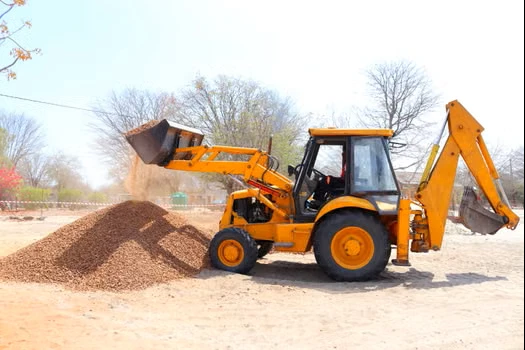
How to Properly Transact Internationally When Selling Used Heavy Equipment

Photo by Robert So on Pexels
A used excavator sitting in a yard in Ohio carries one price. The same machine sold to a contractor in another country can carry a very different one, but only if the transaction is handled correctly from the first inquiry to the final cleared payment. International equipment deals fall apart for predictable reasons: unclear pricing, unverified buyer funds, missing export paperwork, and freight arrangements sorted out after the machine has already been promised to someone.
This guide walks through the practical mechanics of an international sale, from pricing and buyer verification to the export documentation package, freight selection, and the relationship work that brings repeat buyers back. The machinery in question is used heavy equipment: excavators, wheel loaders, dozers, motor graders, backhoes, forklifts, dump trucks, trailers, crushers, screeners, pavers, rollers, trenchers, feller bunchers, log skidders, tub grinders, and everything else that moves between markets.
Nothing here replaces guidance from a freight forwarder, a customs authority, or an attorney familiar with the relevant jurisdictions. Requirements differ by country and change over time, so confirm current rules with the appropriate official source before you commit a machine to a shipment.
What a Used Heavy Equipment International Transaction Actually Requires
An overseas sale is not a domestic sale with a longer drive attached. It has four moving parts that all have to line up before money changes hands. Selling used heavy equipment internationally means pricing in USD, verifying buyer funds before shipping, using export documentation such as a bill of lading, certificate of origin, and commercial invoice, and choosing a freight method from the available options of RoRo, container, or flat rack based on what the machine needs.
Each of those four elements protects a different part of the deal. Currency protects the agreed number. Fund verification protects the seller from releasing a machine against a payment that never clears. Documentation protects the shipment at the border. Freight selection protects the machine itself from damage or from simply not fitting on the transport that was booked.
Get any one of them wrong and the others rarely rescue the deal. A perfectly crated machine with flawless paperwork still stalls if the buyer's transfer is unconfirmed. A verified buyer with cash in escrow still creates a problem if the loader will not fit the container that was quoted.
-
Agreed price in a stable, clearly defined currency
-
Payment verified through a channel the seller controls
-
An export package that satisfies the destination customs authority
-
A freight method matched to the dimensions and weight of the unit
Price in USD and Lock Your Terms Early
Pricing in USD is the simplest way to remove a layer of currency risk from the conversation. When the listing, the invoice, and the payment all reference the same currency, neither side has to argue later about an exchange rate that moved between the handshake and the wire. It also makes comparison easier for international buyers who are already shopping across borders and converting numbers in their heads.
Why a single currency keeps negotiations clean
Buyers in different markets often arrive with a budget expressed in their own currency. Converting that budget once, at the start, keeps the negotiation anchored to a number both parties can point to. If a buyer asks for a price in a local currency, that is a normal request, but the invoice and the payment terms should still be tied to the same figure the listing showed.
What to settle before the first serious conversation
Decide in advance which costs belong to the seller and which belong to the buyer, especially in international sales. Loading at the yard, inland transport to the port, terminal handling, ocean freight, insurance, and destination charges all have to land somewhere. Sellers who leave that division vague end up absorbing costs they never quoted. Write the terms down, put them in the listing or the quote, and repeat them in the invoice. Choosing the right shipping method early helps prevent surprise shipping costs later.
Sellers also benefit from setting aside resources specific to exporting rather than treating each shipment as a one-off scramble. Knowing who handles the paperwork, who books the freight, and who confirms the payment before the machine leaves the yard turns a stressful transaction into a repeatable process.
Verify Buyer Funds Before Anything Ships
Securing payment is the single most important step in the entire transaction, and it is the step most often rushed. A photograph of a bank document is not a cleared payment. An email claiming a transfer is in progress is not a cleared payment. Funds are verified when the seller's own bank can confirm them, or when a recognized escrow arrangement confirms that the money is held and releasable on agreed conditions.
Warning signs of a fraudulent buyer
Equipment scams follow recognizable patterns. Be cautious when a buyer pushes hard for immediate release of the machine before funds clear, offers to overpay and asks for the difference back, communicates only through a forwarding address, or requests that the machine be released to a third party the seller has never dealt with. Pressure to skip documentation, or a sudden change to the receiving party at the last minute, deserves a pause and a second look.
Why some sellers route the deal through a dealer
One common approach for owners who do not want to manage cross-border payment risk is to sell the equipment to equipment dealers and let that dealer handle the export side. The seller gives up some upside, but the transaction becomes a domestic sale with a known counterparty. In that situation, experienced dealers can serve as trustworthy partners when the seller does not want to manage the export process alone. That tradeoff is worth weighing honestly, especially for a first international deal.
Whichever route you take, do not schedule the truck, book the vessel, or promise a collection date until the payment position is confirmed in writing by the party holding the money.
Photo by Oleksiy Yeshtokyn,???? on Pexels
Build the Export Documentation Package
Export documentation is what allows a machine to legally leave one country and enter another. The three documents most consistently referenced in international equipment sales are the commercial invoice, the certificate of origin, and the bill of lading. Additional permits, inspections, or declarations may apply depending on the destination country and the type of machine, so confirm the full list with the relevant authority or a qualified freight forwarder before the shipment is booked, because customs paperwork errors can even lead to seizure.
Identify the Harmonized System (HS) classification for heavy equipment early, since it affects duties and import restrictions.
|
Document |
What it does in the transaction |
|---|---|
|
Commercial invoice |
States the sale between seller and buyer, including the parties, the machine, and the agreed price in USD |
|
Certificate of origin |
Confirms the equipment was made in the U.S. when applicable, which affects how it is treated at the border |
|
Bill of lading |
Acts as the carrier's receipt for the shipment and the document tied to release of the goods |
An export declaration is required for shipments over $2,500.
Title and lien release documents prove clear ownership before sale and are often needed before export can proceed.
Keep the paperwork consistent
Details have to match across every document. The machine description, the serial number, the year, the buyer name, and the destination port should read the same way on the invoice as they do on the bill of lading. Small inconsistencies between documents are one of the most common causes of a shipment held at port while clerks ask questions nobody can answer quickly. The packing list should match those documents as well because it supports customs clearance and shipment verification.
Store copies where you can reach them
Scanned copies of every document should live somewhere the seller can access immediately, not only in the cab of a truck heading to a terminal. Buyers, carriers, and customs officials ask for reprints at inconvenient times, and having the file ready shortens delays considerably during customs clearance.
Choose the Right Freight Method and Consider Shipping Costs for the Machine
International shipping is where the physical reality of heavy machinery meets the paperwork. The three methods that come up most often in used equipment exports are RoRo, container, and flat rack. The right choice depends on the size of the unit, whether it can be driven or must be lifted, and how much protection the buyer wants during transit.
|
Method |
When sellers and buyers typically consider it |
|---|---|
|
RoRo |
Roll on, roll off service for wheeled or self-propelled machines that can be driven aboard |
|
Container |
Enclosed shipping for units that fit inside, offering more protection from weather and handling |
|
Flat rack |
Open platform shipping for oversized or unusually shaped equipment that will not fit in a container |
A 40-ton excavator shipped RoRo may cost about $3,500 to $5,000. The same excavator on a flat rack can run about $7,000 to $9,000.
Dimensions and weight decide more of this than personal preference. A machine that fits inside a container is usually easier to protect. A machine that does not fit needs a platform or a roll on, roll off booking, and those bookings have their own preparation requirements. Confirm the exact measurements with the freight provider rather than estimating from a spec sheet, because attachments, counterweights, and blade widths change the answer. For oversize cargo, account for both shipping costs and port fees to protect your margin.
Position Equipment Where It Holds the Highest Value
International demand is not uniform across international markets. The same machine that draws modest interest in one market can attract multiple serious buyers in another, and in some cases international buyers pay roughly 20–40% more for the same used equipment when demand is stronger abroad. Analyzing demand before listing, and positioning the equipment where it holds the highest value, is a core part of getting a strong result rather than a fast one. This is especially true in developing markets with limited local supply.
Reading demand before you list
Look at where similar machines are moving, what configurations buyers in those markets ask for, and how the machine's hours, condition, and attachments line up with what many buyers in regions like Latin America, Southeast Asia, and the Middle East want from quality used equipment from the U.S. Agricultural machinery and used machines can draw stronger interest where local availability is tight. A unit that is ordinary in its home region can still sell well elsewhere because of strong demand, and that is what the listing should speak to.
Negotiating across languages
International negotiations often run in more than one language. That does not mean the seller has to be fluent in all of them, but it does mean written terms should be plain, specific, and easy to translate accurately. Avoid idioms and shorthand in quotes and invoices. When a term matters, spell it out.
Relationships, Transparency, and Repeat Business
Guidance on selling used equipment overseas has long emphasized the same fundamentals: foster and develop relationships, be fully transparent, and start with a lower-risk transaction before scaling up. Those points hold up because international equipment sales are relationship business. A buyer who trusts the description on the first machine is far more likely to come back for the second.
Foster and develop relationships
Answer questions directly, respond in the buyer's time zone when you reasonably can, and follow through on what you said you would send. That consistency becomes an advantage in long-term international sales. Dealers, exporters, and fleet owners in other countries talk to each other. A seller who is straightforward becomes a known quantity in those networks over time.
Over time, strong relationships with dealers, brokers, and freight forwarders can improve your global reach.
Be fully transparent about condition and history
Disclose the hours, the service history, the overall quality, known faults, and any repairs. Photograph and describe wear honestly, including the parts a buyer cannot see clearly in a wide shot. Inspection reports help support the condition claims in the listing. Poor presentation, dirt, or undisclosed damage can deter buyers. Transparency costs nothing at the listing stage and prevents disputes after a machine has crossed an ocean, when returning it is impractical for everyone involved. Clean, thorough sanitation of older equipment and other heavy machinery is often required to pass biosecurity inspections and helps show the machine arrives in the same condition described.
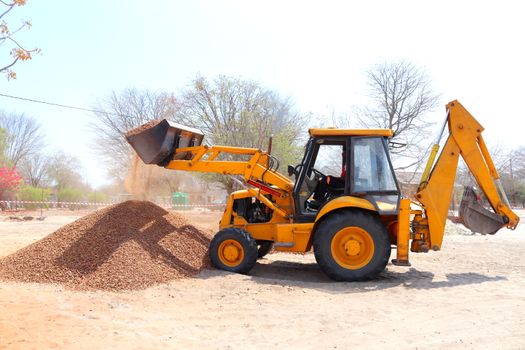
Photo by Roger Brown on Pexels
Set Aside Resources and Start With Lower Risk
Exporting takes time, attention, and occasionally money that a domestic sale does not, and it can become a full time job if no one owns it internally. Someone has to manage the documents, coordinate the freight, answer the buyer's questions, and follow the payment. Sellers who plan for that workload handle it better than sellers who treat it as an afterthought.
Exporting equipment is time consuming and commonly takes 30–60 days from sale to completion.
Starting with a lower-risk transaction is a sensible way to learn the process. That might mean a smaller machine, a buyer with an established track record, or a sale routed through a dealer the first time around. Once the paperwork, the freight, and the payment flow are familiar, larger and more complex deals become far less intimidating.
Get to Know the Buyer Before You Commit
Ask questions. What does the buyer plan to do with the machine, where will it operate, and who is handling the import on their end? A serious buyer answers these without hesitation and usually volunteers details about the destination and the timeline. Vague answers are worth noting.
It also helps to know whether the buyer is an end user, a dealer, or a broker working on someone else's behalf. Each has different expectations about inspection, payment timing, and who signs the documents. Knowing which one you are dealing with shapes the entire conversation.
Selling Through a Marketplace or Going Direct
Sellers generally choose between listing the machine themselves, working with a dealer or broker, or listing on a marketplace that puts the equipment in front of a broad buyer audience. Each path has a different balance of control, effort, reach, and involvement in the sales process.
A marketplace approach widens exposure without requiring the seller to build an international buyer list from scratch. Listing across multiple platforms can help sellers reach global buyers and attract new buyers they would not reach on their own, which matters when the right buyer for a specific machine may be in another country entirely. Marketplaces that operate without contracts or hidden fees also keep the seller from being locked into terms before a sale even happens. Ironmartonline is one example of this model, connecting buyers and sellers of used heavy equipment and helping sellers reach global buyers through brand-specific inventories.
Selling direct keeps more of the margin but puts the full burden of vetting, negotiating, documenting, and shipping on the seller. For a first or second international transaction, weighing that burden honestly is more useful than assuming one route is always better.
Photo by Wolfgang Weiser on Pexels
Common Mistakes That Sink International Deals
-
Releasing a machine or its title before the funds are confirmed by the seller's own bank or a recognized escrow arrangement, which is one of the easiest ways to lose both the equipment and the transaction
-
Quoting a price without stating which costs, such as inland transport or terminal handling, the seller covers
-
Sending documents with descriptions that do not match the machine or each other
-
Booking freight based on estimated dimensions rather than measured ones
-
Skipping the disclosure of known faults and then arguing about them after delivery
-
Accepting an unexplained last-minute change to the receiving party or delivery address
-
Using auction companies or other intermediaries without proper vetting, which can create avoidable risk
Every one of these is avoidable with a written checklist and a willingness to slow down at the two moments that matter most: confirming the money and confirming the paperwork.
A Practical Sequence for an International Sale
-
Assess demand in the markets where the machine is likely to command the best price.
-
Set a USD price and write down exactly which costs the seller and the buyer each carry, using Incoterms or equivalent written terms to define each shipping responsibility.
-
List the machine with clear photographs, honest condition notes, and full specifications, since that supports a good deal by reducing disputes later.
-
Qualify inquiries by asking what the buyer intends to do with the unit and where it is going.
-
Agree on payment terms and confirm receipt through a verifiable channel before scheduling anything.
-
Prepare the commercial invoice, certificate of origin, bill of lading, customs paperwork, the export declaration when required, and the packing list, and check that the details match.
-
Measure the machine and book the right freight method based on its dimensions, protection needs, and total shipping costs, coordinating with the carrier on loading.
-
Keep copies of every document accessible until the buyer confirms delivery.
-
Follow up after delivery, because a smooth first deal is how a second one starts.
Frequently Asked Questions
Do I have to price used heavy equipment in USD when selling internationally?
Pricing in USD is the standard approach because it removes currency confusion from the negotiation and keeps the listing, invoice, and payment tied to one figure. It is not a legal requirement in every situation, but it simplifies comparison for international buyers and reduces disputes if exchange rates move between the agreement and the transfer. Confirm any local requirements with the relevant authority.
What documents do I need to export a used excavator or loader?
The three referenced most often are the commercial invoice, the certificate of origin, and the bill of lading. Depending on the destination country and machine type, additional permits, inspections, or customs paperwork such as a packing list, export declaration, or export license may apply. Because requirements shift over time and vary by country, confirm the complete list for your shipment with a qualified freight forwarder or the relevant customs authority before booking transport. Most used heavy equipment does not require an export license unless it has military applications or is going to a sanctioned country.
How do I know a foreign buyer's payment is real?
Funds are real when your own bank confirms them, or when a recognized escrow service confirms the money is held and releasable on agreed conditions. A screenshot, an email claiming a transfer is in progress, or a promise to pay on arrival is not confirmation. Do not release the machine, book the vessel, or set a collection date until the payment position is verified in writing.
What is the difference between RoRo, container, and flat rack shipping?
RoRo, or roll on roll off, suits wheeled or self-propelled machines that can be driven aboard. Container shipping encloses the unit for more protection from weather and handling, and it can also be useful for equipment parts or non-operational items that need more protection in transit. Flat rack shipping places the equipment on an open platform for oversized or unusually shaped machines that will not fit inside a container. The measurements and weight of the specific unit determine which option works.
Should I sell to a dealer or list the machine myself?
Selling direct versus through a dealer affects how easily you can sell equipment internationally: selling to a dealer turns an international transaction into a domestic one with a known counterparty, which reduces payment and export risk at the cost of some upside. Listing it yourself or through a marketplace reaches a wider buyer base and can produce a higher price, but puts vetting, documentation, and shipping coordination on you. Many sellers try a lower-risk route first and expand from there. Sellers who want steadier overseas exposure often use dealers or marketplaces.