
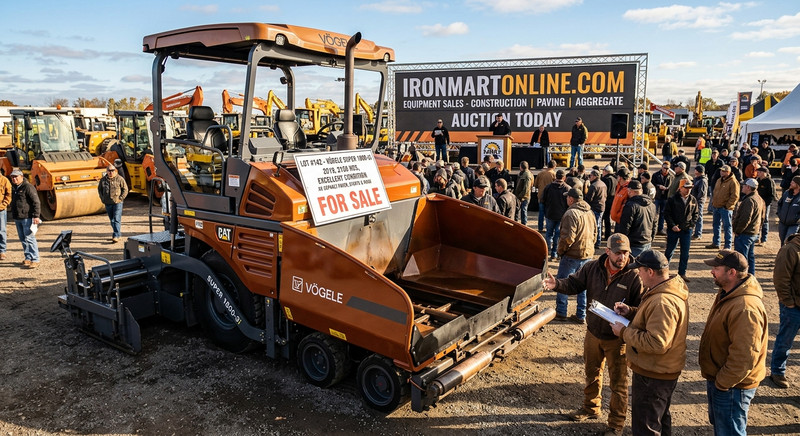
How to Sell Asphalt Paving Equipment Fast
To sell asphalt paving equipment effectively, document the machine's exact hours, maintenance history, and working condition, price it against recent comparable sales rather than guesswork, and list it where paving contractors actually shop — specialized heavy equipment marketplaces like IronMartOnline, not general classifieds. Sellers who skip documentation or underprice out of urgency typically leave thousands on the table.
Selling a paver, milling machine, or asphalt roller isn't like selling a car. The buyer pool is smaller, the due diligence is heavier, and the difference between a prepared listing and a rushed one can run into tens of thousands of dollars. A contractor shopping for a used asphalt paver isn't kicking tires — they're checking screed hours, auger wear, and whether the hydraulic system has a service history that holds up.
This guide walks through exactly how to sell your equipment at the right price, to the right buyer, without the common mistakes that cost sellers money.
What is your asphalt paving equipment actually worth?
Guessing at a price is the fastest way to either scare off buyers or undersell your machine. Value comes down to four factors, in this order of importance:
- Hours and usage pattern. A paver with 3,000 hours used exclusively on municipal road work tells a different story than one with 3,000 hours run hard on commercial lots with constant stop-start cycling. Buyers weigh usage context, not just the hour meter.
- Component condition. Track or tire wear, conveyor and auger condition, screed plate wear, and hydraulic cylinder seals drive resale value more than cosmetic condition. A clean paint job doesn't offset a worn screed.
- Maintenance documentation. A machine with a complete service record — oil changes, filter replacements, undercarriage inspections — commands a higher price than an identical machine with no paperwork. Buyers pay for certainty, not assumptions.
- Comparable recent sales. Check what similar models, years, and hour ranges have actually sold for in the last 90 days. Asking prices on listings mean nothing if nothing is closing at that number.
Rather than pricing from what you paid or what you hope to get, price from what the current market is actually paying. That's the only number that matters.
Where should you sell asphalt paving equipment?
You have four realistic channels, and each one trades speed for price differently.
Trade-in to a dealer. Fastest option. You'll get a number on the spot, often rolled into a new equipment purchase. The tradeoff: dealers price in their own resale margin, so you'll typically net 15-25% less than a direct sale.
Auction. Works if you need to liquidate on a timeline or you're moving an entire fleet at once. Auction houses take a seller's commission, and final sale price depends heavily on who shows up that day. A thin buyer pool on auction day can tank your return regardless of the machine's actual condition.
General classifieds or local listings. Low cost, but low reach. Asphalt paving equipment buyers are a specialized audience — contractors, municipal fleets, paving subcontractors — and they're not browsing general marketplaces built for cars and furniture.
Specialized heavy equipment marketplace. Reaches buyers who are already shopping for paving equipment specifically, which means faster sales and less price negotiation driven by buyer skepticism. This is where serious paving contractors go first.
If your goal is maximum return rather than maximum speed, list where the buyers already are. A dealer trade-in is convenient. A specialized marketplace gets you paid closer to full value.
What documentation do buyers expect before they'll pay full price?
Buyers of asphalt paving equipment are professionals spending five or six figures. They expect proof, not adjectives. Before you list, assemble:
- Complete maintenance and service records, including dates and work performed
- Current hour meter reading, photographed directly off the gauge
- Ownership history — one owner is a selling point, worth stating explicitly
- Recent inspection results, especially hydraulic system and undercarriage condition
- Photos of the screed, augers, conveyor system, and engine compartment, not just exterior shots
A 2018 paver with 2,800 hours and a complete dealer service binder sells faster and for more than a 2020 model with 1,500 hours and no paperwork. Documentation removes the buyer's biggest objection before they even ask the question.
How do you prepare the machine itself before listing?
Clean the machine, but don't stop there. Address the issues a buyer's inspection will catch anyway:
- Run a full operational check. Confirm the engine starts cold without hesitation, hydraulics engage smoothly, and the screed heats evenly across its width. Note and disclose anything that doesn't perform as expected — buyers who discover undisclosed issues during inspection will renegotiate hard or walk.
- Photograph wear points honestly. Screed plates, auger edges, and conveyor chains show wear first. Buyers will check these regardless, so documenting them yourself builds trust instead of inviting suspicion.
- Fix the cheap stuff. A $40 hydraulic fitting leak left unaddressed can cost you a $2,000 price reduction during negotiation. Small fixes before listing protect the number you're asking for.
- Get a third-party inspection if the machine is high-value. A $15,000 inspection fee is irrelevant when it supports a $150,000 sale price with documented proof of condition.
How do you price it to sell without leaving money on the table?
Price against real comparable sales, not list prices. Two paving contractors selling similar pavers will often list at different prices depending on urgency — your job is to find what actually closed, not what's still sitting unsold after 90 days.
Set your price with a negotiation buffer in mind, but don't inflate so far that serious buyers assume you're not realistic. A machine priced 20% above comparable sold units will sit on the market and lose credibility with every week it doesn't move. A machine priced in line with recent sales, backed by full documentation, typically sells within the first few weeks of listing.
If you need to move the equipment quickly because you're upgrading your fleet, consider a graduated pricing approach: list at the high end of the comparable range for the first two weeks, then reduce to the median if you haven't had serious inquiries. This captures buyers willing to pay a premium for a documented, well-maintained machine, while protecting against an extended, stagnant listing.
What mistakes cost sellers the most money?
The same five mistakes show up again and again:
- Listing before gathering documentation. Buyers ask for service records immediately. Scrambling to find them after a buyer is already interested slows the deal and signals disorganization.
- Pricing from emotion instead of data. What the machine means to your business isn't what a buyer will pay for it. Comparable sales set the price, not sentiment.
- Ignoring the buyer pool mismatch. Listing a milling machine on a general marketplace built for passenger vehicles guarantees low visibility to the contractors who actually buy this equipment.
- Skipping pre-sale maintenance. A machine that fails a buyer's inspection on something minor and fixable loses leverage in negotiation immediately.
- Underestimating how much paperwork matters. Two identical machines, one with records and one without, routinely sell at a meaningful price gap. The paperwork is worth more than it looks.
Sell where paving contractors are already buying
The equipment itself rarely decides whether you get a good price — the process does. Document the machine's real condition, price it against actual recent sales, and put it in front of buyers who are specifically shopping for asphalt paving equipment, not scrolling a general marketplace by accident.
That last part is where most sellers lose money without realizing it. IronMartOnline connects sellers directly with contractors and fleet buyers actively searching for pavers, rollers, milling machines, and other paving equipment — not a general audience that has to be convinced paving equipment is even relevant to them. Listing there puts your machine in front of buyers who already know what a screed plate is and already have the budget to buy.
List your asphalt paving equipment on IronMartOnline today.
Frequently Asked Questions
How long does it typically take to sell asphalt paving equipment?
A well-documented, correctly priced machine listed on a specialized marketplace typically sells within a few weeks. Listings with missing documentation or prices set above comparable sales often sit for months.
What's the biggest cost risk when selling used paving equipment?
Underpricing out of urgency and overpricing out of attachment are both common. The bigger risk is usually missing documentation — it causes buyers to discount their offer by more than the paperwork would have cost to assemble.
Should I sell through a dealer trade-in or sell directly?
Choose a dealer trade-in if speed matters more than maximum return — you'll typically net 15-25% less but close the deal immediately. Choose a direct sale through a specialized marketplace if you can wait a few weeks for a buyer willing to pay closer to full market value.
Do I need a professional inspection before selling?
For high-value machines, yes. An inspection report supporting your asking price gives buyers confidence and reduces the back-and-forth negotiation that comes from unverified condition claims.
What information do serious buyers ask for first?
Hour meter readings, maintenance records, and ownership history. Have these ready before you list, not after the first inquiry comes in.