
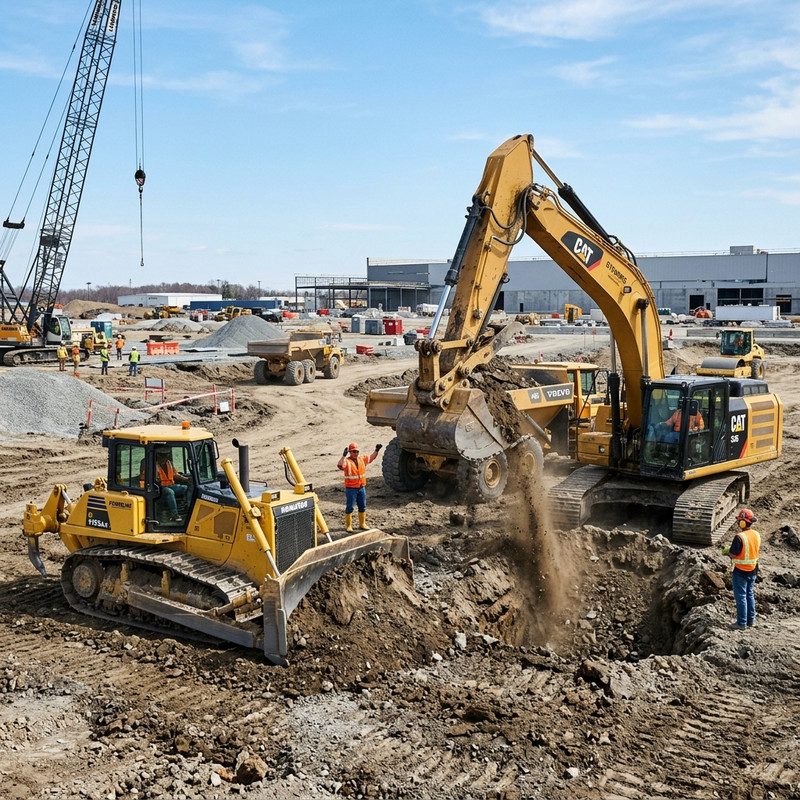
How to Sell Heavy Equipment Online: The Ultimate Guide for Contractors
TL;DR: Selling heavy equipment online requires the right platform, accurate pricing, detailed listings, and clean documentation. Contractors who follow a structured approach — verified specs, quality photos, and competitive pricing — sell faster and closer to asking price than those who post blind and wait.
The used heavy equipment market has shifted. Buyers are doing more research online before they ever pick up a phone. If your listing is vague, your photos are poor, or your price is off, they move to the next one. Simple as that.
This guide walks you through exactly how to sell heavy equipment online — from setting the right price to writing a listing that gets calls. Follow these steps and you close faster, waste less time on tire-kickers, and leave less money on the table.
Why Do Contractors Sell Heavy Equipment Online Instead of Locally?
Local buyers are a limited pool. Online marketplaces open your machine to thousands of qualified buyers across the country — buyers who are actively searching for the exact make, model, and spec you're selling.
Platforms like MachineryTrader, IronPlanet, Equipment Trader, and Ritchie Bros. Auctioneers have built-in audiences of contractors, fleet managers, and dealers. That reach matters. A 2022 Ritchie Bros. report noted that over 70% of its auction buyers were located outside the selling equipment's home state. You're not selling to your county — you're selling to the continent.
Online also means faster. A well-listed machine on a major platform can generate serious inquiries within 48 to 72 hours. A "For Sale" sign on a job site can sit for months.
How Do You Choose the Right Platform to Sell Heavy Equipment?
Not every platform suits every machine or seller. Match your platform to your situation. Your own sales page on equipment sales websites can support direct sales and improve visibility in search engines compared with relying only on a third party marketplace.
Auction platforms (IronPlanet, Ritchie Bros., Proxibid): Best for fast liquidation. You set a date, the machine sells. Expect fees of 5–10% and no guaranteed price floor unless you set a reserve. Right for fleet sell-offs, estate sales, or when speed matters more than maximum return.
Classified listing platforms (MachineryTrader, Equipment Trader, Machinery Pete): Best for sellers who want control over price and timeline. You pay a flat listing fee or monthly subscription, post your specs and photos, and if those listings are optimized, they tend to rank better in search engines and attract more qualified buyers while you negotiate directly with buyers. Right for contractors selling one or two machines and willing to handle inquiries themselves.
Dealer consignment: You hand the machine to a dealer who sells it on your behalf for a commission (typically 8–15%). Less work for you, but you forfeit margin. Right when you lack time to manage the sale.
Direct marketplace listings (Facebook Marketplace, Craigslist): Low cost, local reach, lower buyer quality. Right for smaller equipment — attachments, trailers, compact machines under $20,000.
Match the platform to the machine's value and your timeline. A $250,000 excavator deserves a dedicated listing on MachineryTrader or an IronPlanet verified auction — not a Craigslist post.
How Do You Price Used Heavy Equipment to Sell Fast?
Wrong price kills the sale before it starts. Price too high and you sit for months. Price too low and you leave real money behind.
Three inputs set your number:
1. Comparable sales data. Search MachineryTrader, Machinery Pete, and recent IronPlanet auction results for your make, model, year, and hour range. Pull five to ten comps. Note what's listed vs. what actually sold — auction results are more reliable than asking prices.
2. Hours and condition. A 2019 CAT 336 at 4,500 hours with full service records is worth more than a 2020 unit at 3,800 hours with no documentation. Hours tell part of the story; documentation tells the rest.
3. Attachments and configuration. Buckets, thumbs, quick couplers, and grade control systems add real value. List them separately in your pricing notes — buyers factor them in, and so should you.
Build in 5–8% negotiating room. Most buyers expect to negotiate. If you price at exactly what you'll accept, you either hold firm and lose buyers or cave and feel the loss.
What Information Should You Include in a Heavy Equipment Listing?
Vague listings for used equipment get ignored. Buyers are comparing six construction equipment machines at once — yours needs to answer their questions before they ask, and detailed technical specifications help serious buyers compare options quickly.
Every listing should include:
-
Make, model, year, and serial number
-
Engine hours (verified, not estimated)
-
Engine make, horsepower, and transmission type
-
Recent service history — dates, what was done, who did it, plus maintenance records buyers expect to review
-
Undercarriage condition (for tracked equipment — state percentage remaining or use a wear measurement)
-
Tire condition (for wheeled equipment — state tread depth or remaining life percentage)
-
Attachments included
-
Any known issues — list them plainly; buyers will find them anyway
-
Location and availability for inspection
Do not write "runs great" or "good condition." Write "1,850 hours, CAT C7 engine, recently replaced final drives (receipts available), 75% undercarriage remaining, verified by dealer inspection October 2024." That's a listing that earns trust.
How Do Photos and Video Affect Heavy Equipment Sales Online?
Photos close deals or kill them. This is not hyperbole — buyers on remote markets make $50,000–$500,000 decisions based on what they see on a screen.
Minimum photo requirements for a serious listing: use high resolution photos.
-
All four sides of the machine
-
Engine compartment (open, clean, clear of debris)
-
Operator cab interior (seat, controls, monitor/display if equipped)
-
Undercarriage or tires (close-up, each side)
-
Any attachments
-
Any visible wear or damage — capture high resolution photos from multiple angles, don't hide it
Film a walkaround video with the machine running. Show blade or bucket movement, travel function, swing (for excavators), and any auxiliary hydraulics. Add a short video clip too when posting on platforms or social channels that favor quick previews. A 3–5 minute video on YouTube linked in your listing dramatically increases buyer confidence and reduces back-and-forth.
Shoot in daylight. Clean the machine first — a pressure wash costs $100 and adds thousands to perceived value, and strong visuals help build buyer trust, especially for remote buyers.
What Documents Do You Need to Sell Heavy Equipment Online?
Missing paperwork is the fastest way to lose a deal at the finish line. Complete a thorough physical inspection before you gather paperwork and post the listing. Have these ready before you post:
-
Title or certificate of origin — confirm it's lien-free before listing
-
Service records — dealer invoices, in-house log, and inspection reports
-
Telematics reports — CAT Product Link, Komatsu KOMTRAX, or John Deere JDLink data showing actual hours and fault codes
-
Any warranties — transferable extended service agreements add value and give buyers confidence
-
Bill of sale template — have it ready; don't improvise on closing day
A lien on the machine that you haven't resolved will kill the sale, delay funds, or create legal liability. Run a UCC lien search on your own equipment before listing.
How Do You Handle Buyer Inquiries and Negotiation?
Respond fast. Buyers shopping online are comparing multiple machines simultaneously. A 24-hour response delay means they've moved on.
When buyers inquire:
-
Answer every spec question directly and in writing
-
Put key deal points in writing too, including payment terms once a buyer gets serious
-
Offer a specific window for in-person or remote (video call) inspection
-
If a buyer offers below your floor, counter with a number, not an explanation. "I can do $X" is more effective than three paragraphs about what the machine is worth.
Don't take lowball offers personally — counter or decline. Don't accept verbal commitments — collect a deposit (typically $1,000–$5,000 depending on machine value) to hold the machine. If the contract language gets complex, have an attorney review it. If you're juggling multiple leads, a centralized CRM can track negotiation stages and payment terms in one place.
What Are the Safest Ways to Accept Payment for Heavy Equipment?
Secure payment matters most. Wire transfer is common, and escrow services can be useful for higher-risk deals. Cash for large transactions creates safety and documentation problems. Checks — including certified checks — can be fraudulent.
Process:
-
Agree on price and the secure payment method in writing (email or signed agreement)
-
Collect deposit via wire to hold the machine
-
Confirm full wire receipt in your account before releasing the machine or signing title
-
Transfer title only after funds are confirmed cleared
Never release equipment before funds clear. This is where sellers get burned. Secure methods are especially important in cross border transactions.
What Fees Should You Expect When Selling Heavy Equipment Online?
Factor these into your net return before you set your asking price:
-
Auction platform fees: 5–10% of final sale price (seller's commission)
-
Classified listing fees: $50–$500 per listing depending on platform and duration
-
Dealer consignment: 8–15% of sale price
-
Transportation: If you're offering delivery, quote it separately or build it in
-
Platform-specific inspection or verification fees: IronPlanet's IronClad Assurance inspection runs $200–$600 depending on machine size — but it increases buyer confidence and sale price
A $150,000 machine sold through auctions at 8% commission nets you $138,000. A private classified listing at $300 that closes at full price nets $149,700. The difference is your time and effort, though they’re often the fastest option for older equipment when liquidation matters more than top dollar.
Final Steps Before You Hit Post
Run through this checklist before your listing goes live:
-
Serial number confirmed and matching title
-
Hours verified against telematics or dash display (photograph both)
-
Lien search completed
-
Minimum 20 photos taken in daylight
-
Walkaround video filmed with machine running
-
Service records organized and photographed
-
Confirm the machine is well maintained and that maintenance history is ready to share
-
Verify current market demand before posting, especially if you are deciding whether to keep or sell a machine from inventory
-
Asking price benchmarked against at least five comps
-
Response email or phone number monitored daily
One missed item — especially a lien or a missing title — can unwind a deal that took weeks to build.
How to Sell Your Machine Without Leaving Money Behind
The contractors who get top dollar online treat the sale like a project, because selling heavy equipment online works best when you present industrial assets in a way digital buyers can evaluate quickly and confidently. They document everything, price from data, photograph thoroughly, and respond fast, which also helps with online sales and can support full retail pricing on dealer websites or similar direct sales pages. The ones who post three photos and a vague description sit on their machines for six months, then discount when selling equipment.
Your equipment has done the work. The listing is the last job. Do it right.
If relevant, note financing options in the listing, since buyers often look for that, and promote premium machines with email notifications to previous buyers or targeted advertising. Browse listings on MachineryTrader or IronPlanet to benchmark your machine against active comps — then post yours and start taking calls.
Frequently Asked Questions
What is the best platform to sell heavy equipment online?
MachineryTrader and Equipment Trader are the top classified platforms for private sellers in the U.S., offering broad reach and direct buyer contact. As a machinery trader, Machinery Trader is a top classified option for selling construction equipment and heavy machinery to a broad buyer base. IronPlanet and Ritchie Bros. are the leading auction platforms for sellers who prioritize speed over maximum price control. The right choice depends on your machine's value, your timeline, and how much of the sales process you want to manage yourself. Your own website can support direct sales, while a third party marketplace can expand reach but gives you less control over presentation.
How long does it take to sell heavy equipment online?
Timeline varies by platform, price, and machine type. It also depends on market demand and whether the machine is high demand inventory for local contractors or a niche unit. Well-priced, well-documented equipment on major classified platforms typically generates serious inquiries within one to two weeks. Auction platforms set a fixed sale date — usually 30–60 days from listing submission. Overpriced or poorly documented machines can sit for three to six months regardless of platform.
How do you determine the fair market value of used heavy equipment?
Pull five to ten comparable listings on MachineryTrader, Machinery Pete, and recent IronPlanet auction results in the online market for your make, model, year, and hour range. Weight actual auction sale results more heavily than asking prices, which are often aspirational, since purchasing decisions in the construction business are shaped by buyer demand, specs, and machine condition. Adjust for attachments, documented service history, undercarriage or tire condition, and any known mechanical issues.
Do you need a dealer license to sell heavy equipment online?
In most U.S. states, individuals and contractors can sell their own equipment privately without a dealer license. Licensing requirements apply to businesses that buy and resell equipment regularly as a primary commercial activity. Confirm your state's specific regulations — rules vary. When in doubt, consult a local attorney before listing.
Is it safe to sell heavy equipment to an out-of-state buyer?
Yes, with proper process. Confirm funds via verified wire transfer before releasing the machine or signing title. For high-value or cross-border deals, escrow services can add protection by holding funds until the terms are met. Never ship or allow pickup before funds clear in your account. Document the sale with a written agreement that includes buyer identity, machine serial number, sale price, and condition disclosures. Out-of-state buyers are common — over 70% of Ritchie Bros. auction buyers purchase machines outside their home state, and if the buyer is outside the country, plan for customs clearance as well.
What should you disclose when selling used heavy equipment?
Disclose all known mechanical issues, recent repairs, any maintenance history, and any damage — cosmetic or structural. State the verified hour reading, not an estimate, and note that buyers respond better when used heavy equipment listings clearly show maintenance records. If the machine has a known fault code history, include it. Buyers who discover undisclosed problems after purchase pursue chargebacks, legal claims, or negative platform reviews. Transparency protects you legally and builds trust that closes deals.