
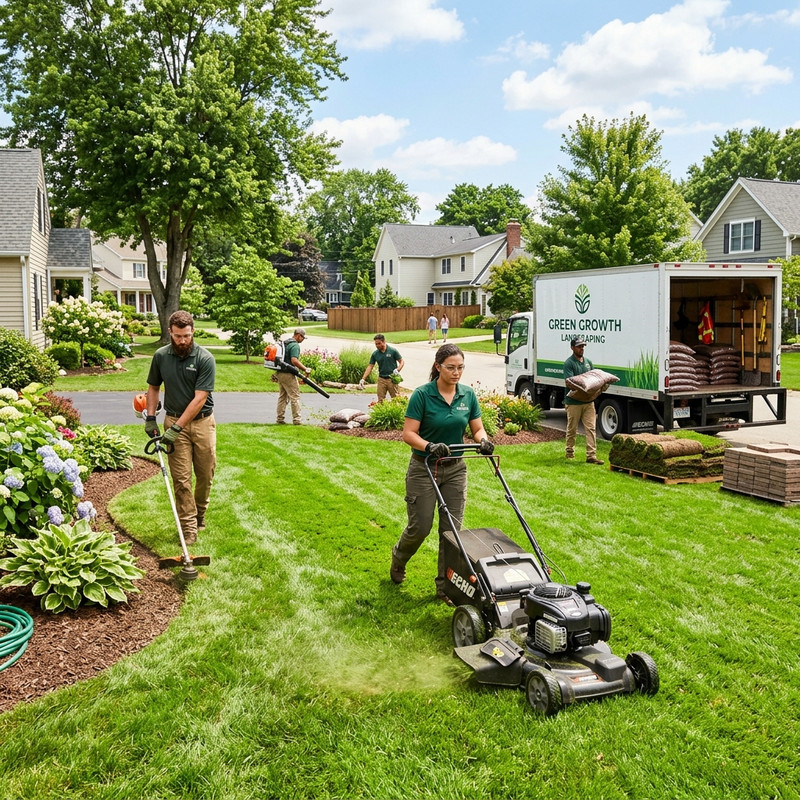
How to Start a Lawn Care Business With the Right Equipment
Quick answer: Starting a lawn care business requires purchasing core equipment — mowers, blowers, edgers, trimmers — plus materials like mulch, sod, and stone, a reliable crew, and an articulated box truck to move it all. Get these fundamentals right from day one and you build a business that scales. Get them wrong and you bleed cash before the first season ends.
Running a lawn care business is one of the most accessible ways to build a service company from scratch. Low barriers to entry, recurring revenue, and high local demand make it attractive. But most people who fail in this business fail in the first six months — not because they lacked hustle, but because they bought the wrong equipment, hired the wrong crew, or underestimated logistics.
This guide covers everything you need to launch a lawn care operation built to last: the equipment, the materials, the crew, and the truck. Follow the steps in order. Skip one and you'll pay for it later.
What Does It Actually Cost to Start a Lawn Care Business?
The total startup cost for a professional lawn care operation ranges from $15,000 on the low end (used equipment, small crew, leased truck) to over $80,000 for a fully equipped commercial setup, though many operators budget roughly $30,000 to $50,000 for startup equipment and actual totals vary by scope. The gap is wide because your choices on equipment condition, truck type, and crew size drive most of the variance.
Before you spend a dollar, define your service scope. A business plan helps clarify your vision, goals, and spending priorities. Residential mowing is a different operation than commercial landscaping. Offering sod installation and stone work requires different equipment and more labor than basic maintenance. Know which jobs you're taking before you buy anything.
The fastest way to overspend is to buy equipment for jobs you don't have yet. Start with core maintenance, add materials capability once you have contracts. Equipment often consumes about 8-14% of sales, so early purchasing decisions affect margins long term.
The Core Equipment You Need — and What to Look For
Mowers: The Engine of Your Revenue
Your mower choice determines how many lawns you can service per day. For residential work, a 48–60" commercial walk-behind or zero-turn handles most properties efficiently. A push mower is a practical low-cost starting option for very small yards and typically costs about $350. For larger commercial accounts, a 60–72" zero-turn or ride on mower cuts time per job significantly.
New commercial lawn mowers, especially zero-turns, run $7,000–$12,000. Quality used units with under 500 hours can be found for $3,500–$6,000. Check the hours, inspect the spindles and deck, and ask for service records. A mower with 800 hours and full documentation beats a 400-hour unit with no paperwork.
Buy at least two mowers if you're running a crew. One breakdown shouldn't shut down your day.
Blowers, Edgers, and Trimmers: Don't Cheap Out Here
These core lawn care equipment tools shape the finished result on every job. Clients notice edges and cleanup more than they notice mowing time.
-
Blowers: Commercial backpack blowers (Echo, Husqvarna, Stihl) run $350–$600 new. Buy one per crew member doing cleanup work.
-
Edgers: Stick edgers for sidewalks and driveways. Plan on $250–$400 per unit, and the clean edge makes a big difference compared with trimming alone.
-
Trimmers: Match the string trimmer brand to your blowers where possible — shared battery platforms cut down on charging logistics. Compare cutting width for efficiency, especially on large properties. Budget $300–$500 per unit.
Many operators also call it a weed eater when talking about trimming around borders and other hard-to-reach spots.
If you’re using gas equipment, keep a 2-gallon can for string trimmers and a 5-gallon can for mowers.
Buy commercial-grade from day one. Consumer-grade equipment fails under daily professional use. The repair costs and downtime will cost more than the price difference. Adding a hedge trimmer later can expand your services and may increase earning potential by as much as 50%.
What Equipment Quantity Do You Need Per Crew?
A standard two-person crew's equipment needs include two mowers, two trimmers, two blowers, one edger, and one set of hand tools. Scale up linearly as you add crews. Don't share critical equipment across crews working different locations — it creates scheduling dependencies you can't control. Add additional equipment, such as a leaf blower upgrade or hedge trimmer, only when your services and crew capacity justify it.
Materials: Mulch, Sod, and Stone
Adding mulch, sod, and stone to your service list gives you higher-value lawn services that can raise your average ticket size significantly. A basic mowing account might generate $150–$300 per visit. A sod installation or mulch refresh can generate $1,500–$5,000 per job. As your landscaping business grows, some operators expand into seasonal lawn maintenance add-ons, including winter lawn services like snow removal.
How to Handle Mulch
Bulk mulch runs $25–$45 per cubic yard depending on type and region. You can either purchase it per job from a local supplier or buy in bulk and store it. Bulk purchasing makes sense once you're doing consistent install volume — it reduces per-yard cost and gives you faster turnaround.
Standard residential mulch bed refresh: 3–6 yards. Budget your markup accordingly. Most operators charge $65–$90 per yard installed, covering labor, delivery, and material.
Sod: Buy Fresh, Install Fast
Sod has a short shelf life — 24 to 48 hours from harvest before quality degrades. Don't pre-purchase sod speculatively. Order per job, schedule your supplier pickup or delivery the morning of install, and keep your crew on a tight timeline.
Sod costs $0.35–$0.85 per square foot depending on grass type and region. Installation charges typically run $1.00–$2.00 per square foot all-in. Know your regional pricing before you quote.
Stone: Margin Is in the Delivery
Decorative stone and gravel installs are high-margin because the material cost is low and the labor is straightforward. River rock, pea gravel, and crushed stone run $40–$75 per ton. A cubic yard of stone weighs roughly 1.3–1.5 tons.
The limiting factor is transport. Without the right truck, stone installs are not practical. That brings us to the most important logistics decision you'll make.
Why You Need an Articulated Box Truck
Most new lawn care operators start with a pickup and trailer. That works for equipment transport. But as route density, equipment loads, and crew size increase, reliable transportation matters more, and that setup starts to fall short once you're hauling bulk materials, multiple mowers, and a full crew to the same job site.
An articulated box truck solves four problems at once: equipment transport, material hauling, crew transport, and job site storage. A 16–26 foot box truck with a lift gate handles mowers, blowers, trimmers, bags of mulch, stone, and sod in a single load, while secure storage and punctual transport help keep jobs running smoothly. One vehicle. One fuel cost. One driver. The setup also needs to work at the client's property, including access, parking, and unloading.
New vs. Used: What's the Right Call?
New commercial box trucks run $55,000–$90,000 depending on length and spec. A well-maintained used unit — 2017–2020 model year, under 150,000 miles — can be sourced for $28,000–$45,000.
The risk with used trucks is mechanical reliability. A truck that breaks down with a full crew and job site materials is a missed appointment and a damaged client relationship. Before you buy used, pull a full maintenance history, inspect the lift gate mechanism, and check the cargo area for structural issues.
Reliable equipment and a reliable used truck with documented service beat a cheap unit with unknown history every time.
What to Look for When Buying an Articulated Box Truck for Lawn Care
-
Box length: 20–26 feet handles a full crew's equipment and bulk material loads
-
Lift gate: Required for moving mowers; hydraulic lift gate preferred
-
Safety equipment: For transport and loading, keep secure tie-downs on board and basic PPE access in the cab or cargo area
-
Engine hours and mileage: Under 150,000 miles for diesel units is a reasonable threshold
-
GVWR: 26,000 lbs or under keeps you in the non-CDL range for most states — verify your state's requirements
-
Interior track system: Allows you to strap mowers and equipment securely
Verify the GVWR limit in your state before you buy. Exceeding the CDL threshold without the proper license creates liability you don't want.
Building Your Crew: Hire for Reliability, Train for Quality
Equipment runs the jobs. Your crew determines whether customers renew.
A standard crew for residential and light commercial lawn care is two to three people: one operator running the mower, one handling trimming and edging, and a third managing cleanup and materials on larger jobs. For small residential routes, two people is workable. Satisfied customers are more likely to renew and refer others, especially when you consistently ask satisfied clients to leave positive reviews.
What Does It Cost to Staff a Lawn Care Crew?
Landscaping wages vary by region, but expect to pay $16–$22 per hour for experienced crew members in most U.S. markets. A two-person crew at $18/hour average costs you $36/hour in direct labor before taxes, insurance, and benefits.
Your pricing needs to account for this. Low-ball pricing is the fastest path to a business that stays busy and still loses money.
What Skills Should You Prioritize in Crew Hiring?
Equipment operation is teachable, but training a lawn care professional takes more than showing someone how to run machines. Reliability and attention to detail are harder to train. Hire for work history and references first. Teach the equipment second. Train key maintenance habits early: check oil levels in gas engines before starting equipment, keep mower blades sharp, and clean underneath mowers after each job. A crew that shows up on time and leaves job sites clean will retain clients. That retention compounds into a stable revenue base. Crews should also learn offseason care, including how to winterize your lawn mower. That kind of detail-oriented work also leads satisfied clients to leave positive reviews.
How to Launch: The Right Sequence
-
Define your service area and job types before purchasing anything, and conduct market analysis on local customer demographics and competitors before buying equipment.
-
Buy core equipment first — mowers, trimmers, blowers, edger
-
Source your truck — used articulated box truck, verified service history
-
Establish supplier relationships — mulch yard, sod farm, stone supplier, all local
-
Hire your initial crew — two reliable operators before your first client
-
Land your first five accounts — neighbors, local businesses, direct outreach, and distributing flyers to local homeowners directly
-
Add materials services after you have consistent maintenance revenue
A professional website and a strong online presence help attract customers.
Social media works best when you post before and after photos regularly.
Join local business associations for potential clients and referrals.
Don't try to offer everything on day one. A tight service menu executed well beats a wide one executed poorly.
Frequently Asked Questions
What equipment do I need to start a lawn care business?
At minimum: the core lawn care tools include one commercial mower (48–60"), two trimmers, two blowers, one edger, and basic hand tools. A string trimmer or weed eater is essential for borders and hard-to-reach areas. For a two-person crew operating professionally, budget $12,000–$18,000 for a full new equipment setup, or $6,000–$10,000 buying quality used commercial units.
Do I need a CDL to drive a box truck for a lawn care business?
In most U.S. states, a box truck with a GVWR of 26,000 lbs or under does not require a commercial driver's license (CDL). Verify the specific threshold in your state before purchasing a truck. Exceeding the limit without the right license creates legal and insurance exposure.
Is it better to buy new or used equipment to start a lawn care business?
Used commercial equipment is the better starting point for most operators. A commercial mower with under 500 hours and service documentation will perform comparably to a new unit at roughly half the cost. Reinvest the savings into a second mower, a better truck, or marketing.
How much should I charge for lawn care services?
Residential mowing typically runs $40–$80 per visit depending on property size and region. Mulch installation: $65–$90 per yard installed. Sod: $1.00–$2.00 per square foot installed. Stone and gravel installs vary by project. Research local competitors, calculate your cost per hour (labor plus equipment depreciation plus fuel), and price above that number. Include a sales strategy in your pricing and quoting so you can track how estimates turn into recurring work.
How many accounts does a two-person crew need to be profitable?
A two-person crew can service 10–15 residential accounts per day at full efficiency. At $60 average per account, that's $600–$900 in daily revenue. Your break-even on crew labor, equipment depreciation, fuel, and overhead will depend on your specific cost structure — but most operators reach stability once they build a recurring customer base of 30 to 50 accounts. Repeat work, referrals, and word of mouth help a two-person crew add more customers without the same acquisition cost every month.
When should I add a second crew?
Add a second crew when your first crew has a full route and a waiting list. Scaling before demand exists adds fixed labor costs without the revenue to cover them. A full first crew with 40+ accounts is the right trigger point. As the business grows, you may need more equipment, tighter routing, and more formal customer relationship management to support another crew.
Build the Operation Right, Then Scale It
The lawn care industry rewards operators who get the fundamentals right before they grow. Buy the right equipment. Get a reliable truck. Hire a consistent crew. Build supplier relationships before you need them.
Your first season is about proving the model works. Set up the right business structure early, whether that means a sole proprietorship or another legal setup allowed in your state. Support it with a written plan that includes an executive summary, competitive analysis, marketing and sales strategy, and financial projections. Your second is about repeating it efficiently. Your third is about adding crews.
Start with the equipment list above. Get your truck spec'd correctly. Land your first ten accounts. Staying close to the lawn care industry through trade shows and relationships with complementary businesses can surface new service and equipment opportunities, and cutting edge technology may make sense later once the core operation is profitable. The business scales from there.