
Landscape Mower: Choosing the Right Lawn Mowers for Professional-Grade Results
A landscape mower is the backbone of any serious grounds maintenance operation. Whether you manage a commercial fleet or simply own more property than a basic mower can handle, picking the right machine saves you time, money, and headaches down the road.
See 2024 SCAG TIGER CAT II Ride-On Commercial Mower and 2018 SCAG V-RIDE II 52” Commercial Stand-on Mower.
Fast Answer: Which Landscape Mower Do You Really Need?
Lawn mowers come in various types for different yard sizes, and the lawn size helps determine the appropriate mower type. Choosing the right mower depends on property size and terrain, so consider yard size when choosing a lawn mower before you spend a dollar.
Here is a quick breakdown:
-
Under 1/4 acre: A push mower is best for yards under 1/4 acre. Push lawn mowers handle smaller yards and tight spaces with ease.
-
1/4 to 1 acre: Self propelled mowers are best for yards between 1/4 and 1/2 acre, and stronger walk behind units cover up to a full acre efficiently.
-
1–3 acres: A riding lawn mower is the standard pick. Riding mowers are designed for larger yards and tracts of land where a walk behind would exhaust any operator.
-
3+ acres: Zero turn mowers are suited for yards over 2 acres, delivering the speed and cut width that large lawns demand.
Professional landscapers rarely rely on a single kind of machine. Most run a riding mower or zero turn for open areas, then keep a push mower or walk behind ready for tight spaces, slopes, and fence lines. That variety in a lineup ensures every corner of a property stays tidy.
For commercial users and fleet managers, durable commercial walk behind or zero turn mowers from proven brands hold their value better on the used market and are easier to resell through a marketplace like IronMartOnline. The rest of this article dives deeper into each mower type, key features, maintenance, and how resale value should influence your purchasing decisions.
Types of Landscape Mowers and Where Each One Works Best
Not all lawn mowers are equal. A push mower, a self propelled walk behind, a riding mower, and a zero turn each fill a specific role in landscaping and grounds maintenance. Flat yards work well with almost any mower type, but flat yards may require different mowers than hilly yards once you factor in obstacles, acreage, and mowing frequency.
Push lawn mowers are ideal for small to medium-sized lawns-think residential lots under a quarter acre with mostly flat terrain. Common cutting widths sit around 20–22 inches. Push mowers are suitable for small to medium-sized lawns and can be battery- or gas-powered for flexibility. Most rotary mowers in this category utilize a high-speed spinning blade to chop grass, while reel mowers use a scissoring action to slice grass blades for a precision cut.
Self propelled walk behind mowers step things up with front-wheel, rear-wheel, or all-wheel drive systems that reduce fatigue. Hilly or sloped terrains may require self-propelled walk-behind mowers because they maintain traction where a basic push mower would struggle. Walk-behind mowers excel on small-to-medium yards and sloped terrain and offer control and maneuverability that larger machines cannot match. Many small lawn care businesses start with a reliable 21–30 inch self propelled unit before scaling up.
Larger commercial walk behind mowers (32–48 inch deck) bridge the gap between homeowner gear and full-size riding equipment. They are perfect for gated backyards, cemeteries, campuses, and hills where a riding lawn setup is impractical.
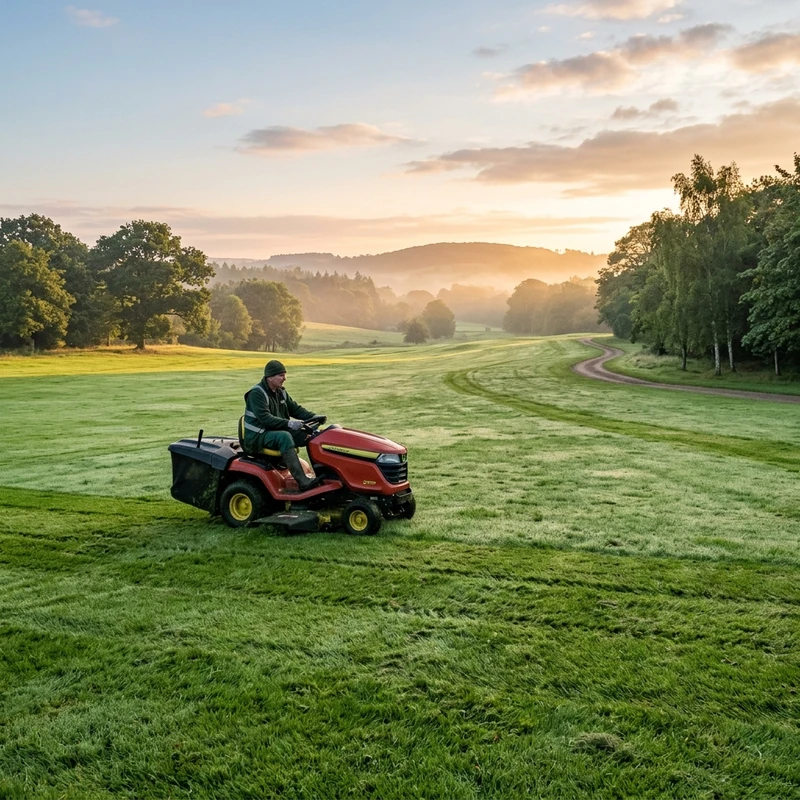
Riding lawn mowers and lawn tractors are designed for extensive lawns-typically 1–3 acre properties, small farms, or light commercial work. Engines usually range from 18–24 HP, deck sizes from 42–54 inches, and most accept accessories like a cart, spreader, or aerator. Choose a mower based on the number of obstacles in your yard; if you have wide open land, a riding mower gets the job done fast.
Zero turn mowers are the go-to landscape mower for serious contractors and large estates. Zero turn mowers are ideal for large yards and offer incredible control for large yards filled with trees, beds, and obstacles. Dual rear drive wheels allow a true zero turn radius, letting operators cut around weeds, leaves, and landscape features in a single pass.
Specialty units round out the lineup. Stand-on mowers provide great visibility and quick access for operators who hop on and off frequently. Out-front mower-tractors give ideal visibility near obstacles. Robotic mowers operate autonomously within a perimeter or GPS boundary and are quiet enough to automate lawn maintenance tasks in noise-sensitive areas. All of these share many components and resale considerations with standard riding mower and zero turn platforms.
Key Features That Matter in a Landscape Mower
For landscape professionals and serious property owners, features that affect cut quality, uptime, and resale value matter far more than initial price or brand color. Here is what to evaluate before you buy.
-
Deck size and construction: Cutting width ranges from 21 inches on a push mower up to 72 inches on a large zero turn. Stamped steel decks are cheaper but wear faster; fabricated steel decks resist warping, support heavier blade assemblies, and contribute to durability that pays off at resale. Lawn mower blades are critical for efficient grass cutting, so ensure the deck design supports easy blade service.
-
Engines and power: Horsepower spans roughly 10–13 HP on small push lawn mowers up to 35+ HP on commercial zero turn mowers. Gas-powered mowers offer high horsepower and quick refueling, while battery-powered mowers reduce maintenance and eliminate fuel mixing. Electric starting systems eliminate pull starts for convenience across both gas and electric models. Commercial users favor engine makers like Kawasaki, Kohler, and Honda for wide parts availability in 2026.
-
Drive systems: Manual push, self propelled walk behind, and hydrostatic drives on riding mower and zero turn units each suit different situations. Hydrostatic transmissions ensure consistent speed on hills, reduce operator fatigue, and simplify mowing on uneven ground.
-
Comfort and ergonomics: High-back seats, armrests, vibration isolation, and an intuitive control layout matter when an operator is cutting five or more hours per day on a riding lawn or zero turn machine.
-
Durability: Heavy-gauge frames, commercial spindles, serviceable wheel bearings, and easy access to belts, filters, and grease fittings all extend service life and lower total cost of ownership.
-
Safety systems: ROPS on larger zero turn mowers, operator-presence controls, and blade shut-off systems keep crews compliant with insurance and jobsite requirements.
-
Grass handling: Grass catchers collect clippings for a tidy lawn appearance, and mulch kits recycle grass clippings back into the turf. Both options help maintain a clean, professional look.
Well-documented service history and robust construction help a machine command a stronger resale price on platforms like IronMartOnline when an owner decides to upgrade or thin their fleet.
New vs Used Landscape Mowers: Costs, Lifespan, and Resale Value
Landscape mowers are capital assets. The choice between new and used affects cash flow, downtime risk, and long-term profitability.
Price ranges (2024–2026):
-
New residential riding lawn mowers typically run $2,000–$4,000.
-
Commercial zero turn units often exceed $10,000–$15,000 with fabricated decks and high-HP engines.
-
Quality used machines sell for roughly 40–65% of new price depending on hours, condition, and brand. Toro, Scag, Cub Cadet, and Ferris products generally hold value best.
Lifespan in hours: Entry-level residential mowers start needing major work around 400–600 hours. Well-maintained commercial riding mower and zero turn models can run 2,000+ hours before a major overhaul.
Used mower checklist:
-
Verify engine hours on the hour meter
-
Inspect deck for rust, dents, and weld repairs
-
Test hydrostatic response under load
-
Listen for spindle and bearing noise
-
Review maintenance records
-
Confirm safety systems are functional
Buying used through a structured marketplace reduces risk. Sellers provide photos, specs, and honest condition descriptions, and buyers can request inspections. IronMartOnline specializes in used ride on mowers and larger commercial-grade machines-not small consumer push lawn mowers-so contractors and fleet managers find a wide selection suited to professional needs.
Many businesses save by mixing new and used lawn mowers in the same fleet: purchasing new front-line zero turn mowers, rotating them into secondary properties as they age, and ultimately selling them on the used market. Planning for resale at the time of purchase-choosing proven commercial brands, keeping service logs, and avoiding unsafe modifications-makes it easy to sell your machine quickly when business needs change.
How IronMartOnline Helps You Sell and Buy Professional Landscape Mowers
IronMartOnline is an online marketplace and brokerage focused on used heavy equipment and commercial machinery, including larger riding mower and zero turn fleets used by contractors, municipalities, and large property owners.
Here is how the process works:
-
Sell Your Machine: Contact IronMartOnline with make, model, year, and key specs. The team helps set a realistic asking price, creates a detailed listing with photos and condition notes, and markets it across multiple buyer channels.
-
Hands-off experience: IronMartOnline handles buyer inquiries, helps arrange inspections, and supports secure transactions and paperwork so sellers are not fielding calls or chasing payments. Learn more about how to sell heavy equipment online.
-
Buyer benefits: Buyers get curated listings with clear details-deck size, engine type, hours, prior use-and can get assistance with shipping and logistics.
Typical landscape mower categories on the platform include commercial walk behind units, stand-on and compact commercial mowers, mid-mount zero turn mowers, and out-front mower-tractors.
Consider a regional landscaping company upgrading in spring 2026 from several 60-inch zero turn mowers to larger units. By listing their older machines on IronMartOnline, they reach nationwide buyers, free up capital quick, and keep their fleet fresh without the hassle of managing individual sales.
Whether you are ready to find your next mower or it is time to sell equipment you have outgrown, think about the full lifecycle-from purchase to maintenance to resale. Sell your equipment with IronMartOnline and let the team handle the heavy lifting so you can get back to the job.