
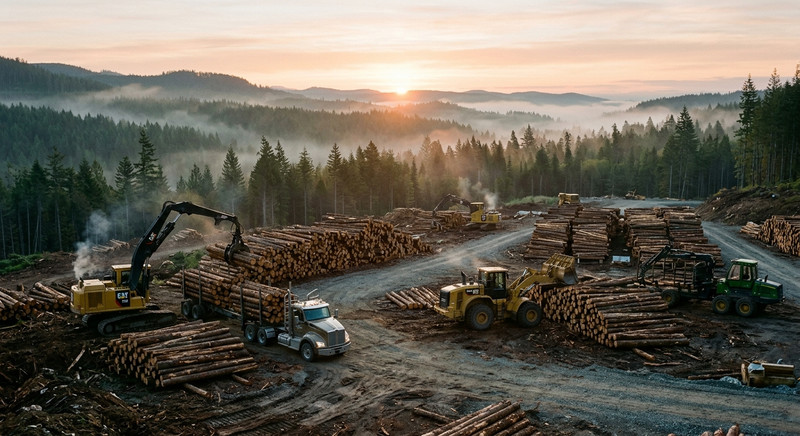
Log Loaders: What to Know Before You Buy in 2026
Quick answer: A log loader is heavy equipment — typically a knuckleboom or swing boom machine — used to lift, sort, and load logs onto trucks or into mill yards. Buyers should match boom type, lift capacity, and reach to their terrain and timber size before comparing price. Used machines with verified service records often beat newer units with unknown histories.
Buying a log loader is not like buying a truck off a lot. One wrong spec and you're stuck with a machine that can't reach the top of your load, can't swing fast enough to keep a crew moving, or can't handle the diameter of timber you're actually cutting. The fastest way to overpay — or worse, under-buy — is to start comparing prices before you've nailed down what the job actually requires.
This guide breaks down what a log loader does, the main types on the market, the specs that actually matter, and the mistakes that cost buyers money. Whether you're outfitting a single-truck logging operation or adding a second loader to a mill yard, the goal is the same: match the machine to the work, not the other way around.
What Is a Log Loader and How Does It Work?
A log loader is a hydraulic machine built to lift, sort, and place logs — on trucks, in decks, or into processing lines. Most run on a diesel engine driving a hydraulic system that powers a boom, a grapple, and a rotating cab or carriage.
The core components are consistent across brands and configurations:
-
Boom and stick — determines reach and lift height
-
Grapple — the claw-like attachment that grabs and holds logs
-
Swing mechanism — rotates the boom and cab to move logs from pile to truck
-
Undercarriage or chassis — tracked, wheeled, or truck-mounted, depending on the application
The loader's job is simple on paper: move wood from one point to another without damaging it, the crew, or the truck. In practice, that requires precise hydraulic control, enough lift capacity for the heaviest logs on site, and enough reach to avoid repositioning the machine every few minutes.
What Are the Main Types of Log Loaders, Including Wheel Log Loaders?
Not every log loader is built the same way, and picking the wrong category costs you productivity, not just money.
Knuckleboom Loaders
Knuckleboom loaders use a jointed, folding boom — similar to a human arm bending at the elbow — that gives tight control in confined spaces and are designed for demanding forestry work. They're common on log trucks themselves, mounted behind the cab, because the folding design lets the boom stow flat during transport.
Knucklebooms work well when:
-
Space is tight (landing sites, narrow yards)
-
The operator needs precise control over the grapple angle
-
The machine needs to double as a self-loading unit on the truck
Swing Boom (Shovel) Loaders
Swing boom loaders — sometimes called log shovels — use a fixed boom mounted on a rotating cab, closer in design to an excavator. Wheel log loaders are also common in forestry yard applications. Wheel loaders offer high mobility on firm ground and are efficient over short distances, while tracked log loaders deliver superior stability, traction, and precise material handling on rough terrain. They trade some compactness for raw lift capacity and faster cycle times in high-volume yards.
Swing boom loaders work well when:
-
Volume matters more than footprint (mill yards, large decks)
-
The operation needs a dedicated, stationary loading machine
-
Cycle speed is the priority over mobility between sites
Truck-Mounted vs. Stationary Loaders
Truck-mounted loaders travel with the truck and load themselves — no second machine needed, while trailer-mounted loaders are a flexible option for mobile operations. Stationary loaders stay on a landing or yard and load multiple trucks as they cycle through.
Choose truck-mounted if you're running a small crew and need self-sufficiency at remote landings. Choose stationary if you're running higher truck volume and want a dedicated loader that isn't tied up riding with one vehicle.
What Specs and Grapple Options Matter Most When Buying a Log Loader?
Specs are where buyers either protect themselves or set themselves up for a bad fit. Four numbers matter more than any brand name or paint color:
-
Lift capacity — rated in pounds at a given reach distance. A loader rated for 8,000 lbs at full extension may lift significantly more close to the cab. Know your heaviest log diameter and species before comparing machines.
-
Reach — maximum horizontal distance the boom can extend. Short reach means more repositioning; longer reach means slower cycle times but fewer moves.
-
Swing speed and angle — how fast and how far the cab rotates per cycle. Faster swing speed directly increases loads per hour.
-
Grapple opening width — determines how many logs or how large a diameter the machine can grab in a single pass. The right grapple options should match different log sizes to improve secure handling and placement control.
Features that affect operators, especially visibility and comfort in a forestry environment, matter during long shifts because they support all-day production.
Define these four numbers before you start browsing listings. A machine that looks like a deal at $120,000 is not a deal if its reach is two feet short of what your landing requires.
New vs. Used: Which Log Loader Makes Sense for You?
New loaders come with full warranties, zero hours, and the latest hydraulic control systems — at the highest possible price. Used loaders can save 30-50% off new pricing but carry higher risk if the service history is incomplete, but buyers can find both new and used log loaders for sale from various manufacturers.
Compare available models by specifications and overall condition, not age alone.
Choose new if:
-
Downtime costs more than the price premium
-
You need warranty coverage for a high-volume operation, and a wheel configuration fits the site because it is designed for high-volume timber handling
-
You're financing and want predictable maintenance costs for the first several years
Choose used if:
-
You have in-house maintenance capability or a trusted mechanic
-
The seller can produce documented service records
-
You're willing to budget for near-term wear items (grapple pins, hydraulic hoses, undercarriage)
A 2019 loader with 6,000 hours and a complete maintenance log tells a far better story than a 2021 model with 3,000 hours and no paperwork. Hours alone don't tell you how a machine was run or maintained — the records do, especially when comparing forestry equipment by spec sheet and service history.
What Mistakes Do Buyers Make When Purchasing a Log Loader?
The same mistakes show up again and again across buyers new to the equipment market:
-
Buying on price before specs. Comparing dollar figures before confirming lift capacity and reach leads to buying the wrong machine at any price.
-
Skipping the hydraulic inspection. Hydraulic leaks and worn cylinders are the most expensive hidden costs in a used loader. Have a mechanic check cylinder seals, hose condition, and pump pressure before closing a deal.
-
Ignoring undercarriage or tire wear. On tracked units, undercarriage replacement can run tens of thousands of dollars. On wheeled units, tire condition affects both safety and resale value.
-
Not verifying grapple and boom pin wear. Loose pins and bushings signal heavy use and future repair costs, even if the engine and hydraulics look clean.
-
Failing to match reach and capacity to actual timber size. A machine specced for different log sizes and timber volume will underperform no matter how well it was maintained.
When operating a loader, keep in mind that stability matters as much as output, so stay within rated load limits and check machine balance before lifting.
The fix for all five is the same: inspect before you buy, and inspect against your specific job requirements — not generic "good condition" claims from a listing.
How Much Does a Log Loader Cost?
Pricing varies widely by type, age, hours, and region, but a few general patterns hold across the used market:
-
Smaller knuckleboom units in working condition often land in the lower-to-mid five figures.
-
Mid-size swing boom loaders with moderate hours typically run into the low-to-mid six figures.
-
High-capacity, low-hour units — new or near-new — command premium pricing well above six figures.
Price alone tells you nothing about value. A lower-priced machine with a documented service history and verified hydraulic performance can be a better purchase than a higher-priced unit with unknown wear on major components. Request maintenance records and a pre-purchase inspection before comparing final numbers.
How Do You Maintain a Log Loader to Extend Its Life?
Routine maintenance determines whether a log loader lasts 10,000 hours or breaks down at 4,000. Key maintenance priorities include:
-
Daily hydraulic fluid and filter checks — contamination is the leading cause of premature cylinder and pump failure.
-
Grease points on schedule — boom pins, grapple joints, and swing bearings need regular lubrication to prevent accelerated wear.
-
Undercarriage inspection — for tracked units, monitor track tension and roller wear monthly.
-
Engine service intervals — follow manufacturer-recommended oil and filter change schedules, and log every service for resale value later.
-
Operating setup and controls — proper positioning is critical before operating the loader, and operators should check machine stability and maintain rated load limits during operation.
A machine with a documented maintenance history isn't just easier to sell later — it's also less likely to fail mid-job, which matters more than any resale number when a crew is waiting on a load.
Buy the Loader That Fits the Job, Not the Lot
A log loader is a long-term investment in uptime, not a one-time purchase decision. The buyers who get the best value are the ones who define their lift capacity, reach, and swing requirements before they ever look at a price tag — and who demand service records and inspections before closing a deal.
If you're in the market now, start with the four specs above: lift capacity, reach, swing speed, and grapple opening. Match those to your timber size and landing conditions first. Then compare new versus used based on your maintenance capability and downtime tolerance. The machine that fits your job will outperform the machine that simply fits your budget.
Frequently Asked Questions
How much does a log loader cost to buy?Pricing depends heavily on type, age, and hours. Smaller knuckleboom units in working condition often fall in the lower five figures, while mid-size swing boom loaders with moderate hours can run into the low-to-mid six figures. New, high-capacity units command the highest premiums.
What's the difference between a knuckleboom and a swing boom log loader?A knuckleboom loader uses a jointed, folding boom suited to tight spaces and truck-mounted applications. A swing boom loader uses a fixed boom on a rotating cab, offering higher lift capacity and faster cycles for high-volume yards. Log loaders may also be mounted on wheel or tracked carriers depending on the forest terrain and site needs.
Is it better to buy a new or used log loader?Buy new if downtime costs outweigh the price premium and you need warranty coverage. Buy used if you have reliable maintenance support and the seller can provide documented service records, since used units can save 30-50% off new pricing.
What should I inspect before buying a used log loader?Check hydraulic cylinder seals and hose condition, pump pressure, grapple and boom pin wear, and undercarriage or tire condition. Confirm which attachments are included and make sure the grapple choice suits different log sizes. Request full maintenance records and arrange a pre-purchase mechanical inspection.
What specs matter most when choosing a log loader?Lift capacity, boom reach, swing speed and angle, and grapple opening width matter most. Define these against your heaviest log diameter and landing layout before comparing machines or prices. Compare a range of models suited to contractors and other professionals, and choose the ideal solution that is ready for the woods.