
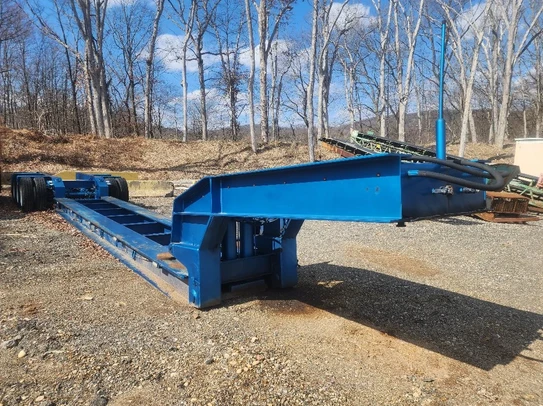
Lowboy Trailers: Choosing a Heavy Haul Trailer
Lowboy trailers are the standard answer for moving equipment that is too tall or too heavy for a flatbed. The deck sits close to the ground, which creates overhead clearance for tall machines and keeps the load's center of gravity lower during transport. That combination is why lowboys show up constantly in construction, mining, automotive, agriculture, and forestry work.
Buying one, new or used, comes down to matching the trailer to the equipment you actually move. Deck height, ton rating, axle setup, neck style, and load securement all shape whether a trailer is the right tool or an expensive mismatch. This guide walks through the main design choices and the practical details worth checking before money changes hands.
What Counts as a Lowboy Trailer
A lowboy is an open-deck trailer with a main deck that sits close to the ground, creating clearance for tall and heavy equipment. Some buyers know them as dropdeck trailers, a name that points directly at the defining feature: the deck drops down between the axles and the neck instead of running flat across the whole length of the trailer.
That lower profile does more than look distinctive. It changes how a machine loads and unloads, and it changes how much vertical room the load has before it meets bridges, wires, or any other overhead limit along the route. For tall excavators, dozers, crawler carriers, and similar machines, the low deck is often the only way the move works at all.
Why Deck Height Changes Everything
The most useful number on a lowboy spec sheet is the one that describes how high the load can stand. Lowboy trailers can haul and carry equipment up to 12 ft in height. Anything taller pushes you into a different trailer class or a different transport plan entirely.
Deck height also affects loading. A lower deck means a shorter, shallower climb from the ramp to the trailer floor, which makes loading and unloading easier on both the machine and the crew. That advantage compounds on jobsites where the approach is tight, uneven, or short on room to maneuver.
The Three Main Lowboy Designs
Lowboys are usually grouped into three design families: fixed neck, gooseneck, and removable gooseneck. Each design suits different loading methods, weights, and jobsite conditions, so the choice is not about one being better than the others. It is about which one fits how you load and what you haul.
-
Fixed neck: the neck stays attached to the deck, giving a simpler, more permanent connection between tractor and trailer; fixed gooseneck lowboys are generally lighter, but they are harder to load from the front.
-
Gooseneck: a raised neck design that changes how the trailer connects and how the front of the deck is arranged.
-
Removable gooseneck: the detachable gooseneck separates so the front of the deck can drop to the ground for loading, then reconnects for the road. RGN is the common shorthand for removable gooseneck, and some are hydraulic detachable designs that use hydraulic cylinders for easier neck removal.
Removable gooseneck trailers are frequently described as the choice for heavy haul work where loading method matters most. If your equipment drives on under its own power, or if you need the deck flat on the ground to load, the removable style is worth a close look. A gooseneck trailer with a mechanical RGN setup is typically lighter and needs less maintenance than hydraulic versions.
Extendable Lowboys and Mechanical Detachable Necks
Some lowboys extend. Extendable trailers carry a main deck that can stretch to provide extra loading length, and they are available with different goosenecks, including a rigid neck or detachable versions. That makes them a flexible option for buyers who regularly haul machines of different lengths rather than one repeated load.
Within the extendable category, mechanical detachable extendables pair an extending main deck with a mechanical style removable gooseneck. The mechanical detachable design is a distinct neck type, and it is worth confirming exactly which neck style a used trailer carries before you assume it loads the way your crew expects.
Carrying Capacity: What a Lowboy Can Actually Carry
Many lowboy trailers fall in the 35- to 80-ton range, but actual carrying capacity varies with trailer design and tare weight. As a reference point, a standard two-axle lowboy trailer of this kind can haul up to 40,000 pounds. A 35-ton lowboy can move more than 70,000 pounds. Heavier trailers with more axles handle more, which is why ton rating belongs at the top of any comparison.
Match the trailer to the machine, not the other way around. Weigh the equipment you plan to move, including attachments and any added ballast, then confirm the trailer's rating covers it with margin. A trailer that is technically rated for the load but leaves no room for fuel, tools, or attachments is a trailer that will limit you on the next job. Even then, legal payload depends on axle count and route restrictions, not just the posted rating.
What to Compare Before You Buy
Lowboy trailers are compared on a short list of criteria: ton rating, deck height, axle setup, detachable neck style, and load securement, with width and well dimensions also worth checking on the spec sheet. Working through that list in order keeps a purchase grounded in the work rather than in how the trailer looks in a photo.
|
Criteria |
Why it matters |
|---|---|
|
Ton rating |
Sets the weight class of the trailer and whether it can handle your heaviest machine. |
|
Deck height |
Determines overhead clearance and how easily tall equipment loads. Lowboys handle loads up to 12 ft in height, and common trailer width is 102 inches (8.5 feet). |
|
Axle setup |
Drives capacity. A standard two-axle lowboy hauls up to 40,000 pounds, while multi-axle lowboys spread weight across more axles to help meet regulations. |
|
Detachable neck style |
Affects loading method. Fixed, gooseneck, and removable designs suit different jobsite conditions, and well length often runs about 24 to 29.6 feet depending on the model. |
|
Load securement |
Confirms the trailer has what you need to tie down the machine properly for the road. |
Buying a Used Lowboy Trailer
Used lowboys and lowboy trailers for sale are widely available across the market in both standard and specialized configurations, including extendable and removable gooseneck models. The appeal is straightforward: a well-kept trailer does the same job as a new one at a lower entry cost, and heavy haul trailers tend to be built for long service lives.
Prices often range from about $30,000 to $100,000 depending on condition, capacity, and configuration.
Inspection is where a used purchase is won or lost. Walk the deck for wear and repairs, look closely at the neck and its connection points, and check the axles and suspension. Ask about the trailer's history, what it hauled, and whether the neck style matches your loading method. If a listing does not state ton rating or deck height clearly, ask before you commit, and verify specifications with the manufacturer or dealer rather than assuming.
It also helps to think beyond the trailer itself. Confirm your tractor is set up for the neck style you are buying, and confirm your hauling route suits the loaded height. Those two checks prevent the most common disappointment after a purchase.
Selling a Lowboy Trailer
Sellers get better results when the listing answers the buyer's comparison list up front, especially when buyers are reviewing lowboy trailers and other trailers for sale. State the ton rating, deck height, axle configuration, neck style, whether the deck extends, and the exact model. Note the trailer's condition honestly, including any deck repairs or neck work, and include clear photos of the deck, neck, axles, and tires.
Buyers and sellers may also compare hauling costs, and lowboy transport pricing varies by equipment size and distance.
Buyers shopping heavy haul equipment are usually working against a job deadline, so listings with complete specifications and realistic condition notes move faster than listings with a single photo and a one-line description. Present the trailer the way you would want to find it.
Frequently Asked Questions
What is a lowboy trailer used for?
A lowboy is an open-deck trailer with a deck that sits close to the ground, built to carry tall and heavy equipment such as construction equipment cargo. The low deck helps transport large cargo while keeping tall loads within road height limits. Lowboys are common in construction, mining, automotive, agriculture, and forestry work, where excavators, dozers, and similar machines need to move between jobsites.
How tall of equipment can a lowboy trailer haul?
Lowboy trailers can haul and carry equipment up to 12 ft in height. The exact figure depends on the trailer's deck height and the machine's dimensions loaded, so measure the equipment as it will sit on the deck. If your machine approaches that limit, confirm the loaded height with the trailer manufacturer or dealer before scheduling the move.
What is the difference between a gooseneck and a removable gooseneck?
The main difference is that a removable gooseneck trailer lets the front of the trailer bed drop for easier loading, while carrying capacity varies by design. Some gooseneck lowboy trailer models and detachable gooseneck lowboys are rated from 35 to 80 tons. RGN is the common shorthand for removable gooseneck. Fixed neck, gooseneck, and removable designs suit different loading methods, weights, and jobsite conditions, so the right one depends on how you load.
How much weight can a two-axle lowboy carry?
A standard two-axle lowboy trailer can haul up to 40,000 pounds, though depending on configuration these trailers can accommodate loads from about 20,000 pounds to over 100,000 pounds. Trailers with additional axles are built for heavier loads, and common upgrades include a tandem axle setup or heavier rear axles; axle spacing also affects how much weight the trailer can legally carry on the road, which is why ton rating is one of the first specifications to compare. Always weigh the equipment you intend to move, including attachments, and confirm the trailer's rating covers it before you buy.
What should I check on a used lowboy trailer?
Compare ton rating, deck height, axle setup, detachable neck style, deck length, overall length—some lowboy trailers reach 53 feet overall—and load securement first. Then inspect the deck for wear, examine the neck and its connection points, and review the axles, suspension, and tires. Ask what the trailer hauled and confirm the specifications with the manufacturer or dealer before you commit to a purchase.
A lowboy trailer earns its keep by fitting the equipment you actually haul, not the equipment you might haul someday. Start with loaded height and weight, choose a neck style that matches how your crew loads, and verify the specs on any used trailer before you buy. Get those three things right and you can choose the right lowboy trailer and the right trailer for your hauling needs, especially when comparing loading style and dimensions, so it becomes a long-term asset rather than a workaround.