
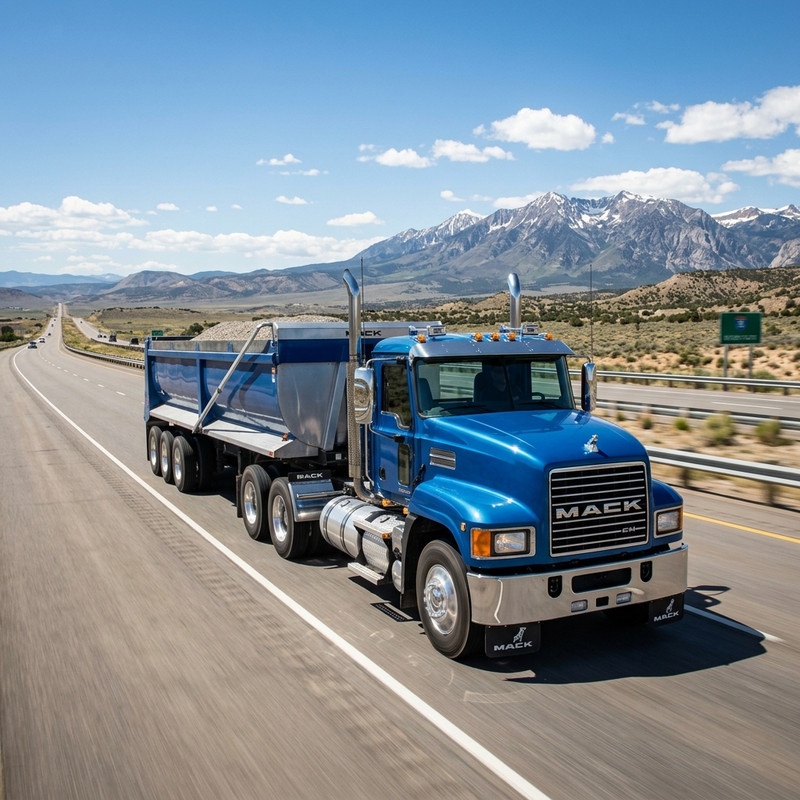
CH Tri Axle Mack: What Buyers Need to Know Before Purchasing
Quick answer: The Mack CH Tri Axle is a heavy-duty conventional truck built for construction, dump, and vocational work requiring higher payload capacity than a standard tandem axle. The third axle spreads weight across more contact points, letting operators legally haul more material while staying compliant with federal bridge formula weight limits. Buyers should prioritize engine hours, axle ratings, and maintenance records over cosmetic condition.
Buying a Mack CH Tri Axle without understanding what separates a good unit from an overpriced liability is how fleet budgets get destroyed. The truck itself has earned a reputation for durability in the vocational market, but that reputation gets used as a sales tactic more often than it gets backed with documentation. This guide breaks down what the Mack CH Tri Axle actually offers, what specs matter, and how to evaluate a used unit before you sign anything.
See MACK CH613 Day Cab Tri-Axle Tractor.
What Is a Mack CH Tri Axle Truck in the Context of Mack Dump Trucks?
The Mack CH is a conventional cab truck series Mack Trucks produced primarily through the 1990s and 2000s, widely used in construction, dump body, mixer, and heavy hauling applications. "Tri Axle" refers to the configuration: one steer axle up front and three axles in the rear group, as opposed to the more common tandem (two rear axles) setup.
The added axle isn't a cosmetic upgrade. It's a weight-distribution solution. Federal and state bridge formula laws cap how much weight a truck can carry based on axle spacing and axle count. A tri axle configuration allows a truck to legally carry more gross weight than a tandem by spreading that weight across a longer wheelbase and an additional axle. For contractors hauling aggregate, dirt, or demolition debris, that translates directly into more payload per trip and fewer trips per job.
What Engine and Drivetrain Options Come in a Mack CH Tri Axle?
Most Mack CH Tri Axle trucks were built with Mack's own E-Tech or E7 series diesel engines, with Mack E7 diesel engines rated from 300 hp to 460 hp depending on the model year and application. Common drivetrain pairings include Mack's own Maxitorque manual transmissions (typically 8, 9, 10, or 13-speed) alongside Mack or Eaton rear ends rated for vocational duty, though some Mack tri-axle trucks were also spec’d with Allison automatic transmissions.
Higher-spec Mack tri-axle units could reach up to 505 HP, so buyers should compare horsepower and torque to the intended hauling job.
Before buying, confirm three things:
-
Engine hours or mileage. A truck with 250,000 miles and full service records is a safer bet than one with 180,000 miles and no paperwork.
-
Rear axle rating. Vocational tri axle applications typically need axles rated 40,000 lbs or higher combined to handle full payloads without premature wear.
-
Transmission condition. Manual Maxitorque transmissions are durable but unforgiving of poor driver habits. Ask for maintenance logs, not just a test drive.
A truck with 300,000 miles and a complete dealer service binder tells a far better story than one with 150,000 miles and zero documentation.
Why Do Contractors Choose Tri Axle Over Tandem Axle Trucks: Comparing Axle Configurations?
Contractors choose tri axle configurations when payload capacity matters more than maneuverability, though the longer wheelbase can make them harder to handle in tight spaces. A tandem axle dump truck typically maxes out around 26,000–33,000 lbs of legal payload depending on state regulations. Add a third axle, and that payload capacity can climb toward 40,000 lbs or more, with legal hauling limits depending on GVWR, axle spacing, and state regulations.
Choose a tri axle Mack CH if your jobs involve high-volume material hauling — aggregate, asphalt, dirt, gravel, sand, or demolition debris — where fewer trips directly reduce labor and fuel costs. A tri axle dump setup also benefits from the extra axle, which can improve traction on low-traction surfaces and provide good off-road capability on job sites. Choose a tandem axle instead if your work involves tighter job sites, residential streets, or applications where turning radius and maneuverability outweigh payload gains.
Many tri axle dump setups fall within a GVWR range of roughly 50,000 to 82,000 lbs.
What Should You Check Before Buying a Used Mack CH Tri Axle?
The fastest way to overpay for a used Mack CH Tri Axle is trusting a seller's description of "good condition" without verification. Condition claims mean nothing without a number attached. Here's what to verify in person or through documented records before making an offer:
-
Frame and subframe integrity. Tri axle trucks carry heavier loads, which stresses frames more than tandem configurations. Inspect the heavy-gauge steel frame rail for cracks, repairs, or reinforcement welds around the rear axle housings.
-
Suspension type and condition. Most CH Tri Axles run either walking beam or air-ride rear suspension. Air-ride systems ride smoother but cost more to repair. Confirm which system is installed and check for leaks or worn air bags. The front axle on tri-axle trucks is commonly rated between 12,000 and 18,000 lbs, though some Mack specs go to 20,000 lbs.
-
Tire and brake wear across all three rear axles. Uneven wear across axles can indicate alignment issues or a bad axle bearing, both of which are expensive to fix. Check air brakes for even wear and proper function across all three rears; tri-axle rear axle capacity is commonly rated from 38,000 to 46,000 lbs, with some Mack units at 46,000 lbs.
-
PTO and hydraulic system condition, if the truck is equipped with a dump body or other hydraulic-driven attachment.
-
DOT inspection history and any open recalls. A clean recent DOT inspection reduces your risk of immediate out-of-service violations after purchase.
Verify the vin, confirm whether the truck started and could be function-tested, and make sure the title status is clear.
Ask for maintenance records going back at least three years. If a seller can't produce them, assume the worst and price your offer accordingly.
How Much Does a Used Mack CH Tri Axle Cost?
Pricing varies significantly based on year, hours, engine condition, and body equipment (dump, mixer, or chassis-only). As a general range, used Mack CH Tri Axle trucks in working condition typically sell between $25,000 and $65,000, with well-maintained, lower-hour units toward the top of that range and higher-mileage or cosmetically rough units toward the bottom.
A lower price isn't automatically a better deal. A $30,000 truck needing a $15,000 transmission rebuild costs more in the first year than a $40,000 truck with documented recent service. Calculate total cost of ownership, not just sticker price, before comparing options.
What Maintenance Issues Are Common in Heavy Duty Mack CH Tri Axle Trucks?
Mack CH trucks have a strong reputation for engine longevity, particularly the E7 series, but tri axle configurations can carry higher operational costs because the extra axle adds maintenance requirements and wear points that tandem trucks don't face. Watch for these recurring issues:
-
Third axle bearing wear, caused by the added weight distribution across three axles instead of two.
-
Air suspension leaks on trucks equipped with air-ride rear ends, especially units over 200,000 miles.
-
Clutch wear on manual transmission units used in stop-and-go vocational work, which accelerates clutch replacement schedules compared to highway use.
-
Frame stress cracks near the rear axle mounts on trucks that regularly haul at or above rated payload.
None of these issues are dealbreakers on their own. A heavier chassis can also reduce fuel economy, which makes replacement parts budgeting more important. They are, however, negotiating leverage. Factor the cost of addressing each into your offer.
Is a Mack CH Tri Axle a Good Investment for a Small Fleet?
A Mack CH Tri Axle makes sense for a small fleet if your work regularly requires payload above what a tandem axle legally allows, and if you have the maintenance infrastructure — in-house or contracted — to manage a manual transmission, vocational-duty diesel platform. It makes less sense if your jobs rarely max out tandem payload limits, since the added axle brings added maintenance cost without a corresponding return.
Fleets running aggregate hauling, demolition, or large-scale earthmoving support typically see the tri axle configuration pay for itself in reduced trip counts within the first one to two years of heavy use. Fleets doing lighter, intermittent hauling often find a tandem axle truck cheaper to acquire and cheaper to maintain over the same period.
Making the Purchase Decision
A Mack CH Tri Axle earns its reputation when it's maintained properly and matched to the right job. It loses that reputation fast in the hands of a buyer who skipped the inspection, ignored the maintenance records, or bought on price alone. Verify the frame, the axles, the transmission, and the paperwork before you negotiate. Everything else is a specification you can look up — these are the details that determine whether your purchase becomes a workhorse or a liability.
Ready to compare available units? Request full maintenance and inspection records before scheduling a viewing.
Frequently Asked Questions
What does "tri axle" mean on a Mack CH truck?Tri axle refers to a rear axle configuration with three axles instead of the standard two-axle tandem setup. This allows the truck to legally carry more weight under federal and state bridge formula laws.
How much can a Mack CH Tri Axle legally haul?Legal payload depends on axle spacing, state regulations, and the specific bridge formula calculation, but tri axle configurations generally allow for gross payloads exceeding 40,000 lbs, compared to roughly 26,000–33,000 lbs on a tandem axle.
What's the difference between a Mack CH Tri Axle and a tandem axle dump truck?The tri axle has one additional rear axle, increasing legal payload capacity at the cost of a longer wheelbase and reduced maneuverability compared to a tandem axle truck.
Are Mack CH Tri Axle trucks still in production?No. The Mack CH series was discontinued in the mid-2000s in favor of newer Mack models like the Pinnacle, while the cl used a longer hood than the CH Series. Buyers often cross-shop the granite for vocational setups; the Mack Granite was first available in 2001 and supports a wide range of axle configurations and customizations. For highway use, Anthem models offered the mack mp8 or MP7, while the MD Series serves the medium-duty market and the Titan offered a 600 HP MP10 for heavier specialized work. Mack CH Tri Axle trucks available today are sold exclusively on the used market.
What should I ask a seller before buying a used Mack CH Tri Axle?Request engine hours or mileage, three years of maintenance records, recent DOT inspection results, and documentation on rear axle rating and suspension type before making an offer.