
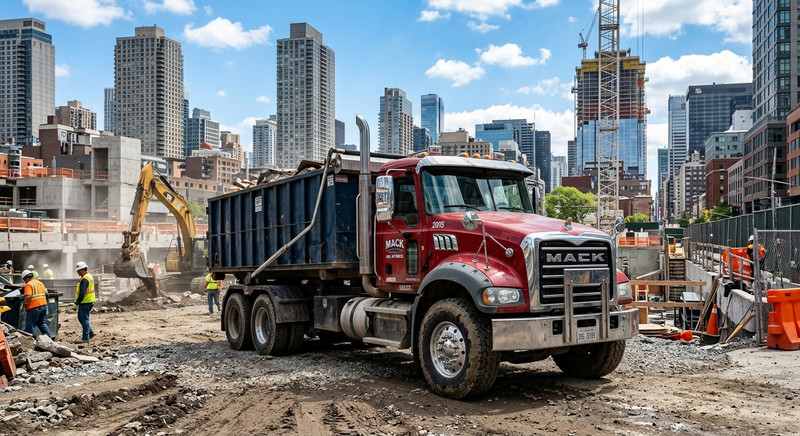
Mack Tri Axle Roll Off Trucks: What Buyers Need to Know Before They Buy
TL;DR: Mack tri axle roll off trucks pair a heavy-duty chassis with a third axle for higher legal payload — typically 60,000–75,000 lbs GVWR depending on configuration, versus roughly 54,000 lbs on a tandem axle. The extra axle means more hauling capacity per trip and fewer overweight tickets, but it also means a higher purchase price, more tires to maintain, and a tighter turning radius on tight job sites. Buy tri axle if you're hauling heavy construction debris or C&D roll offs daily. Buy tandem if your loads run lighter and your routes are tight.
Roll off operators lose money two ways: buying the wrong truck, or buying the right truck for the wrong price. A tri axle Mack sitting on a lot with a clean service history and the right GVWR for your routes can run your business for a decade. The same truck with a cracked frame rail or a rebuilt rear end hiding under fresh paint can put you out of business in a year.
This guide breaks down what a Mack tri axle roll off truck actually is, why operators choose the configuration over a tandem axle, what specs matter most, and how to inspect one before you sign anything.
What is a Mack tri axle roll off truck?
A Mack tri axle roll off truck is a Mack chassis — most commonly the Granite or TerraPro models — built with three axles instead of two, paired with a roll off hoist system for hauling dumpsters and containers. The third axle distributes weight across more contact points, which raises the legal gross vehicle weight rating (GVWR) compared to a standard tandem axle setup.
Mack built its reputation on vocational trucks designed for abuse: construction sites, demolition routes, waste hauling. The Granite series in particular has become the default choice for roll off operators because of its reinforced frame rails, heavy-duty rear suspension, and engine options built for stop-and-go torque rather than highway cruising speed.
Why does the third axle matter?
The third axle isn't about speed or comfort. It's about legal payload. A tandem axle roll off truck typically tops out around 54,000 lbs GVWR. Add a third axle and that number climbs toward 60,000–75,000 lbs, depending on axle rating and state bridge law limits.
For a roll off operator hauling construction and demolition (C&D) debris, that difference determines how many loads you run per day and how many overweight citations you risk. Heavier debris — concrete, brick, roofing shingles — fills a container's legal weight limit long before it fills the physical box. A tandem axle truck hits its weight ceiling fast on these jobs. A tri axle truck lets you haul closer to a full container without getting flagged at the scale.
When should you choose a tri axle over a tandem axle?
Choose a tri axle Mack if your routes involve dense, heavy material — concrete, dirt, asphalt, shingles — where weight limits out before volume does. Choose a tandem axle if your loads are bulkier but lighter — household junk, wood, cardboard — where you fill the box before you hit the weight limit.
The tradeoff comes down to upfront cost against operating efficiency:
- Tri axle: Higher purchase price, more tires and brakes to maintain, tighter turning radius, but legal payload up to 20,000+ lbs higher than tandem.
- Tandem axle: Lower purchase price, easier maneuverability on residential or tight commercial routes, but weight-limited on dense debris hauls.
If you're running mixed-use routes — some light pickups, some heavy C&D — a tri axle gives you flexibility a tandem can't match. If every route you run is tight urban alleys and residential pickups, the tandem's smaller turning radius saves you time and dents.
What specs should you check on a used Mack tri axle roll off truck?
Specs tell you what the truck can do. Condition tells you whether it can still do it reliably. Check both before you negotiate price.
Engine and drivetrain
Mack's MP7 and MP8 engines are the standard in Granite tri axle configurations, typically rated between 325 and 505 horsepower depending on the build year and application. Pair that against the transmission — Mack's mDRIVE automated manual or a traditional Eaton Fuller manual — and confirm it matches your drivers' experience. A fleet of drivers trained on manuals won't get full value out of an automated transmission, and vice versa.
Axle ratings and suspension
Confirm the rear axle rating matches the GVWR the seller is advertising. A truck advertised as 70,000 lbs GVWR with axles rated below that number isn't legally rated for 70,000 lbs — it's rated for whatever the lowest-rated component allows. Ask for the axle tag numbers and verify them against Mack's published ratings, not just the seller's listing copy.
Hoist and hydraulic system
The roll off hoist is a separate system from the Mack chassis itself, typically built by a third-party manufacturer like Galfab, Marathon, or Amrep. Check hydraulic cylinder condition, cable or chain wear (depending on hoist type), and confirm the hoist's rated capacity matches your heaviest containers. A hoist rated below your container weight is a liability, not a cost-saving shortcut.
Frame and odometer history
Mileage alone doesn't tell you much about a roll off truck — these trucks run short routes with heavy idle time, so hours matter more than miles. A 2019 Granite with 60,000 miles but 8,000 idle hours has seen more wear than the odometer suggests. Ask for engine hour data alongside mileage, and inspect the frame rails for cracks or weld repairs near the rear suspension mounts, where tri axle trucks see the most stress.
How do you inspect a used Mack tri axle roll off truck before buying?
Don't take a listing's word for "excellent condition." Verify it yourself, in person, before money changes hands.
- Pull the maintenance records. A truck with a complete service binder tells a better story than a newer truck with no paperwork at all. Look for regular oil analysis, DPF service, and brake inspections.
- Inspect the frame rails and cross members. Look for rust-through, cracks, or non-factory welds, especially around the third axle mount and rear suspension hangers.
- Check tire wear across all axles. Uneven wear on the tri axle's lift or pusher axle can indicate alignment problems or suspension wear that's expensive to fix.
- Run the hoist through a full cycle. Watch for hydraulic leaks, slow cylinder response, or cable fraying under load.
- Verify the axle and GVWR ratings against the title and registration. Confirm what you're buying is legally rated for the weight you intend to haul.
- Get a compression or oil analysis test on the engine. This costs a few hundred dollars and can save you tens of thousands if it flags early signs of engine failure.
Skip any of these steps and you're buying on trust instead of evidence. Evidence is cheaper.
What does a Mack tri axle roll off truck cost?
Pricing depends heavily on model year, engine hours, hoist condition, and axle configuration, but here's the general shape of the market: new Mack Granite tri axle roll off trucks with a hoist installed typically run well into six figures, while well-maintained used units from the past five to eight years trade at a significant discount — often 30–50% below new, depending on hours and hoist condition.
A lower price on a used unit isn't automatically a better deal. A truck priced $20,000 below market with no service records and an unverified hoist cycle count can cost you more in downtime and repairs than the truck you passed on for being "too expensive." Price against documented condition, not against the sticker alone.
Buy the truck that matches your routes, not the one with the lowest price
A Mack tri axle roll off truck earns its keep by hauling heavier loads legally, fewer trips, fewer citations, more tons moved per day. That advantage only holds if the axles, frame, and hoist are rated and maintained to back it up.
Define your route weight requirements before you start shopping. Pull maintenance records before you negotiate. Verify axle ratings against the title, not the listing copy. Inspect the frame and hoist in person, or have someone you trust do it for you.
Ready to compare specs on available tri axle Mack roll off trucks? Browse current listings and verify the numbers yourself.
Frequently asked questions
How much does a Mack tri axle roll off truck cost compared to a tandem axle?
Tri axle configurations generally cost more upfront than tandem axle trucks — both new and used — because of the added axle, suspension components, and higher-rated chassis. The exact premium varies by model year and hoist type, but expect a tri axle to carry a higher purchase price in exchange for higher legal payload capacity.
How long does a Mack tri axle roll off truck typically last?
Longevity depends more on maintenance history and duty cycle than age alone. A well-maintained Mack Granite with regular service and no frame damage can run well past 500,000 miles in vocational service. A poorly maintained unit with the same mileage may need major repairs far sooner.
What are the risks of buying a used tri axle roll off truck without an inspection?
Skipping inspection risks hidden frame damage, undisclosed hoist repairs, mismatched axle ratings, and engine wear that isn't reflected in mileage alone. These issues can turn a seemingly good deal into a truck that costs more in repairs than it saved at purchase.
Is a tandem axle a good alternative to a tri axle roll off truck?
Yes, if your routes involve lighter, bulkier loads rather than dense debris. Tandem axle trucks cost less, maneuver more easily on tight routes, and are sufficient when weight limits rarely come into play. They're the wrong choice if you regularly haul heavy material that hits legal weight limits before filling the container.
Who should buy a Mack tri axle roll off truck instead of other brands?
Operators prioritizing frame durability and vocational-duty engineering over the lowest sticker price tend to favor Mack. Buyers focused purely on acquisition cost, with lighter-duty routes, may find comparable configurations from other manufacturers at a lower entry price — but should weigh that against Mack's resale value and parts availability in the vocational truck market.