
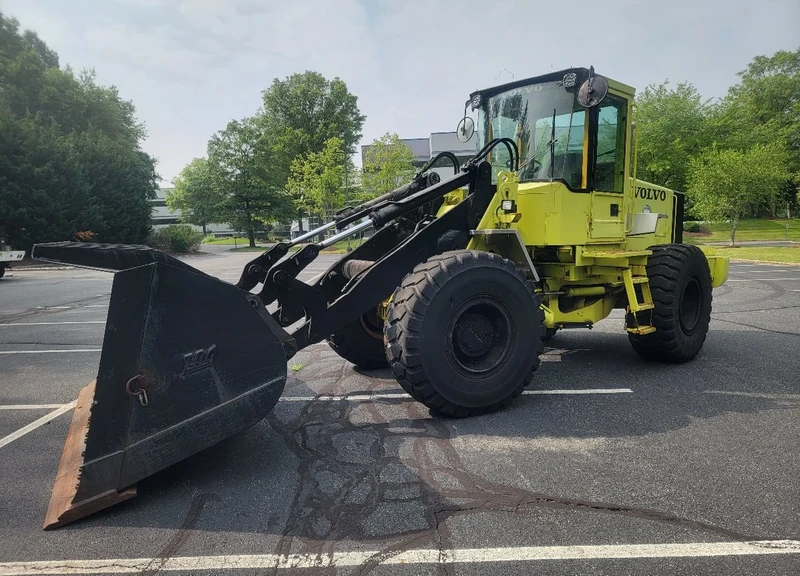
Michigan L90 Wheel Loader
The Michigan L90 is a mid-size wheel loader built under the Michigan brand, a name with roots in Clark-Michigan and later folded into Volvo Construction Equipment's L-series lineup. Buyers considering a used L90 should verify hour meter accuracy, inspect the hydraulic system and bucket linkage for wear, and confirm parts availability before purchase — Michigan-branded units can be decades old, and support networks vary by region.
Michigan L90 equipped with 6 yard bucket gets a lot work done in a very little amount of time because of it's nible size 28,000lbs and huge 6 yard bucket Michigan L90 Wheel Loader long lasting durabilty super deppenibilty having 156 hp Cummins diesel engine with super pushing power.
Buying a used wheel loader is not like buying a used car. There's no standardized inspection report, no universal warranty, and no dealership network guaranteeing parts on every corner. When the machine in question carries the Michigan name — a brand with a long, layered history that eventually merged into Volvo's construction equipment division — the stakes for due diligence go up, not down.
This guide breaks down what the Michigan L90 is, where it fits in the wheel loader class, and exactly what to check before you write a check of your own. Whether you're adding a loader to a small fleet or replacing an aging unit on a single job site, the goal here is the same: know what you're buying before the seller knows you want it.
See MICHIGAN L90B Wheel Loader.
What is the Michigan L90 wheel loader?
The Michigan L90 is a wheel loader that falls in the mid-size class, positioned for material handling, loading trucks, and yard work on construction and industrial sites. The "Michigan" name traces back to a heavy equipment manufacturer that became part of Clark Equipment Company, forming Clark-Michigan in the mid-20th century. In 1985, Clark-Michigan's construction equipment operations merged into VME Group, a joint venture between Volvo, Michigan, and Euclid. By the 1990s, Volvo Construction Equipment had absorbed the Michigan brand entirely, and the L-series naming convention — L90, L120, L150, and so on — carried forward into Volvo's own model lineup.
That history matters for one practical reason: a Michigan L90 you find for sale today is likely an older unit, and its parts and service lineage may run through Volvo dealers rather than a dedicated Michigan parts network. Confirm this before you buy, not after the machine breaks down on a job site.
Where does the L90 fit in the wheel loader lineup?
Within a wheel loader class system, the L90 sits below larger loaders (L120, L150, L180) and above compact models. It's built for operations that need more capacity than a skid steer or compact loader but don't require the size or cost of a full production-class machine. Typical uses include:
-
Loading and unloading trucks on construction sites
-
Aggregate and material handling in yards
-
Snow removal and municipal work
-
Light-duty quarry or gravel pit operations
If your job site needs a loader that can move between tasks without the fuel and operating cost of a larger machine, the L90 class is worth evaluating. If your work involves heavy quarry production or large-scale earthmoving, you're likely better served by a larger L-series unit.
What should you inspect before buying a used Michigan L90?
Inspect the hour meter, hydraulic system, and bucket linkage first — these are the components most likely to reveal how hard a loader has actually worked, regardless of what the odometer says. Its versatility also lets it serve as an integrated tool carrier in mixed-use operations. A low hour count with no maintenance records tells you less than a higher hour count backed by a service history, and listing details like hours, location, and transport height can change. Buyers comparing wheel loaders in this class should also confirm whether financing options let them apply before visiting. Overall, the Michigan L90 class is recognized for balancing power and agility across a range of industries.
Does the hour meter tell the whole story?
No. Hour meters can fail, be replaced, or simply stop being trustworthy after decades of ownership changes, so buyers comparing listings for wheel loaders should verify key class-defining specs like the approximately 28,540 lb operating weight and 2.49 m transport width, especially when planning transport. A 1990s-era Michigan L90 with 6,000 recorded hours and zero documentation is a bigger question mark than a machine with 9,000 hours and a complete service binder. Always ask for maintenance records, and treat their absence as a red flag rather than a minor inconvenience, since hours, condition, and location can change.
What are the common wear points on an aging wheel loader?
For a machine of the L90's age and class, prioritize these checks:
-
Hydraulic cylinders and hoses — Look for leaks, scoring on cylinder rods, and cracked or brittle hose fittings, especially if it has a quick coupler.
-
Bucket and linkage pins — Excessive play indicates wear that will only get worse under load; confirm bucket width matches the work you plan to do.
-
Tires — Uneven wear can point to alignment or axle issues, not just tire age.
-
Engine and transmission fluids — Cloudy or metallic-smelling fluid suggests deferred maintenance.
-
Cab and operator features — An enclosed cab with working heat adds comfort in cold conditions and can matter on older wheel loaders.
-
Undercarriage and axle seals — Leaks here are expensive to fix and easy to overlook during a quick walkaround.
Choose a machine with clean fluid samples and documented service history if your budget allows it — that combination reduces the odds of an expensive surprise in the first six months of ownership. If financing matters, apply early to understand your options. If budget is the primary constraint and you're comfortable doing your own repairs, a lower-priced unit with known issues can still be a reasonable buy, provided the price reflects the work needed; listed hours, condition, and location can change, so documentation matters more than the ad copy.
Can you still get parts for a Michigan-branded loader?
This is the single most important question to answer before bidding on any Michigan L90. Because the brand's construction equipment lineage now runs through Volvo Construction Equipment, some components may cross-reference to Volvo L90 parts, while others — particularly Michigan-specific electrical or hydraulic components — may require sourcing from used equipment parts suppliers or specialty dealers. Call a parts supplier with the machine's serial number before you buy, not after.
How do you determine a fair price for a used Michigan L90?
Price a used Michigan L90 based on hours, documented maintenance, and the cost of parts availability in your region — not on the asking price alone. A seller listing a low price on an undocumented machine isn't offering a deal; they may be pricing in the unknowns you'll inherit.
Use this comparison approach when evaluating two similar listings:
-
Lower price, no records: Saves money upfront but carries higher risk of hidden repair costs, potentially $5,000–$15,000 depending on hydraulic and drivetrain condition.
-
Higher price, full service history: Costs more initially but reduces the likelihood of near-term major repairs and gives you leverage to negotiate financing or warranty terms.
Choose the documented machine if you're operating on a tight schedule and can't absorb downtime. Choose the cheaper, undocumented unit only if you have in-house mechanical capability and time to inspect and repair it before putting it to work.
Is the Michigan L90 still a good investment in today's used equipment market?
The used heavy equipment market has shifted since the pandemic-era bidding wars cooled, giving buyers more room to negotiate on aging, brand-transitional equipment like the Michigan L90. Softer prices don't mean every L90 on the market is a good deal — they mean buyers finally have the leverage to demand documentation, inspection access, and fair pricing before committing.
For buyers who value proven mechanical simplicity over the latest telematics and emissions technology, an older Michigan L90 can still deliver reliable work at a fraction of the cost of a new mid-size loader. For buyers who need manufacturer support, warranty coverage, or the latest fuel efficiency standards, a newer Volvo L90-series loader is the more defensible purchase, even at a higher price point.
Get the paperwork before you get the machine
A Michigan L90 can be a smart, budget-conscious addition to your fleet — but only if you go in with eyes open. Confirm parts availability, verify maintenance history, and inspect the hydraulic system and linkage points before you negotiate price. The seller who hesitates to provide service records or serial numbers for a parts check is telling you something important. Listen to that before you listen to the sales pitch.
If you're actively shopping for a mid-size wheel loader, start by requesting maintenance documentation and a parts cross-reference on any Michigan L90 listing you're considering. That single step will tell you more about the machine's true condition than any walkaround inspection.
Frequently asked questions
How old is a typical Michigan L90 wheel loader?
Most Michigan-branded L90 units date back to before Volvo Construction Equipment fully absorbed the brand in the 1990s, making the majority of units on the used market at least a few decades old. Exact age should always be confirmed by serial number, not by seller estimate.
Are Michigan L90 parts interchangeable with Volvo L90 parts?
Some components may cross-reference due to the shared engineering lineage, but this varies by part and model year. Confirm compatibility with a parts supplier using the machine's serial number before assuming interchangeability.
What's the biggest risk when buying a used Michigan L90?
The biggest risk is buying a machine with no maintenance history and discovering parts support is limited in your region. Both issues are avoidable with pre-purchase research, but both are costly if ignored.
Is a Michigan L90 a good fit for a small construction business?
It can be, particularly for businesses that need mid-size loading capacity without the cost of a new machine. It's a better fit for operators with mechanical capability or access to a trusted repair shop than for buyers who need turnkey reliability from day one.
What alternatives should I consider if parts support is a concern?
If parts availability for a Michigan-branded unit is limited in your area, consider a comparably sized Volvo L90-series loader instead. You'll pay more upfront but gain access to an active dealer and parts network.