
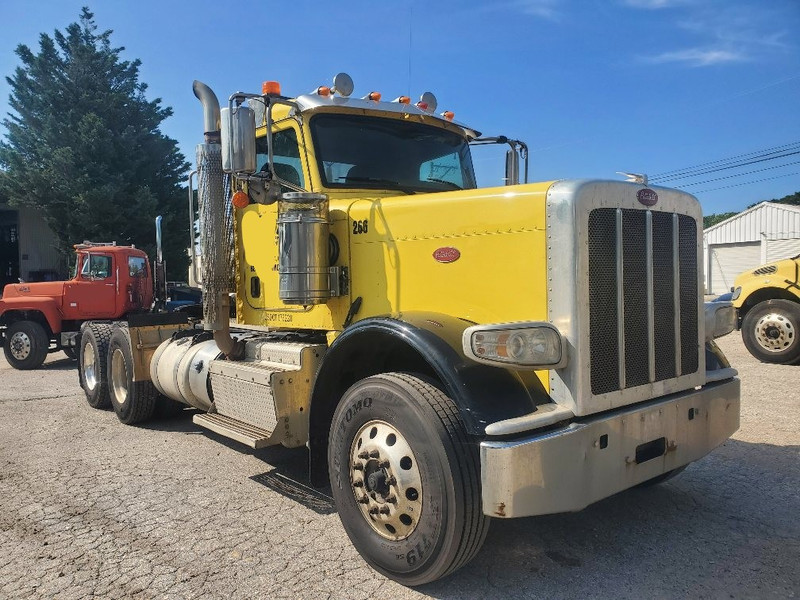
Peterbilt 389 Day Cab Tractor vs. the Competition: Here's the Truth
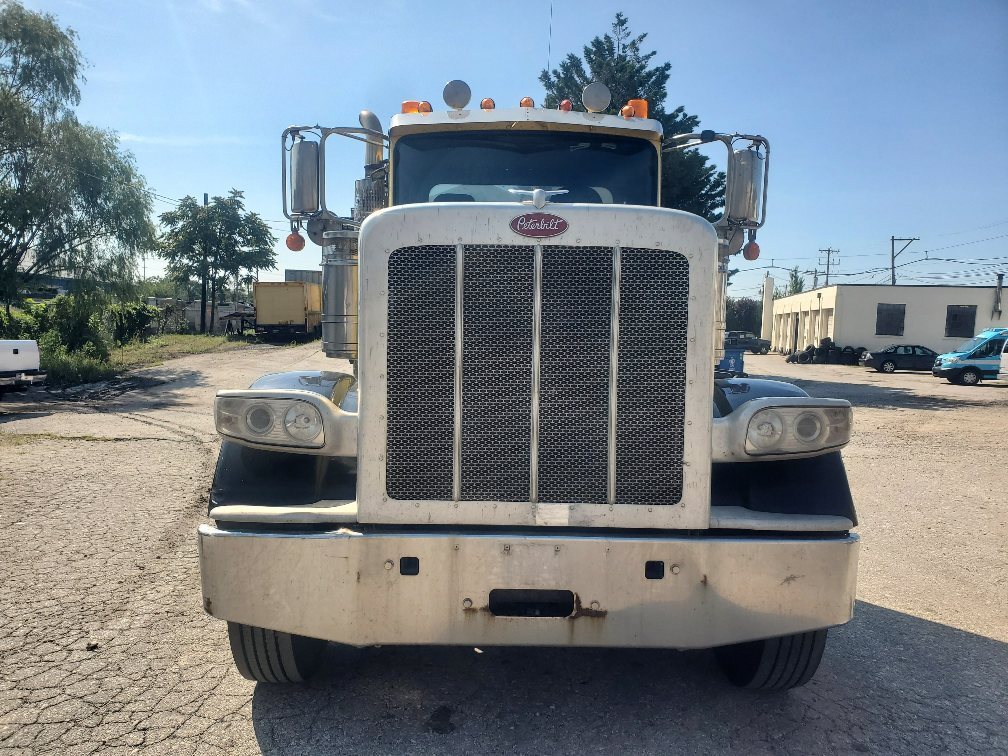
TL;DR: The Peterbilt 389 day cab tractor — specifically the Peterbilt 389 Day Cab Tandem Axle — is a Class 8, long-hood regional haul truck built as a high-performance, lightweight day cab with PACCAR MX-13 or Cummins X15 power for regional freight, port drayage, and intermodal work. For owner-operators, fleet managers, contractors, and equipment owners buying or selling used heavy trucks, it sets the benchmark on resale value, driver satisfaction, parts access, and long-term operating value.
There's no shortage of Class 8 trucks on the market. Walk any dealer lot and you'll find Kenworths, Macks, Internationals, and Western Stars all making their case. The question isn't whether those trucks can move freight — most of them can. The question is which one costs you the least over time, keeps drivers in the seat, and holds value when you're ready to move it.
The Peterbilt 389 Day Cab Tandem Axle answers that question better than its competitors. Not because of marketing. Because of verifiable specs, engine options, real-world resale data, driver preference, and dealer and parts network support that directly affect uptime, total cost of ownership, and long-term return.
This post breaks down the 389 Day Cab's specifications, how it compares with Kenworth, Mack, International, and Western Star, what resale trends say in the used market, and what to inspect before you buy or sell one.
What makes the Peterbilt 389 Day Cab Tandem Axle worth your attention?
The 389 is a conventional, long-hood truck built on a proven frame. The Day Cab configuration strips out the sleeper to reduce weight, improve maneuverability, and cut your upfront cost — without sacrificing the mechanical platform that makes the 389 a long-term asset.
Standard configuration includes:
-
PACCAR MX-13 or Cummins X15 engine options, up to 605hp
-
Tandem rear axles / 40,000 lb rear axle rating
-
Eaton Fuller Advantage or Automated 18-speed transmission options
-
Premium cab suspension / air-ride seat standard
-
110-inch BBC (bumper-to-back-of-cab)
-
Tilt hood for full engine access
-
Steel or aluminum wheel options
The Day Cab build is the preferred spec for regional haul, port drayage, intermodal, and heavy haul operations. You're not paying for a sleeper you won't use. Every pound saved is payload gained.
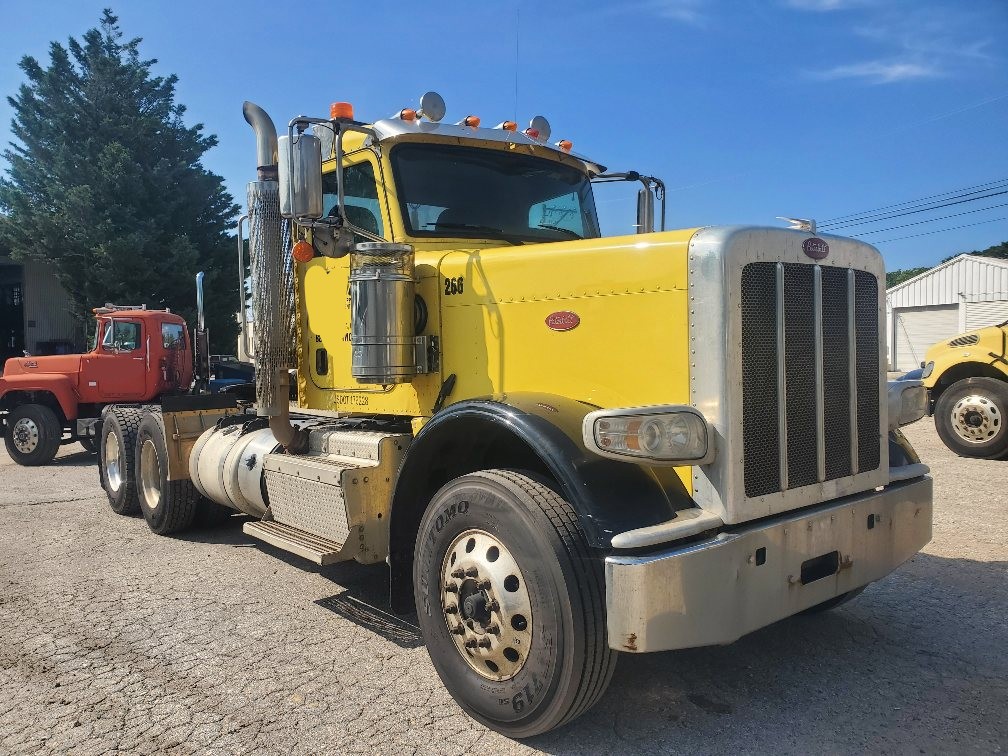
How does the Peterbilt 389 compare to Kenworth T680 and W900?
Kenworth and Peterbilt share a parent company — PACCAR — which means they share engine platforms and many drivetrain components. That's a meaningful starting point. But the trucks diverge fast in cab design, driver appeal, and resale performance.
The Kenworth W900 is the direct long-hood competitor to the 389. It's a capable truck. But driver surveys consistently rank Peterbilt 389 higher for cab quality, visibility, and overall preference. When drivers prefer a truck, turnover drops. Lower turnover has a dollar value.
The Kenworth T680, by contrast, is an aerodynamic platform built for fuel economy on highway miles. Fuel savings on long-haul runs are real — roughly 5–7% better than a conventional hood in controlled comparisons. That advantage narrows significantly in regional and stop-and-go operations where the 389 Day Cab lives.
Bottom line: Choose the T680 if highway fuel economy matters more than driver preference and resale. Choose the Peterbilt 389 Day Cab if regional flexibility, driver retention, and long-term value matter more.
How does the Peterbilt 389 stack up against Mack Trucks?
Mack's identity is built on durability. The Mack Anthem and Mack Pinnacle are respected platforms with a loyal following, particularly in vocational and construction-heavy markets. Mack's proprietary MP8 and MP10 engine options are solid performers with a known service record.
The weakness is parts availability and dealer network density. Mack's dealer network is smaller than Peterbilt's in most U.S. regions. A breakdown 300 miles from the nearest Mack dealer is a different problem than a breakdown 300 miles from the nearest Peterbilt dealer. According to PACCAR's dealer data, Peterbilt operates over 350 dealer locations across North America — one of the densest heavy truck networks on the continent.
Resale also favors the 389. Mack trucks depreciate at a steeper rate beyond the 500,000-mile mark. A well-maintained Peterbilt 389 with documented service history commands a premium in the used market that Mack equivalents rarely match.
Bottom line: Mack is durable. But Peterbilt 389 wins on dealer access, resale value, and driver preference — three factors that compound over a truck's working life.
Where does the Peterbilt 389 beat International trucks?
International's LT Series is the brand's answer to the conventional market. It's a newer platform with modern aerodynamics and the International A26 engine, which replaced the troubled MaxxForce lineup.
That history matters. The MaxxForce engine issues that plagued International trucks from roughly 2010–2014 created a trust deficit in the owner-operator community that hasn't fully recovered. The A26 is a better engine. But buyer perception in the used market still pressures International's resale values downward relative to Peterbilt.
For fleet buyers, International offers competitive pricing upfront. That's a real advantage if acquisition cost is your primary constraint. But total cost of ownership — including downtime, dealer access, resale, and driver preference — consistently favors the Peterbilt 389 Day Cab in independent fleet analyses.
Cab technology is another gap. The Peterbilt 389 cab offers better ergonomics, cleaner driver interface, and a more configurable spec sheet. International's LT Series has made gains here, but it hasn't closed the gap in driver satisfaction scores.
Bottom line: International may cost less at signing. Expect to give some of that savings back in resale value and driver turnover.
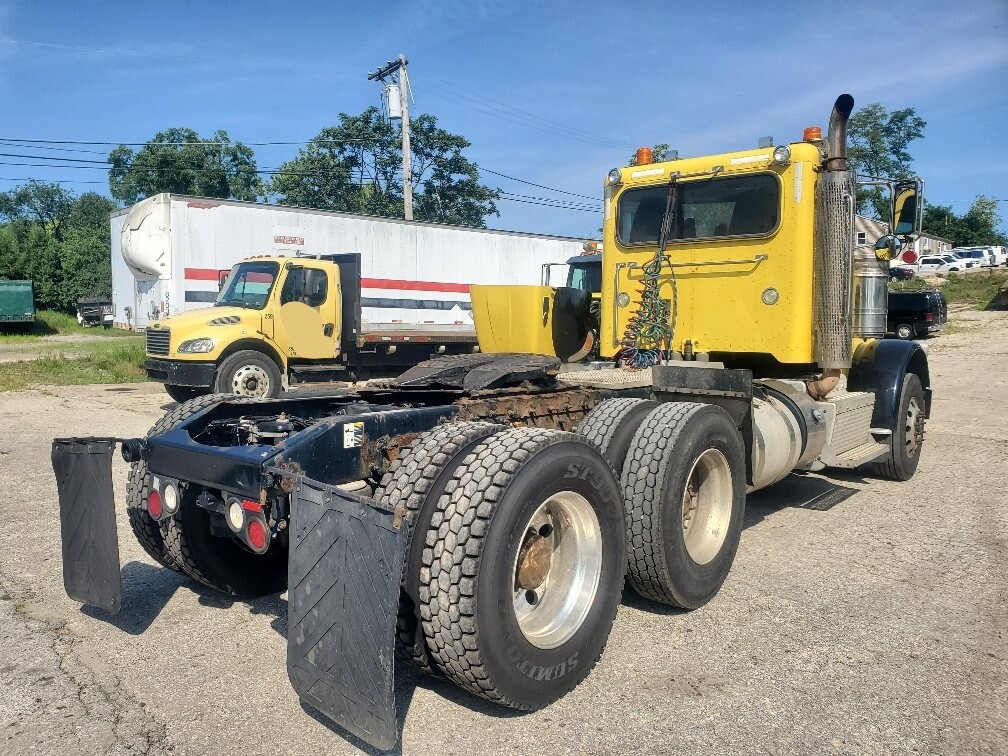
How does the Peterbilt 389 compare to Western Star trucks?
Western Star, now under Daimler Truck ownership alongside Freightliner, occupies a niche in the vocational and severe-service market. The Western Star 4900 and 5700 are heavy, rugged trucks built for logging, mining, and applications where the frame needs to absorb punishment that would stress a standard Class 8 platform.
For that specific use case, Western Star competes well. For the regional haul, drayage, and tandem axle freight operations where the Peterbilt 389 Day Cab excels, Western Star is a mismatch. The trucks are heavier, less fuel-efficient, and carry a higher maintenance cost per mile in standard freight environments.
Parts support is also more specialized. Western Star's service network is thinner than Peterbilt's, and proprietary components can mean longer lead times on repairs.
Bottom line: Western Star is the right tool for severe vocational applications. For tandem axle day cab freight operations, the Peterbilt 389 is the better spec.
What does real-world resale data say about the Peterbilt 389?
Resale is where the Peterbilt 389 separates from the field most clearly.
Used truck market data from industry sources like Commercial Truck Trader and ACT Research consistently show Peterbilt 389 units commanding a 10–15% premium over comparable Mack and International units at the same age and mileage. Kenworth W900s are the closest competition, given the shared PACCAR platform, but the 389 still leads on buyer demand in most U.S. regions. Peterbilt 389 listings commonly range from $47,950 to $129,900.
Three factors drive that premium:
-
Driver demand — Owner-operators actively seek out 389s. That buyer pool is larger than the pool for competing models, which creates upward price pressure.
-
Parts commonality — The PACCAR MX engine and Eaton drivetrain components are widely stocked. Buyers pay for tractability, not exclusivity.
-
Brand trust — Peterbilt's quality reputation has been consistent for decades. In the used market, reputation is a measurable dollar figure.
A 389 Day Cab with documented service history, known mileage, and a clean frame will move faster and for more money than almost any equivalent competitor, and current trucks for sale back that up with examples like a 2020 Peterbilt 389 at $79,950 and a 2019 Peterbilt 389 at $63,999. Multiple 2020 Peterbilt 389 units are also listed around $95,000 each, which reinforces how consistently the market values them.
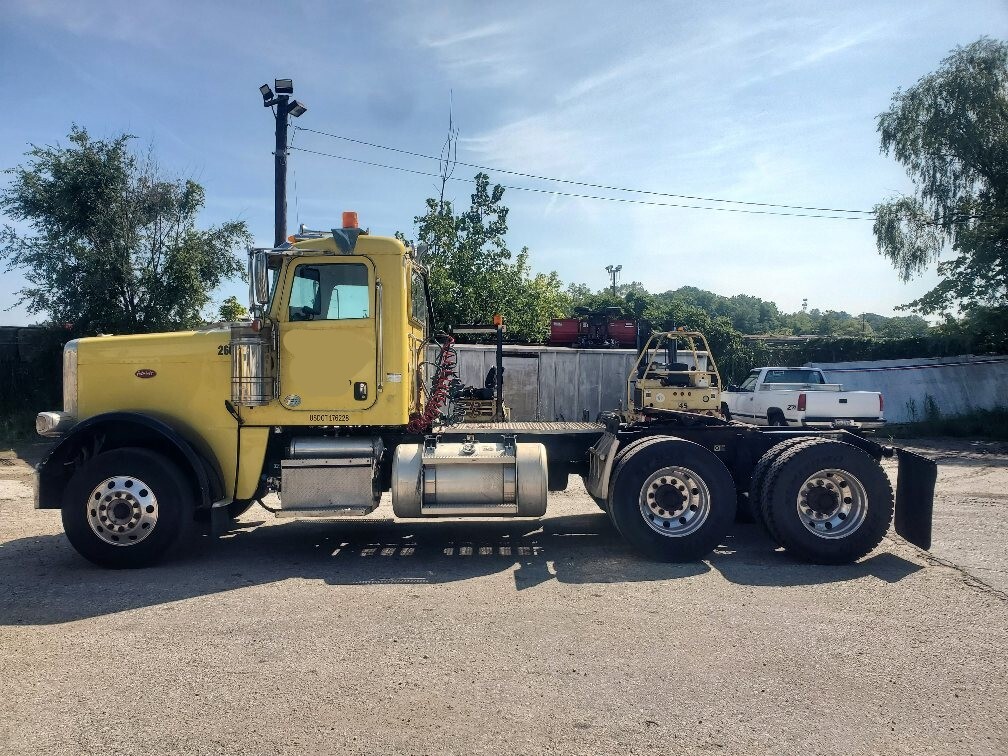
What should you verify before buying a Peterbilt 389 Day Cab?
The 389's reputation attracts buyers. That same reputation attracts sellers who know they can hide problems behind a brand name. Don't let the badge do the inspection work.
Before you buy, verify:
-
Engine hours and mileage — Cross-reference the ECM reading against the odometer. Discrepancies signal tampering.
-
Frame condition — Inspect for cracks at the crossmember welds and rear suspension mounts. Tandem axle configurations concentrate stress at predictable points.
-
Transmission history — Ask for service records on the Eaton Fuller or automated unit. A rebuilt transmission isn't a dealbreaker, but undisclosed rebuilds are.
-
Rear axle seals and differential condition — Pull the covers if possible. Metal contamination in the differential fluid is a warning sign that costs $8,000–$15,000 to address.
-
Cab suspension and air bags — Ride quality issues are driver retention issues. Check the airbags and cab mounts for wear.
A pre-purchase inspection from an independent Peterbilt-certified technician typically costs $300–$500. It's the cheapest insurance you'll buy on a six-figure transaction.
Peterbilt 389 Day Cab trucks vs. the competition: side-by-side summary
|
Factor |
Peterbilt 389 Day Cab |
Kenworth W900 |
Mack Anthem |
International LT |
Western Star 4900 |
|---|---|---|---|---|---|
|
Resale Value |
★★★★★ |
★★★★☆ |
★★★☆☆ |
★★★☆☆ |
★★★☆☆ |
|
Driver Preference |
★★★★★ |
★★★★☆ |
★★★☆☆ |
★★★☆☆ |
★★★☆☆ |
|
Dealer Network |
★★★★★ |
★★★★☆ |
★★★☆☆ |
★★★★☆ |
★★☆☆☆ |
|
Parts Availability |
★★★★★ |
★★★★★ |
★★★★☆ |
★★★☆☆ |
★★★☆☆ |
|
Upfront Cost |
★★★☆☆ |
★★★☆☆ |
★★★★☆ |
★★★★☆ |
★★★☆☆ |
|
Vocational Spec |
★★★★☆ |
★★★★☆ |
★★★★☆ |
★★★☆☆ |
★★★★★ |
The 389 doesn't win every category. It wins the categories that matter most over a truck's working life.
The right truck for the right operation
The Peterbilt 389 Day Cab Tandem Axle is the default choice for regional freight, port drayage, and intermodal operations where driver satisfaction, dealer access, and resale value are priorities. It outperforms Mack and International on resale and network density. It edges Kenworth on driver preference. It's the wrong choice for severe vocational work where Western Star's frame ratings are the spec requirement.
Know your operation before you shop. If the 389 fits your route profile and duty cycle, buy it with confidence — and verify every claim before you sign.
Availability for purchase or rental can vary by location, and Peterbilt 389 rentals start at $45,000 daily.
Browse available day cab trucks or cab trucks for sale by location, or call our team to confirm specs.
Frequently Asked Questions
Is the Peterbilt 389 Day Cab a good truck for regional freight?Yes. The 389 Day Cab Tandem Axle is well suited to local and regional hauling, and day cab trucks are a practical choice for intermodal and drayage work. The day cab configuration reduces weight and upfront cost compared to sleeper models, while the tandem axle rating — typically 40,000 lbs rear — handles standard regional payload requirements without modification.
How does the Peterbilt 389 compare to the Kenworth W900 for resale value?Both trucks share the PACCAR platform, which gives them stronger resale performance than most competitors. The Peterbilt 389 generally commands slightly higher demand in the used market due to broader driver preference and brand recognition among owner-operators. Expect both to outperform Mack, International, and Western Star equivalents at comparable mileage.
What engine options are available in the Peterbilt 389 Day Cab?The Peterbilt 389 is available with the PACCAR MX-13, a PACCAR manufacturer engine with Paccar horsepower up to 510hp, or the Cummins X15, a Cummins manufacturer engine with Cummins horsepower up to 605hp. Both engines have wide parts availability and strong service network coverage across North America.
Why do drivers prefer the Peterbilt 389 over International or Mack?Driver surveys point to cab ergonomics, visibility from the long-hood layout, and overall build quality as the primary factors. The 389's interior is consistently rated higher than International LT and Mack Anthem equivalents. Driver preference translates directly to retention — a measurable operational cost.
Is the Peterbilt 389 Day Cab a good investment for an owner-operator?For an owner-operator running regional routes, the 389 Day Cab offers strong long-term economics: competitive fuel efficiency for a conventional hood, a dense dealer network that limits downtime exposure, and resale values that recover a meaningful percentage of purchase cost at trade-in. Verify engine hours, frame condition, and service history before purchase.
How does Western Star compare to Peterbilt 389 for tandem axle day cab operations?Western Star trucks are built for severe vocational applications — logging, mining, heavy construction — where frame ratings and ground clearance outweigh fuel efficiency and resale considerations. For standard tandem axle freight operations, Western Star's higher weight and maintenance costs per mile make the Peterbilt 389 the better choice.