
Tree Care Handler vs. Grapple Saw Processor: Buy Right
Introduction
-
Open with the core buying risk: operators overspend on tree care equipment because they conflate two machines with overlapping capabilities but fundamentally different job profiles.
-
State the market reality plainly — tree service contractors, land clearing crews, and municipalities are all shopping the same used equipment pool, and the right machine for one job is the wrong machine for another.
-
Establish the blog's purpose: give buyers a spec-level breakdown of tree care handlers and grapple saw processors, define where each machine earns its keep, and walk through the decision framework that prevents a six-figure mistake.
-
Briefly outline what the post covers: machine definitions, key specs, application match, total cost of ownership, what to inspect before buying, and where to find verified listings.
Body Sections
What Is a Tree Care Handler?
-
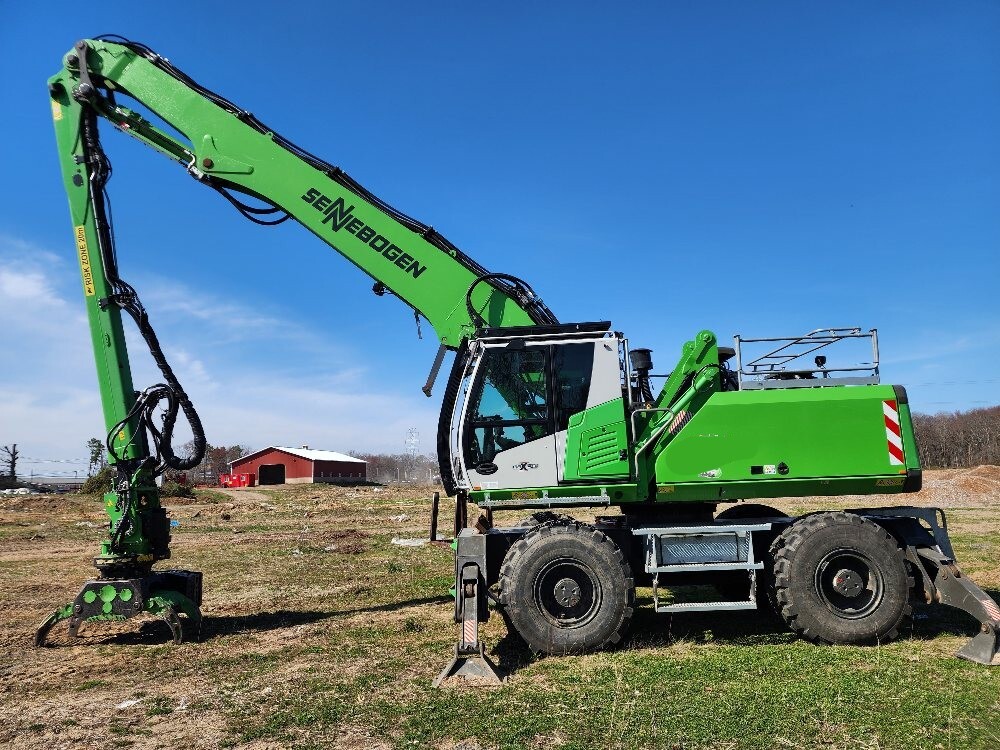
Define the machine precisely: a tree care handler is a dedicated carrier — typically a wheeled or tracked unit — fitted with a boom arm and grapple designed for loading, sorting, and moving felled trees or brush, often based on excavators or material handlers.
-
Name the most common base machines: knuckleboom loaders, log loaders, and material handlers configured for tree work.
-
Clarify what it does not do: it does not process or cut. If your crew still needs a saw on the ground, a handler alone doesn't close that gap.
-
Include a compressed spec overview: typical reach (30–50 ft), grapple jaw capacity (common range: 18–36 in), carrier weight class, and rotation type (continuous vs. fixed).
-
Target keyword: tree care handler — place naturally in first two sentences.
What Is a Grapple Saw Processor?
-
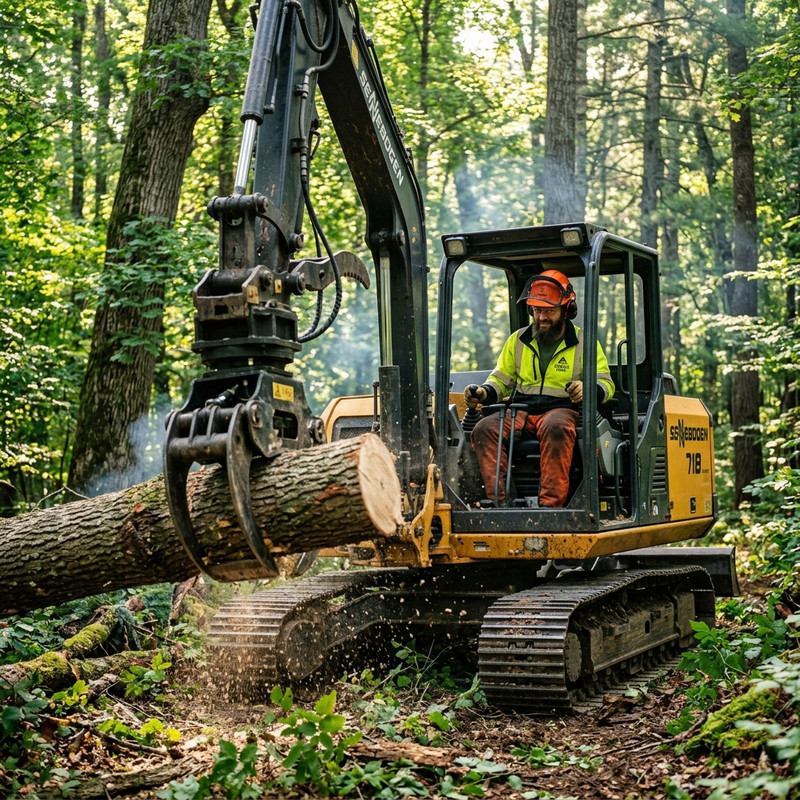
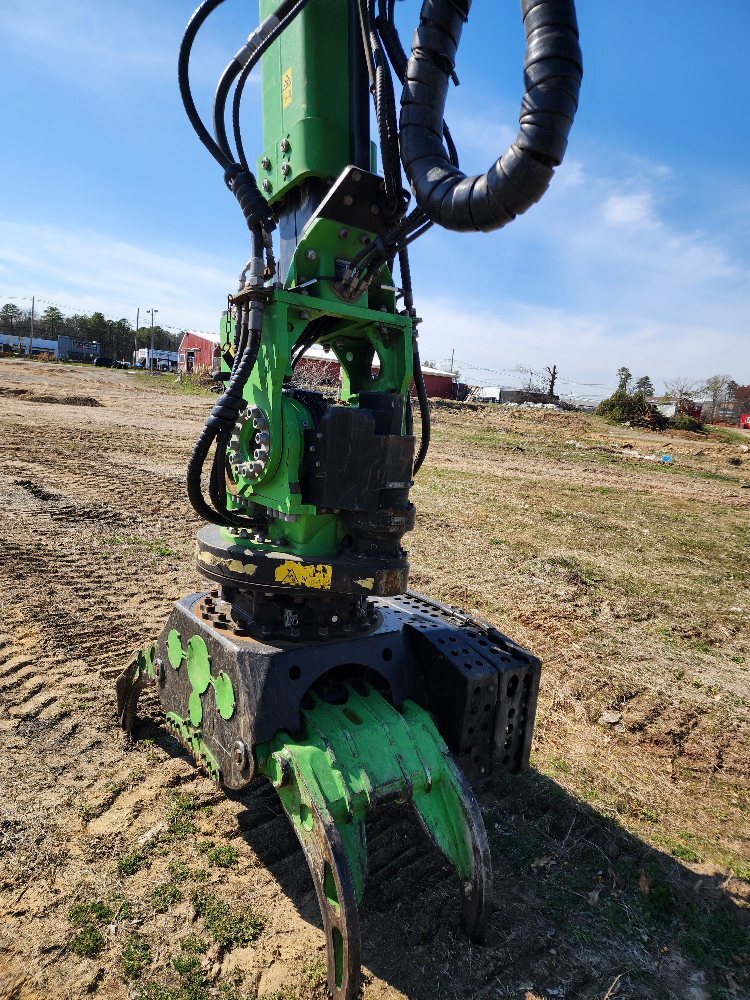
Define the grapple saw processor: a single-unit attachment or purpose-built machine, commonly fitted to excavators in the 7–26 ton range, that combines a grapple and a hydraulic saw head, allowing the operator to grip, cut, and place trees in one continuous motion from the cab.
-
Name the productivity advantage immediately: it improves safety, eliminates the ground worker, compresses the cut-and-sort cycle, and reduces exposure on dangerous canopy and roadside jobs.
-
Spec breakdown: saw diameter capacity (common range: 6–24 in depending on head), grapple opening width, hydraulic flow requirements (gpm), carrier compatibility. These units can be fitted to various grapple series.
-
State the tradeoff plainly: higher hydraulic demand means carrier compatibility is non-negotiable. Some setups require two EC-Oil blocks for operation. Running the wrong flow rate kills cycle time and head longevity.
-
Target keyword: grapple saw processor — use in heading and opening sentence.
Tree Care Handler vs. Grapple Saw Processor: The Core Difference
-
Lead with the organizing principle: one moves material, the other processes it. Buying the wrong one because the price looked right is the most common error in this category.
-
Use a parallel comparison structure:
-
-
Handler: load, sort, move — no cutting capability
-
Grapple Saw Processor: grip, cut, place from the cab for safer operation on jobs where crews are cutting or positioning trees — all in one pass
-
Name the job site types where each machine wins:
-
-
Handler: municipal debris cleanup, nursery and landscape operations, log yard sorting, storm response staging
-
Grapple saw processor: right-of-way clearing, line clearance, high-production land clearing, utility corridor maintenance
-
Close the section with a directive: match the machine to the majority of your billable hours, not to the job you did last month. These are not easy jobs, and automatic chain tension improves efficiency in logging tasks on grapple saw setups.
Key Specs for Maximum Safety to Compare Before You Buy
-
Hydraulic requirements: the most overlooked spec. State the exact gpm and psi ranges for common grapple saw heads and why mismatches destroy ROI. For example, some Rotobec grapple saws feature automatic chain tension and lubrication systems for smoother operation and easier upkeep, with the bar feed cylinder supporting saw bar return and chain-tension function.
-
Example framing: "A head rated for 30–40 gpm on a carrier producing 22 gpm runs hot, cycles slow, and fails early."
-
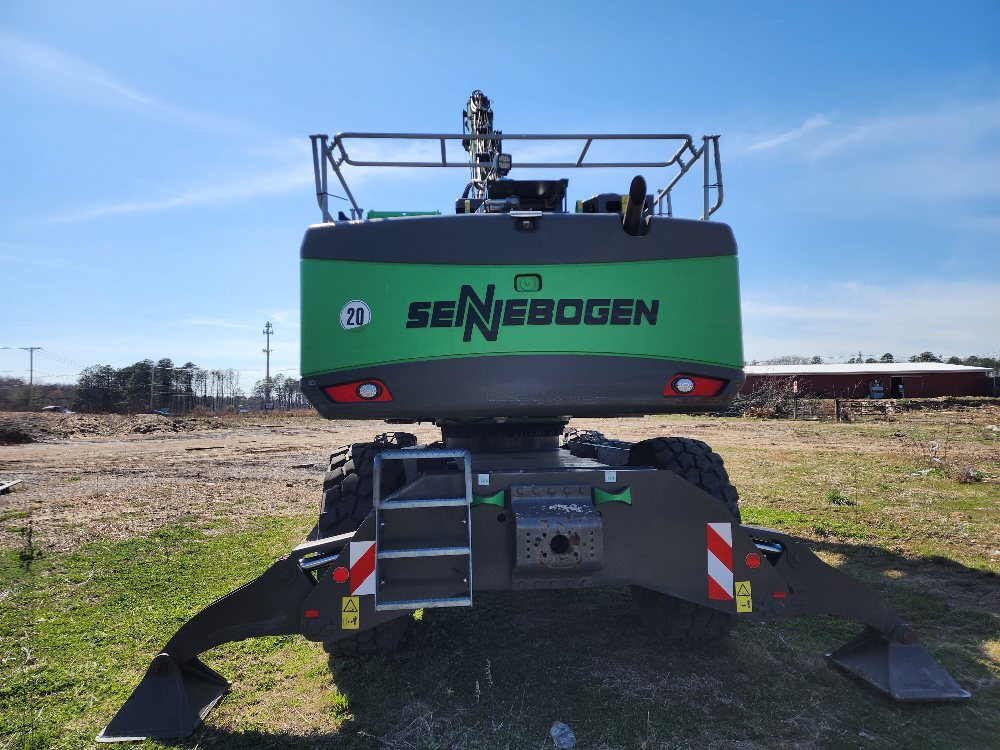
Carrier weight and ground pressure: tracked vs. wheeled platforms, and why surface type (turf, pavement, soft ground) determines the right undercarriage — not operator preference.
-
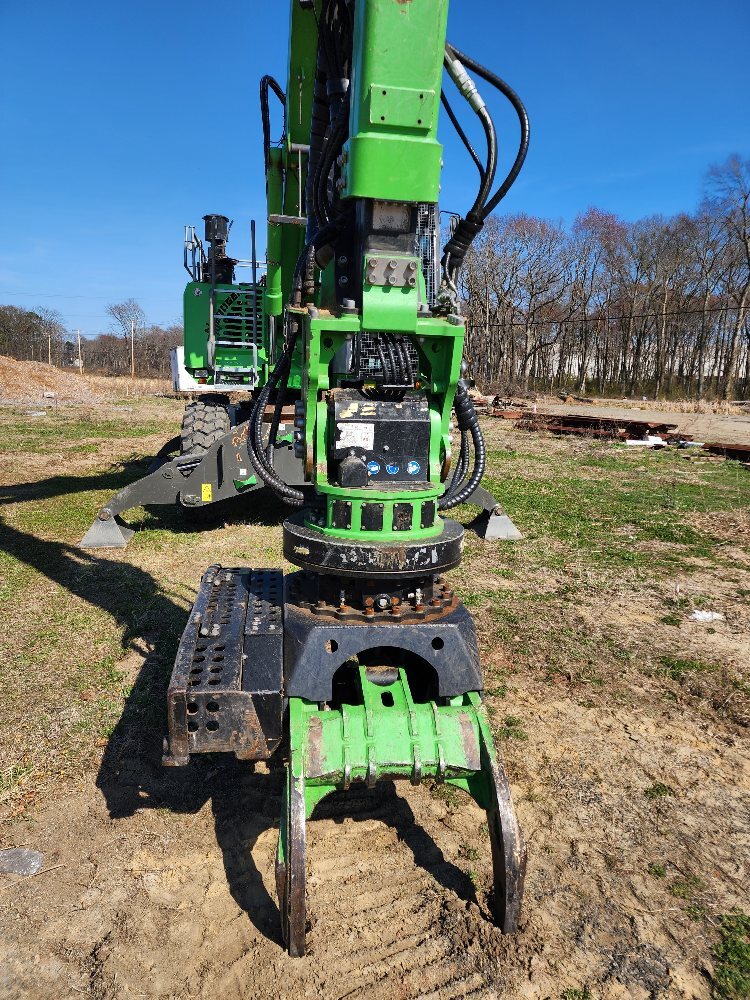
Grapple jaw size and rotation: full 360-degree rotation vs. fixed; jaw opening range matched to typical stem diameter in your market.
-
Cycle time per load or cut: the spec most buyers never ask for. Include benchmark data where available.
-
Maintenance access: name specific components — hoses, wear edges, pivot pins — and flag which configurations make field service a half-hour job vs. a half-day job.
Total Cost of Ownership: What the Sticker Price Hides
-
Open with the risk: two machines at the same asking price can have a $40,000–$80,000 swing in five-year operating cost.
-
Break down the real cost components:
-
Wear parts: saw teeth, grapple tines, cutting edges — replacement frequency and unit cost by machine type
-
Hydraulic system: fluid intervals, cooler condition, pump hours — flag machines with no service records
-
Carrier undercarriage (for tracked units): inspect link stretch, sprocket wear, and pad condition — rebuild cost runs $15,000–$35,000 depending on machine class
-
Downtime cost: factor in dealer proximity, parts availability, and whether the brand supports dealer-network service in your region
-
Use a specific comparison example: "A processor with 3,200 hours and a documented hydraulic service history is a better buy than a 1,800-hour unit with no paperwork and a leaking main pump."
-
Close with a directive: get the service records before you make an offer. No records, no deal — or price it accordingly.
What to Inspect Before Buying a Used Tree Care Handler or Grapple Saw Processor
-
Frame this section as a buyer's pre-purchase checklist, not a general overview.
-
Hydraulic system:
-
Check for weeping fittings, cracked hoses, and cylinder drift under load
-
Verify oil color and smell — black oil or a burnt smell signals heat damage
-
Boom and stick:
-
Inspect pins and bushings for slop — excessive play = near-term rebuild cost
-
Check weld integrity at high-stress joints
-
Grapple head (handler) or saw head (processor):
-
Rotate the grapple through full range; hesitation or jerking = worn motor or contaminated circuit
-
For saw heads: check tooth condition, bar wear, and hydraulic motor case drain flow
-
Carrier (if included):
-
Undercarriage inspection on tracked units: measure link stretch, check grouser height
-
Engine hours vs. visual condition: a 5,000-hour machine maintained on schedule outperforms a 2,000-hour machine that was neglected
-
Run it yourself: any seller who won't let you operate the machine under load is telling you something.
-
Target keyword variation: "used grapple saw processor inspection" and "used tree care handler checklist" — incorporate naturally.
Where to Buy: Finding the Right Machine at the Right Price
-
Name the sourcing options buyers typically use and rank them by risk level:
-
Dealer network: higher price, verified condition, warranty options — lower risk. Some dealer networks, including John Deere, offer a broader range of forestry equipment for logging operations. When comparing supported brands and dealer ecosystems, forestry technology can simplify logging operations and team coordination, and John Deere also offers technology designed to simplify logging operations for customers.
-
Auction: competitive pricing, limited inspection window — higher risk without preparation
-
Private sale: widest price range, no recourse — requires the most due diligence
-
State the GEO-relevant consideration: regional availability affects pricing. Markets with active logging or utility clearing (Pacific Northwest, Southeast, Upper Midwest) carry more used inventory — and more price competition.
-
Name what to bring to every purchase: a hydraulic flow meter, a magnet for contamination testing, and a pre-purchase inspection checklist.
-
AEO-ready framing: structure this section to answer "where to buy a used grapple saw processor" and "how to find tree care handlers for sale" as direct-answer queries.
-
Close with a call to action: browse current verified listings or call [phone number] to speak with a specialist.
Financing a Tree Care Handler or Grapple Saw Processor
-
Open with the practical reality: most buyers in this category are small operators or mid-size contractors — cash purchases are the exception, not the rule.
-
Outline the typical financing structure: equipment loans, lease-to-own, and manufacturer/dealer programs.
-
Name the variables that determine rate: machine age, hours, credit profile, and whether the unit is dealer-certified.
-
Flag the sales copy angle: buyers who pre-qualify before shopping are better positioned to move fast on the right machine when it surfaces — and the right machines move fast.
-
Mention any available financing options directly tied to your platform or dealer network.
Conclusion: Match the Machine to the Work
-
Recap the core decision framework in four plain sentences: define your primary job site application, match hydraulic specs to your carrier, inspect before committing, and account for total ownership cost — not just purchase price.
-
Name the two most expensive mistakes in this category: buying a handler when you need processing capability, and skipping the pre-purchase inspection on a used unit.
-
Direct readers to the next step: browse current inventory, request a machine report, or speak with a specialist — stated in five words or fewer.
-
Include a trust-building close: your operation runs on uptime. The machine you buy today either earns its keep or costs you more than you saved.
SEO, AEO & GEO Suggestions
Keyword Placement
-
Primary keywords: "tree care handler" and "grapple saw processor" — place in the title, within the first 100 words of the introduction, at least one H2 heading each, and 2–3 times naturally throughout the body.
-
Long-tail keywords for AEO: structure FAQ-style answers for queries like "what is a grapple saw processor used for," "tree care handler vs grapple saw," "how to inspect a used grapple saw processor," and "grapple saw processor hydraulic requirements" — these surface in AI-generated answers and featured snippets.
-
GEO-relevant terms: reference regional markets (Pacific Northwest, Southeast, Upper Midwest) to capture location-based searches like "grapple saw processor for sale [state]" or "tree care handler dealers near me."
Technical SEO
-
URL slug: /tree-care-handler-vs-grapple-saw-processor
-
Meta title: Tree Care Handler vs. Grapple Saw Processor: Buy Right (under 60 characters)
-
Meta description: include "tree care handler," "grapple saw processor," and a direct call to action — under 155 characters
-
Image alt text: name the machine, configuration, and application (e.g., "tracked grapple saw processor right-of-way clearing")
-
Schema markup: use FAQPage schema on the inspection and buying sections to increase AEO eligibility
Sales Copy Integration
-
Insert one clear CTA per major section — not at the end of the post only
-
Use urgency framing grounded in market reality: "the right machines move fast" is more credible than artificial scarcity
-
Place financing section before the conclusion to reduce friction at the decision point
-
Link to active inventory listings from the machine-specific sections (handler section → handler listings; processor section → processor listings)