
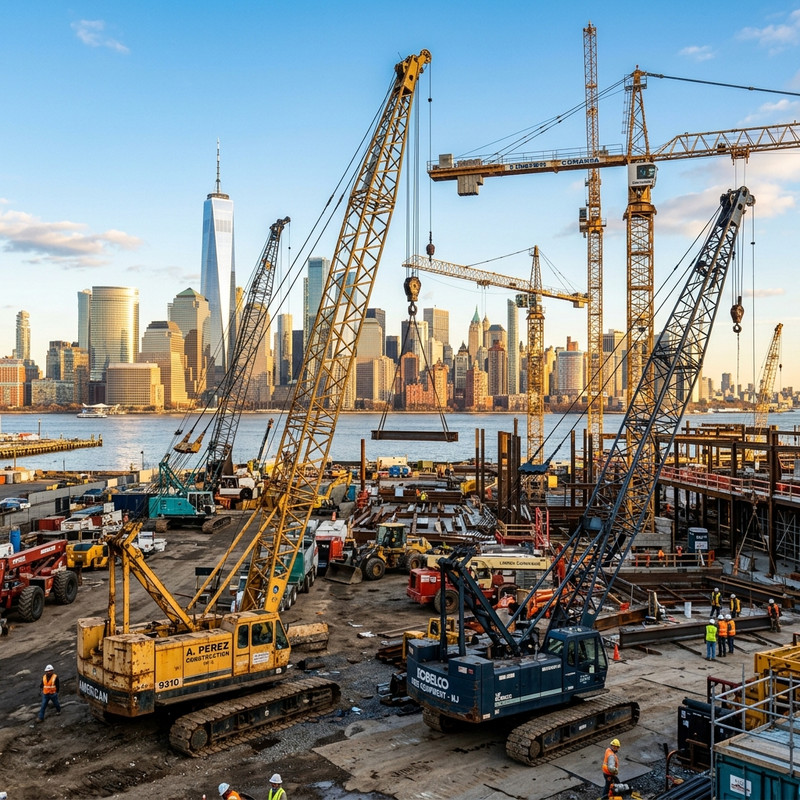
How to Find Used Cranes in NJ Without Getting Burned
Quick answer: Finding used cranes in New Jersey means knowing where to look, what to inspect, and what a fair price looks like before you start browsing. Key sources include local dealers, auction houses, and private sellers. The right crane depends on your lift capacity needs, job site access, and budget — not what happens to be available.
New Jersey's construction and industrial sectors run hard. Port operations, highway projects, commercial builds — the demand for lifting equipment is constant, and so is the turnover of used cranes entering the market. That creates real opportunity for buyers who know what they're doing.
The problem is that most buyers don't. They browse first, define requirements second, and end up either overpaying for a machine that fits their budget but not their job, or passing on a solid unit because they didn't recognize the value. This guide fixes that.
Define Your Lift Requirements Before You Search
The fastest way to waste time — and money — is to search for "used cranes NJ" with no specifications in mind. You'll find hundreds of listings and no way to evaluate them.
Before you look at a single price, nail down these four things:
- Maximum lift capacity: Measured in tons. Know your heaviest lift, then add a safety buffer of at least 20–25%.
- Boom length and configuration: Telescoping or lattice? How much vertical reach do you need?
- Crane type: Mobile hydraulic, crawler, tower, or rough terrain — each fits a different job site condition.
- Transportation requirements: Can you move it yourself, or does it need specialized transport? That cost adds up fast.
Get these numbers from your project engineer or site superintendent before you open a browser. A crane that checks every budget box but can't reach your lift point costs you more than a pricier machine that does the job right.
Where to Find Used Cranes in New Jersey
New Jersey has a concentrated equipment market driven by its proximity to New York City, major ports, and dense industrial infrastructure. That gives you more sourcing options than most states.
Local Dealers and Equipment Yards
Dealers operating in the NJ/NY metro area carry used cranes with some level of inspection and service history. The advantage: you can walk the machine, run it, and verify its condition before any paperwork moves. Dealers in Elizabeth, Newark, and along the Route 1 and Route 9 corridors frequently stock mobile and rough terrain cranes turned over from construction fleets.
Ask for the service records upfront. A unit with documented maintenance — oil changes, hydraulic inspections, load test certifications — is worth more than a lower-hour machine with no paper trail.
Auction Houses and Online Platforms
Ritchie Bros., IronPlanet, and Sandhurst are active in the Northeast and regularly list New Jersey-based equipment. Auctions offer competitive pricing, but they come with risk: final sale condition, no warranty, and limited inspection windows.
If you bid at auction, always conduct a physical inspection before the sale date. Never bid on photos alone. A crane with a clean exterior can have a worn boom, leaking hydraulic seals, or a failing load moment indicator — none of which show up in a listing image.
Private Sellers and Fleet Liquidations
Contractors downsizing, companies shutting down, or fleet operators rotating equipment often sell direct. These deals can be the most competitive on price, but they carry the least protection. No dealer recourse, no auction house accountability.
The upside: motivated sellers move faster and negotiate more. If you know what you're looking at, a private sale in good condition can be the best deal in the market.
What to Inspect on a Used Crane in NJ
Condition claims mean nothing without proof. Here's what to verify in person.
Structural Components
- Boom sections: Look for cracks, straightness, and wear on the chord members. Bent or cracked boom sections are expensive and sometimes impossible to safely repair.
- Wire rope: Check for broken strands, kinking, and corrosion. Rope replacement on a large crane runs $5,000–$15,000 depending on configuration.
- Counterweights: Confirm all counterweight sections are present and undamaged.
Mechanical and Hydraulic Systems
- Engine hours: Lower hours matter, but condition matters more. An 8,000-hour crane with full service records outperforms a 4,000-hour unit that's been neglected.
- Hydraulic cylinders and hoses: Look for weeping seals, staining around cylinder rods, and cracked hoses. Hydraulic repairs compound fast.
- Swing and travel drives: Operate the crane through full range of motion. Hesitation, noise, or drift under load signals worn components.
Load Testing and Certifications
In New Jersey, cranes used on job sites must comply with OSHA 29 CFR 1926 Subpart CC and require load testing and annual inspections. Before you buy, confirm the unit has a current load test certificate or budget for one immediately post-purchase. A failed inspection grounds the machine until it's resolved.
What Does a Used Crane Cost in New Jersey?
Prices vary widely by type, capacity, and age. Rough benchmarks as of 2025:
- Rough terrain cranes (50–75 ton): $80,000–$200,000
- All-terrain cranes (100 ton): $250,000–$600,000
- Crawler cranes (100–250 ton): $300,000–$900,000+
- Tower cranes (used, self-erecting): $60,000–$250,000 depending on height and capacity
New Jersey's market tends to run 5–10% above national averages due to regional demand and transportation costs. Factor in delivery, permit fees for oversize loads on NJ roads, and any immediate service needs before comparing sticker prices.
A machine priced $40,000 below market with a worn undercarriage may cost $50,000–$80,000 to bring to working standard. Know the total cost before you commit.
Financing and Ownership Costs to Budget
Purchase price is only one number. Build a complete cost picture before closing:
- Transportation: Moving a large crane in NJ often requires pilot cars and state permits. Budget $2,000–$10,000 depending on distance and machine size.
- Insurance: Commercial crane insurance in New Jersey runs $8,000–$25,000 annually for most mobile cranes. Get a quote before you finalize your budget.
- Operator certification: NCCCO-certified operators are required for most commercial lifts. If you're staffing a new crane, account for operator wages and certification costs.
- Annual inspections: OSHA-compliant annual inspections typically run $1,500–$4,000 per crane.
Frequently Asked Questions
What types of used cranes are most commonly available in New Jersey?
Mobile hydraulic cranes and rough terrain cranes appear most frequently in the NJ used market, driven by turnover from construction and port operations. Crawler cranes and tower cranes are less common but available through specialized dealers and auction houses serving the NJ/NY metro area.
How do I verify a used crane's inspection status in New Jersey?
Request the load test certificate, OSHA annual inspection records, and maintenance logs from the seller. Cranes operating on New Jersey job sites must comply with OSHA 29 CFR 1926 Subpart CC. If records are missing, budget for a third-party inspection and load test before putting the machine to work.
Is it better to buy a used crane from a dealer or private seller in NJ?
Dealers offer more accountability — inspection records, service support, and sometimes limited warranties. Private sellers offer lower prices but no recourse if problems surface post-sale. Choose based on your ability to inspect thoroughly: if you can bring a certified crane mechanic to evaluate the machine, private sales often deliver better value.
What should I watch out for when buying a used crane at auction in NJ?
Inspect the machine in person during the preview window — never bid on photos alone. Confirm that all load certifications are current, verify boom condition and hours, and run the crane through full operation if the auction house permits it. Factor in buyer's premiums, which typically add 10–15% to the hammer price.
How many hours is too many for a used crane?
Hour counts alone don't determine value. A 10,000-hour crane with documented service history is a better buy than a 5,000-hour crane with no records. Focus on maintenance documentation, hydraulic condition, and structural integrity over the odometer.
Make a Calculated Decision, Not a Reactive One
The used crane market in New Jersey rewards buyers who prepare. Define your lift specs, identify your sourcing channel, inspect before you commit, and account for the full cost of ownership — not just the asking price.
One undocumented hydraulic failure or a failed load test can wipe out any savings you found in the purchase price. Know what you're buying. Then move.