
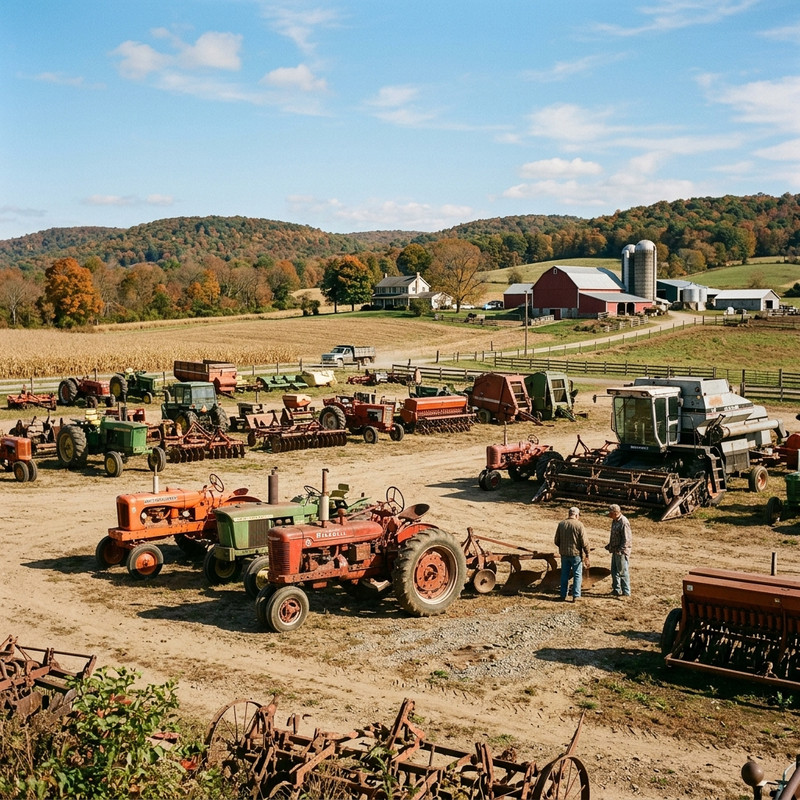
Where to Find Used Farming Equipment in NJ (And How to Buy Smart)
Quick answer: New Jersey farmers can find used farming equipment through local dealers, online auction platforms, farm sales, and classified listings. The key is knowing what you need before you start browsing, inspecting equipment in person, and verifying machine hours and service history before committing to any deal.
New Jersey has more farmland than most people expect. With roughly 700,000 acres of active agricultural land across the state, demand for reliable, affordable equipment stays steady. Tractors, tillers, balers, spreaders — the market moves fast, especially in spring. Miss your window and you'll either overpay or settle.
This guide covers where to find used farming equipment in NJ, what to look for before you buy, and how to avoid the mistakes that cost farmers thousands.
What Types of Used Farming Equipment Are Most Available in NJ?
New Jersey's agricultural base leans heavily toward produce, nursery crops, and equine operations. That shapes what's available on the used market.
Common finds include:
- Compact and utility tractors (25–75 HP range)
- Rotary tillers and finishing mowers
- Hay balers and tedders
- Sprayers and spreaders
- Skid steers and compact loaders
- Seeding and transplanting equipment
Larger row-crop equipment — the kind suited to Midwest grain operations — is less common here. If you need it, expect to look beyond NJ state lines or pay a premium for the limited local supply.
Where to Find Used Farming Equipment in NJ
Local Farm Equipment Dealers
Start here. Dealers in Burlington County, Salem County, and Hunterdon County regularly carry trade-in and certified used inventory. The advantage: you can inspect the machine, ask for service records, and sometimes negotiate a warranty. The tradeoff: prices reflect that convenience. Expect to pay 10–20% more than private sale prices for the same machine.
A few dealers specialize in brands like John Deere, Kubota, and New Holland — and they know the regional soil conditions and crop types well enough to steer you toward equipment that actually fits your operation.
Online Auction Platforms
Machinery Pete, IronPlanet, and Purple Wave list used farm equipment from NJ and surrounding states year-round. These platforms provide condition reports, photo documentation, and in some cases inspection access before bidding opens.
The risk here is real. Buying at auction without a physical inspection is how buyers end up with a tractor that has a cracked block or a baler with worn pickup tines. If you can't get eyes on a machine before the hammer falls, budget for unknowns. Set a firm ceiling before you bid. The fastest way to overpay at auction is to get competitive — decide what the machine is worth to your operation and stop there.
Farm Sales and Estate Auctions
When NJ farms sell or transition between generations, the equipment goes with them. Estate auctions — frequently listed in the New Jersey Farm Bureau network and local agricultural publications — are where underpriced, well-maintained machines surface. Many of these tractors have been single-owner operated for decades, serviced on a schedule, and stored in covered sheds.
Show up early. Talk to the family or executor if possible. A seller who knows the machine's history will tell you more in five minutes than any inspection report.
Classified Listings: Craigslist and Facebook Marketplace
Don't dismiss these. Private sellers on Craigslist and Facebook Marketplace in South Jersey and the Delaware Valley region list used tractors, implements, and specialty equipment regularly. Prices are negotiable. Sellers often have full service records and a willingness to let you run the machine before purchase.
The risk is the opposite of auctions: deals can disappear in hours. If you see something priced right, move fast.
How to Evaluate Used Farming Equipment Before You Buy
Check Hours Against Age — Not Just One or the Other
A 2016 tractor with 1,200 hours tells a better story than a 2019 model with 2,800 hours and no service documentation. Hours matter, but context matters more. Ask for maintenance logs. If the seller can't produce them, that's data too.
On diesel equipment, low hours with signs of deferred maintenance — cracked hoses, dirty filters, oil residue around seals — is a warning sign. Don't let the odometer override what you see with your eyes.
Run the Machine Under Load
Cold starts are easy to fake. Run the equipment under actual working conditions. Engage the PTO. Raise and lower the three-point hitch under load. On a tractor, this reveals hydraulic issues, clutch wear, and transmission slippage that idle inspections miss entirely.
If a seller won't let you do this, walk away.
Inspect These Specifically
- Tires: Rear ag tires new cost $600–$1,200 each. Check tread depth and sidewall cracking.
- Hydraulics: Slow lift speed or drift under load means cylinder wear or pump issues.
- Sheet metal and frame: Surface rust is normal in NJ's humid climate. Structural rust is not.
- Belts and chains on implements: Worn components signal deferred maintenance throughout.
Price It Against Comparable Listings
Before you make an offer, know the going rate. Search Machinery Pete or NADA Guides for comparable makes, models, years, and hours. If a seller is priced 25% below market, ask why before you assume it's a deal.
What's the Best Time of Year to Buy Used Farm Equipment in NJ?
Late fall and winter — November through February — is when motivated sellers list and buyer competition drops. Farms completing harvest need cash, storage is tight, and equipment that didn't sell at fall auctions gets repriced.
Spring buying means competition. Every farmer in NJ is looking for the same compact tractor in March. Prices spike 15–30% above winter levels on popular makes and models.
If you can plan your purchase in the off-season, you'll negotiate from a stronger position.
Frequently Asked Questions
What is the average price of a used tractor in NJ?
Compact tractors (25–50 HP) from brands like Kubota, Mahindra, or New Holland typically range from $8,000 to $28,000 depending on age, hours, and attachments. Utility tractors (60–100 HP) run $15,000–$55,000 on the private market. Dealer-certified units carry a premium of roughly 10–20% over equivalent private sales.
Are there farm equipment auctions specifically in New Jersey?
Yes. The New Jersey Farm Bureau and regional auctioneers like Kline Auctioneers hold periodic farm equipment auctions across the state. Estate sales in Salem, Cumberland, and Burlington counties are particularly productive for buyers looking for older, well-maintained machinery.
Should I buy used farming equipment locally or from out of state?
Buy locally when possible. You can inspect before purchasing, avoid transport costs ($500–$2,000 depending on distance), and follow up with the seller if problems emerge. Out-of-state purchases make sense only when a specific machine isn't available locally — and when you can arrange an in-person inspection before committing.
What brands hold up best for NJ farm conditions?
John Deere, Kubota, and New Holland all have strong dealer networks in New Jersey with available parts and service. For used purchases, prioritize parts availability over brand preference — a good deal on a discontinued brand becomes an expensive deal when you can't source components.
How do I check if a used tractor has a lien against it?
Run a UCC (Uniform Commercial Code) lien search through the New Jersey Department of Treasury before purchasing from a private seller. If a lien exists, the equipment can legally be repossessed even after you've paid for it. This step takes thirty minutes and prevents a serious financial loss.
Make the Right Buy the First Time
The used farm equipment market in NJ rewards buyers who prepare. Know your machine specs before you browse. Verify hours against documentation. Run equipment under load before you commit.
Good machines are out there — you just need to find them before someone else does.