
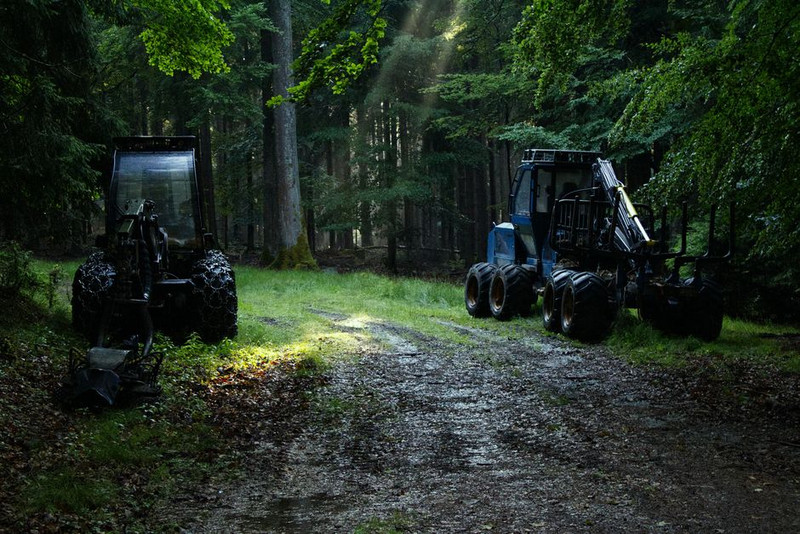
Used Forestry Equipment For Sale: Feller Bunchers, Stump Grinders, Wood Chippers, Debarkers, and Log Skidders
Forestry operations rely on specialized machinery to move timber from the stump to the landing. From cutting and gathering stems to processing logs and clearing residual material, each piece of equipment plays a specific role in the workflow. For logging contractors, tree care companies, and land management crews, buying used forestry equipment can lower upfront costs while still delivering the production capacity needed to get the job done. This article covers key equipment categories found on the used market, including feller bunchers, stump grinders, wood chippers, debarkers, tree trimmers, and log skidders, along with practical comparisons to help you make an informed purchase decision.
Understanding Feller Bunchers
A feller buncher is a self-propelled machine designed for cutting, holding, and placing stems on the ground. According to the USDA Forest Service, a feller buncher uses a cutting head that can hold more than one stem at a time. Unlike a harvester, a feller buncher does not have processing capabilities, meaning it cuts and bunches trees but does not delimb or buck them. This makes the feller buncher a high-production tool for the first step in many logging systems, especially those that use a grapple skidder and a processor at the landing.
What Is a Feller Buncher?
In logging terminology, a feller buncher is a type of harvester that uses a tree-grabbing device to grip the stem before cutting it with a chainsaw, circular saw, or shear blade. The machine holds the cut stem and then places it on the ground in a bunch, which is later picked up by a skidder and moved to a landing site. Feller bunchers are built with Rollover Protective Structures (ROPS) and Falling Object Protective Structures (FOPS) to protect the operator during work in hazardous forest conditions. These safety features are standard on most modern feller bunchers, whether new or used.
Tracked Versus Wheeled Feller Bunchers
Feller bunchers come in both tracked and wheeled configurations, and the choice between them depends largely on terrain and mobility requirements. Tracked feller bunchers are slower than wheeled models, but they offer greater stability on steep slopes and can operate on wet or loose soils without sinking or losing traction. Wheeled feller bunchers are faster, which can improve cycle times on flat ground, but they are restricted to slopes below 25 percent. The USDA Forest Service advises that wheeled machines should not be used on grades exceeding that threshold.
Tracked machines offer additional slope flexibility depending on cab features. Feller bunchers with self-leveling cabs can operate on slopes up to 50 percent. Tracked machines without self-leveling cabs are limited to slopes up to 40 percent. When evaluating used forestry equipment for sale, the condition of the undercarriage, tracks, or tires is an important consideration because replacement costs can be significant. The slope limits also affect which machines can work safely on your harvest site, so knowing the terrain before shopping is essential.
Types of Cutting Heads
The cutting head is the core component of any feller buncher, and three main types are common on the used market: disc saw heads, shear blade heads, and chainsaw heads. Disc saw heads provide high cutting speed and can cut and gather multiple trees in a single cycle, making them a popular choice for production logging. Shear blade heads cut by clamping the stem and activating a blade that severs the wood. Chainsaw heads use a bar and chain similar to a handheld saw but offer minimal control for bunching, which means they are less effective when the goal is to gather multiple stems before placing them on the ground.
When shopping for a used feller buncher, the cutting head type should match your intended tree size and stand density. Disc saw heads excel in most conditions, while shear heads are often found on older machines. Chainsaw heads are less common on modern feller bunchers due to the bunching limitation.
Cost and Productivity of Feller Bunchers
Feller bunchers are a significant investment even on the used market. The purchase cost of a new feller buncher has been estimated at around $180,000, with hourly operating costs of approximately $99.50. These figures come from published research and may vary by region and machine age. The unit production cost of a feller buncher is about $12.10 per cubic meter, which is lower than the $16.50 per cubic meter reported for harvesters. This cost advantage makes feller bunchers an attractive choice for operations that separate felling and processing into distinct steps.
Unit felling cost changes dramatically with tree size. For a 5-inch diameter at breast height (DBH) tree, the felling cost per stem is around $70. For a 15-inch DBH tree, that cost drops to about $12 per stem. The efficiency gain on larger timber means that a feller buncher pays for itself faster when working in stands with mature trees. Used equipment examples on the market include a FRANKLIN 3000 feller buncher listed at $5,500 and a John Deere 843K feller buncher listed at $104,000. These price points show the wide range of used inventory available, from older affordable machines to late-model high-production units.
Safety Features
Forestry equipment operates in some of the most hazardous working environments in heavy industry. Feller bunchers are built with ROPS and FOPS as standard equipment. ROPS protects the operator if the machine tips over, while FOPS shields against falling branches, chunks of wood, or other overhead debris. When inspecting a used feller buncher, verify that these structures are intact and free of cracks or modifications. The operator cab should also have functional glass and secure latches to keep debris out during operation.
Stump Grinders for Sale
Stump grinders are specialized machines used to remove tree stumps after a tree has been felled. While a feller buncher cuts the stem at ground level or slightly above, the remaining stump can interfere with replanting, construction, or land restoration. Stump grinders use a rotating cutting disk with carbide teeth to reduce the stump and root crown to wood chips and soil mix. The used market offers stump grinders in a range of sizes, from compact tow-behind units to large self-propelled models with high horsepower engines.
What to Look For in a Stump Grinder
When evaluating used stump grinders for sale, the most important factors are engine condition, cutting wheel integrity, and the service history of the hydraulic system if the unit is self-propelled. A VERMEER SC372 stump grinder is an example of a model available on the used market, listed at $27,000. Vermeer is a common brand in stump grinding, but buyers should inspect any machine regardless of brand. Look for cracked welds on the frame, worn teeth or pockets on the cutting wheel, and signs of hydraulic fluid leaks. Stump grinders experience heavy vibration during operation, so check that all mounting bolts and connections are tight. The hours on the machine provide a rough guide to remaining service life, but maintenance records are more informative than hour counts alone.
Stump grinders are often purchased by tree service companies, land clearing contractors, and municipalities. A used stump grinder can be a cost-effective way to add stump removal capability without paying new equipment prices. The VERMEER SC372 at $27,000 represents a mid-range used option. Smaller units can often be found for less, while larger tracked grinders may command higher prices.
Wood Chippers for Sale
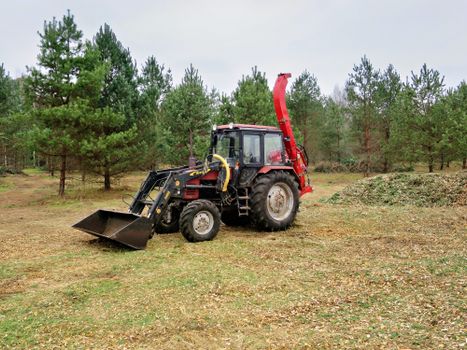
Wood chippers convert branches, brush, and small diameter trees into uniform wood chips. These chips can be used for mulch, biomass fuel, erosion control, or composting. Wood chippers are commonly used by tree care crews, utility line clearance teams, and land management operations. In logging systems, a wood chipper may be used at the landing to process tops and limbs left behind after delimbing. The used market includes disc chippers, drum chippers, and whole-tree chippers in various sizes.
Matching a Wood Chipper to Your Operation
The key specification for a wood chipper is its capacity, measured by the maximum diameter of material it can accept. A VERMEER BC1800A wood chipper, for example, is listed on the used market at $18,000. This model is a brush chipper sized for tree service and land clearing work. When shopping for a used wood chipper, inspect the feed wheel, the chipper disc or drum, the discharge chute, and the engine. Check for wear on the knives and anvil, as these components need regular replacement. Look at the condition of the hydraulic system that powers the feed rollers. A chipper that has been used to process dirty or sandy material may have accelerated wear on the cutting edges and internal components.
Used wood chippers range from small gas-powered units for residential use to large diesel-powered whole-tree chippers for industrial applications. The VERMEER BC1800A at $18,000 fits into the mid-range category. Buyers should compare the listing price with the estimated cost of replacing knives, belts, and other wear items to get a full picture of the total investment.
Log Skidders for Sale
Log skidders are purpose-built machines for dragging felled trees from the stump to the landing. They use a grapple or a cable winch system to gather one or more stems and then haul them over the ground. Skidders are a critical link in conventional logging systems because they bridge the gap between the feller buncher at the stump and the processor or loader at the landing. According to the USDA Forest Service, feller bunchers are commonly used with grapple skidders and a processor at the landing, making skidders a natural companion piece for any feller buncher purchase.
How Log Skidders Work With Feller Bunchers
In a typical cut-to-length or tree-length system, the feller buncher cuts and bunches trees, and a grapple skidder picks up the bunches and skids them to the landing. The grapple skidder uses hydraulic arms to close around the stems and lift the butt ends slightly off the ground, reducing drag resistance. Skidders are built with heavy-duty frames, large tires or tracks, and powerful engines to handle the loads and rough terrain. A FRANKLIN 560M log skidder is an example available on the used market, listed at $29,000. Franklin is a well-known brand in skidder manufacturing, and the 560M model represents a mid-sized option suitable for many logging operations.
When buying a used log skidder, pay close attention to the condition of the grapple, the winch (if equipped), the drivetrain, and the tires or undercarriage. Skidders operate in some of the most punishing conditions in forestry, and wear on the frame and structural components is common. Check for cracks near the articulation joint, damaged hydraulic cylinders, and excessive play in the steering system. A used skidder at $29,000 can be a productive addition to a fleet if it has been well maintained.
Tree Trimmers and Debarkers on the Used Market
Tree trimmers and debarkers fill specialized roles in forestry and land management. Tree trimmers, also known as aerial lift trucks or bucket trucks, allow operators to reach elevated branches for pruning, removal, or line clearance. These machines are common in utility vegetation management, municipal tree care, and commercial landscaping. On the used market, tree trimmers vary widely in reach, platform capacity, and chassis configuration. When evaluating a used tree trimmer, inspect the boom and bucket for structural integrity, check the hydraulic system for leaks, and verify that all safety systems including emergency descent functions are operational. The age and condition of the chassis are also important, as many tree trimmers are mounted on older truck platforms.
Debarkers remove bark from logs before they enter a sawmill, veneer mill, or chipper. Removing bark improves the quality of lumber and reduces wear on saws and chipper knives. Debarkers come in several designs including ring debarkers, drum debarkers, and rosser head debarkers. Ring debarkers are the most common in sawmill operations, using a rotating ring with pressurized arms to strip bark as the log passes through. Drum debarkers use tumbling action to rub bark off multiple logs at once. While debarkers are less commonly listed on general forestry equipment marketplaces than feller bunchers or skidders, they do appear in sawmill and wood processing inventory sections. Buyers of used debarkers should evaluate the condition of the feed system, the debarking tools or arms, and the drive components. Debarkers experience heavy wear from continuous contact with bark and dirt, so thorough inspection is critical before purchase.
Equipment marketplaces such as ForestryTrader.com list categories including feller bunchers, stump grinders, wood chippers, tree trimmers, delimbers, skidders, mulchers, and debarkers. This range of categories shows the breadth of machinery available to forestry professionals on the used market. Whether you need a primary felling machine like a feller buncher or a secondary processing tool like a debarker, the used market offers options at various price points.
Building a Productive Forestry Fleet
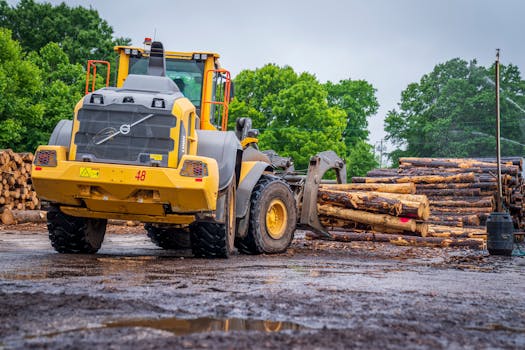
Putting together a cohesive fleet of used forestry equipment requires matching each machine to your specific harvest system and terrain. A feller buncher works best when paired with a grapple skidder for extraction and a processor or debarker at the landing. Stump grinders and wood chippers can handle residual material after the merchantable stems are removed. Tree trimmers support ongoing maintenance in stands that require selective pruning or utility clearance.
Cost considerations extend beyond the purchase price. The feller buncher hourly cost of about $99.50 includes fuel, maintenance, and wear items. Skidders, chippers, and stump grinders all have their own operating costs that should be factored into any fleet budget. Used equipment can reduce the initial capital outlay, but the condition of each machine determines how much you will spend on repairs and downtime. The examples cited here, including the FRANKLIN 3000 feller buncher at $5,500, the John Deere 843K at $104,000, the VERMEER BC1800A wood chipper at $18,000, the VERMEER SC372 stump grinder at $27,000, and the FRANKLIN 560M log skidder at $29,000, illustrate the price diversity on the used market.
Slope capability is a major factor when selecting a feller buncher. If your harvest site has slopes above 25 percent, a tracked machine is the safer and more productive choice. For flat or gentle terrain, a wheeled feller buncher can offer faster travel speeds between bunches. Self-leveling cabs extend the operating range of tracked machines up to 50 percent slopes, while machines without that feature are limited to 40 percent. Always verify the slope of your work site before committing to a machine type.
Safety equipment on used forestry machines deserves close attention. Feller bunchers and other forestry equipment are built with ROPS and FOPS, but those structures may have been damaged or modified over the machine's life. Inspect the cab structure, seat belts, and operator guarding thoroughly. A used machine that has been maintained with care can provide years of reliable service, while a neglected machine can become a safety and financial liability.
Frequently Asked Questions
What is the difference between a feller buncher and a harvester?
A feller buncher cuts and holds stems and places them on the ground but does not delimb or buck them. A harvester performs felling, delimbing, and bucking all in one machine, producing cut-to-length logs at the stump. Feller bunchers typically have a lower unit production cost than harvesters, estimated at $12.10 per cubic meter compared to $16.50 per cubic meter for harvesters, but they require additional equipment such as a processor at the landing.
What slope can a feller buncher operate on?
Tracked feller bunchers with self-leveling cabs can operate on slopes up to 50 percent. Tracked machines without self-leveling cabs are limited to 40 percent slopes. Wheeled feller bunchers should be restricted to slopes below 25 percent for safe operation. These limits come from the USDA Forest Service and are based on machine stability and operator safety. Actual site conditions such as soil moisture and obstacles may further reduce the safe operating slope.
Are used stump grinders a good value?
Used stump grinders can be an excellent value for tree service companies and land clearing contractors. A VERMEER SC372 stump grinder is available on the used market at $27,000. The key to finding a good value is inspecting the cutting wheel, engine, and hydraulic system for wear. Used machines with documented maintenance history are worth a premium over machines with unknown service records. Replacing worn teeth and pockets is normal, but cracked frames or failed hydraulics can be expensive to repair.
What size wood chipper do I need for my operation?
The right wood chipper size depends on the maximum diameter of material you process. A VERMEER BC1800A wood chipper at $18,000 on the used market is suitable for tree service and land clearing work. For whole-tree chipping in logging operations, larger disc or drum chippers with heavier feed systems are needed. Capacity is measured by the largest diameter branch or stem the chipper can accept. Buyers should match chipper capacity to their typical material size rather than oversizing for rare large stems.
How do log skidders work with feller bunchers?
Feller bunchers are commonly used with grapple skidders in a two-machine system. The feller buncher cuts and bunches stems on the ground, and the grapple skidder picks up the bunches and drags them to the landing. A processor at the landing then delimbs and bucks the stems. This system is highly productive because the feller buncher can continue cutting while the skidder is traveling. Used log skidders such as the FRANKLIN 560M at $29,000 are often listed alongside feller bunchers on equipment marketplaces, making it convenient to source both machines at once.