
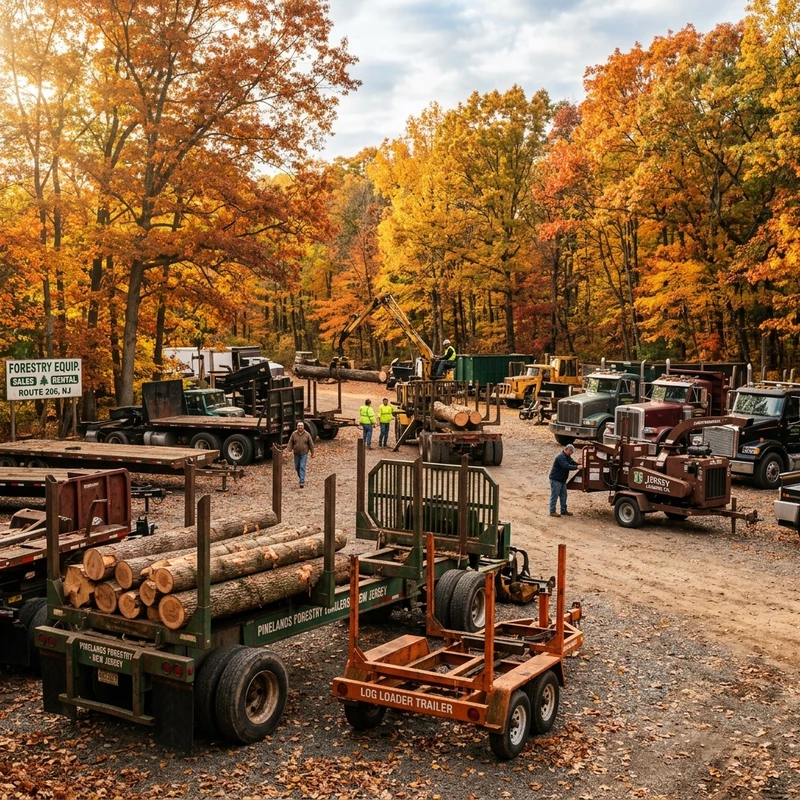
How to Find Used Forestry Equipment Trailers in NJ
Quick answer: Finding used forestry equipment trailers in NJ means knowing where to look, what condition standards to demand, and which specs match your load. The right trailer is out there — but unprepared buyers overpay or end up with equipment that fails inspection before the first job.
Forestry trailers take punishment that flatbeds and landscaping trailers never see. Steep grades, uneven terrain, heavy timber loads, log bunks, bolsters — the wear patterns are specific, and so are the risks when you buy blind. New Jersey's market has inventory, but knowing how to filter signal from noise is what separates a calculated purchase from an expensive regret.
This guide covers where to find used forestry trailers in NJ, what to look for before you buy, what to avoid, and how to make sure the trailer you take home earns its keep from day one.
What Types of Forestry Equipment Trailers Are Available in NJ?
Not all forestry trailers are the same. Before you search, get specific about what you need.
Log trailers: Designed for transporting full-length logs. Look for bolsters, stanchions, and bunk capacity rated for your typical load weight. GVWRs typically range from 40,000 to 80,000+ lbs.
Pole trailers: Extendable frames for long timber loads. Crucial spec: overall extended length and the rated load capacity at full extension.
Chip trailers: High-sided, lighter-weight builds for wood chips or biomass. Check sidewall integrity and floor wear — chip loads are corrosive over time.
Lowboys and equipment trailers: Used to haul harvesters, skidders, and feller bunchers to the job site. Deck length, deck height, and ramp capacity matter here.
Define your load type, gross weight, and transport distance before you look at a single listing. The fastest way to overpay is to browse before you know what you need.
Where to Find Used Forestry Trailers for Sale in NJ
Local Equipment Dealers With Forestry Inventory
Start with dealers who specialize in forestry or heavy equipment — not general trailer lots. A dealer with forestry-specific inventory will have units that have been field-inspected and can answer technical questions about bunk configurations, tie-down ratings, and axle setups.
Ask directly: Does the dealer have forestry trailers on-site in NJ, or are they listing units located out of state? Shipping adds cost and removes your ability to inspect in person.
Online Heavy Equipment Marketplaces
Platforms like MachineryTrader, IronPlanet, and TractorHouse list used forestry trailers by state. Filter to New Jersey and surrounding states — PA and NY dealers often deliver or allow local pickup. Review listing photos carefully: look for frame welds, bunk wear, axle and tire condition, and any visible rust on cross-members.
One rule: never commit to a purchase based on photos alone. Request additional images or a live video walkthrough before traveling.
Forestry Industry Auctions
Ritchie Bros. and Purple Wave run regional auctions that include forestry equipment. NJ buyers can bid online, but inspect in person whenever possible. Auction units sell as-is. Know your walk-away price before bidding opens — auction momentum causes buyers to overpay.
Private Sellers and Fleet Dispersals
Logging operations that are downsizing or transitioning often sell trailers privately. These can be strong value opportunities, but due diligence is entirely on you. There is no dealer warranty, no inspection report, and no recourse if the frame is cracked behind a fresh coat of paint.
Get the trailer's VIN, pull any available title history, and physically inspect the frame, axles, and running gear before any money changes hands.
What to Inspect Before Buying a Used Forestry Trailer in NJ
Frame and Structural Integrity
Start at the frame. Look for cracks at high-stress weld points — bunk mounts, cross-member junctions, and kingpin area on full trailers. Surface rust is cosmetic. Rust that has eaten through frame steel is a structural problem. Probe suspected areas with a screwdriver; soft spots mean metal loss.
A 2017 trailer with a documented repair history and clean frame welds is a better buy than a 2021 unit with no records and visible flex cracks near the bolsters.
Axles, Suspension, and Brakes
Check for even tire wear across all axles. Uneven wear signals misalignment or a bent axle — both cost money to fix. Inspect brake drums and slack adjusters. In NJ, CMV trailers must pass DOT inspection before road use. A trailer that can't pass inspection immediately cuts into your budget before the first job.
Ask for the last inspection date and any repair invoices. No paperwork is a red flag, not a negotiation point.
Bunk and Stanchion Condition
On log trailers, the bunks and stanchions carry the load. Look for cracks in bunk welds, worn stanchion pockets, and any makeshift repairs. Bunk replacements are not cheap — factor that cost into your offer if you see damage.
Lights, Wiring, and DOT Compliance
Wiring on working forestry trailers takes constant abuse. Check every light: marker lights, brake lights, turn signals. Bring a connector tester. Rewiring a full trailer runs $800–$2,500 depending on extent. Know that before you negotiate.
What to Watch Out For When Buying Used in NJ
Title issues: Verify the title is clear before purchase. Salvage or rebuilt titles affect resale value and may complicate registration in NJ.
Out-of-state seller listings posted as NJ inventory: Some platforms allow dealers to list equipment in multiple states. Confirm the trailer's physical location before making plans to inspect.
Freshly painted trailers: New paint on a used forestry trailer can hide cracks, rust, and weld repairs. Ask why it was painted. If the seller can't tell you, walk closer and look harder.
Missing GVWR plates or VIN tags: Required for NJ registration. Replacing lost data plates requires documentation and time. Confirm they're present and legible.
How Much Do Used Forestry Equipment Trailers Cost in NJ?
Prices vary widely based on type, age, axle count, and condition.
- Used log trailers (3–4 axle): $8,000–$35,000 depending on year and configuration
- Used pole trailers: $5,000–$20,000
- Used chip trailers: $10,000–$40,000
- Used lowboys for forestry equipment transport: $15,000–$60,000+
Buying through a dealer typically costs 10–20% more than private sale, but includes inspection history and, in some cases, a short warranty. That premium often pays for itself on the first repair bill.
Registering and Operating a Forestry Trailer in NJ
NJ requires all commercial trailers to be registered with the Motor Vehicle Commission. Trailers over 10,000 lbs GVWR require NJ DOT compliance and, if used in interstate commerce, must meet FMCSA standards.
Before you register, the trailer must pass a commercial vehicle inspection if it hasn't had one recently. Build that step into your purchase timeline — don't assume a used trailer is road-ready the day you pick it up.
If you're hauling timber across state lines, verify your trailer configuration complies with the weight limits and permit requirements of each state in your route.
The Right Trailer Is in NJ — Know What You're Looking For
The NJ used forestry trailer market has inventory across every price point. The buyers who walk away with the best deals are the ones who showed up with a checklist, not just a budget.
Define your specs first. Inspect in person. Demand paperwork. Factor in registration and inspection costs before you negotiate price. A trailer that passes DOT inspection on day one and has documented maintenance history is worth more than a cheaper unit that needs three weeks of shop time before it can move.
Find your trailer, run your inspection, and put it to work.
Frequently Asked Questions About Used Forestry Trailers in NJ
What is the best type of trailer for hauling logs in New Jersey?
For full-length log transport in NJ, a three- or four-axle log trailer with rated bolsters and stanchions is the standard choice. Confirm the GVWR matches your typical load weight and that the trailer meets NJ weight limits for the routes you'll be running.
Do used forestry trailers in NJ need a DOT inspection before use?
Yes. Commercial trailers in NJ must pass a DOT inspection before road use. Factor inspection costs and any corrective repairs into your total purchase budget before finalizing a deal.
How do I avoid buying a forestry trailer with a hidden frame crack?
Inspect weld points at bunk mounts, cross-members, and the kingpin area in person. Be skeptical of trailers with fresh paint on the frame — it can conceal repairs. Bring a screwdriver and probe any rusted areas for metal loss.
Can I finance a used forestry trailer in NJ?
Yes. Many heavy equipment dealers and commercial lenders offer financing for used trailers. Expect to provide proof of business, recent financials, and a down payment of 10–20%. Some lenders specialize in forestry and logging equipment — their underwriters understand the asset class better than general commercial lenders.
What should I ask a private seller before inspecting a used forestry trailer?
Ask for the title, last DOT inspection date, any maintenance or repair records, the reason for selling, and the trailer's full work history. If the seller can't answer basic questions about the trailer's past, treat that as a signal to inspect more carefully — or walk away.
Is it worth buying a forestry trailer from an out-of-state dealer near NJ?
Dealers in PA and NY frequently sell to NJ buyers and may offer delivery. The key risk is losing the ability to inspect before purchase. If you can travel to inspect in person, out-of-state inventory is worth considering. If the deal requires buying sight unseen, the risk is rarely worth the potential savings.