
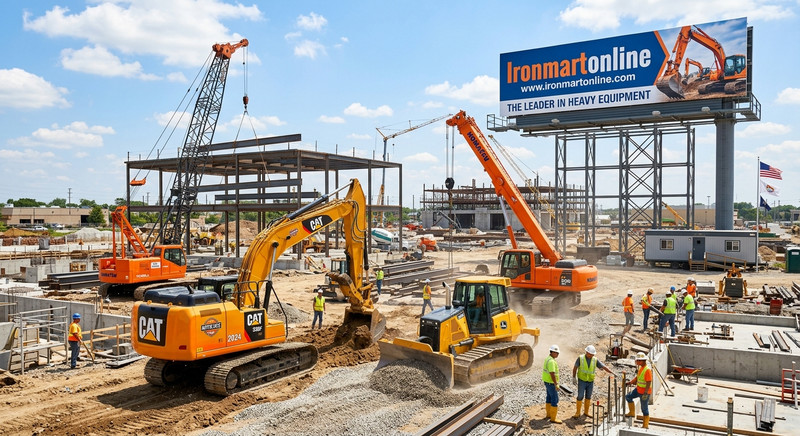
Quick answer: The heavy equipment sales slump turns around when three forces align: interest rates ease enough to make financing new purchases affordable again, construction and infrastructure spending picks back up, and dealer inventory levels normalize after years of overcorrection. Until then, buyers hold the leverage — and platforms like IronMartOnline give them the pricing transparency to use it.
Heavy equipment dealers have spent the last two years watching sales numbers that don't match the headlines. Infrastructure bills get passed. Construction backlogs stay full. And yet showroom floors are quieter than they should be. If you're trying to figure out when — or whether — this slump turns around, you're asking the right question. The answer isn't one single event. It's a set of conditions that need to line up at the same time.
This post breaks down what's actually driving the slowdown, what needs to change before volume recovers, and how buyers can use the current market to their advantage instead of waiting on the sidelines for a signal that may take years to arrive.
Why Has the Heavy Equipment Market Slowed Down?
High interest rates are the primary drag on heavy equipment sales. When financing costs rise, the monthly payment on a $200,000 excavator or wheel loader climbs right along with it — and that math doesn't work for a lot of contractors operating on thin margins. A machine that penciled out at 5% financing stops penciling out at 8%.
Add to that a period of aggressive buying during 2021 and 2022, when supply chain shortages pushed buyers to purchase equipment early and often just to lock in availability. That pulled demand forward. Fleets that would normally replace equipment on a rolling basis bought ahead of schedule, which means fewer replacement purchases are due right now. The market isn't broken — it's digesting a buying cycle that got compressed.
Dealers are also sitting on inventory that built up as new equipment orders placed during the shortage years finally arrived, just as demand cooled. That combination — more supply, less urgency — is exactly what pushes prices down and sales cycles longer.
What Has to Happen for Demand to Recover?
Three conditions need to shift before sales volume returns to pre-slump levels.
Financing costs need to come down. Equipment purchases are financed decisions first and operational decisions second. Until borrowing costs drop, a meaningful share of buyers will keep deferring purchases, renting instead of buying, or running older equipment longer than they'd prefer.
Construction starts need to accelerate. Heavy equipment demand follows construction activity directly — commercial, residential, and public infrastructure projects all drive machine utilization. When new project starts increase, idle equipment gets put back to work and fleets start adding capacity instead of just replacing it.
Inventory levels need to normalize. Dealers can't raise prices or tighten terms while lots are full. As excess inventory sells through — which happens faster when buyers take advantage of current pricing — dealers regain pricing power, and that's usually the clearest sign a slump has ended.
None of these move independently. A rate cut without more construction activity won't move the needle much. More construction activity without financing relief just pushes more buyers toward used equipment and rental fleets instead of new purchases.
How Will Interest Rates Affect the Timeline?
Choose your expectations based on which direction rates move, not on hope. If rates hold steady or decline modestly, expect a gradual recovery — dealers slowly work through inventory, and sales volume ticks up through the following few quarters rather than snapping back overnight. If rates drop sharply, expect a faster rebound in financed purchases, but also expect prices on quality used equipment to rise quickly as buyers who were waiting all re-enter the market at once.
That second scenario is exactly why waiting for a "perfect" rate environment often costs more than acting during the slump. Buyers who purchase while inventory is high and sellers are motivated typically get better terms than buyers who wait for rates to bottom out and then compete with everyone else who had the same idea.
Will Infrastructure Spending Drive the Turnaround?
Public infrastructure spending is a tailwind, not a trigger. Large infrastructure projects move through planning, permitting, and bidding phases that take months or years before equipment orders actually hit the market. That means the infrastructure spending already allocated will support demand over the coming years — but it won't produce an immediate spike in sales.
For buyers, this matters because it changes the calculation. If you're bidding on upcoming infrastructure-adjacent work, the smart play is securing equipment now, while competition for machines is lower, rather than waiting until project awards drive a rush of buyers into the same used equipment pool.
What Role Does Used Equipment Inventory Play in the Recovery?
The used equipment market is where the slump resolves first. New equipment sales are tied directly to financing costs and dealer floor plans, but used equipment transactions move faster and respond to motivated sellers sooner. As fleets right-size and sell off machines bought during the 2021–2022 surge, used inventory grows — and that inventory needs buyers before the broader market stabilizes.
This is where buyer strategy matters most. A contractor who buys a well-maintained used machine during a slump often gets a far better deal than one who waits for new equipment financing to improve. A 2019 excavator with full maintenance records and moderate hours can do the same job as new equipment at a fraction of the cost, provided the buyer can verify its condition before purchase.
Choose used equipment if your priority is minimizing upfront cost and you have the ability to inspect machine history and condition. Choose new equipment if you need manufacturer warranty coverage and can absorb the higher financing cost. The slump doesn't eliminate that tradeoff — it just makes the used option more attractive, because sellers are more willing to negotiate.
How Can Buyers Position Themselves Before the Market Turns?
Don't wait for a headline to tell you the slump is over — by then, pricing leverage has already shifted back to sellers. Instead:
- Define the specific equipment you need now. Specifications, hours, attachments, and application — before you start comparing prices. This prevents chasing a low price on a machine that's wrong for the job.
- Verify condition with documentation, not adjectives. A machine with a complete service history and verifiable hours tells you more than a listing description ever will.
- Compare pricing across multiple sellers before committing. Slumps create wide price variation between sellers — some are still pricing off last year's market, others have already adjusted.
- Move while inventory is high. Once dealers and private sellers work through excess stock, negotiating room disappears.
Why IronMartOnline Is the Smartest Place to Buy or Sell Right Now
A slow market rewards buyers who can see real pricing data, not guess at it. IronMartOnline gives buyers and sellers of heavy equipment direct access to current listings, specs, and pricing across a wide range of machines — without the markup or guesswork that comes from relying on a single dealer's lot.
If you're buying, that means you can compare machine condition, hours, and asking price across multiple sellers before you commit, which is exactly the leverage this market rewards. If you're selling, it means your equipment gets in front of buyers who are actively searching, not just browsing — which shortens the time a slow market usually adds to a sale.
The equipment slump won't last forever, but the pricing advantage it creates for prepared buyers will. Browse current listings on IronMartOnline and act while the terms favor you.
Frequently Asked Questions
How long do heavy equipment sales slumps typically last?
Slumps tied to interest rate cycles typically resolve over several quarters rather than months, since both financing costs and dealer inventory need time to adjust. The exact timeline depends on how quickly rates move and how fast existing inventory sells through.
Is now a good time to buy used heavy equipment?
Yes, if you can verify a machine's condition and maintenance history. Slumps give buyers more negotiating leverage and a larger pool of inventory to compare, which reduces the risk of overpaying.
Should I wait for interest rates to drop before buying equipment?
Only if you don't need the equipment soon. Waiting for lower rates often means competing with more buyers once rates drop, which can push used equipment prices up faster than financing savings offset.
What's the risk of buying equipment during a sales slump?
The main risk is buying from a seller who hasn't adjusted pricing to match current market conditions. Comparing listings across multiple sellers, rather than accepting the first asking price, reduces that risk significantly.
Is renting a better option than buying during a slowdown?
Renting makes sense for short-term or uncertain project timelines. Buying makes more sense if you have consistent utilization planned, since slump-era pricing on used equipment is often lower than typical rental costs over a multi-year project.