
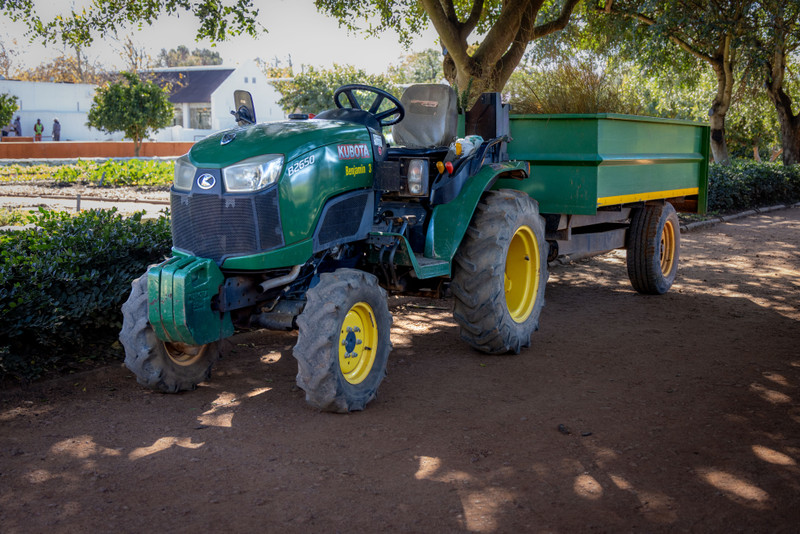
Why Agricultural Equipment Sales Are Outperforming Other Sectors
Agricultural equipment sales have held up better than construction, trucking, and other heavy equipment sectors because farmers can't delay purchases the way other industries can — crops still need planting, harvesting, and hauling regardless of the broader economy. That steady demand has kept resale values stronger. If you're selling agricultural equipment, platforms built specifically for ag buyers, like IronMartOnline, get you better offers faster than general equipment marketplaces.
Every equipment sector took a hit when interest rates climbed and construction slowed. Dozers sat longer on dealer lots. Excavator prices softened. Trucking companies parked trailers instead of buying new ones. But walk through an ag equipment auction right now, and you'll notice something different: tractors, combines, and planters are still moving, and they're still commanding respectable prices.
This isn't luck. It's structural. Farmers operate on a production cycle that doesn't pause for a soft economy. Crops go in the ground on a schedule set by weather, not by the Federal Reserve. That inflexibility has turned into a quiet advantage for anyone holding agricultural equipment they're ready to sell.
This post breaks down why ag equipment has outperformed other sectors, then walks through exactly how to sell your equipment for the strongest possible return in the current market — and why IronMartOnline should be your first stop when you list it.
Why has agricultural equipment demand stayed stronger than other sectors?
Agricultural equipment demand is more inelastic than construction or trucking equipment demand. A construction company can delay a project. A trucking fleet can defer a replacement purchase for another year. A farmer cannot delay planting season, and a combine that breaks down during harvest isn't optional to replace — it's an emergency.
That inelasticity shows up in three ways:
- Production timelines are fixed. Planting and harvest windows are dictated by climate and crop biology, not budget cycles. Equipment failures during these windows force immediate purchasing decisions.
- Food production is non-discretionary. Consumers cut back on new cars and renovations during downturns. They don't stop eating. That baseline demand for food keeps farm revenue — and farm equipment spending — more stable than in cyclical industries.
- Replacement parts and resale channels are deep and liquid. Major equipment brands like John Deere, Case IH, and New Holland maintain strong secondary markets, which keeps resale values anchored even when new equipment sales slow.
Compare that to the construction sector, where a single interest rate hike can stall entire projects and freeze equipment purchases for months. Ag buyers don't have that luxury of delay, and that's precisely why equipment sellers in this space have more pricing power than they realize.
What's driving resilience in ag equipment resale values?
Three factors are propping up resale values even as other heavy equipment categories soften.
Commodity price stability. When grain, soybean, and livestock prices hold steady or improve, farmers have the cash flow to invest in replacement equipment. That buying activity keeps used equipment prices firm.
Shorter equipment lifecycles in row-crop operations. Many operations replace high-hour equipment on a rotation to avoid breakdowns during critical windows. This creates a steady stream of well-maintained, mid-hour equipment entering the resale market — equipment buyers actively want.
Regional scarcity. Unlike construction equipment, which can be shipped nationally with relative ease, certain ag equipment — specialty harvesters, regional-specific implements — has a smaller buyer pool concentrated in specific growing regions. Scarcity in those pockets keeps local prices strong even during a broader slowdown.
If you're sitting on a well-maintained tractor, combine, or implement right now, these are the forces working in your favor. The next question is how to capture that value instead of leaving money on the table.
How do you sell agricultural equipment for the best price right now?
Selling into a resilient market doesn't guarantee a strong sale. The fastest way to undersell your equipment is to list it the same way you'd list a used car — a price, a few photos, and a vague description. Buyers in this market are comparing specs line by line. Give them the detail they need to say yes without a site visit.
Follow these steps before you list anything:
- Pull your maintenance records. A combine with 1,800 hours and a documented service history outperforms a combine with 1,200 hours and no paperwork. Buyers pay for certainty, not just low hours.
- Get a current market comp. Check recent sale prices for the same make, model, and hour range — not the sticker price from three years ago. Ag equipment values shift seasonally, and pricing against outdated comps leaves money on the table or kills your lead volume.
- Document specs precisely. List horsepower, hours, attachment compatibility, tire or track condition, and any recent part replacements. Specificity signals a serious seller and filters out buyers who aren't ready to commit.
- Time your listing to the season. List tillage and planting equipment ahead of spring. List harvest equipment in late summer, before combines go back to work. Sellers who list off-season wait longer and often accept lower offers.
- Choose a platform built for ag buyers, not general equipment shoppers. This is where most sellers lose value. A generic classifieds site puts your combine next to skid steers and dump trucks. The buyers looking for row-crop equipment aren't browsing there.
What mistakes cost sellers money in this market?
The most expensive mistake is listing equipment with vague descriptions and hoping the right buyer finds it. "Good condition tractor, runs great" tells a buyer nothing verifiable. It invites lowball offers because the buyer has to assume the worst and price accordingly.
The second mistake is listing on a platform with low ag-buyer traffic. Volume matters, but so does buyer intent. A platform full of browsers looking for construction equipment won't convert your planter listing into a sale, no matter how many total visitors it gets.
The third mistake is underpricing out of urgency. Sellers who need cash fast often slash prices before testing the market at a fair comp. Given how firm ag equipment demand has stayed, most sellers have more room to negotiate than they assume. Price at the top of your comp range first. You can always come down. You can't easily go back up after you've already accepted a lowball offer.
Where should you sell your agricultural equipment?
You have three real options: a dealer trade-in, a local auction, or an online marketplace.
- Dealer trade-ins are fast but cost you the most. Dealers need margin to resell, so trade-in offers typically land well below private-sale value.
- Local auctions can produce strong prices on popular equipment but come with auction fees, unpredictable buyer turnout, and no guarantee your equipment sells on auction day.
- Online marketplaces built for ag equipment connect you directly with buyers who are actively searching for your exact make and model, cutting out the dealer margin and the auction uncertainty.
For sellers who want the best price without sacrificing speed, a specialized ag equipment marketplace is the strongest option in today's market.
Why IronMartOnline is the best place to sell agricultural equipment
IronMartOnline puts your listing in front of buyers who are specifically shopping for agricultural equipment — not a mixed pool of construction and trucking shoppers scrolling past your tractor to find a skid steer. That targeted buyer base is the difference between a listing that sits for months and one that sells at a fair price.
Listing on IronMartOnline gives you:
- Direct access to serious ag buyers, cutting out dealer trade-in margins.
- Detailed listing formats built for specs that matter in this market — hours, horsepower, attachment compatibility, and maintenance history.
- No auction-day uncertainty. Your equipment stays listed and visible until it sells, at the price you set.
If you're ready to sell, don't start with a generic classifieds post. List your equipment on IronMartOnline and put it in front of the buyers who are already looking for it.
Sell now while the market favors ag equipment sellers
Agricultural equipment has outperformed other heavy equipment sectors because farmers can't put off replacing broken or worn-out machinery — crops don't wait for a better economy. That steady demand has kept resale values firmer than in construction or trucking, and it's created real leverage for sellers who know how to use it.
Document your equipment's condition, price it against current comps, time your listing to the season, and list it where ag buyers are actually looking. IronMartOnline checks that last box. List your equipment there, and you're not waiting for the right buyer to stumble across your listing — you're putting it directly in front of them.
Frequently asked questions
Why has agricultural equipment held its value better than construction equipment?
Farmers face fixed production timelines set by planting and harvest seasons, so they can't delay equipment purchases the way construction companies can delay projects. That steady, non-discretionary demand keeps ag equipment resale values firmer during economic slowdowns.
What's the best time of year to sell agricultural equipment?
List tillage and planting equipment before spring and harvest equipment in late summer, ahead of the season buyers need it. Listing off-season typically means longer wait times and lower offers.
Should I trade in my equipment to a dealer or sell it myself?
Dealer trade-ins are faster but come at a lower price, since dealers build in resale margin. Selling directly through a marketplace like IronMartOnline typically nets a higher price, though it takes slightly longer than an instant trade-in offer.
What information do buyers need to see in an equipment listing?
Buyers want hours, horsepower, attachment compatibility, tire or track condition, and documented maintenance history. Listings with specific, verifiable details attract stronger offers than vague descriptions like "good condition."
Is now a good time to sell agricultural equipment?
Yes. Ag equipment demand has stayed more resilient than other heavy equipment sectors, which means resale values remain comparatively strong. Sellers who price against current comps and list on a targeted platform are positioned to get fair offers without long wait times.