
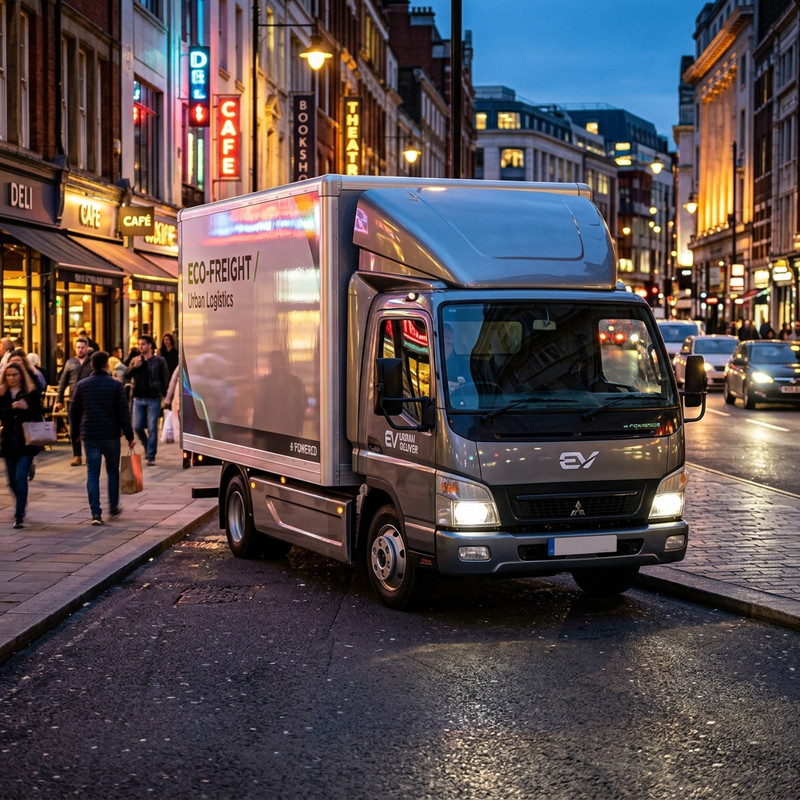
Why the Cab Over Box Truck Remains the Smartest Haul
Quick answer: A cab over box truck places the engine beneath the cab rather than in front of it, giving you a shorter overall length with the same cargo capacity as a conventional truck. That design advantage translates directly into easier urban maneuvering, better payload ratios, and lower operating costs per mile — which is why fleet operators and owner-operators keep coming back to it.
Cab over box trucks have been moving freight for decades. That's not nostalgia — it's a track record. The design solves real problems that conventional trucks create: wasted length, wide turning radii, and payload limits that eat into your margin on every run.
Before you dismiss one as old-fashioned or buy one without knowing what to check, you need to understand exactly what makes the cab over configuration so effective — and where it can burn you if you buy the wrong unit.
What Makes a Cab Over Box Truck Different from a Conventional Truck?
The engine sits under the cab, not out front. That single structural difference changes nearly everything about how the truck performs in daily operation.
On a conventional truck, the hood extends ahead of the front axle. Add a 16-foot or 20-foot box behind the cab and your total vehicle length climbs fast. A cab over design eliminates that forward overhang entirely. The front axle sits at the nose of the vehicle. The cab sits directly above it. The box starts immediately behind.
The result: the same cargo box fits inside a significantly shorter footprint. That matters in loading docks, city streets, permit thresholds, and parking lots where every foot of length costs you time or money.
What Are the Real Advantages of a Cab Over Box Truck?
Shorter overall length with equivalent cargo space
A cab over box truck carrying a 20-foot cargo box runs measurably shorter than a conventional truck carrying the same box. That length difference is not cosmetic — it determines whether you can legally operate the vehicle on certain routes, whether you need a commercial driver's license, and how many stops you can realistically make in a day.
Most cab over box trucks fall under 26,001 lbs. GVWR when spec'd correctly. Stay under that threshold and you avoid CDL requirements in most U.S. states. That expands your driver pool immediately and cuts your labor cost per route.
Tighter turning radius for urban and last-mile delivery
The front axle at the nose means the steering pivot point is as far forward as it can be. You gain usable turning radius that a conventional truck gives to hood length instead. On a city block, loading alley, or tight industrial park, that difference is a daily operational asset.
Drivers who switch from conventional trucks to cab overs consistently report faster turnaround times at multi-stop urban routes. Fewer three-point turns, fewer blocked loading zones, fewer wasted minutes per stop — those add up across a full week.
Better sightlines from the elevated cab position
You sit directly over the front axle, which puts the driver higher and further forward than in a conventional configuration. Sightlines to the front corners of the truck improve. You see curbs, pedestrians, and dock edges that a conventional cab position hides.
That's not a comfort feature. It's a liability and safety advantage on every urban run.
Easier cab access for maintenance
The cab tilts forward on virtually every cab over design. Engine access requires no crawling under a hood or working around a front-mounted grille structure. The entire powertrain exposes itself in one movement. For fleet operators managing their own maintenance, that translates to shorter service windows and lower labor hours per interval.
Weight distribution efficiency
Moving the engine over the front axle improves front-to-rear weight balance compared to a conventional layout where the engine sits ahead of the front axle. Better balance means more of your GVWR goes to payload rather than compensating for a forward-heavy powertrain. More payload capacity per legal gross weight is a direct margin improvement on every loaded run.
Who Actually Buys Cab Over Box Trucks — and Why?
Three buyer profiles dominate the cab over box truck market:
Last-mile and urban delivery operators. Multiple stops per day in congested areas. Length limits and turning constraints make a conventional truck actively inefficient. The cab over is the default choice here for good reason.
Owner-operators working regional routes under 26,001 lbs. GVWR. Avoiding CDL requirements while maximizing cargo space is a real business decision. The cab over makes that math work.
Small fleet operators in trades, catering, moving, and distribution. Predictable vehicle dimensions, lower acquisition cost versus a Class 7 or 8 conventional truck, and a large used market make the cab over box truck a practical fleet-building unit.
If your operation runs long highway miles with minimal stops and no length constraints, a conventional truck may deliver better driver comfort on extended runs. The cab over earns its advantage in density — stops, streets, and space limits.
What Should You Check Before Buying a Used Cab Over Box Truck?
The used cab over market is deep. That means good deals exist — and so do expensive mistakes.
Frame and cab integrity first. The cab-over-engine position means the cab takes more vibration stress over its life than a conventional configuration. Check the cab tilt mechanism, hinge points, and any cab-to-frame mounts for cracks or fatigue. A compromised cab mount is not a minor repair.
Box condition relative to the chassis condition. The box and the truck are often on different life cycles. A chassis with 180,000 miles and a recently rebuilt box is a different proposition than a low-mileage chassis with a rotted floor and failing liftgate. Inspect both independently.
Engine documentation over engine claims. A seller who says the truck "runs great" is telling you nothing useful. Ask for oil change records, any repair orders, and the last emissions test. A cab over with 150,000 miles and a documented service history is a safer buy than a 90,000-mile unit with no paperwork.
Liftgate operation under load. Run it. Hydraulic systems on used equipment fail without warning when they're overdue for service. If the liftgate isn't tested under weight before purchase, you're absorbing that risk at your cost.
Tires and brakes as a negotiation point, not a surprise. Price both into your offer before you close. A set of steer and drive tires plus a brake job on a cab over box truck runs $2,500–$5,000 depending on size and market. Know that number going in.
How Does Fuel Economy Compare Between Cab Over and Conventional Box Trucks?
Aerodynamics favor the conventional layout on sustained highway speeds. The blunt front face of a cab over creates more drag than a sloped conventional hood at 65 mph.
At urban operating speeds — stop-and-go, under 40 mph — that aerodynamic gap essentially disappears. Fuel economy in urban cycle operation is largely driven by weight, start-stop frequency, and driver behavior, not aerodynamic coefficient.
If your routes are predominantly urban with low average speeds, expect comparable fuel consumption to a similarly rated conventional truck. If you're running consistent highway miles at speed, a conventional layout will return marginally better fuel economy — typically 0.5 to 1.5 mpg better depending on specific configuration.
Know your route profile before you let fuel economy claims drive your decision.
Cab Over Box Truck vs. Conventional Box Truck: Which One Is Right for Your Operation?
Choose a cab over box truck if:
- Your routes involve urban density, multiple stops, or tight loading environments
- You want to stay under 26,001 lbs. GVWR and avoid CDL requirements
- Length restrictions apply to your operating area or dock access
- You manage your own maintenance and value fast engine access
Choose a conventional box truck if:
- Your routes are predominantly highway with few stops
- Driver comfort over long-distance runs is a priority
- You have no meaningful length or turning radius constraints
- Your payload requirements push you into heavier Class 6 or 7 territory where conventional configurations are more common
Neither layout is universally better. The cab over wins where density and length matter. The conventional wins where highway efficiency and driver fatigue matter more.
The Bottom Line on Cab Over Box Trucks
The cab over box truck is not popular because of marketing. It is popular because the design solves specific, recurring problems in freight, delivery, and distribution operations better than the alternative.
Shorter length, tighter turns, better sightlines, easier maintenance access, and efficient payload ratios — each advantage exists because of one structural decision: engine under the cab, not out front.
Buy the right unit for your route profile. Inspect the cab mounts, the box condition, and the service records before you commit. Know the CDL threshold for your state. Price tires and brakes into your offer.
Do that, and a cab over box truck is one of the most cost-effective working assets you can put on the road.
Browse current cab over box truck listings to find verified units with full specs.
Frequently Asked Questions
What is a cab over box truck?
A cab over box truck is a commercial truck where the cab sits directly over the front axle with the engine mounted beneath the cab rather than ahead of it in a conventional hood configuration. This eliminates front overhang, shortens overall vehicle length, and improves the turning radius — making the design particularly effective for urban delivery and multi-stop freight operations.
Do you need a CDL to drive a cab over box truck?
Most cab over box trucks are configured to stay at or under 26,001 lbs. GVWR. In most U.S. states, vehicles under that threshold do not require a Commercial Driver's License (CDL). Confirm the specific GVWR of any unit you're evaluating and check your state's CDL threshold before assuming you're exempt.
How many miles does a cab over box truck typically last?
A well-maintained cab over box truck with a diesel powertrain commonly reaches 300,000–500,000 miles before requiring major drivetrain work. Service documentation is a stronger indicator of remaining life than odometer reading alone. A 200,000-mile truck with complete records often represents less risk than a 100,000-mile truck with none.
Are cab over box trucks harder to maintain than conventional trucks?
No — the cab tilt mechanism makes engine access faster and easier than working around a conventional front hood. Routine service intervals, fluid changes, and component inspections all take less time in a cab over configuration, which reduces labor cost per service event for fleet operators managing in-house maintenance.
What size box fits on a cab over box truck?
Cab over box trucks commonly carry cargo boxes ranging from 12 to 26 feet in length depending on the chassis rating and wheelbase. The 16-foot and 20-foot configurations are the most common in the used market for Class 5 and 6 applications. Confirm the box interior dimensions — not just the nominal length — before purchase, as body-to-chassis fit varies.
Is a cab over box truck good for long-distance driving?
The cab over configuration prioritizes maneuverability and length efficiency over highway cruising comfort. On sustained highway routes, driver fatigue can be higher than in a conventional cab due to the seating position and cab dynamics. For operations with long-haul or overnight highway segments, a conventional truck is typically the better fit.