
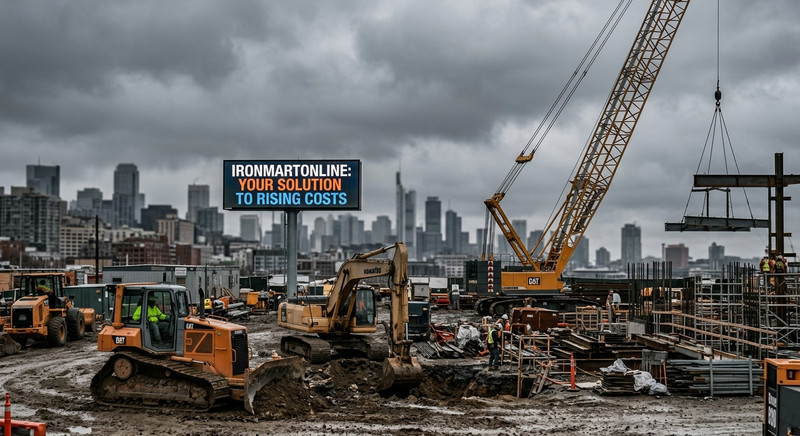
Why Are All Heavy Equipment Brandmanufacturers Across the Board Feeling the Pinch of Rising Costs Current Economy Conditions — And What Buyers Can Do About It
Quick answer: Heavy equipment manufacturers are facing higher costs from steel and aluminum tariffs, elevated interest rates, and persistent supply chain bottlenecks for components like engines, hydraulics, and electronics. These costs get passed to buyers through higher new-equipment prices. For contractors and fleet managers, the used equipment market — including platforms like IronMartOnline — offers a way to acquire reliable machines without absorbing the full weight of new-equipment inflation.
Every heavy equipment manufacturer is dealing with the same math problem right now. Raw material costs are up. Borrowing costs are up. Component lead times are longer than they were three years ago. None of these pressures are unique to one brand or one machine category — they're hitting dozer manufacturers, excavator builders, and crane producers alike.
The result shows up on the invoice. New equipment prices have climbed steadily, and buyers who assume next year's purchase will cost what last year's did are in for a rough surprise. Understanding why these costs are rising — and where the pressure points actually sit — puts you in a stronger position to make a smart purchasing decision instead of an expensive one.
This post breaks down the specific cost drivers squeezing equipment manufacturers, explains why those costs land on your invoice, and lays out how buyers can protect their budgets without compromising on machine quality.
What's driving up costs for construction equipment and heavy equipment manufacturers?
A broader combination of economic factors is putting pressure on manufacturers’ operations, from material costs and financing costs to component availability. Each one independently adds pressure, creating real challenges as heavy equipment manufacturers face rising operational costs due to economic pressures. Tariffs on imported raw materials and industrial components, along with freight and logistics costs, are adding further pressure. Together, these factors compound. Manufacturers are also being squeezed by higher input costs and weaker pricing power because demand is uneven across sectors of the economy.
Why are steel and aluminum costs rising?
Steel and aluminum are the backbone of every piece of heavy equipment — frames, buckets, booms, undercarriages. Tariffs on imported steel and aluminum raise input costs for manufacturers who source globally, while raw material prices for steel and aluminum have also shown sustained upward pressure, and domestic steel producers often raise prices in response to reduced competition. Manufacturers don't absorb this difference. They build it into the sticker price of every new machine that rolls off the line.
This isn't a one-time cost bump. Steel and aluminum pricing is cyclical and tied to global trade policy, which affects demand across construction and pricing for construction equipment, so manufacturers are forced to build pricing models that assume continued volatility rather than stability. Materials costs, not just labor, are a major source of inflation for manufacturers.
How are interest rates and equipment demand affecting equipment manufacturing costs?
Manufacturers don't just sell equipment — they finance production. High interest rates are also limiting equipment demand by making financing more expensive for buyers. Plant expansions, new tooling, and component inventory all get financed, and elevated interest rates mean higher borrowing costs across every stage of production. Those costs flow downstream.
Buyers feel this twice. First, in the sticker price of new equipment. Second, in the financing rate on their own purchase. A machine that would have carried a 5% equipment loan rate a few years ago may now carry a rate several points higher, which changes the real cost of ownership over a 5- or 7-year term, reduces what many customers are willing to commit to, and leaves manufacturers with less pricing power than expected as purchases are delayed or scaled back.
Why do engines, hydraulics, and electronics still face supply delays?
Pandemic-era supply chain disruptions exposed how dependent heavy equipment manufacturing is on a small number of specialized component suppliers, especially because heavy machinery production often relies on globally sourced materials and components for engines, hydraulic pumps, onboard electronics, and advanced electronics and semiconductors. Supply chains have normalized compared to 2021 and 2022, but they haven't fully reset to pre-pandemic lead times.
When a manufacturer can't get hydraulic components on schedule, production slows, output per quarter drops, and per-unit costs rise. That pressure also affects used machinery values, since buyers keep older fleets in service longer. Scarcer components also carry pricing power — suppliers raise prices when demand outpaces their capacity, and manufacturers pass that increase along. Telematics helps offset some of that strain by improving diagnostics and maintenance planning for aging equipment.
How do rising manufacturer costs and market growth affect equipment buyers?
Manufacturer cost pressure doesn't stay with the manufacturer. It moves straight to the buyer through three channels: new equipment pricing, financing terms, and parts/service costs.
-
New equipment pricing: List prices on new dozers, excavators, loaders, and cranes have risen across nearly every major manufacturer over the past several years, reflecting the compounding effect of material, labor, and financing costs, including rising labor costs as manufacturers compete for skilled workers.
-
Financing terms: Higher manufacturer borrowing costs often correlate with tighter captive-finance terms offered to buyers, meaning less favorable rates on manufacturer-backed loans.
-
Parts and service: Component scarcity doesn't end at the factory. Replacement parts for engines, hydraulics, and electronics carry the same cost pressure, raising the total cost of ownership over a machine's working life.
Those increases also show up in weaker project affordability, as higher construction input costs and softer construction spending leave buyers watching both budgets and future sales more closely. Buyers who ignore this chain end up budgeting against yesterday's prices. The fix isn't to wait for costs to drop — most signs point to continued pressure, not relief. The fix is to buy smarter.
Is buying used heavy equipment a smart response to rising manufacturer costs?
Yes, for buyers who need reliable machines without paying full new-equipment inflation, because high new-equipment costs are driving more buyers to the used market. Used equipment sidesteps the steepest cost increases because it was built before the current wave of material and component price hikes.
The used market has been stabilizing amid a commodity downturn, reflecting broader trends in buyer behavior. By Q3 2025, used construction equipment showed signs of recovery, with rising demand supporting stronger performance, and demand for mid-age units is projected to remain strong.
A well-maintained used excavator with verified hour counts and documented service history delivers the same productivity as a new unit at a fraction of the cost. The key word is verified. Buying used only works as a cost-avoidance strategy if you can confirm the machine's condition, not just its price.
What should you check before buying used specialized equipment?
Define your job requirements first. Used agricultural equipment prices dropped 18% to 25% in 2024, which makes it crucial to check segment-specific pricing against actual machine condition. Match specifications, lift capacity, and attachment compatibility to your actual work before comparing prices. Buyers who shop price first and specs second end up with machines that are wrong for the job, no matter how good the deal looked on paper.
Once you know what you need, verify three things on any used machine:
-
Hour count and usage pattern — Lower hours with heavy idle time aren't necessarily better than moderate hours with consistent, documented work cycles.
-
Service and maintenance records — A machine with a complete service history tells a more reliable story than one with none, regardless of model year.
-
Component condition — Engine, hydraulics, and undercarriage should be inspected or verified directly, not assumed from a listing description, because condition drives long-term reliability.
How does IronMartOnline help buyers avoid overpaying in this market?
IronMartOnline connects buyers directly with sellers of used heavy equipment, cutting out the inflated pricing layers built into new-equipment purchases, and the marketplace value comes not just from listings but from the support buyers need to compare used machines with confidence. Listings include the specification detail buyers need to verify a machine before committing — hours, condition, and equipment history — so you're comparing real data, not marketing language, especially in a market where buyers are shifting focus toward cost control and equipment efficiency.
In a market where manufacturer costs keep climbing, that access matters. You're not stuck choosing between an inflated new-equipment price and an unverified private sale. You get a marketplace built around the same principle that should guide every equipment purchase: know exactly what you're buying before you buy it.
Buy with the data, not the sticker price
Rising steel costs, higher interest rates, and ongoing component delays aren't going away soon. Manufacturers are passing these pressures straight to buyers, and the equipment budget you built two years ago won't stretch as far today.
The buyers who come out ahead in this market are the ones who shift their strategy — defining their actual equipment needs, verifying condition instead of trusting a listing description, and treating the used market as a legitimate cost-avoidance tool rather than a fallback option.
Browse IronMartOnline's listings and compare verified used equipment before you commit to a new-equipment price tag.
Frequently asked questions
Why is new heavy equipment getting more expensive?New heavy equipment prices are rising because manufacturers face higher steel and aluminum costs from tariffs, elevated borrowing costs tied to interest rates, and ongoing component delays for engines, hydraulics, and electronics. These costs are built into the final sticker price. For example, Caterpillar expects tariff costs of $250 million to $350 million, Komatsu estimates US tariff costs at 78 billion yen ($550 million), and JLG said tariffs could reduce earnings by $1 per share.
Is used heavy equipment a reliable alternative to new equipment?Yes, provided the buyer verifies hour counts, service history, and component condition before purchase. A documented, well-maintained used machine can match new-equipment productivity at a lower cost.
How long will heavy equipment prices stay elevated?There's no fixed timeline. Material costs, trade policy, and interest rates all remain active variables, and most industry signals point toward continued cost pressure rather than a near-term reset to pre-pandemic pricing. In the current period, leading manufacturers are still taking a hit, with Caterpillar's Q1 2025 sales falling 19% to $5.184 billion and Volvo's Q1 2025 sales declining 8% year-over-year, which is one reason investors do not expect any single company to see relief quickly.
What's the risk of buying used equipment without verifying its history?Unverified used equipment can carry hidden costs — worn components, inconsistent maintenance, or inflated hour counts — that erase the savings of buying used in the first place. Always confirm service records and component condition before committing.
Who should consider IronMartOnline for an equipment purchase?Contractors and fleet managers who need verified used heavy equipment without paying current new-equipment prices. IronMartOnline is built for buyers who want specification-level detail before they commit to a purchase.