
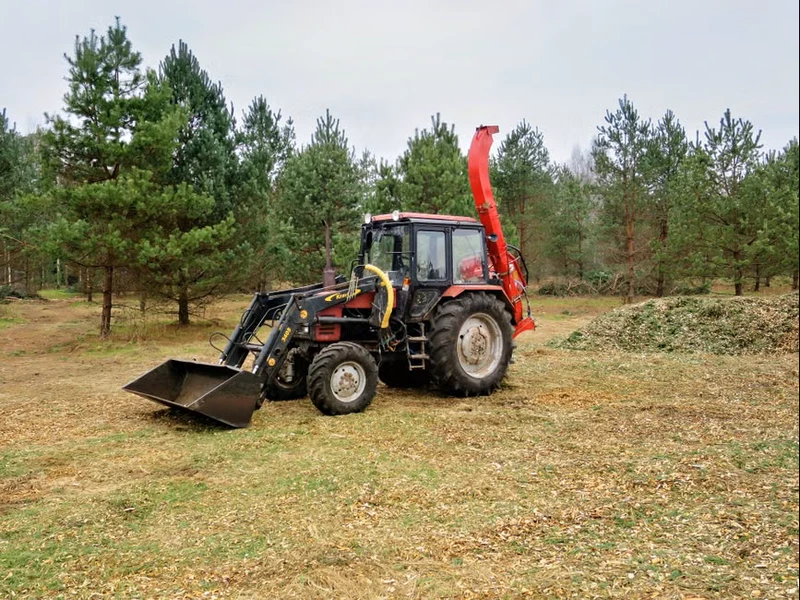
Wood Chippers: Types, Features, and Buying Considerations

Wood chippers turn tree limbs and brush into uniform wood chips, making bulky yard and job site debris far easier to handle. Instead of hauling branches away or burning them, you can process material on site into something reusable as mulch or ground cover. These machines are common tools for landowners, landscapers, arborists, and forestry crews, and they come in a range of sizes from compact homeowner models to large commercial units.
Choosing the right chipper starts with understanding what these machines do, how they feed material, and which features matter for the kind of work you do most. This guide explains the differences between chippers and shredders, how capacity is measured, and what to look for when shopping for new or used equipment.
What Is a Wood Chipper?
A tree chipper or woodchipper is a machine used for reducing wood, generally tree limbs or trunks, into smaller woodchips. These machines are often portable, which makes them practical for moving around a property or traveling between job sites. The core job of a chipper is straightforward: branches and woody material go in one end, and uniform chips come out the other.
Wood chippers are designed primarily to chip branches and woody material into uniform chips. That makes them best suited for users who mainly process limbs rather than leaves or soft garden waste. A chipper can handle tree branches and larger limbs and debris, chopping them into small wood chips that are much easier to collect, spread, or haul away.
The resulting material has practical value. These efficient, eco-friendly machines transform tree branches, leaves, grass, and garden debris into reusable, marketable chips or mulch. Wood chips can be spread around trees and garden beds, used as pathways, or sold to buyers who need ground cover in bulk.
Wood Chipper vs. Shredder vs. Mulcher
The terms chipper, shredder, and mulcher are sometimes used interchangeably, but they describe different functions. Knowing the difference helps you pick a machine that matches the debris you process most often.
A chipper is designed to handle tree branches and larger limbs and debris, chopping them into small wood chips. It uses cutting blades or flywheels to produce consistent chips from rigid, woody material. A shredder or mulcher, on the other hand, reduces leaves, grass, and softer garden debris into a finer texture. Shredders work well for composting and for reducing large volumes of leafy waste.
| Machine Type | Best Material | Output |
|---|---|---|
| Wood chipper | Tree branches, limbs, and woody debris | Uniform wood chips |
| Shredder or mulcher | Leaves, grass, and garden debris | Fine shredded material |
| Chipper shredder combo | Both branches and soft yard waste | Chips and shredded mulch |
Many machines combine both functions. Shredder-chippers accept branches through one chute and leaves or grass through another, giving property owners a single tool for the full range of yard waste. Some compact units go further and offer multiple functions in one machine, including models described as 3-in-1 units that can chip, shred, and perform other yard care tasks.
How Wood Chippers Work: Feeding, Cutting, and Discharge
Wood chippers use different approaches to pull material in and cut it into chips. The feeding system is often the most important feature to evaluate because it determines how easily and safely you can process branches.
Some chippers use a gravity-assist infeed, which relies on the weight of the branch and the design of the feed opening to guide material toward the cutting mechanism. Others use powered rollers that grab branches and pull them in automatically. Self-feeding models reduce the need for pushing material by hand, which is a major convenience for anyone processing large amounts of brush.
DR Power Equipment, for example, builds wood chippers that self-feed branches up to 5.75 inches thick. That capacity allows operators to process substantial limbs without manually forcing each piece through the machine. The self-feeding action keeps the work moving faster and reduces physical strain.
Cutting power comes from the machine's internal mechanism. Some manufacturers use patented Twin Flywheel technology and gravity-assist infeed to deliver smooth feeding and powerful chip throwing. The flywheel stores rotational energy and releases it as the blades slice through the wood, producing consistent chips and pushing them out through the discharge chute with force.
Discharge is another area where design matters. An adjustable exit chute lets you direct chips exactly where you want them, whether that is into a pile, a trailer, or a tarp on the ground. Being able to angle the chute makes cleanup easier and gives you control over where the material lands while you work.
Chipper Size and Capacity: Matching the Machine to the Material
Chipper capacity is usually described by the maximum branch diameter the machine can accept. Smaller units handle brush and small limbs, while larger units process whole tree sections. Choosing the right capacity is about matching the machine to the material you actually deal with.
Compact wood chippers are available for garden use, often powered by engines in the range of a 7HP gas engine, and are built to handle ordinary yard cleanup. These machines are affordable and well suited to homeowners who need to reduce branches and light brush on a regular basis.
At the other end of the range, commercial brush chippers are built for serious volume. Vermeer offers wood chippers that fit any crew and any job, from 8-inch (20.3-cm) units up to 21-inch (53.3-cm) units. A machine with 21 inches of capacity can take very large limbs and trunks, which is the kind of throughput demanded by tree service companies and large-scale land clearing operations.
Some manufacturers give buyers a choice of several chipping diameters within one product line. Woodland Mills, for example, offers wood chippers with a choice of four chipping diameters, so buyers can select the capacity that matches their typical workload without paying for more machine than they need.
Types of Wood Chippers for Different Jobs
Hand-Fed Brush Chippers
Hand-fed brush chippers are the most common type for general use. An operator feeds branches into the infeed opening by hand, and the machine pulls the material through the cutting mechanism. These units are available in sizes ranging from compact homeowner models to larger machines used by landscaping and tree care crews. They work well for processing pruned limbs, storm debris, and brush cleared from a property.
Large Limb and Whole-Tree Chippers
When branches get too big for a standard brush chipper, larger models take over. Vermeer builds chippers for large limbs and whole-tree processing, with capacities reaching 21 inches. These machines are typically used by professional crews who need to reduce heavy material quickly and keep job sites clean. They require more power and are built for sustained commercial use.
Mechanical Feed Chippers
Mechanical feed chippers use powered rollers or other mechanisms to draw material in without the operator having to push it. This design is especially valuable for large limbs, where the weight and size of the material make hand feeding difficult. Mechanical feeding also improves safety by keeping the operator farther from the cutting area during normal operation.
Combination and Multi-Purpose Units
For buyers who deal with both woody branches and soft garden waste, combination machines are a practical choice. Shredder-chippers handle limbs in the chipper chute and leaves or grass in the shredder hopper. Compact 3-in-1 units extend the idea further, giving homeowners one machine for several yard maintenance jobs. These machines save space and money compared with buying separate tools.
Portability and Setup: Towable and Self-Contained Units
Wood chippers are often portable, and many are built to be towed behind a vehicle. This is a major advantage for anyone who needs to move the machine around a large property or travel to different job sites. Instead of being confined to one spot, the chipper can be positioned right next to the pile of branches being processed, cutting down on hauling and lifting.
DR Power Equipment makes all of its chipper models towable, and the company sells factory-direct with free shipping. Towable models typically ride on their own wheels and include a hitch so they can be pulled by a truck, SUV, or tractor. For property owners who chip in different areas of a large lot, being able to tow the unit behind a vehicle is a significant convenience.
Commercial chippers, including the larger Vermeer models, are also designed for transport. They are built to be moved from job to job as part of a tree service or landscaping operation. When you compare machines, check the wheel and hitch setup, the towing weight, and whether the unit includes features that make it easy to position on uneven ground.
Key Features to Look For in a Wood Chipper
A few features make the biggest difference in day-to-day use. Focus on these when comparing models:
- Maximum branch diameter: The thickest branch the machine can self-feed or accept. Look for a number that comfortably exceeds the size of the limbs you normally process.
- Self-feeding system: Powered rollers that grab branches and pull them in, reducing manual effort and keeping the work moving.
- Flywheel design: Twin flywheel technology and similar designs provide smooth cutting and powerful chip throwing for consistent output.
- Gravity-assist infeed: A feed design that guides branches toward the blades with less pushing required from the operator.
- Adjustable exit chute: Lets you aim the discharged chips into a pile, truck bed, or trailer.
- Towability: Built-in wheels and a hitch allow the unit to be moved around a property or transported between sites.
- Engine power: Compact units often start in the range of a 7HP gas engine, while larger commercial units have substantially more power.
- Multi-function capability: Shredder-chipper or 3-in-1 designs handle leaves and garden debris in addition to branches.
When comparing models, also consider construction quality, blade design, and how easy it is to access the cutting mechanism for maintenance. A machine that is difficult to service will cost more time and money over the long run.
New vs. Used Wood Chippers: What to Consider
Wood chippers are available both as new machines from manufacturers and as used equipment on the heavy machinery market. Each option has its place depending on your budget and how often you plan to use the machine.
Buying new gives you the latest features, a full warranty, and the assurance that the machine has not been worn down by previous owners. DR Power Equipment sells factory-direct with free shipping on its chipper models. MacKissic, a manufacturer of shredder-chippers made in the USA, offers its 12P Hammermill Shredder Chipper, described as the best all-around machine for homeowners, with a price range from $2,549.00 through $3,049.00. Woodland Mills also emphasizes affordability across its line of wood chippers.
Buying used can stretch your budget further and is a common route for contractors who need a commercial-duty chipper without paying new-equipment prices. Marketplaces like Ironmartonline connect buyers and sellers of used heavy equipment, with inventory that includes forestry chippers and tub grinders alongside other machinery. Used chippers from well-maintained fleets can deliver years of service at a lower upfront cost.
If you go the used route, evaluate the condition of the blades, the feed mechanism, the engine, and the trailer or frame. Ask about service history and how the previous owner used the machine. A chipper that spent its life processing small brush is generally in better shape than one that was pushed hard on large timber.
Maintenance and Safe Operation
Wood chippers are powerful machines, and they deserve respect. Always follow the manufacturer's instructions for operation, maintenance, and safety. Keep blades sharp, because dull blades produce ragged chips and force the engine to work harder. Check the condition of feed rollers, belts, and the discharge chute regularly, and clear any jams only after the machine is completely shut down and the cutting mechanism has stopped.
Position the chipper on level ground, keep bystanders clear of the infeed and discharge areas, and wear appropriate protection while feeding material. Operators should feed branches from the side and never reach into the infeed opening. These habits reduce risk and keep the machine running reliably.
Frequently Asked Questions
What is the difference between a wood chipper and a shredder?
A wood chipper is designed to handle tree branches and larger limbs and debris, chopping them into small wood chips. A shredder or mulcher reduces leaves, grass, and softer garden debris into a finer texture. Many machines combine both functions as chipper shredders, letting you process woody branches and leafy waste with a single unit.
What size branches can a wood chipper handle?
Capacity varies widely by model. Compact garden chippers with engines around 7HP handle light brush and small limbs. Self-feeding units like those from DR Power Equipment accept branches up to 5.75 inches thick. Commercial brush chippers, such as those from Vermeer, range from 8-inch units to 21-inch units for very large limbs and trunks.
Can a wood chipper process leaves and grass?
A standard chipper is built for woody material like branches and limbs. Leaves and grass are better handled by a shredder or mulcher, which reduces soft garden debris into a fine texture. If you need one machine for both jobs, look for a chipper shredder combination or a compact 3-in-1 unit.
Are wood chippers portable?
Yes. Wood chippers are often portable, and many models are designed to be towed behind a vehicle. DR Power Equipment makes all of its chipper models towable, and commercial units from manufacturers like Vermeer are built to be moved between job sites. Towable designs let you bring the machine directly to the debris pile.
Are homeowner wood chippers worth it?
For property owners who regularly process branches and limbs, a chipper converts bulky debris into reusable wood chips and mulch. Compact models are affordable and sized for typical yard work, while shredder-chippers add the ability to process leaves and grass. If you spend significant time dealing with brush, the convenience and useful end product make a chipper a practical investment.