

Table of Contents
- Why Use an Equipment Broker to Understand Depreciation
- What Is Heavy Equipment Depreciation and Why It Matters
- The Straight-Line Depreciation Method Explained
- MACRS Depreciation Schedule for Heavy Equipment
- Units of Production vs. Time-Based Depreciation
- IRS Section 179 Deduction for Used Equipment
- Determining the Useful Life of Construction Machinery
- Book Value vs. Market Value: Understanding the Gap
- Key Factors That Influence Equipment Depreciation Rates
- Frequently Asked Questions
Last Updated: September 19, 2026
Why Use an Equipment Broker to Understand Depreciation
When you're selling used heavy equipment, understanding how value depreciates matters. A lot. The difference between knowing your machine's true market value and guessing can cost you thousands in lost revenue. This is where working with a Heavy Equipment Broker like Ironmartonline makes sense. But before we get to that, here's the bigger question: why should you care about how to calculate depreciation used equipment in the first place?
Most sellers ignore what the market actually pays, leaving money on the table. Understanding depreciation helps you price competitively, time sales for maximum returns, and make informed hold-versus-sell decisions. For contractors, fleet managers, and owner-operators, this directly impacts cash flow and profitability.
So why use a Heavy Equipment Broker to understand depreciation? Because Ironmartonline works with real market data, not theoretical formulas. We know which factors actually drive value loss in your specific equipment category. We can show you comparable sales, current market conditions, and realistic pricing strategies. When you're trying to move equipment quickly without leaving money on the table, that expertise saves time and generates better results.
This guide covers IRS-recognized depreciation methods, accounting formulas, and how market reality diverges from textbook curves. You'll learn why brokers factor real-world variables into fair market valuations.
What Is Heavy Equipment Depreciation and Why It Matters
Heavy equipment depreciation is the decline in machinery value due to age, use, and market conditions. The IRS recognizes it as a tax deduction, but it also helps you understand actual resale worth.
Tax depreciation and market depreciation are not the same thing.
A machine might depreciate 20-30 percent in its first year according to market data. The IRS might allow a different deduction schedule. A bulldozer could be worth significantly more or less depending on maintenance history, hours of operation, and current demand for that specific model.
Why this matters: tax planning, selling strategy, equipment purchase decisions, and accurate financial reporting all depend on understanding depreciation.
According to Wurth Machinery's 2026 tax guidance, 100 percent bonus depreciation is available for qualified assets acquired and placed in service after January 19, 2025. This changes the math significantly for new equipment purchases. But for used equipment you already own, understanding standard depreciation methods is what matters most.
The Straight-Line Depreciation Method Explained
The straight-line method divides total depreciable cost evenly across the asset's useful life.
Here's the formula:
Annual Depreciation = (Cost - Salvage Value) / Useful Life
Let's use a real example. A $325,000 excavator with an estimated salvage value of $50,000 and a 7-year useful life would depreciate like this:
($325,000 - $50,000) / 7 = $39,286 per year
According to HVI App's depreciation calculations, this results in an annual depreciation deduction of approximately $46,428 when calculated differently based on cost basis assumptions. The exact figure depends on how salvage value and depreciable base are determined.
Contractors use straight-line for simplicity, consistency, and IRS acceptance. However, most equipment depreciates faster in early years, then slower later.
MACRS Depreciation Schedule for Heavy Equipment
MACRS (Modified Accelerated Cost Recovery System) is the IRS-mandated method that front-loads depreciation. Heavy equipment typically falls into 5-year or 7-year categories: trucks and trailers (5-year), bulldozers and excavators (5-year), specialized equipment (7-year).
MACRS uses preset percentage tables with larger deductions in early years, improving cash flow and aligning with actual value loss patterns. It's required for federal tax reporting.
MACRS rates don't match real market value, equipment might have a 20 percent MACRS deduction but lose 25-30 percent of actual market value.
Units of Production vs. Time-Based Depreciation
Time-based depreciation assumes value loss from age; units of production ties it to actual usage. For used equipment, this choice directly affects deductions and tax liability.
Understanding Units of Production Method
Depreciation per unit = (Cost − Salvage Value) / Total expected operating hours
If your excavator costs $325,000, has $50,000 salvage value, and is expected to run 10,000 hours:
($325,000 − $50,000) / 10,000 hours = $27.50 per operating hour
A machine running 1,000 hours per year depreciates $27,500 that year. A machine running 500 hours depreciates $13,750. Depreciation tracks actual wear, not calendar time.
Understanding Time-Based Depreciation
Time-based methods (straight-line or MACRS) divide total depreciable cost by years of useful life, regardless of usage:
Annual Depreciation = (Cost − Salvage Value) / Useful Life
Same $325,000 excavator with 7-year useful life:
($325,000 − $50,000) / 7 = $39,286 per year
You deduct $39,286 annually whether the machine runs 2,000 hours or 200 hours.
Choose units of production if: usage varies significantly year to year, you have reliable hour-meter data, equipment is actively used in revenue-generating operations, or you're buying used equipment and can estimate remaining hours accurately.
Choose time-based depreciation if: usage is consistent and predictable, equipment sits idle frequently, hour-meter data is unavailable, technological obsolescence matters more than wear, or you need accounting simplicity.
When purchasing used equipment, you may lack complete hour records. Work backward from current hours and maintenance records to estimate annual usage and adjust your depreciation method.
The IRS allows you to estimate remaining useful life in hours, use current hour-meter readings as baseline, and depreciate based on hours you actually operate the equipment.
Example: You purchase a used loader for $95,000 with 5,400 hours on the meter. Manufacturer design life is 10,000 hours. You estimate remaining life of 4,600 hours. You plan to operate it 1,200 hours annually.
Depreciation per hour = ($95,000 − $15,000 salvage) / 4,600 hours = $17.39 per hour
Year 1: 1,200 hours × $17.39 = $20,868 depreciation Year 2: 1,100 hours × $17.39 = $19,129 depreciation
This method rewards you for lower-usage years and penalizes higher-usage years, accurately reflecting actual equipment stress.
Switching depreciation methods mid-ownership requires IRS Form 3115 and may trigger adjustments. Decide your method at purchase and document it clearly.
Real-World Comparison: Time-Based vs. Units of Production
Assume a $250,000 excavator with $40,000 salvage value, 8-year useful life, and expected 8,000 operating hours:
Straight-line (time-based): Annual depreciation = ($250,000 − $40,000) / 8 = $26,250/year
Units of production: Depreciation per hour = ($250,000 − $40,000) / 8,000 = $26.25/hour
If Year 1 usage is 1,200 hours:
- Straight-line: $26,250 deduction
- Units of production: $31,500 deduction (1,200 × $26.25)
If Year 2 usage is 800 hours:
- Straight-line: $26,250 deduction
- Units of production: $21,000 deduction (800 × $26.25)
Over 8 years, total depreciation is identical. But timing and annual deductions differ significantly, affecting cash flow and tax liability in each year.
The Market Reality Check
Neither method perfectly predicts actual resale value. A well-maintained excavator with 6,000 hours might sell for more than a neglected one with 4,000 hours, despite lower depreciation under units of production. Maintenance history, condition, and market demand ultimately drive market value, not depreciation formulas.
For used equipment, units of production often aligns better with how the market actually values equipment (based on hours and condition), while time-based methods are simpler for accounting and tax reporting. Your choice depends on your operational patterns, record-keeping capability, and tax strategy.
IRS Section 179 Deduction for Used Equipment
Section 179 of the tax code allows businesses to deduct the full cost of qualifying equipment in a single year, rather than depreciating it over time.
For used equipment, Section 179 eligibility depends on:
- Equipment must be tangible personal property (machinery, vehicles, tools)
- Must be used in active business
- Must be purchased, not leased
- Cost limits apply (currently $1,160,000 for 2026, subject to annual adjustment)
The benefit is immediate cash flow impact. Instead of spreading $325,000 in deductions across 7 years, you can deduct it all in Year 1.
Limitations to know:
- Cannot exceed your total business income for the year
- Excess deductions carry forward to future years
- Used equipment must be purchased from an unrelated party
- Election must be made on your tax return
Section 179 works well for owner-operators and small contractors buying used equipment to expand capacity. It's less useful if you're buying equipment you'll immediately resell.
Determining the Useful Life of Construction Machinery
Useful life is the foundation of every depreciation calculation. Get it wrong, and your entire depreciation schedule is off. But here's where most guides fail: they assume you're depreciating new equipment from purchase date. Used equipment requires a different approach.
IRS Guidelines for New Equipment
The IRS publishes standard useful life estimates by asset class:
- Trucks and trailers: 5 years
- Excavators and loaders: 5-7 years
- Dozers and graders: 5-7 years
- Specialized equipment: varies by type
For new equipment, these are straightforward. But for used equipment you've just purchased, you must adjust.
The Used Equipment Problem: Adjusted Useful Life
When you buy a used excavator that's already 3 years old with a standard 7-year useful life, you cannot simply use the remaining 4 years. The IRS allows you to estimate the remaining economic life based on the equipment's actual condition, hours of operation, and expected remaining productive years.
Example: You purchase a 3-year-old excavator with 6,000 operating hours. Original useful life was 7 years (10,000 expected hours). You estimate it will run another 6,000 hours before retirement. Your adjusted useful life for depreciation purposes is approximately 4-5 years, not the original 7.
This matters because:
- Shorter useful life = larger annual deductions (if using straight-line method)
- Faster cost recovery improves cash flow in early years of ownership
- More accurate reflection of remaining economic value for financial reporting
- Better alignment with actual market depreciation for that equipment
Factors Affecting Remaining Useful Life
When estimating remaining useful life for used equipment, consider:
Operating hours and condition. A 10-year-old bulldozer with 4,000 total hours may have 8+ years of remaining life. The same model with 18,000 hours might have only 3-4 years remaining. Hours are often a better predictor than age.
Maintenance and repair costs. Equipment requiring major overhauls (engine rebuild, hydraulic system replacement) has shortened remaining life. Well-maintained equipment with documented service history can exceed standard useful life estimates.
Technological obsolescence. Older models become harder to resell as newer technology emerges. A 2015 wheel loader might have 10 years of mechanical life but only 5-6 years of marketable life due to emissions standards, fuel efficiency improvements, or telematics capabilities in newer models.
Parts availability and manufacturer support. Equipment from discontinued product lines or manufacturers no longer in business depreciates faster. Availability of replacement parts directly affects remaining economic life.
Market demand for that specific model. Popular, proven models (Caterpillar D7, Komatsu PC200) hold value and remain useful longer. Niche or unpopular models depreciate faster as the resale pool shrinks.
Documentation and valuation approach. The IRS allows you to support your useful life estimate with:
- Equipment condition reports from certified inspectors
- Manufacturer specifications for design life
- Industry standards (e.g., construction equipment typically retires after 10,000-15,000 operating hours)
- Comparable sales data showing how similar equipment is actually valued in the market
Practical Example: Adjusting Useful Life for Used Equipment
You purchase a used Caterpillar 320 excavator for $185,000. It's 5 years old with 7,200 operating hours. The original manufacturer design life is 10,000 hours.
Remaining hours: 10,000 − 7,200 = 2,800 hours
If you operate it 1,000 hours per year, remaining useful life = 2.8 years (round to 3 years for depreciation purposes).
Alternatively, if you estimate the equipment will remain marketable for 4 more years based on condition and demand, you might use 4 years as your useful life for depreciation.
This adjusted useful life becomes the denominator in your straight-line depreciation formula, resulting in larger annual deductions than if you'd used the original 10-year design life.
Why This Matters for Tax Planning
Adjusting useful life for used equipment is not aggressive or risky, it's standard practice recognized by the IRS. The key is documenting your estimate with condition reports, operating hour records, and industry standards. Brokers and appraisers regularly adjust useful life downward for used equipment, and the IRS expects this adjustment.
Underestimating remaining useful life (using too short a timeframe) can trigger audit questions. Overestimating it (using too long a timeframe) leaves deductions on the table. The goal is a defensible, realistic estimate based on the equipment's actual condition and expected remaining productive life. Accurate assessments often require inspecting for frame damage to ensure that structural integrity aligns with the projected service years.
Book Value vs. Market Value: Understanding the Gap
This is where depreciation gets real. Book value and market value are almost never the same.
Book value is what depreciation formulas produce. It's the original cost minus accumulated depreciation. A $325,000 excavator with $150,000 in accumulated depreciation has a book value of $175,000.
Market value is what someone will actually pay for it today. That same excavator might sell for $180,000, $160,000, or $200,000 depending on condition, hours, demand, and location.
Why the gap exists:
- Market conditions shift faster than depreciation schedules
- Maintenance history affects value more than age
- Technological improvements make older models less desirable
- Supply and demand fluctuations drive prices
- Individual equipment condition varies widely
This is why working with a Heavy Equipment Broker matters. Brokers see real transaction data. They know what equipment actually sells for, not what depreciation tables predict. A well-maintained piece of equipment can command premium pricing despite high accumulated depreciation.
| Metric | Book Value | Market Value |
|---|---|---|
| Based on | Depreciation formula | Actual buyer demand |
| Updated | Annually on fixed schedule | Continuously as market changes |
| Reflects condition | No | Yes |
| Reflects maintenance | No | Yes |
| Reflects market demand | No | Yes |
| Tax deductible | Yes | No |
| Used for | Financial reporting, tax planning | Selling, buying, insurance |
Key Factors That Influence Equipment Depreciation Rates
Market depreciation doesn't follow formulas. Real-world factors drive actual value loss.
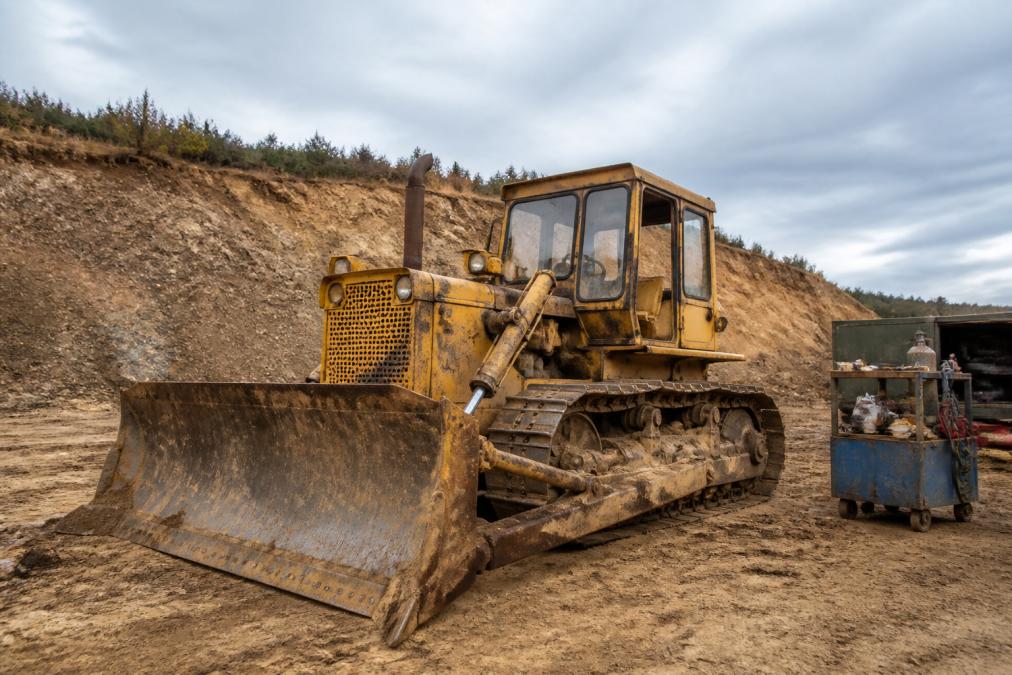
Operating hours matter more than age. A 10-year-old excavator with 5,000 hours might be worth more than a 5-year-old excavator with 15,000 hours. Hours directly correlate to wear on hydraulic systems, engines, and structural components.
Maintenance history is critical. Equipment with documented service records, regular fluid changes, and preventive maintenance commands higher resale prices. Buyers trust well-maintained machines.
Market demand fluctuates. During construction booms, used equipment holds value better. During downturns, depreciation accelerates. Specialized equipment (pile drivers, cranes) depreciates differently than general-purpose machinery (loaders, dozers).
Technological changes affect value. Newer models with better fuel efficiency, lower emissions, or telematics capabilities make older equipment less desirable. A 2016 excavator might depreciate faster once 2024 models with significantly better technology hit the market.
Condition and cosmetics matter to buyers. Rust, dents, and worn paint signal poor maintenance. Equipment that looks well-cared-for sells faster and at higher prices, even if mechanical condition is identical.
Supply and location drive prices. Equipment in high-demand regions (major construction markets) holds value better. Oversupply in a region pushes prices down rapidly.
First-year depreciation rates typically range from 20-30 percent. After that, depreciation stabilizes between 10-15 percent annually on remaining book value.
Understanding how to calculate depreciation used equipment gives you control over pricing and timing decisions. Tax formulas provide structure, but market reality determines what you'll actually receive when you sell.
That's where a Heavy Equipment Broker makes a difference. Our team analyzes real transaction data across multiple selling platforms, reaching millions of potential buyers. We factor in condition, hours, market demand, and current pricing trends, not just depreciation tables. When you're ready to sell equipment, connect with Ironmartonline to get a fair market valuation and access to buyers who understand the true value of well-maintained machinery.
Frequently Asked Questions
How do you calculate depreciation on used construction equipment?
The most common method is straight-line depreciation: divide the depreciable base (original cost minus salvage value) by the useful life in years. For example, a $325,000 machine with a $25,000 salvage value and 7-year useful life results in annual depreciation of $42,857. You can also use units-of-production (depreciation per operating hour) or MACRS, which accelerates deductions in early years. Choose the method that best matches how you actually use the equipment.
What is the difference between straight-line and MACRS depreciation for heavy equipment?
Straight-line spreads depreciation evenly over the asset's useful life, making calculations simple and predictable. MACRS (Modified Accelerated Cost Recovery System) front-loads depreciation, allowing larger deductions in early years and smaller ones later. MACRS typically results in faster cost recovery for tax purposes. Most construction businesses use MACRS because it improves cash flow in the first years of ownership, especially valuable when acquiring used equipment that may have limited remaining useful life.
How does the age of used equipment affect its depreciation schedule?
Used equipment depreciates faster than new equipment in real-world markets. The first year typically sees significant value loss, while subsequent years settle into a more stable annual depreciation on the remaining value. For tax purposes, the IRS useful life doesn't change based on age, a used bulldozer still follows standard depreciation schedules. However, for resale value, older equipment with higher accumulated wear depreciates more steeply. Understanding both book depreciation and actual market value is critical when buying or selling used machinery.
What tax benefits are available for purchasing used construction equipment in 2026?
For 2026, 100% bonus depreciation is available for qualified tangible personal property acquired and placed in service after January 19, 2025. This allows you to deduct the entire cost in the year of purchase rather than spreading it across years. Additionally, IRS Section 179 lets you deduct up to a specified limit in the first year. These provisions significantly reduce taxable income when you acquire used machinery, making them valuable for fleet managers and owner-operators. Consult a tax professional to determine which strategy maximizes your deductions.