Description
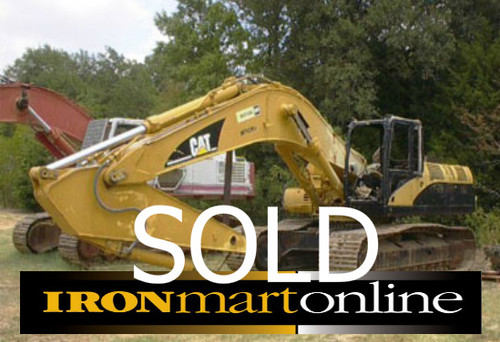
Used Caterpillar 350 Excavator Stick 12' Located in Rockaway, NJ 07866.
Specs and Dims
Description Continued...
Caterpillar 350 Excavator Stick 12' 6500 lbs Buyer Guide
A 12-foot stick for a Caterpillar 350 excavator is a working attachment, not a cosmetic part. At roughly 6,500 lbs, it is a heavy piece of fabricated steel with machined pin bores at both ends, and it decides how far the machine can reach, how deep it can dig, and how much force it can put into a bucket. If you are buying or selling one, the questions that matter are fitment, wear, and logistics. This guide walks through each of those using published Cat 350 specifications and practical inspection points.
What the Stick Does on a Cat 350 Excavator
The stick, also called the arm, is the second member of the boom assembly. It pivots at the boom nose, carries the bucket linkage at its far end, and receives thrust from the stick cylinder mounted along the top of the boom. Everything the operator does with the bucket, from curling to crowding to lifting, passes through the stick and its pin joints. Because of that, the stick carries constant reversing loads and is one of the highest stress areas on the machine.
Caterpillar publishes the stick reach for the current generation 350 at 3.9 m (12'10"), with a maximum reach at ground level of 39.8 ft, a maximum vertical wall digging depth of 19.2 ft, and a minimum loading height of 7.2 ft. Those figures describe the modern 350, and they are useful as a reference point for what a 12-foot class stick does on this size of machine. A 12-foot stick sits very close to that published length, so it delivers comparable reach geometry, though the exact numbers on a 1998 machine will differ from the current spec sheet.
How the Stick, Boom, and Bucket Work Together
The three members form a linkage. The boom sets the working envelope, the stick converts cylinder stroke into reach and crowd force, and the bucket does the cutting. Cat rates the current 350 for buckets up to 3.2 m3 (4.2 yd3), and the machine is known for high digging force and swing torque. Change the stick length and you move that balance. A shorter stick produces more crowd force at a shorter radius. A longer stick trades some of that force for reach. A 12-foot stick lands in the middle, which is why it is a common configuration on general excavation work.
Why a 12-Foot Stick Matters on the Job
Stick length is a productivity decision. With 12 feet of stick on a 350 class machine, an operator can trench ahead of the tracks without constantly repositioning, load trucks from a single setup, and reach over a wall or a spoil pile without crawling forward. The published minimum loading height of 7.2 ft is directly relevant here, because it tells you how much clearance the machine needs to clear the side of a truck body during loading.
Longer sticks also change how the machine feels. Reach increases, but bucket breakout and lift capacity at a given radius decrease. On a 1998 machine that has been working with a 12-foot stick for decades, the balance between reach and force is already established. Replacing that stick with the same length keeps the machine behaving the way the operator expects rather than forcing a new learning curve.
Fitting a 12' Stick to a 1998 Caterpillar 350
This is where buyers need to slow down. A 1998 Caterpillar 350 was built long before the current generation 350 that Caterpillar introduced in 2022, along with features such as optional Cat Stick Steer for one-hand travel and turning. Generation changes typically bring different pin sizes, boss widths, casting shapes, and cylinder mounting arrangements. A stick that fits one generation may not bolt to another, even though both machines carry the 350 designation.
Before committing to a used stick, collect these measurements and compare them against the machine that will receive it:
- Boom nose pin diameter and the condition of the bore
- Bucket linkage pin diameter and the spacing between pin centers
- Overall stick length from pin center to pin center
- Boss width and the thickness of each ear at both ends
- Stick cylinder rod end mounting style and pin size
- Hydraulic line routing, brackets, and any hard plumbing attached to the stick
If the seller cannot supply those measurements, ask for photographs with a tape measure in frame. Anything you cannot confirm should be verified with a Caterpillar dealer or a qualified heavy equipment mechanic before money changes hands.
What 6,500 lbs Means for Handling and Transport
A bare stick at 6,500 lbs (roughly 2,950 kg) is beyond the reach of most shop lifting equipment and needs to be treated as a rigging job. For scale, the current Cat 350 itself weighs 47.7 tons with a 600 mm track width and transports at 11.95 m long, 3.34 m wide, and 3.26 m tall. The stick is a small fraction of that total, but it still requires a crane, a large telehandler, or a second excavator with adequate capacity at the required radius.
For shipping, a 6,500 lb item generally moves on a flatbed or step deck. Plan the following:
- Confirm the actual length and center of gravity so the load sits correctly on the deck
- Protect machined pin bores with caps or blocking so they do not take impact in transit
- Block the stick against rolling or shifting, then secure with rated chains and binders
- Confirm the receiving end has lifting capacity on site before the truck arrives
Loading and unloading a Caterpillar 350 is a routine job for experienced heavy haulers, but the stick itself moves on a different plan than the machine, since it cannot be driven off a trailer.
Inspection Checklist for a Used 350 Stick
Sticks fail at predictable places. A visual inspection that covers the following areas will tell you most of what you need to know about remaining service life.
| Inspection Area | What to Look For |
|---|---|
| Pin bores, both ends | Out-of-round wear, oval shape, visible clearance when a pin is inserted, prior bore welding or line boring |
| Bosses and ears | Cracks radiating from the bore, elongation, previous weld repair |
| Stick cylinder mount | Weld cracking, deformation, worn pin and bushing |
| Bucket linkage area | Wear on the linkage pivot, cracks at the linkage bracket |
| Main body welds | Fatigue cracks along seam welds, especially near the midpoint of the stick |
| Hydraulic brackets and lines | Bent brackets, chafed hoses, crushed hard lines |
| General condition | Heavy section loss from corrosion, bent or twisted stick, prior straightening |
A stick that has been line bored and re-pinned can still be a good working part if the repair was done correctly. A stick with unchecked cracks at the cylinder mount is a liability. Price the repair before you price the part.
Buying and Selling 350 Sticks on Ironmartonline
Ironmartonline is a web based marketplace that connects buyers and sellers of used heavy equipment, trucks, and machinery. Sellers list across nine platforms to reach a broad buyer audience, and there are no contracts or hidden fees. Buyers can also look into financing options. That structure suits an item like a 350 excavator stick, which has a narrow audience of contractors, excavator owners, and repair shops rather than the general public.
If you are listing a stick, include the measurements above, the machine model and year it came off, the weight, photographs of every pin bore, and clear shots of any weld repair. If you are buying, ask the same questions in reverse and confirm fitment against your own machine before you arrange freight. Both sides benefit from a listing that answers the fitment question up front instead of after the truck is dispatched.
Frequently Asked Questions
How much does a Cat 350 excavator stick weigh?
The stick in this listing weighs about 6,500 lbs, which is roughly 2,950 kg. Weight varies with stick length, generation, and whether bucket linkage or hydraulic plumbing is included. Always confirm the actual weight with the seller before arranging lifting equipment or freight, because the difference between a bare stick and a dressed one can affect the rigging plan.
Will a 12-foot stick from one Cat 350 fit another?
Not automatically. Pin diameter, pin spacing, boss width, and cylinder mounting can differ between machine generations, and a 1998 Caterpillar 350 predates the current generation 350 introduced in 2022. Measure your machine at the boom nose and bucket linkage, then compare those numbers against the seller's stick. When in doubt, verify with a Caterpillar dealer or a qualified mechanic.
How much reach does a 12-foot stick provide?
Caterpillar lists the current 350 stick reach at 3.9 m (12'10"), with a maximum reach at ground level of 39.8 ft, a maximum vertical wall digging depth of 19.2 ft, and a minimum loading height of 7.2 ft. A 12-foot stick is close to that published length, but an older machine will have its own geometry, so treat the current figures as a reference rather than an exact match.
Can a 6,500 lb excavator stick be shipped on a flatbed?
Yes. A 6,500 lb stick is well within flatbed and step deck capacity, but it needs proper blocking and rated chains, and the machined pin bores should be protected during transit. Confirm the receiving site has a crane, telehandler, or excavator with enough capacity at the required radius before the truck is dispatched, since the part cannot be unloaded by hand.
Where can I sell a used Caterpillar 350 stick?
Ironmartonline lists used heavy equipment, trucks, and machinery across nine platforms to reach a wide buyer audience, with no contracts or hidden fees. A listing that includes pin bore photographs, measured dimensions, machine year, and stick weight will answer the fitment questions serious buyers ask first, which shortens the time between inquiry and sale.