

Table of Contents
- Why Certified Equipment Appraisals Matter for Your Business
- Why Use a Heavy Equipment Broker Like Ironmartonline
- Understanding Fair Market Value of Equipment
- How Certified Appraisals Support Equipment Appraisal for Financing
- The Equipment Appraisal Process Explained
- Reading and Using Your Equipment Appraisal Report
- Tax Planning and Insurance Coverage Benefits
- Maximizing Resale Value When Selling Equipment
- Common Mistakes in Equipment Valuation
- Frequently Asked Questions
Last Updated: October 15, 2026
Why Certified Equipment Appraisals Matter for Your Business
A certified equipment appraisal is a professional valuation of machinery and equipment performed by a qualified appraiser. It determines the fair market value of your assets based on current market conditions, equipment condition, and comparable sales data. For business owners, this isn't just paperwork, it's a critical tool that affects financing decisions, insurance coverage, tax planning, and asset sales.
When you need to understand what your equipment is actually worth, guesswork costs money. A certified appraisal provides documented proof of value that banks, insurers, and buyers will accept. Whether you're securing a loan, filing insurance claims, planning for taxes, or preparing to sell, the appraisal report becomes your foundation for every decision that follows.
Why Use a Heavy Equipment Broker Like Ironmartonline
Before diving into appraisal details, it's worth asking: why use a Heavy Equipment Broker like Ironmartonline in the first place? The answer comes down to reach, efficiency, and expertise.
When you're ready to sell equipment, you face a choice: list it yourself across multiple platforms, navigate buyer inquiries alone, and handle logistics independently, or partner with a broker who already has the infrastructure in place. Ironmartonline connects buyers and sellers through nine specialized web-based selling platforms, giving your equipment access to millions of potential buyers globally and locally. You avoid the complexity of managing multiple listings, vetting serious buyers, and coordinating international transactions.
A certified equipment appraisal strengthens your position whether you're selling through a broker or independently. It gives you documented proof of value, which accelerates negotiations and builds buyer confidence. For Ironmartonline clients, an appraisal report becomes part of the listing documentation, making your equipment stand out in a competitive market.
Understanding Fair Market Value of Equipment
Fair market value is the price at which equipment would sell between a willing buyer and a willing seller, neither under pressure to buy or sell. It's the foundation of every certified equipment appraisal.
Fair market value differs from other valuation approaches:
- Replacement cost is what it would cost to buy identical or similar new equipment today
- Orderly liquidation value is what the equipment would sell for in a controlled sale over 90-180 days
- Forced liquidation value is what it would bring if sold quickly, often at a discount
- Insurable value is the amount your insurance policy will cover if equipment is damaged or lost
An appraiser determines fair market value by analyzing comparable equipment sales, current market demand, equipment condition, age, and remaining useful life. The result is a defensible number that works for financing, insurance, and tax purposes.
How Certified Appraisals Support Equipment Appraisal for Financing
Banks and lenders require documented asset values before approving loans. An equipment appraisal for financing serves as collateral verification. Lenders use the appraiser's conclusion to determine how much they'll lend against your equipment.
The process works like this: you provide equipment details to the appraiser, they conduct an on-site inspection, and they produce a report with a specific fair market value conclusion. The lender reviews this report.
A certified appraisal accelerates loan approval because it removes uncertainty. Without it, lenders estimate value themselves, often conservatively. With a professional appraisal, you have documented support for a higher valuation, which can mean a larger loan amount and better terms.
The Equipment Appraisal Process Explained
The equipment appraisal process follows a standard sequence designed to produce defensible, accurate valuations. But the quality of the outcome depends heavily on how well you prepare. This section walks through what happens during the assessment and provides a practical checklist to get your equipment and records ready.
What Happens During the Assessment
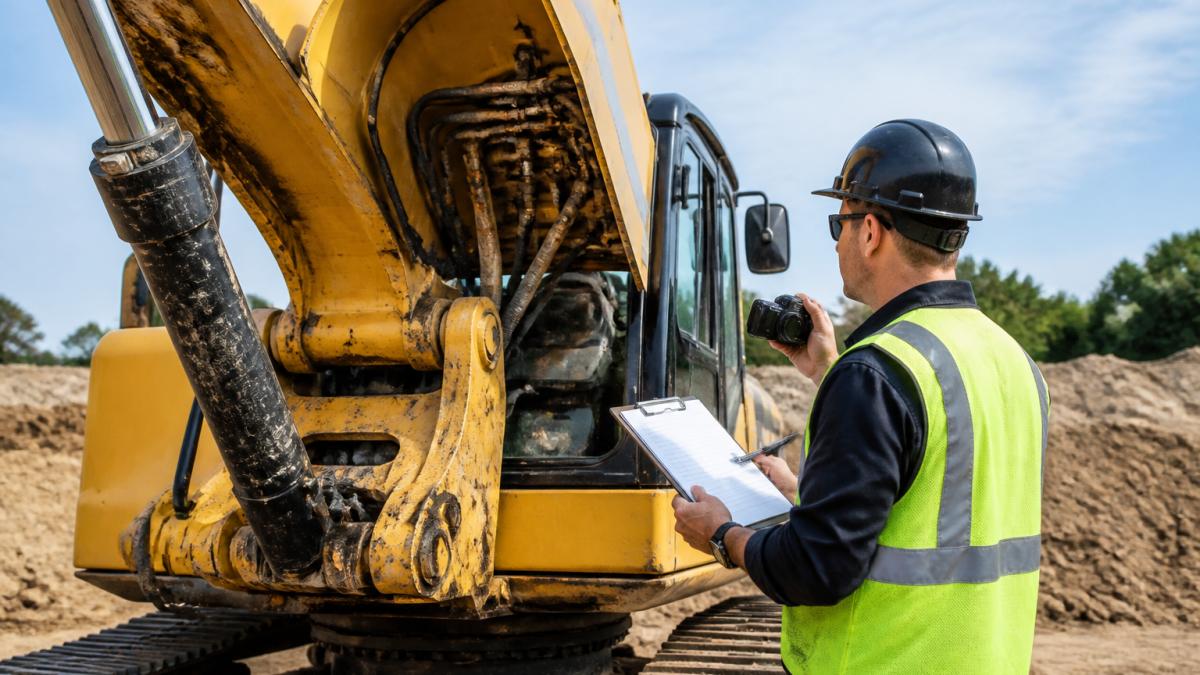
The appraiser begins with a detailed inspection of your equipment. They examine physical condition, check for wear and damage, verify serial numbers, and document any modifications or repairs. They photograph key components and note the equipment's age, maintenance history, and remaining useful life.
This inspection typically takes time depending on equipment complexity. The appraiser also gathers market data, recent sales of comparable equipment, current asking prices, and industry trends, to establish what similar machinery is selling for today.
How to Prepare Equipment and Documentation for an Appraisal
A smooth appraisal starts long before the appraiser arrives. Use this checklist to organize your assets and records:
- Asset register: Create a spreadsheet listing each piece of equipment with make, model, year, serial number, and location. Include attachments and accessories.
- Purchase records: Gather original invoices, bills of sale, or lease agreements. These establish acquisition cost and date.
- Maintenance logs: Compile service records, repair invoices, and parts replacements. This demonstrates care and can support a higher condition rating.
- Photographs: Take clear, well-lit photos of each item from multiple angles, including any wear, damage, or modifications. Date-stamp them if possible.
- Site access: Ensure the appraiser can safely access all equipment. Provide a point of contact and any required safety gear.
- Prior appraisals: If you have previous valuation reports, have them available for reference.
The more complete your documentation, the faster the appraisal moves. Missing records don't stop the process, but they may lower the appraiser's confidence in the valuation, which affects the final report's defensibility.
What to Expect on Timeline and Cost
Most certified equipment appraisals are completed from engagement, depending on the number of items, travel requirements, and report complexity.
Appraisal fees vary based on several factors:
- Scope and complexity: A single piece of equipment costs less to appraise than a fleet of 50 machines.
- Equipment type: Specialized or rare equipment may require more research and command higher fees.
- Travel and site access: Remote locations or multiple sites increase time and cost.
- Report requirements: A detailed report with extensive comparables takes longer than a summary letter.
- Appraiser credentials: Experienced appraisers with specialized designations may charge premium rates.
Most appraisers charge either a flat fee per assignment or an hourly rate. Always request a written quote that specifies the scope, deliverables, and timeline before engaging.
Documentation and Information Required
Before the appraisal, gather these documents:
- Equipment serial numbers and model information
- Maintenance and repair records
- Original purchase date and price
- Any modifications or upgrades made
- Recent service history
- Photos of the equipment from multiple angles
- Specifications (size, capacity, horsepower, attachments)
The more complete your documentation, the faster the appraisal moves. Missing records don't stop the process, but they may lower the appraiser's confidence in the valuation, which affects the final report's defensibility.
Reading and Using Your Equipment Appraisal Report
Your appraisal report contains several key sections: the equipment description, condition assessment, valuation methodology, comparable sales analysis, and the appraiser's final value conclusion.
Pay attention to the valuation conclusion, this is the number lenders, insurers, and buyers will use. The report explains how the appraiser arrived at this value, which approaches they used (market approach, cost approach, or income approach), and what assumptions they made about market conditions.
The report also includes limiting conditions and assumptions. These clarify what the appraisal does and doesn't cover. For example, an appraisal might assume the equipment is in working condition, or that it will be sold as-is without repairs.
Tax Planning and Insurance Coverage Benefits
A certified appraisal supports two critical business functions: tax planning and insurance protection. But the value goes beyond simply having a number on file. Understanding how appraisals interact with tax rules and insurance policies helps you make better decisions.
Tax Planning: Depreciation, Cost Basis, and IRS Documentation
For tax purposes, an appraisal documents the value of depreciable assets on your balance sheet. If you're claiming depreciation deductions, the IRS may request evidence of the equipment's original value and condition. An appraisal report provides this documentation.
More specifically, a certified appraisal can help you:
- Establish cost basis: When you acquire equipment through a non-cash transaction (like a trade-in or inheritance), an appraisal sets the starting value for depreciation.
- Support casualty loss claims: If equipment is damaged or destroyed, an appraisal substantiates the loss amount for your tax return.
- Plan for like-kind exchanges: Although rules have changed, appraisals still help document value in certain exchange transactions.
- Substantiate charitable donations: If you donate equipment, an appraisal supports the deduction (Topic no. 506, Charitable contributions).
Keep in mind that tax rules are complex and change over time. Always consult a tax professional about how an appraisal fits your specific situation.
Insurance Coverage: Replacement Cost vs. Actual Cash Value
For insurance, an appraisal ensures you carry adequate coverage. Many business owners underinsure equipment because they don't know its actual replacement cost. An appraisal shows what it would cost to replace the equipment if it's damaged or lost. You can then adjust your policy limits to match.
Insurance policies typically use one of two valuation methods:
- Replacement cost: Pays to replace the equipment with a new equivalent, without deducting for depreciation. This usually requires higher policy limits.
- Actual cash value (ACV): Pays the current market value, factoring in depreciation. This may be lower than replacement cost.
An appraisal helps you choose the right coverage level. If you have replacement cost coverage but your policy limits are based on outdated values, you could face a shortfall after a loss. Review your appraisal with your insurance agent annually, especially after market shifts or equipment purchases.
How Appraisal Findings Affect Business Decisions
The numbers in your appraisal report feed directly into strategic decisions:
- Borrowing capacity: Lenders use appraised values to set loan amounts. A higher, well-supported value can increase your credit line.
- Capital planning: Knowing the value of your fleet helps you decide when to sell, upgrade, or hold.
- Asset sales: An appraisal provides a defensible asking price and speeds negotiations.
- Financial statements: While not a substitute for accounting records, an appraisal can support impairment testing or fair value disclosures.
Common Appraisal Mistakes and Report Red Flags
When reviewing an appraisal report, watch for these warning signs:
- Incomplete asset list: Missing equipment or incorrect serial numbers undermine the report's credibility.
- Unsupported assumptions: The appraiser should explain the basis for condition ratings and market comparisons.
- Stale valuations: Market conditions change. Market conditions change. An appraisal may need updating.
- Mismatched intended use: The report should clearly state the purpose and value premise. If it doesn't align with your needs, ask for clarification.
- Lack of comparables: A credible report includes actual sales data, not just asking prices.
If you spot these issues, discuss them with the appraiser before relying on the report for a major decision.
Maximizing Resale Value When Selling Equipment
When you're ready to sell equipment, a certified appraisal becomes your sales tool. It documents value to potential buyers, which accelerates negotiations and builds confidence in your asking price.
Buyers of used equipment want proof that the price is fair. An appraisal report provides this. Whether you're selling through Ironmartonline or another channel, the appraisal becomes part of your listing documentation. It answers the buyer's unspoken question: "Why should I pay this price?"
A certified appraisal also protects you during negotiations. If a buyer challenges your price, you have professional documentation backing your position. This is especially valuable for high-value equipment where even small percentage differences represent significant dollars.
Common Mistakes in Equipment Valuation
Many business owners make predictable mistakes when valuing equipment themselves.
Confusing book value with market value is the most common error. Book value is what you paid minus depreciation claimed for tax purposes. Market value is what the equipment is worth today. These numbers rarely match. A five-year-old excavator might have a book value of one amount but a market value of another if heavy equipment prices have risen.
Ignoring condition and maintenance history is another frequent mistake. Two identical machines of the same age and model can have vastly different values if one was well-maintained and the other neglected. An appraiser accounts for this; most business owners don't.
Relying on asking prices instead of actual sales distorts valuation. Just because equipment is listed for $200,000 doesn't mean it sells for that. An appraiser researches actual sales prices, not just listings.
Overestimating remaining useful life inflates value. Equipment doesn't last forever. An appraiser assesses realistic remaining life based on age, condition, and technological obsolescence. Equipment that's 15 years old may only have 5 years of realistic service life remaining, which significantly affects its value.
Getting your equipment valued correctly changes how you approach financing, insurance, and sales. A certified equipment appraisal removes guesswork and replaces it with documented, defensible value. Whether you're securing a loan, protecting assets with insurance, or preparing to sell through a broker, the appraisal report becomes your foundation. At Ironmartonline, we work with sellers who understand that professional documentation, including certified appraisals, accelerates sales and builds buyer confidence. When you're ready to sell equipment, having that appraisal in hand positions you for better negotiations and faster deals.
Frequently Asked Questions
When should a business owner get a certified equipment appraisal?
Business owners should obtain a certified equipment appraisal whenever they need to determine the fair market value of equipment for financing, insurance, sale, tax planning, or litigation purposes. If you're applying for asset-based lending, replacing damaged equipment, selling machinery, or need documentation for regulatory compliance, a professional appraisal provides substantiated value that lenders and insurers require. The timing matters: schedule appraisals before major business decisions, not after.
What does a certified equipment appraisal include?
A comprehensive equipment appraisal report includes a detailed condition assessment, equipment inventory with serial numbers, valuation using multiple methodologies (market approach, cost approach, and income approach where applicable), fair market value conclusion, replacement cost, orderly liquidation value, and forced liquidation value. The report documents remaining useful life, depreciation, obsolescence, maintenance records reviewed, comparable sales data, and the scope of work performed. A certified appraiser signs the report, certifying the analysis meets professional standards.
How does an equipment appraisal help with financing or insurance?
Lenders use certified equipment appraisals to determine collateral value for asset-based lending and loan underwriting decisions. Banks require independent, substantiated valuations to approve financing secured by machinery. Insurers use appraisals to establish accurate insurable value and total loss thresholds. Without a certified appraisal, lenders may undervalue your assets and offer lower loan amounts, while insurers might deny claims or underpay settlements. An appraisal protects both your borrowing capacity and insurance coverage.
How long does a certified equipment appraisal take?
The timeline depends on the scope and complexity. Appraisers need time to conduct on-site inspections, gather maintenance records, research comparable sales, perform calculations, and prepare a detailed written report. Plan ahead if you need the report for a specific deadline like financing application or transaction closing.